

Classic Mallet Trios---Beethoven: Bells
4 Classics Arranged for Orchestra Bells, Vibraphone, and Marimba
Music by Ludwig van Beethoven / arr. Brian Slawson
Item: 00-PC-0016602_B
$3.00
Pickup currently not available
Description
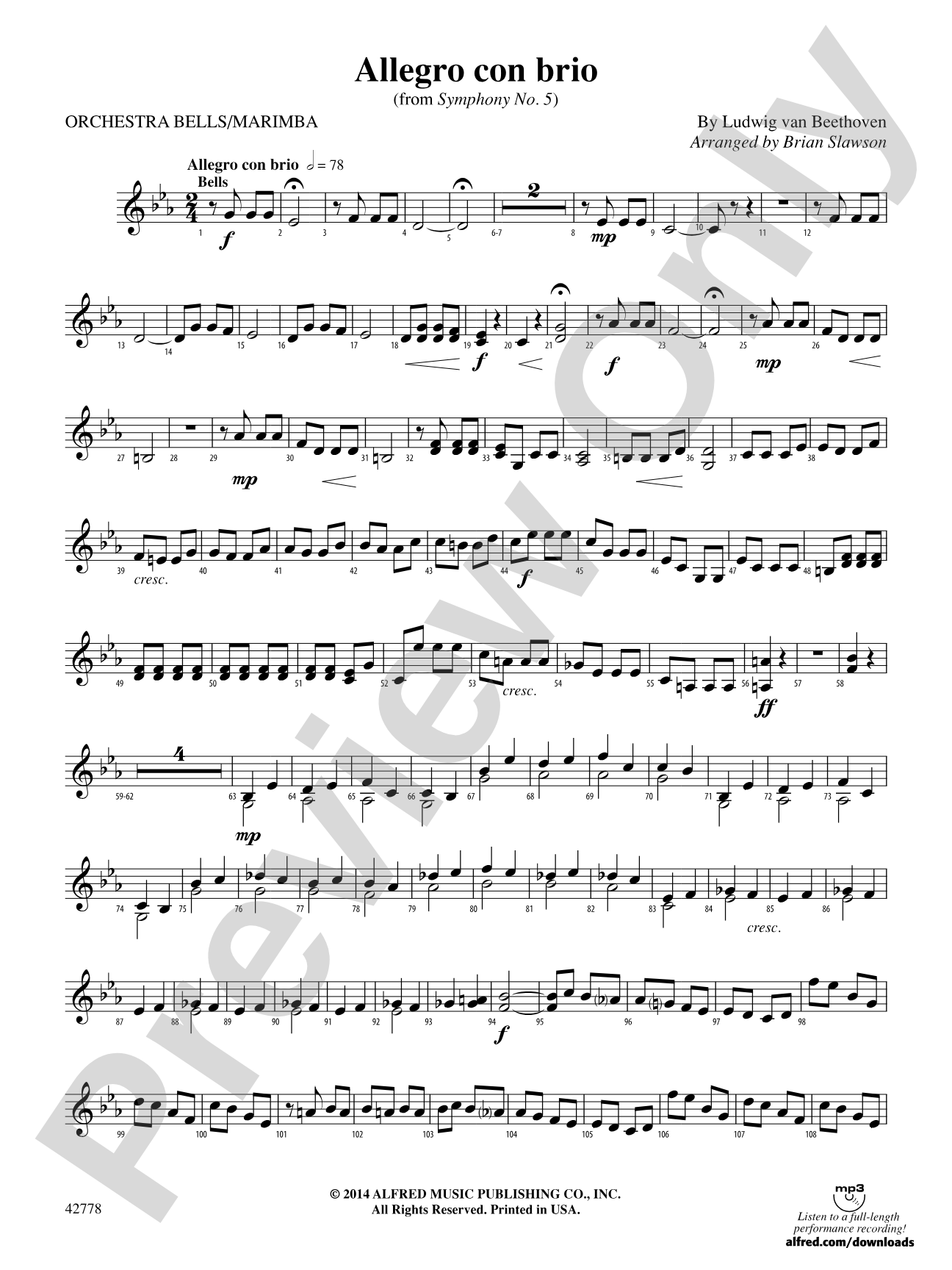
Features four classics arranged for orchestra bells, vibraphone, and marimba. These selections work splendidly as individual pieces or in a four-movement capacity, reflecting popular forms commonly used in symphonic works of the 18th and 19th centuries. In addition to providing inside access to valuable repertoire from one of the great master composers, this "mini-symphony" reveals the importance of key relationships, tempo relationships, and contrasting dynamics. "Allegro con brio" (from the Fifth Symphony), "Adagio" (from the Emperor Concerto), and "Für Elise" and "Ode to Joy" (from the monumental Ninth Symphony) comprise this exciting collection, wonderfully suited for solo & ensemble applications and bound to thrill audiences in concert settings.


Don't just read it, hear it, play along with it, and watch your students grow with it. In MakeMusic Cloud, Classic Mallet Trios---Beethoven: Bells comes alive with professional accompaniment, adjustable tempo, and built-in practice tools that turn solo practice into real progress.
Open in the Player
Jump straight in and assign it today.
Start Your Free Trial
Open this title and explore the full library in minutes.
Sample Audio
1
1 Classic Mallet Trios - 1
--:--
2
2 Classic Mallet Trios - 2
--:--
3
3 Classic Mallet Trios - 3
--:--
4
4 Classic Mallet Trios - 4
--:--
1 Classic Mallet Trios - 1
0:00
0:00
Sample Video
No sample videos found.
Additional Details
Series:
Alfred’s Percussion Performance Series
Publisher:
Alfred Music
Page Count:
12
SKU:
00-PC-0016602_B
More about this title
About the Composer: Ludwig van Beethoven
Ludwig van Beethoven (1770–1827) stands as a transformative figure in Western music history. His compositions bridged the Classical and Romantic eras, expanding harmonic language, structural boldness, and emotional depth in ways that fundamentally altered what composers believed music could express. His symphonies, concertos, and chamber works remain central to the concert repertoire and essential study for musicians seeking to understand how musical form and innovation intersect.
Beethoven's influence on music education runs especially deep. His works teach voice leading through dense textures, harmonic relationships through key contrasts, and structural thinking through large-scale form. For percussionists, his melodies offer the rare gift of being instantly recognizable yet demanding the precision and musicality required to honor their symphonic origins.
Why we love this
These four movements preserve the architectural integrity of Beethoven's originals while opening them to a percussion ensemble that rarely gets access to genuine masterwork material. The arrangement spans contrasting forms and tempos, allowing your students to experience how a great composer uses key relationships and dynamic shaping to create coherence across a multi-movement work. You can program them as individual pieces or as an integrated four-movement work, depending on your concert needs.
What to expect
These arrangements bring Beethoven's unmistakable voice into the mallet percussion family: the driving momentum of the Fifth Symphony opening, the noble restraint of the Emperor Concerto's Adagio, the intimate melancholy of Für Elise, and the jubilant affirmation of Ode to Joy. Playing them feels less like performing a transcription and more like being invited into the mind of a master composer working within the unique sonorities of bell, vibraphone, and marimba.
Who it's for
This book belongs in the hands of mallet percussionists in intermediate to advanced high school and college ensembles, as well as in private studio settings where students are ready to engage with repertoire beyond method-book arrangements. The four-movement structure and varying difficulty levels across the pieces make it accessible for solid high school musicians while offering depth and sophistication that will engage college performers.
How to get the most out of it
- Balance the three mallet instruments as equal voices, not as solo-plus-accompaniment. In the Allegro con brio, the bell, vibraphone, and marimba lines are compositionally interdependent; let each voice ring clearly without one dominating the texture.
- Honor the tempo relationships marked between movements. Beethoven's formal architecture relies on contrasts between energetic Allegro and slower Adagio sections; rushing transitions or missing the character shift will flatten the overall arc.
- Attend closely to dynamic markings, particularly in the Ode to Joy movement, where Beethoven uses crescendo and decrescendo to shape familiar melodic phrases. Mallet percussion can easily sound static; use dynamics to reveal the expressive intent beneath.
- Use the sustain capabilities of the vibraphone intentionally. Where Beethoven wrote for legato strings or sustained winds, the vibraphone's natural decay and motor control can approximate that vocal quality in a way that bell and marimba alone cannot.
How to use it
Present this as a four-movement percussion concerto within a larger concert, positioning it as a centerpiece that showcases your ensemble's musicianship and connection to the classical tradition. Alternatively, extract individual movements for different concert contexts: the Allegro con brio works as a dynamic opener, the Adagio suits a quieter program moment, and Ode to Joy lands powerfully as a closing statement. This book is particularly effective in spring concerts where you want to demonstrate growth and repertoire depth.
Skills your students will build
- Balancing three independent melodic lines within a single ensemble
- Interpreting tempo and dynamic markings that shape classical form across multiple movements
- Understanding harmonic relationships and key centers through orchestral masterwork arrangements
- Coordinating entrance timing and articulation across mallet percussion voices
- Sustaining musical phrasing and legato quality on percussion instruments