
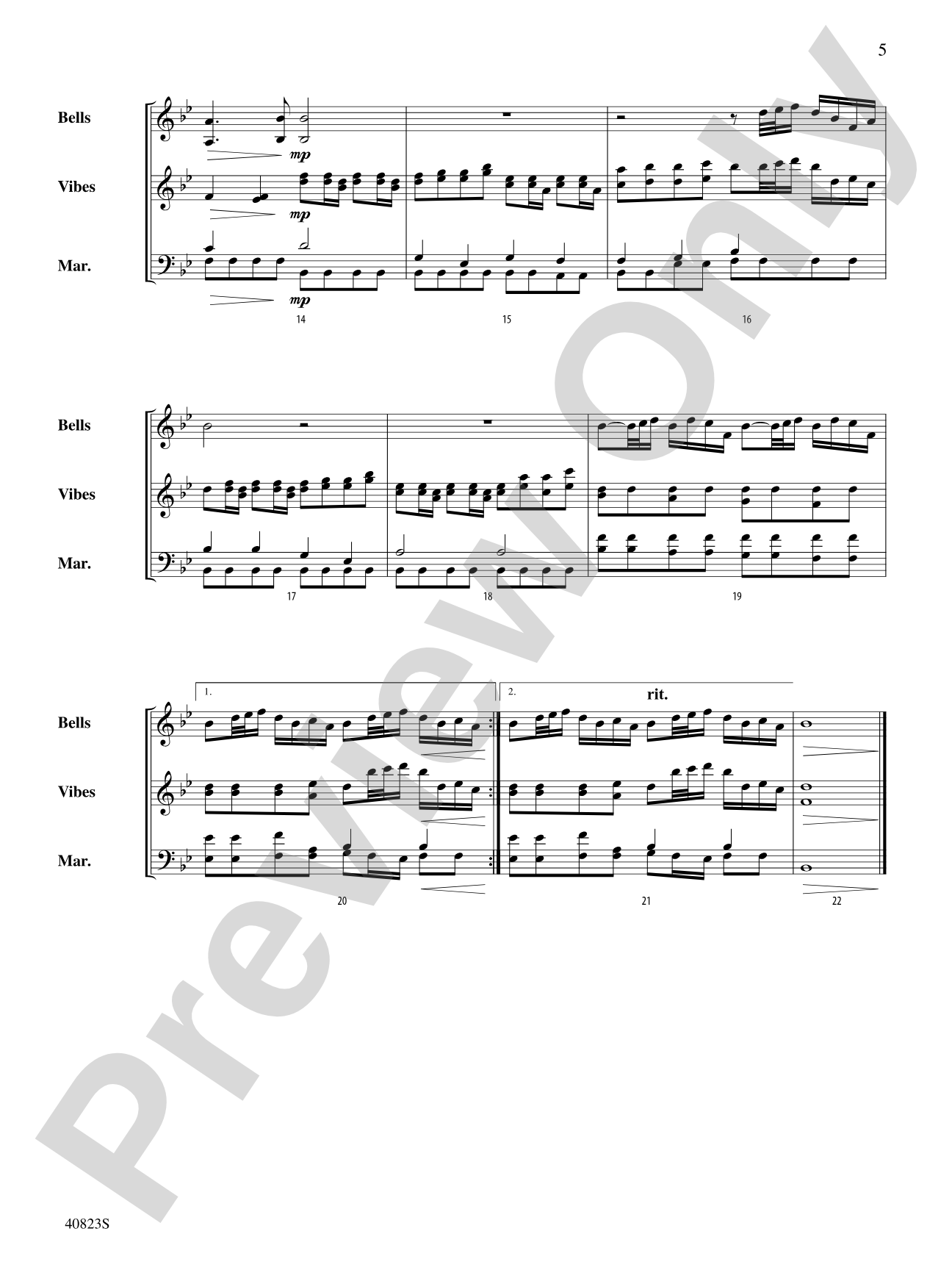
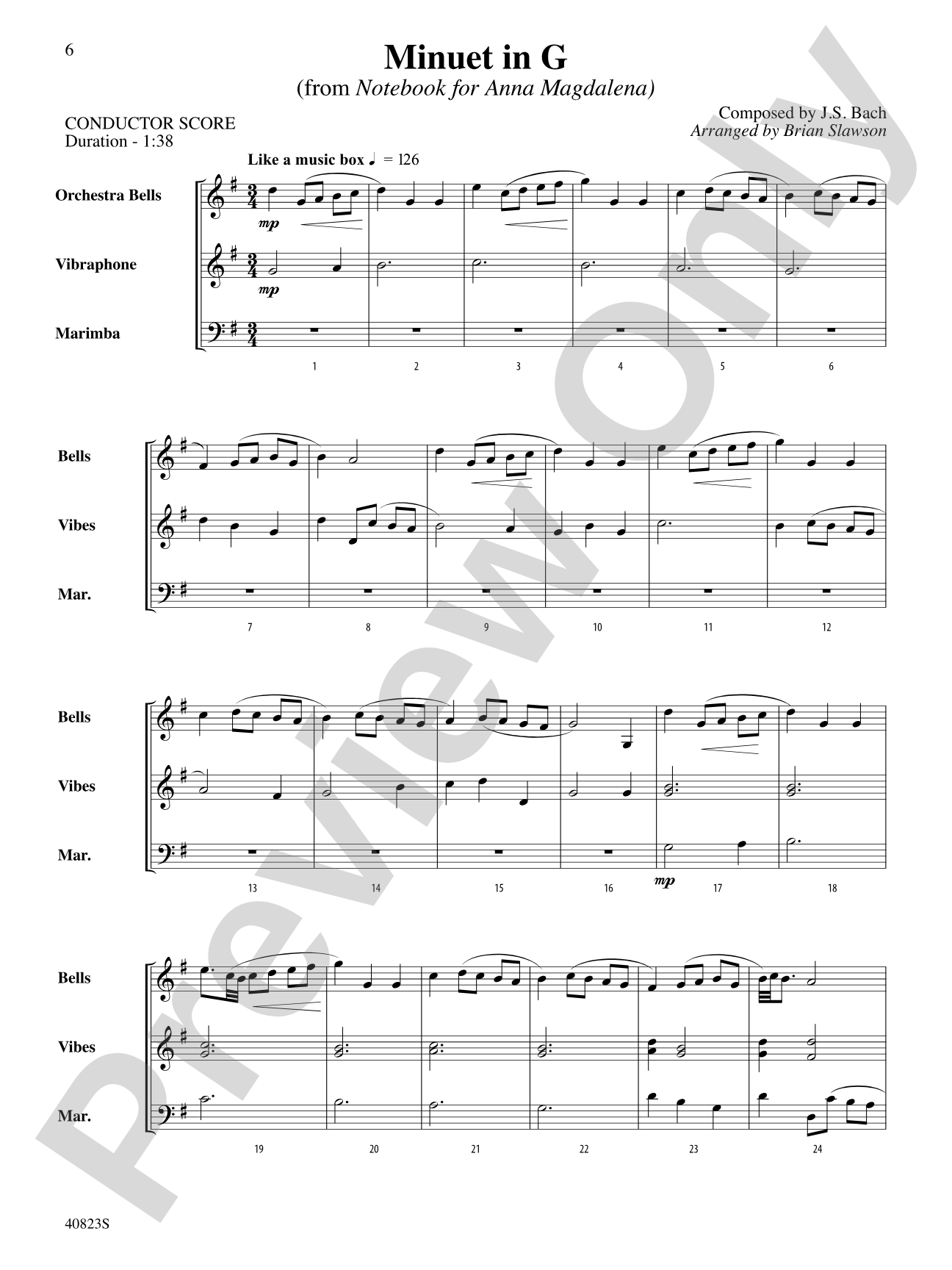
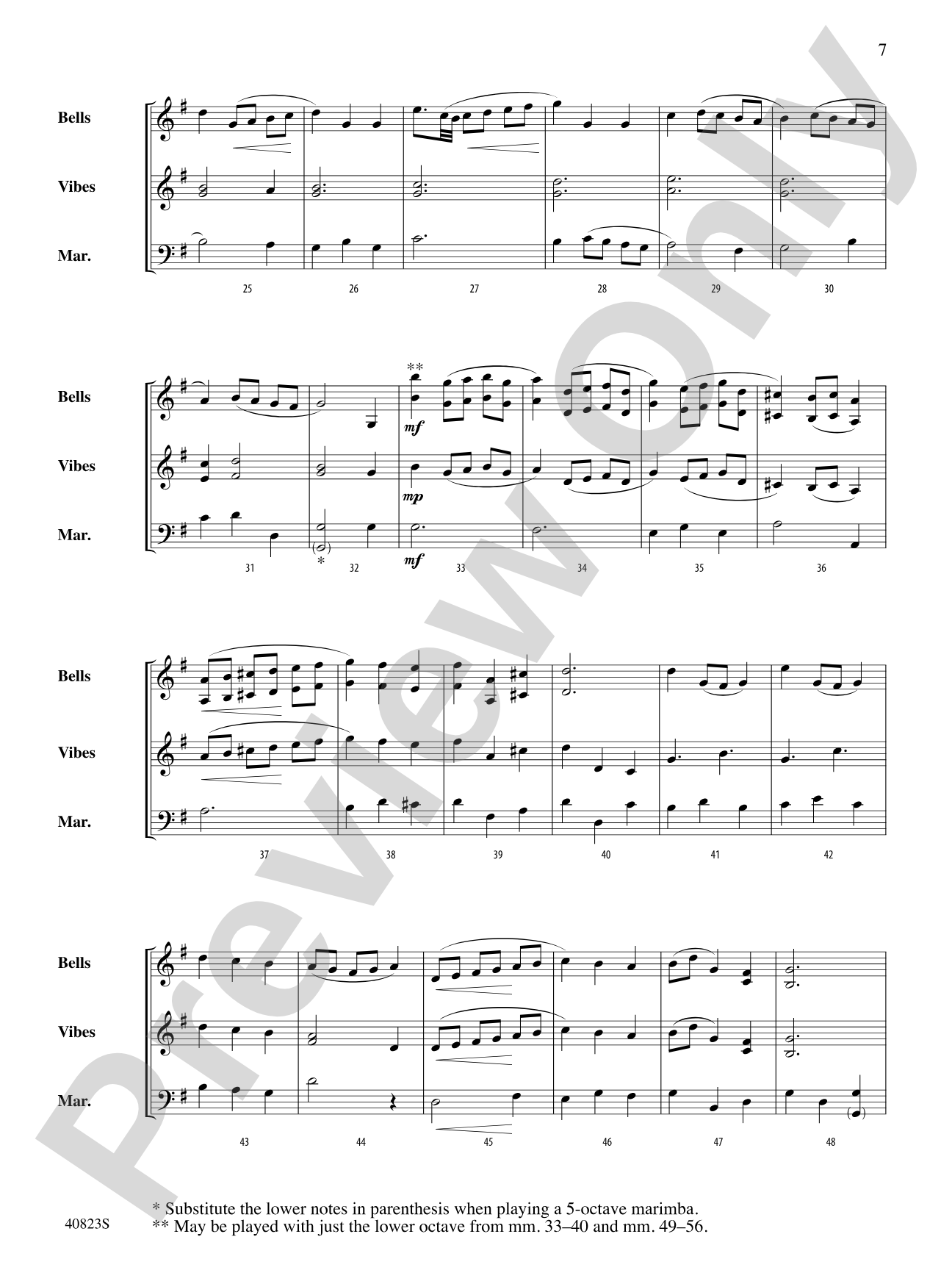
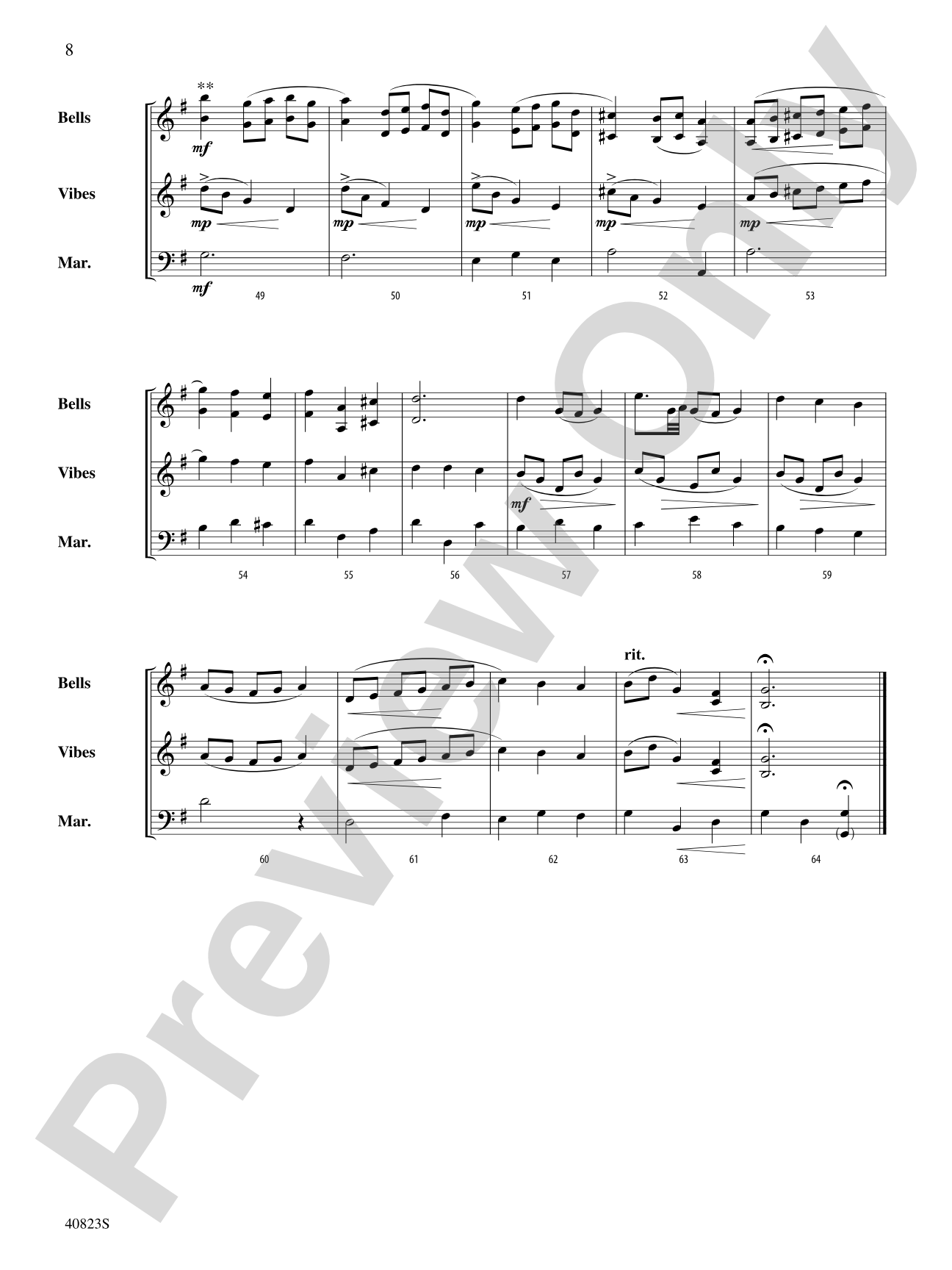


Classic Mallet Trios---Bach: Score
4 Classics Arranged for Orchestra Bells, Vibraphone, and Marimba
Music by Johann Sebastian Bach / arr. Brian Slawson
Item: 00-PR-0004349
$8.00
Pickup currently not available
Description
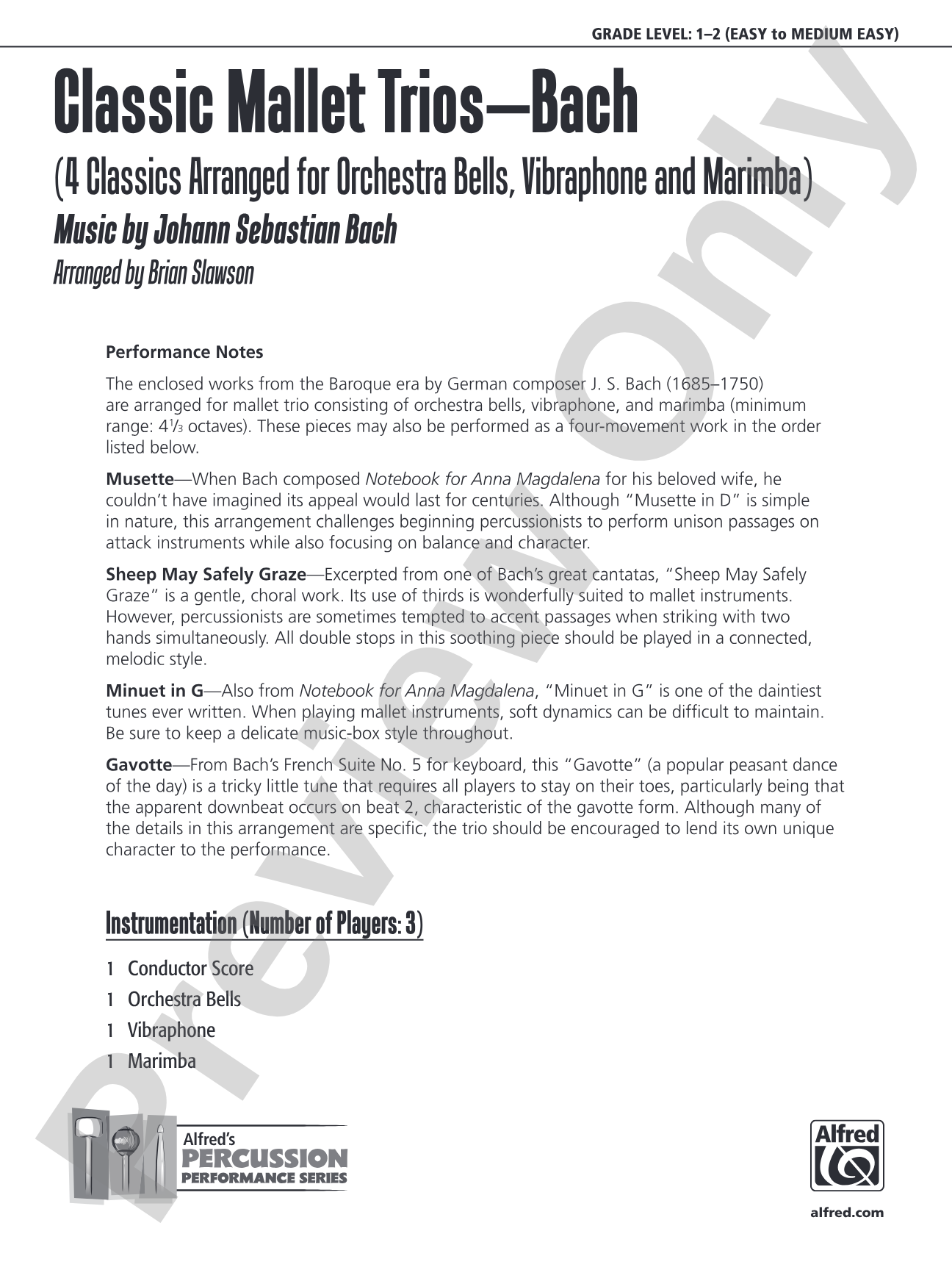
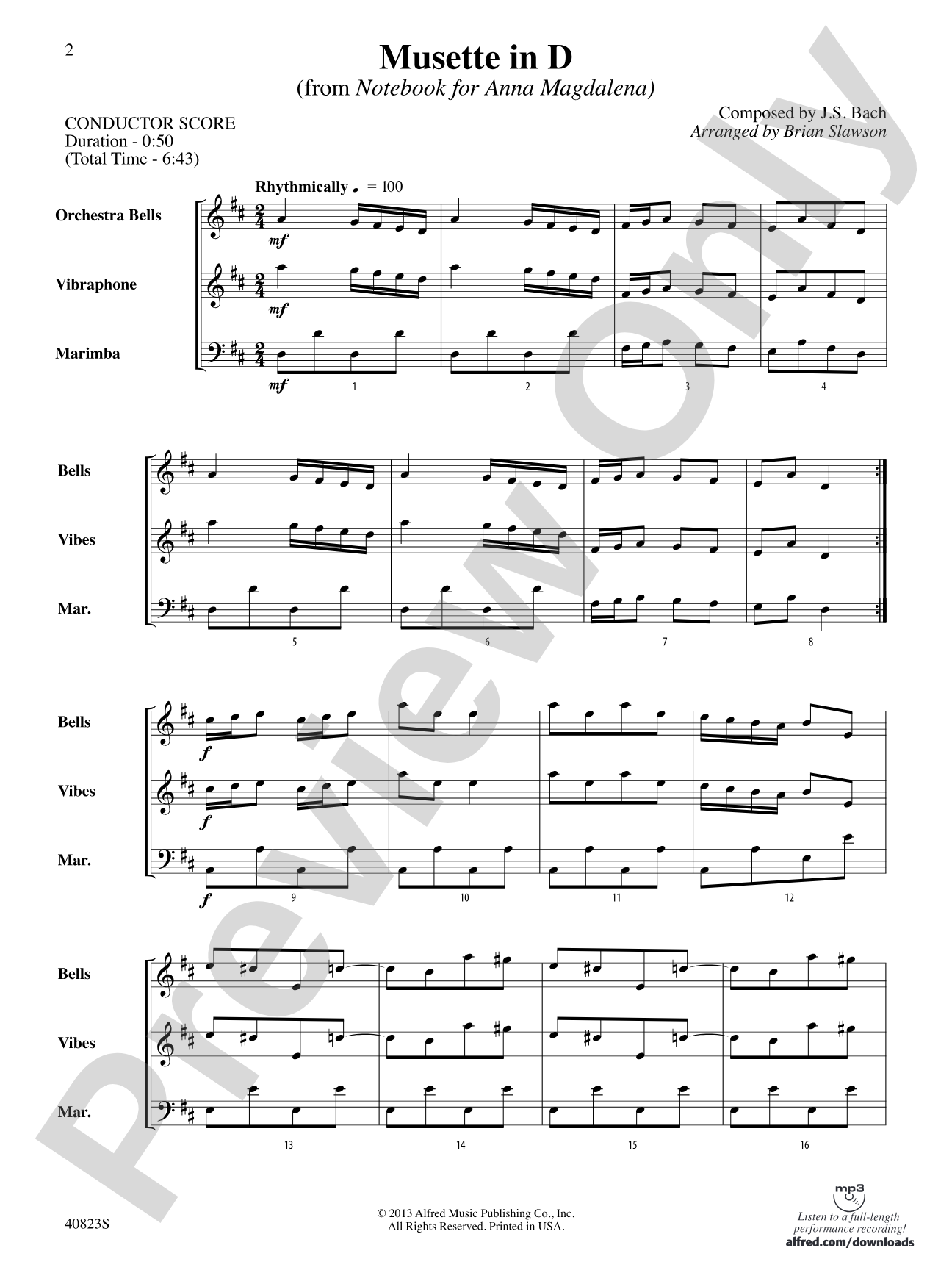
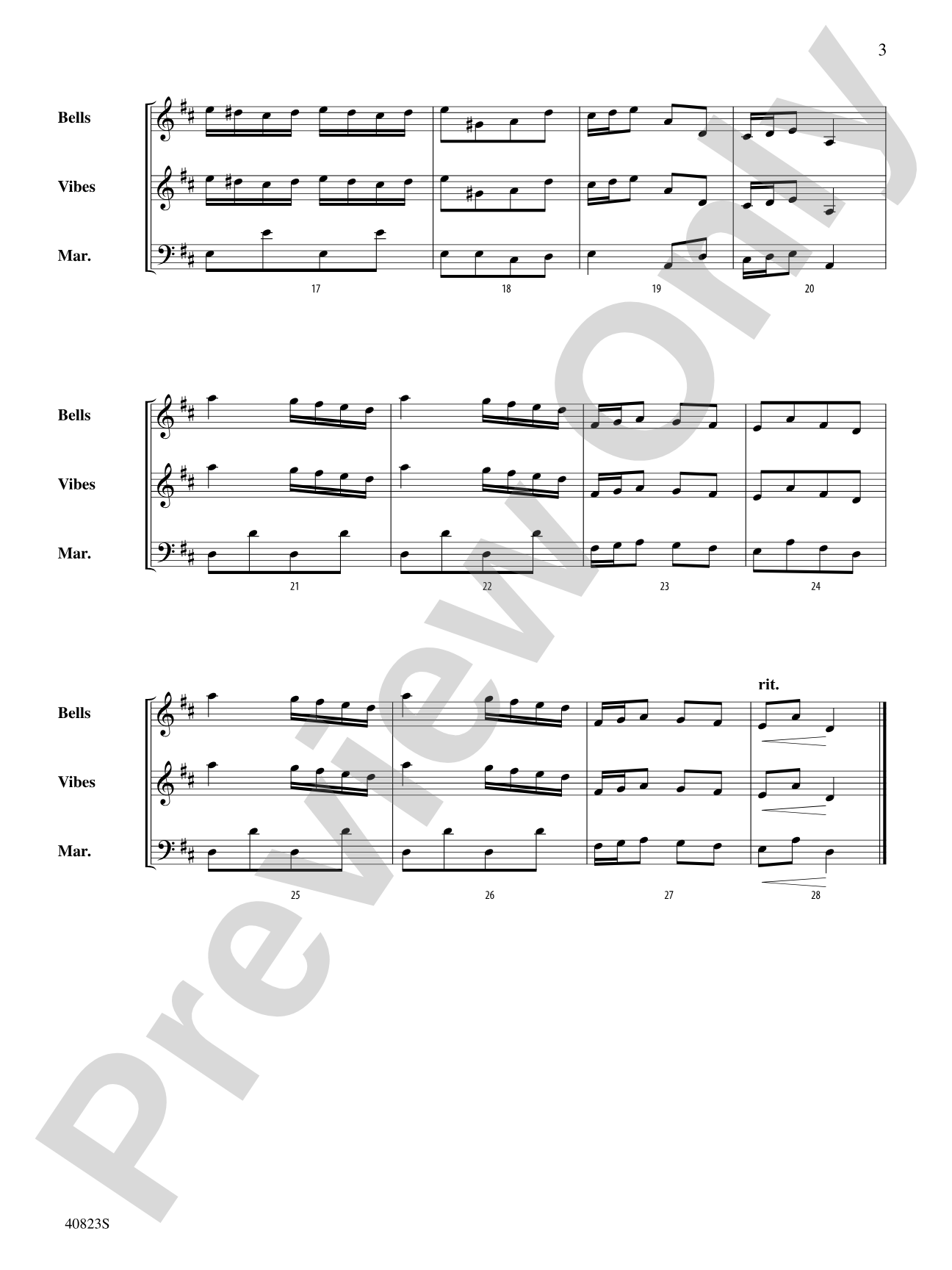
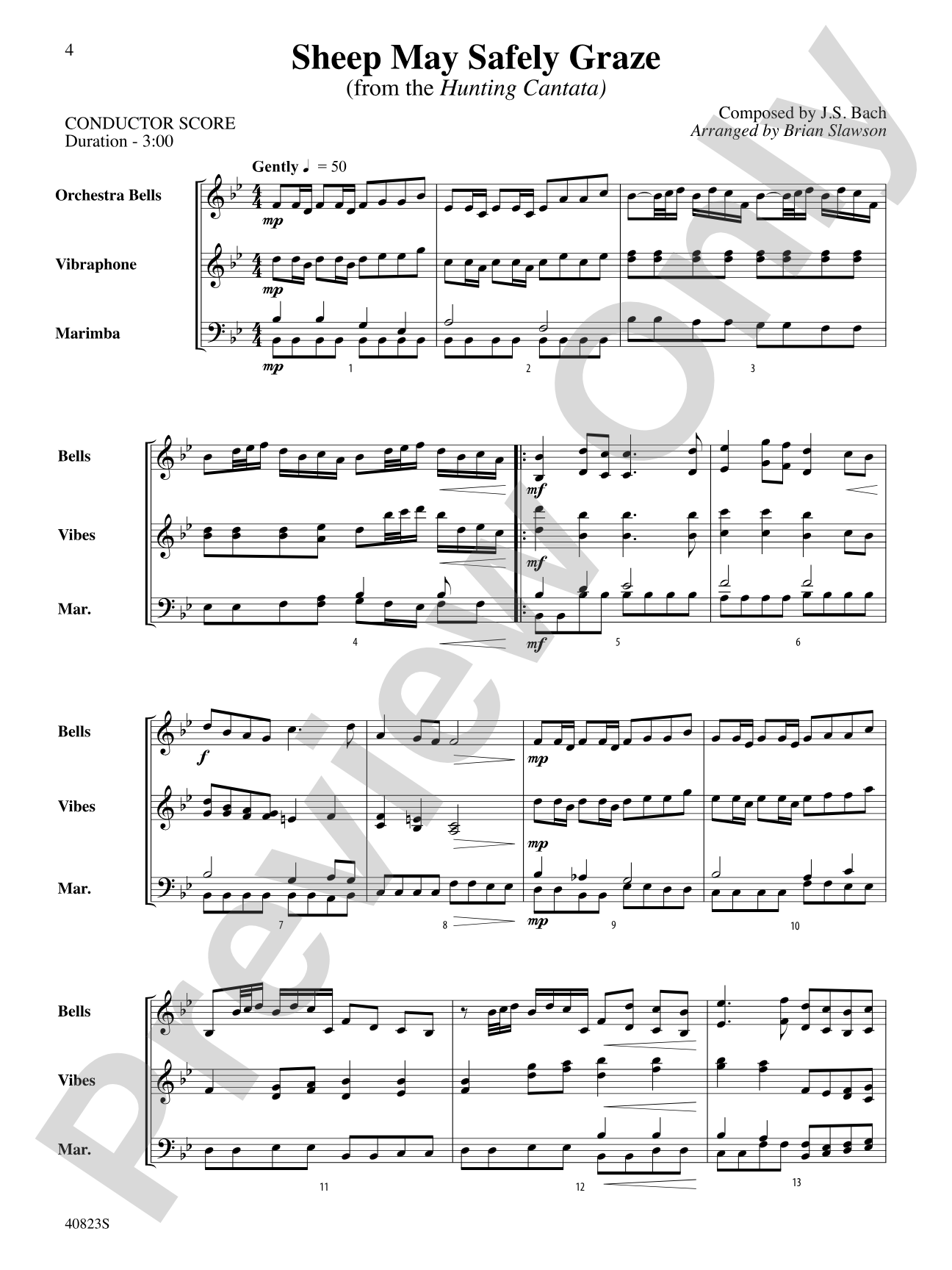
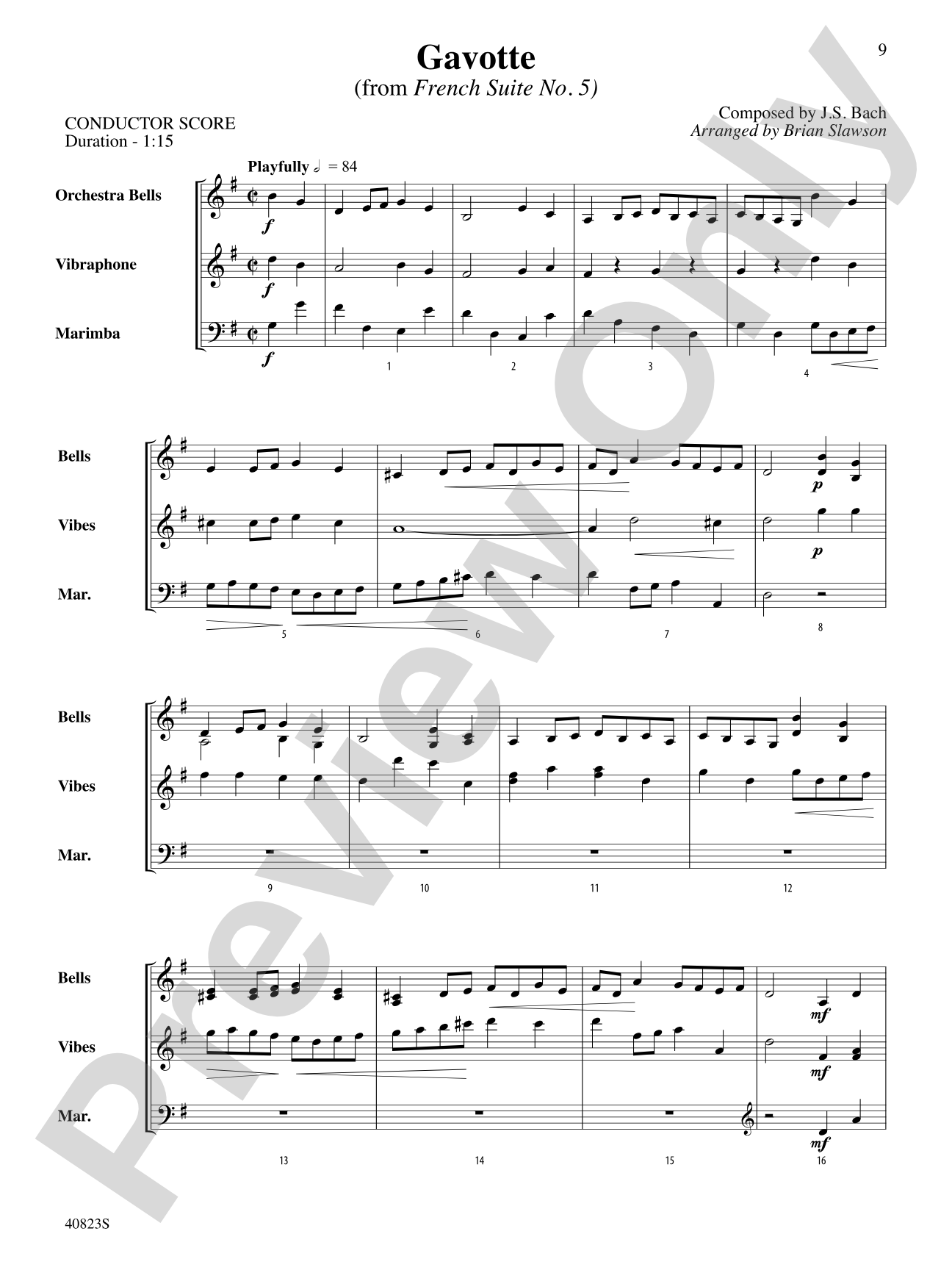
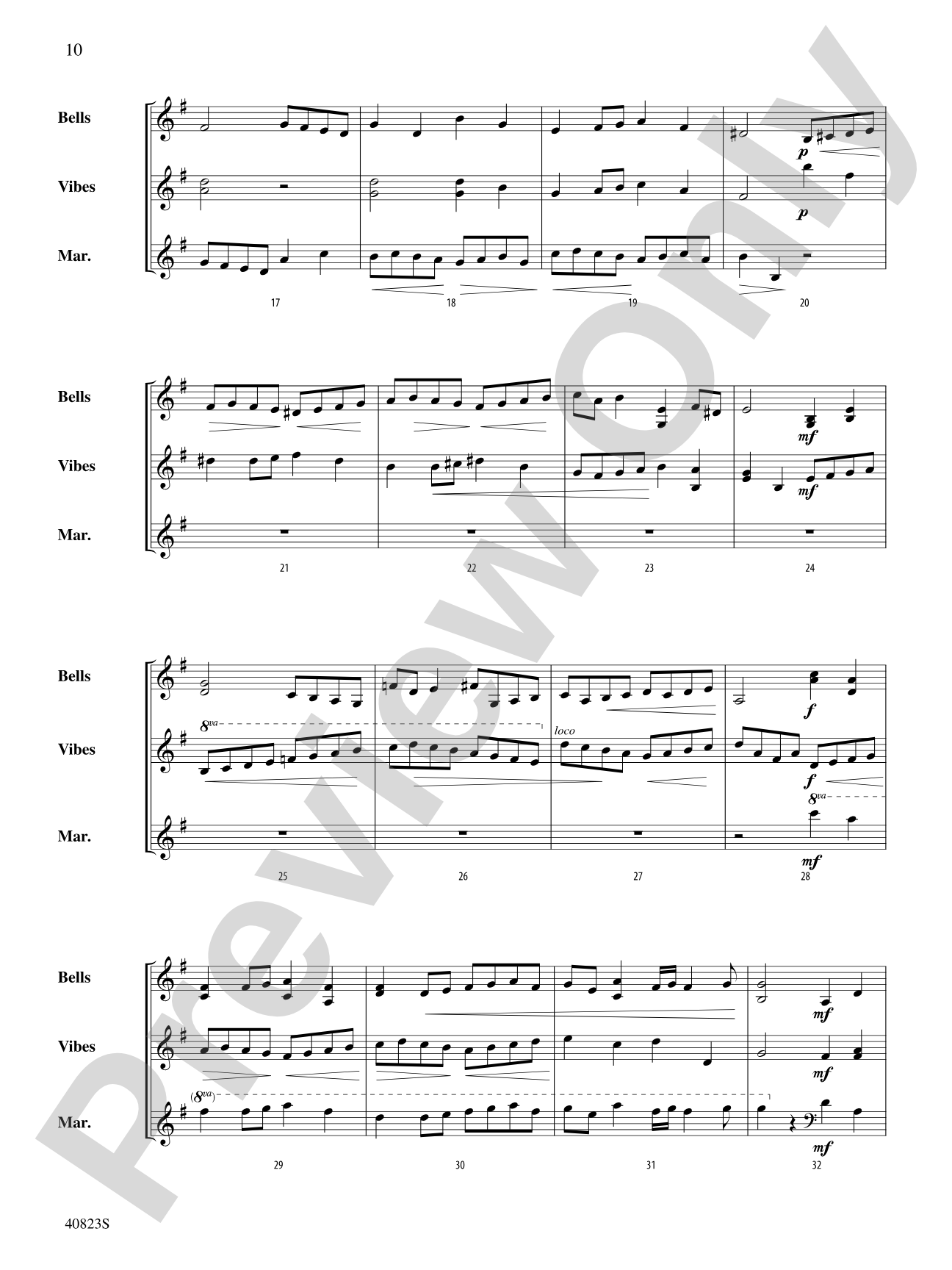
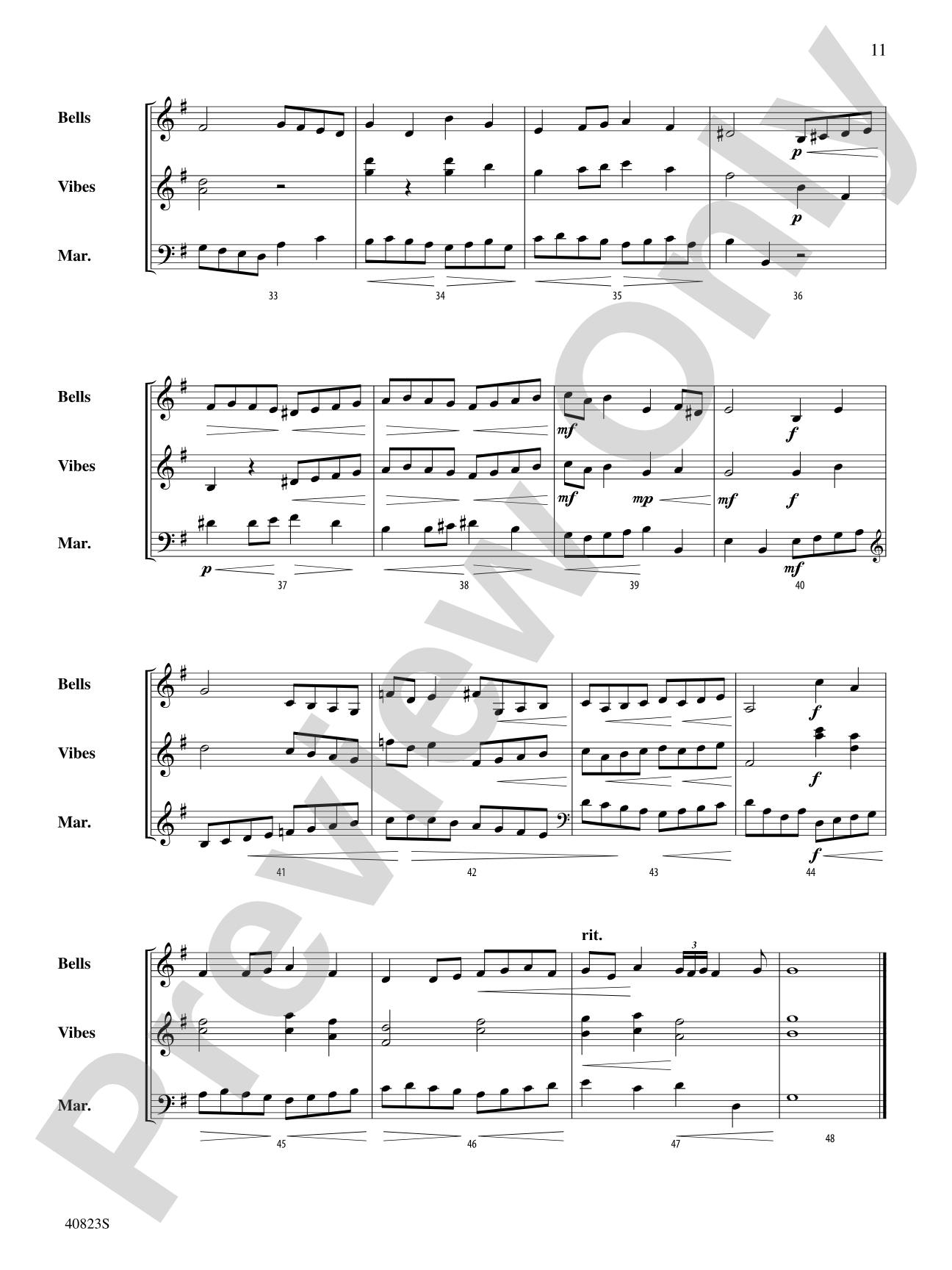
Features four classics arranged for orchestra bells, vibraphone, and marimba. These selections work splendidly as individual pieces or in a four-movement capacity, reflecting the popular sonata form commonly used in symphonic works of the 18th and 19th centuries. In addition to providing inside access to valuable repertoire from one of the great master composers, this "mini-symphony" reveals the importance of key relationships, tempo relationships, and contrasting dynamics. "Musette in D," "Sheep May Safely Graze," "Minuet in G," and "Gavotte" (from French Suite No. 5) comprise this charming collection, wonderfully suited for solo & ensemble applications and sure to thrill audiences in concert settings.


Don't just read it, hear it, play along with it, and watch your students grow with it. In MakeMusic Cloud, Classic Mallet Trios---Bach: Score comes alive with professional accompaniment, adjustable tempo, and built-in practice tools that turn solo practice into real progress.
Open in the Player
Jump straight in and assign it today.
Start Your Free Trial
Open this title and explore the full library in minutes.
Sample Audio
No sample audio found.
Sample Video
No sample videos found.
Additional Details
Series:
Alfred’s Percussion Performance Series
Publisher:
Alfred Music
Page Count:
12
SKU:
00-PR-0004349
More about this title
About the Composer: Johann Sebastian Bach
Johann Sebastian Bach (1685-1750) stands as the apex of Baroque composition, synthesizing centuries of musical tradition into works of unmatched structural clarity and spiritual depth. His mastery of counterpoint, harmonic innovation, and melodic invention established the foundation for virtually all Western classical music that followed. For music educators, Bach's output serves as the ultimate pedagogical resource: every piece reveals something essential about voice leading, form, or harmonic function.
Why we love this
Bach's melodies transcend their original instrumentation beautifully, and these four selections showcase his gift for memorable, singable lines that translate perfectly to mallet instruments. The arrangement respects the contrapuntal clarity of Bach's writing while giving each mallet player distinct material to execute; students aren't simply doubling chords. Programming this collection as a four-movement suite lets your audience experience how Bach's key relationships and contrasting dance rhythms create narrative arc comparable to a full sonata.
What to expect
Elegant and crystalline. The combination of orchestra bells, vibraphone, and marimba creates a luminous sonority that feels both intimate and refined. These familiar Bach melodies gain new brightness when voiced across three independent mallet parts, inviting listeners into the intricate web of his counterpoint while remaining thoroughly accessible.
Who it's for
Intermediate mallet percussionists who read music confidently and work well in chamber settings. Three players of similar ability will find rewarding material here, and advanced ensembles can use this collection in solo or ensemble recitals. Directors seeking to deepen students' understanding of Baroque form and counterpoint through active performance will find this arrangement invaluable.
How to get the most out of it
- Balance the parts carefully in rehearsal. Each voice carries equal weight in Bach's counterpoint, so all three players must tune their ears to blend rather than compete for prominence.
- Attend to the tempo relationships between movements. The collection gains coherence when faster movements (Gavotte, Minuet) feel appropriately brisk against the more lyrical selections (Musette, Sheep May Safely Graze).
- Shape phrases through dynamic contrast within each piece. Bach's structural clarity invites subtle rises and falls; resist the impulse to play dynamically flat simply because the music is Baroque.
- Lock in the rhythmic pulse across all three players before worrying about interpretation. Precision in counting will make the counterpoint sing.
How to use it
Program the complete suite as a stand-alone moment of elegance within a larger concert, using it as a palate cleanser between louder or more contemporary works. Alternatively, individual movements pair well with other chamber works from the Baroque or early Classical era. This arrangement also serves excellently as a supplementary repertoire project for advanced percussionists during ensemble rehearsal season.
Skills your students will build
- Reading and executing independent melodic lines in contrapuntal texture
- Maintaining rhythmic accuracy across three separate parts
- Balancing voice leading and harmonic clarity within an ensemble
- Understanding Baroque dance forms and their characteristic rhythmic profiles
- Shaping Baroque phrasing through articulation and dynamic control
- Recognizing key relationships and how Bach uses them to unify multi-movement works