

Classic Mallet Trios: Mallet Instrument Book
4 Classics Arranged for Marimba and Vibraphone
Music by Johann Sebastian Bach, George Frederic Handel, Georges Bizet, and Alessandro Scarlatti / arr. Brian Slawson
Item: 00-PK-0004871

$17.99
Pickup currently not available
Buy Extra Parts (Digital PDF Download)
| Product | Price | Quantity |
|---|---|---|
| Classic Mallet Trios: Score | $8.00 | |
| Classic Mallet Trios: Mallets | $4.00 | |
| Classic Mallet Trios: Vibraphone | $4.00 | |
| Classic Mallet Trios: 2nd Mallet Percussion | $4.00 |
Parts Added to Cart!
Related Items
Classic Mallet Trios, Volume 1: Mallet Instrument Book |
$17.99
|
View |
Description
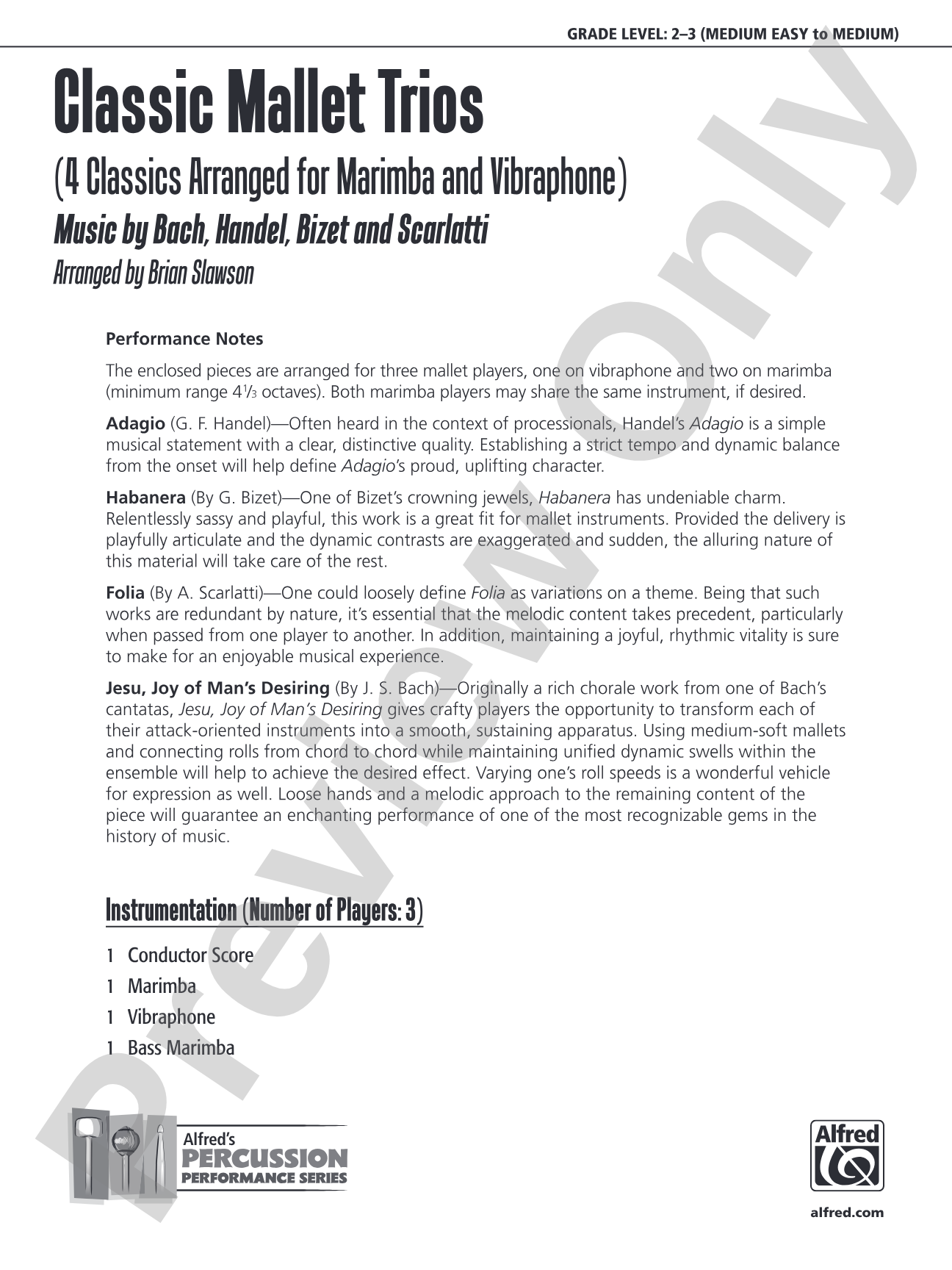
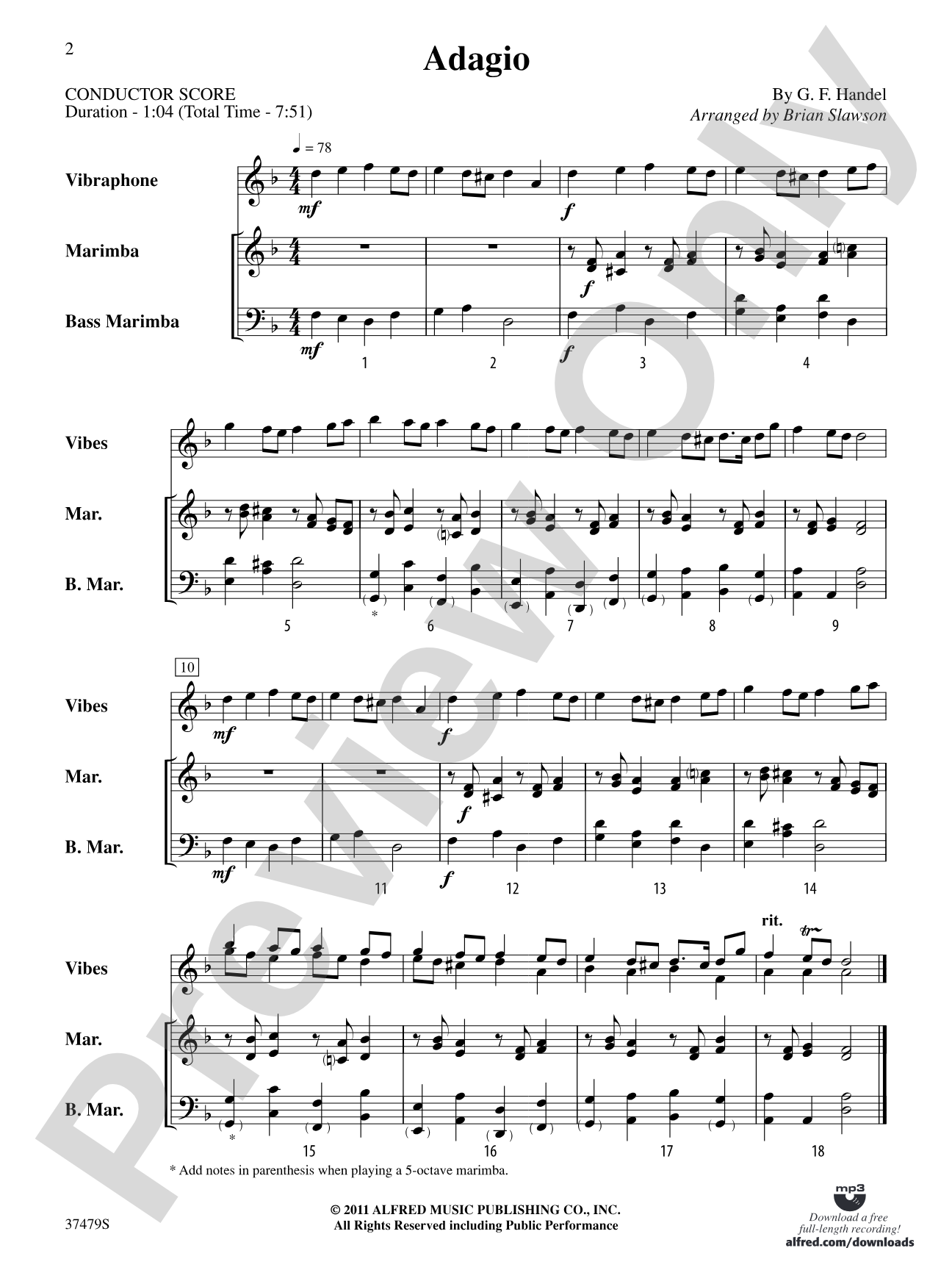
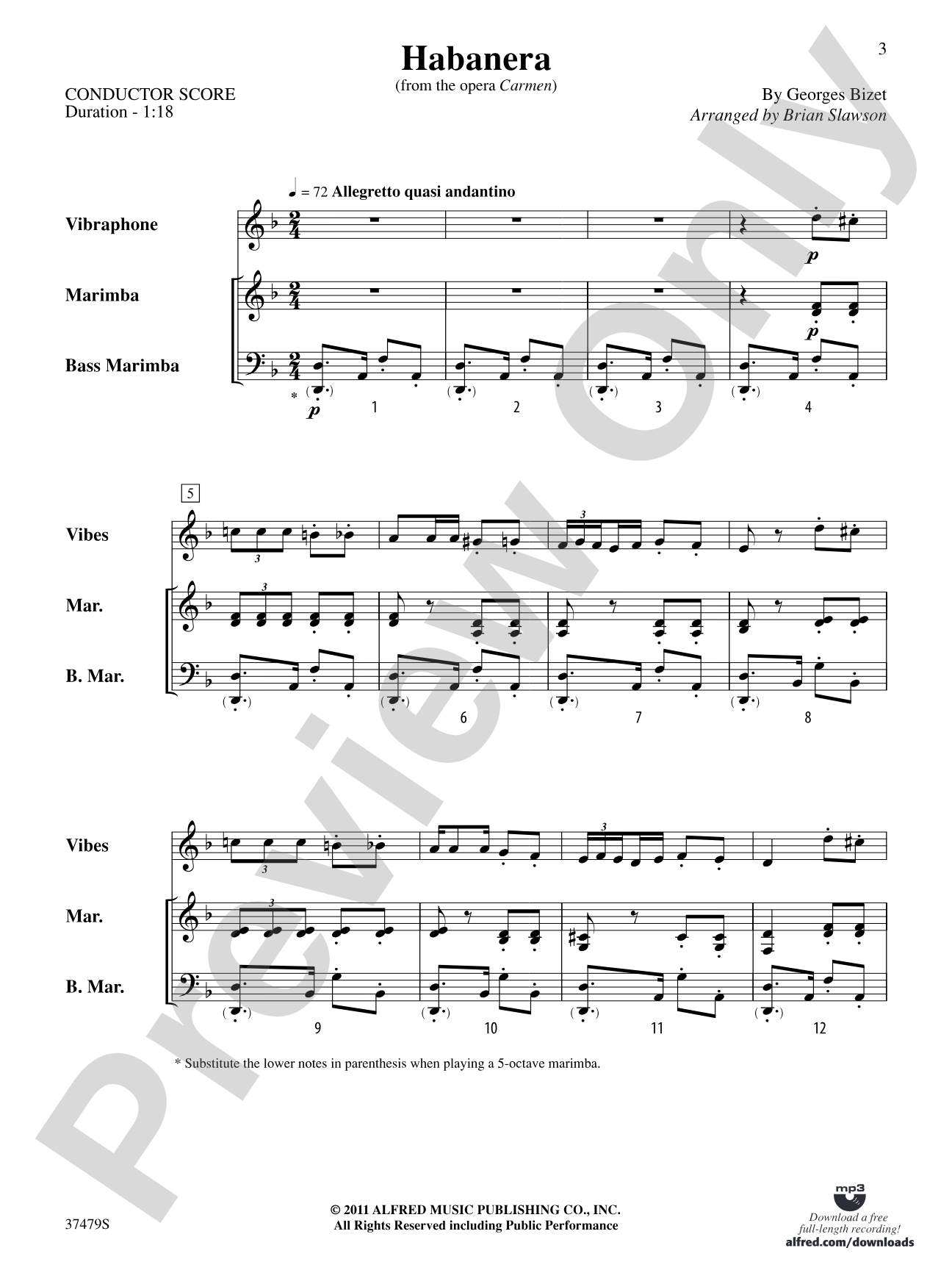
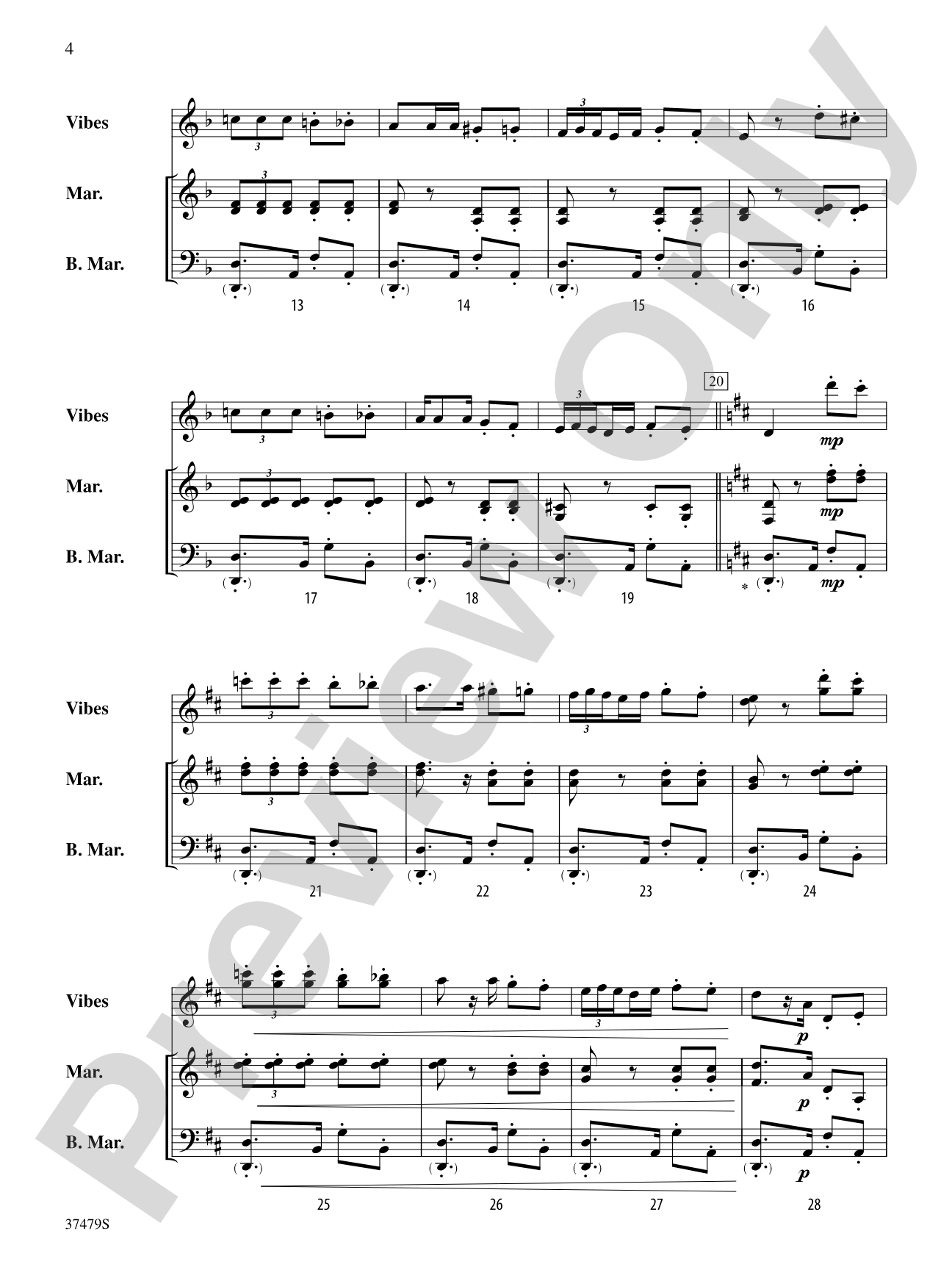
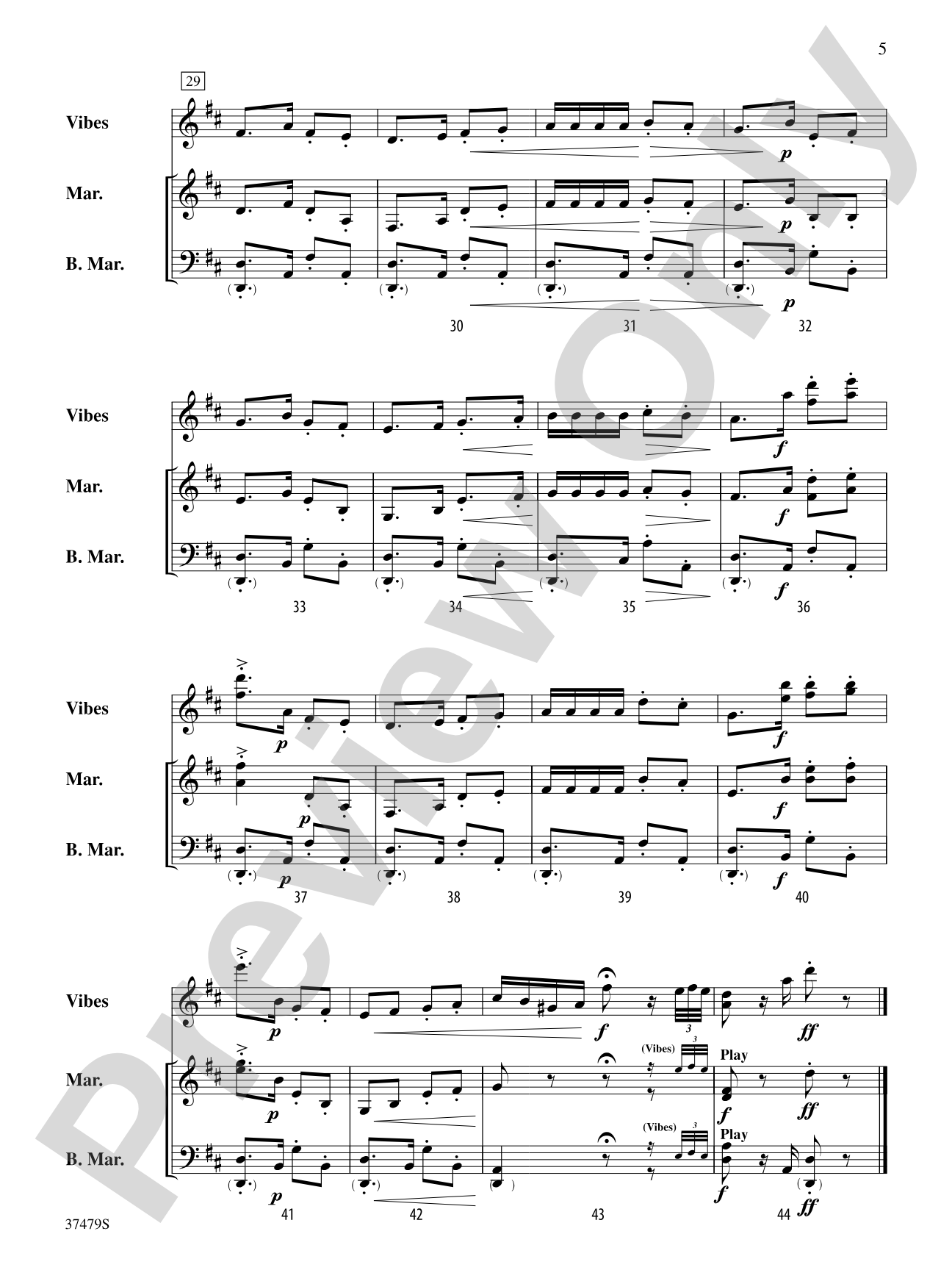
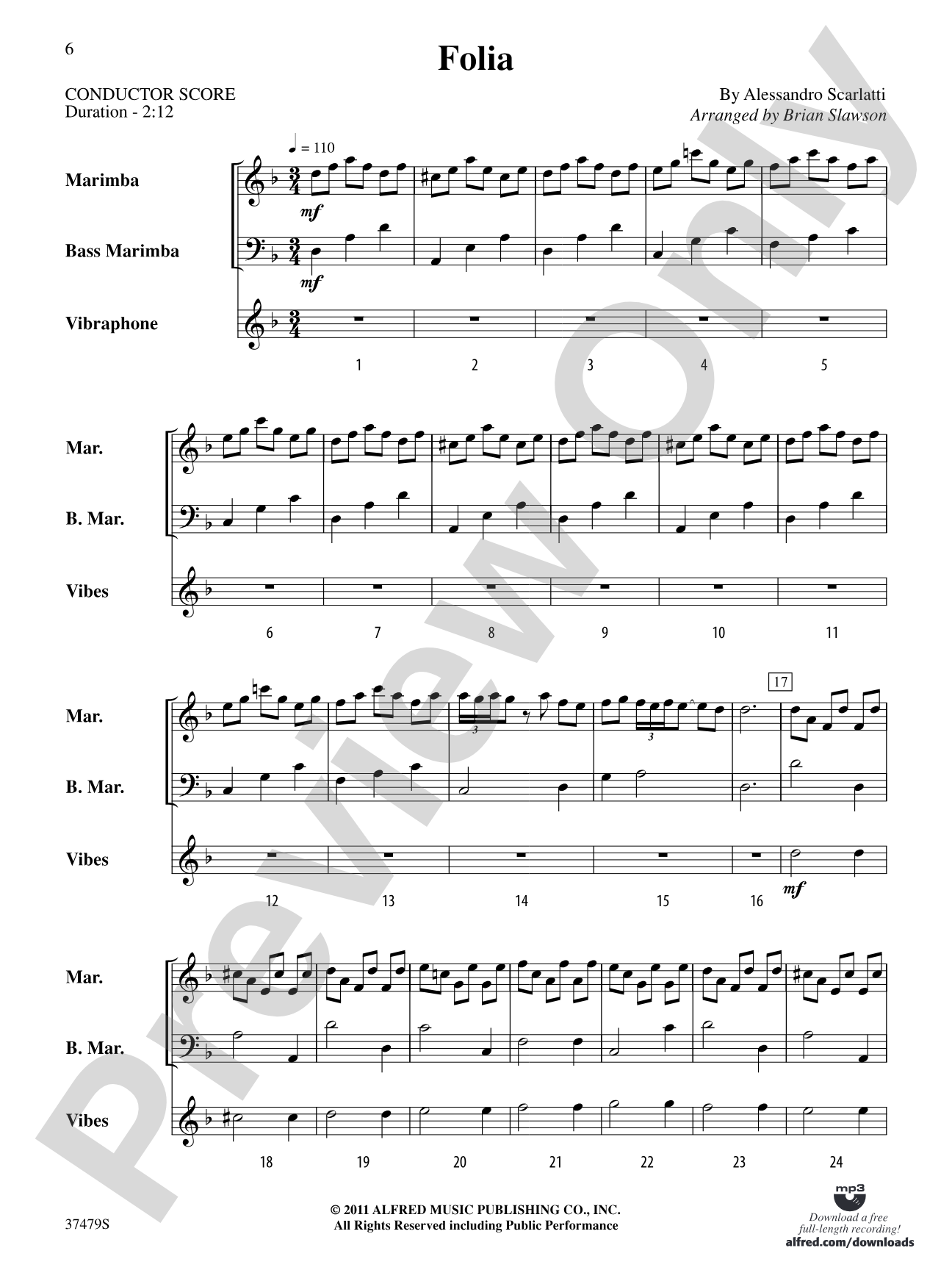
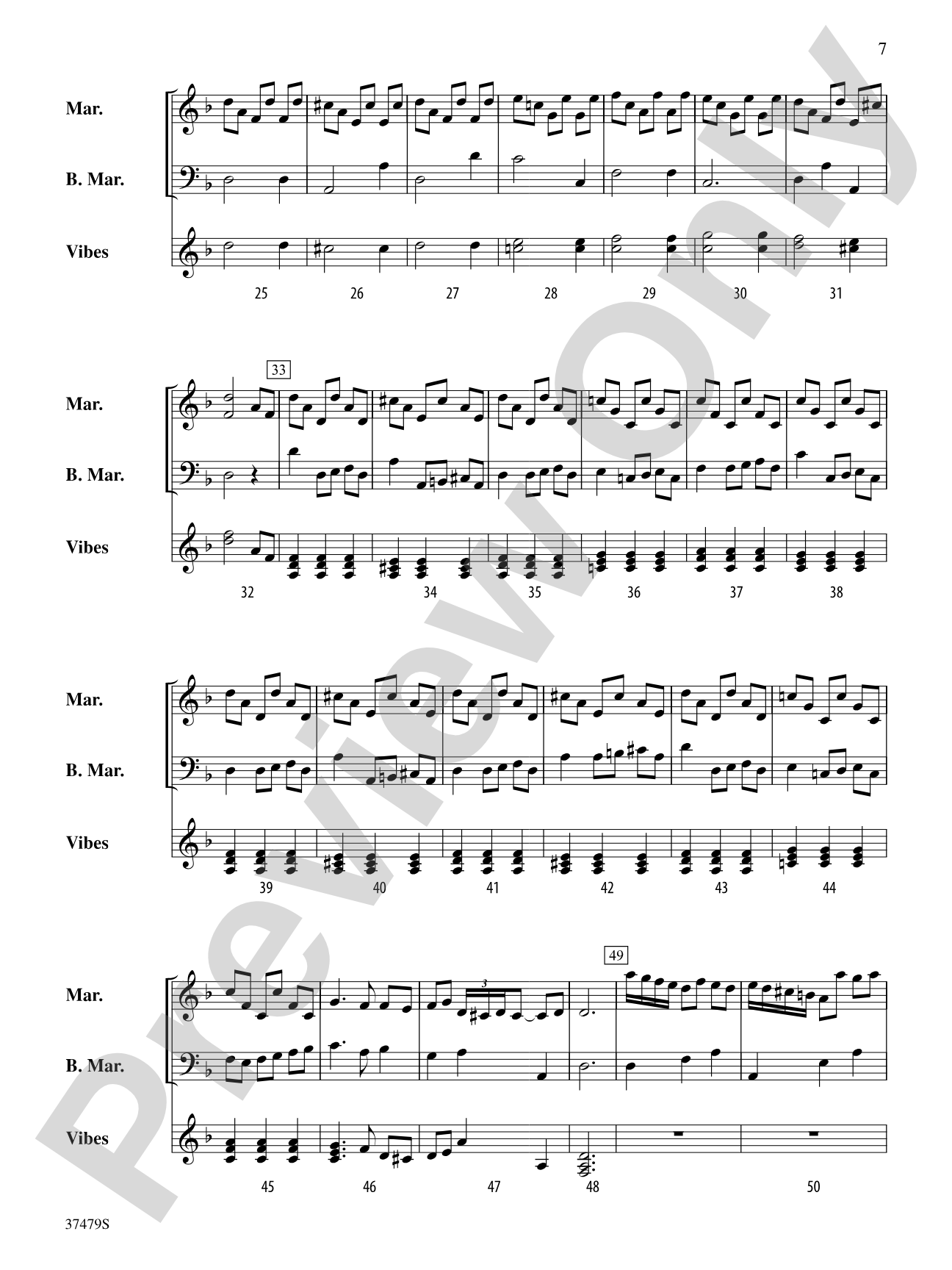
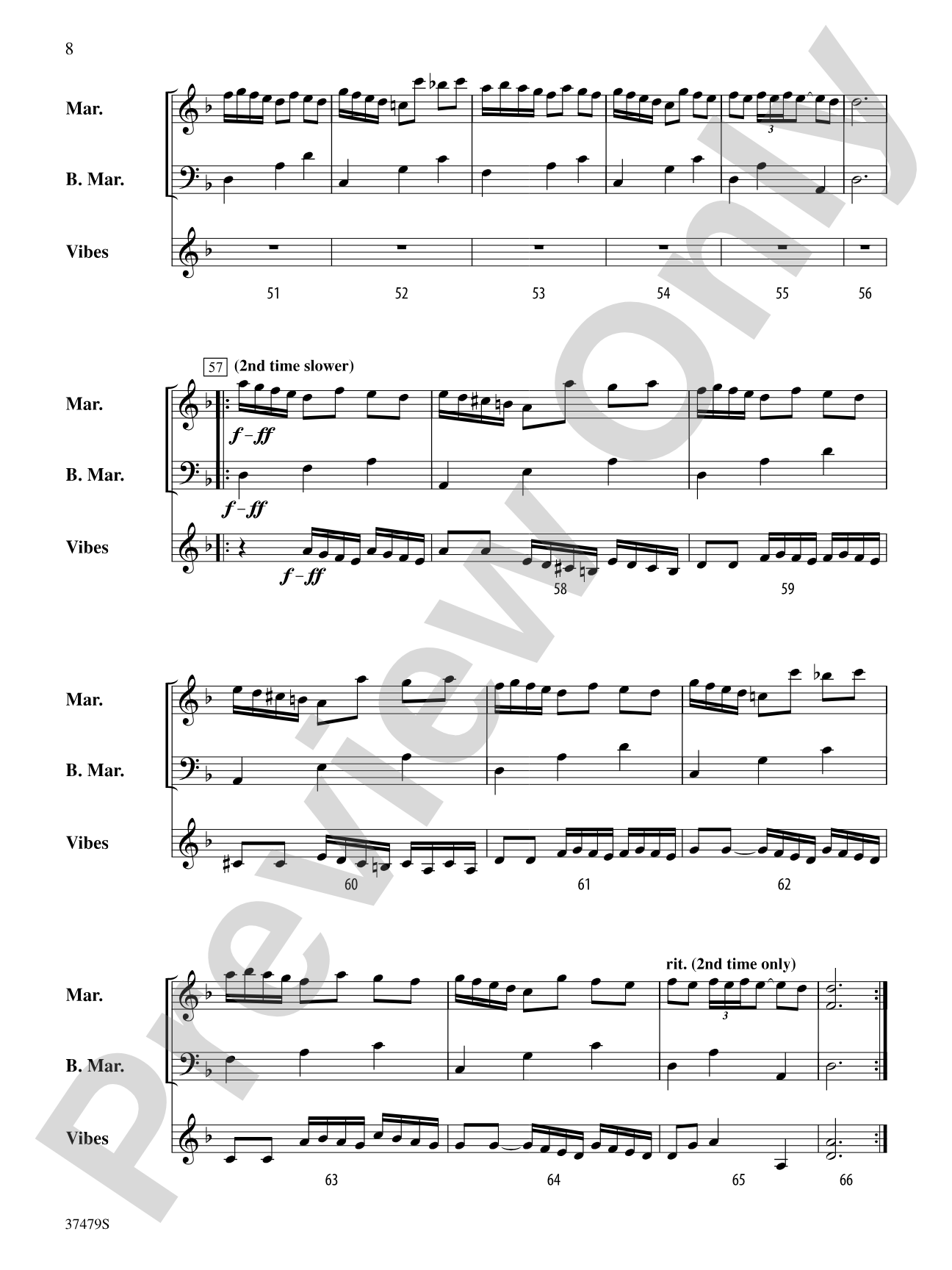
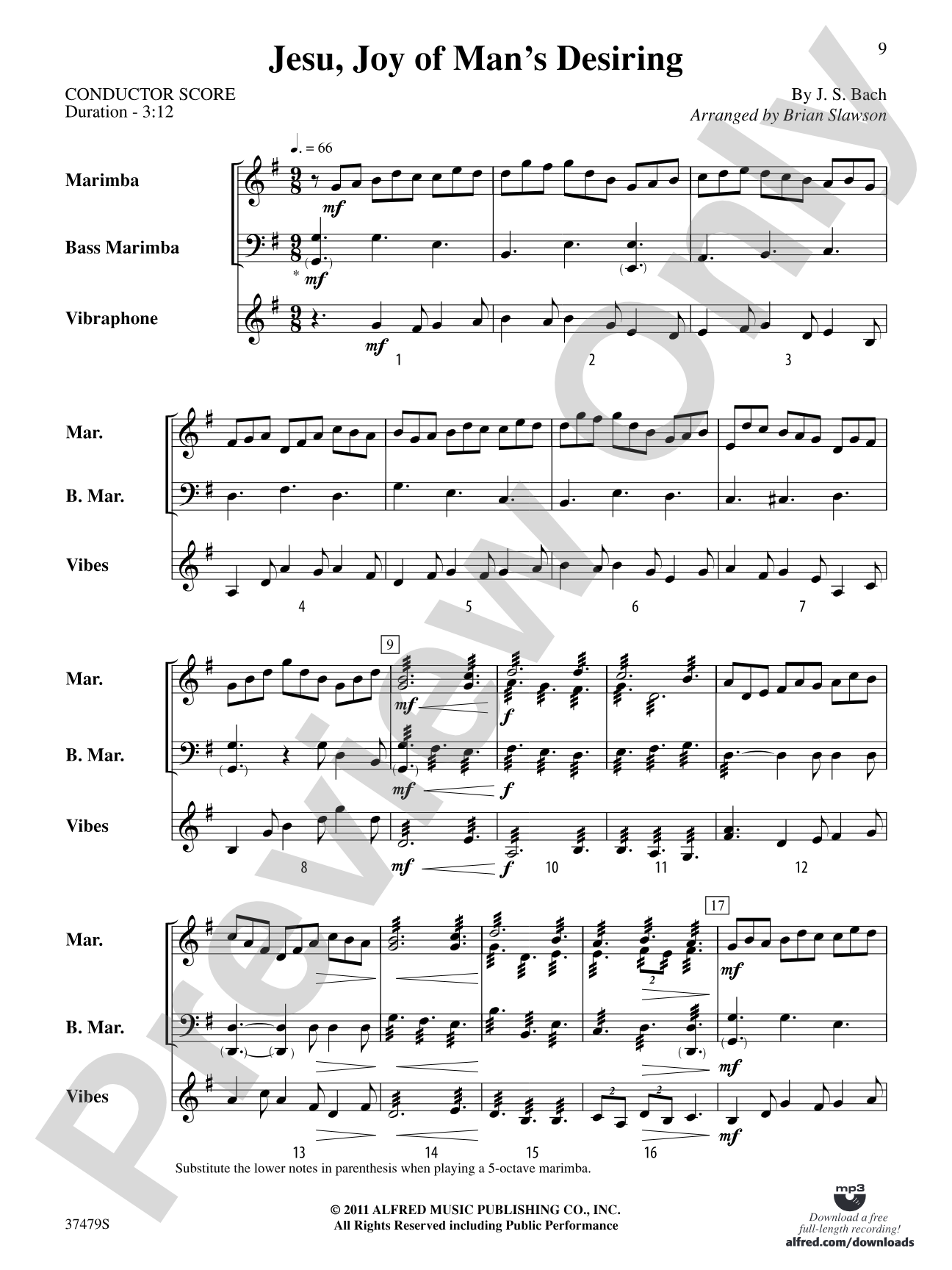
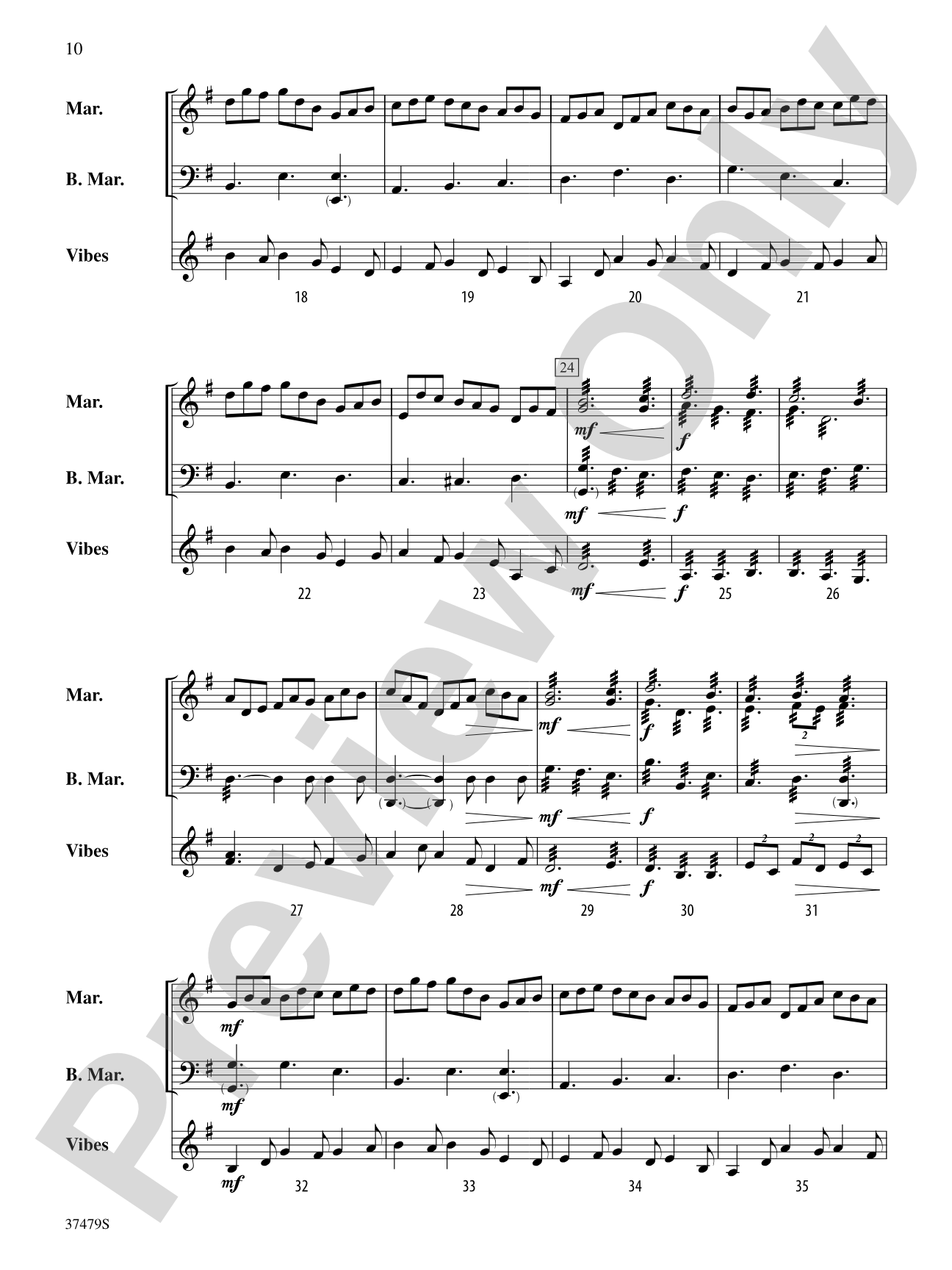
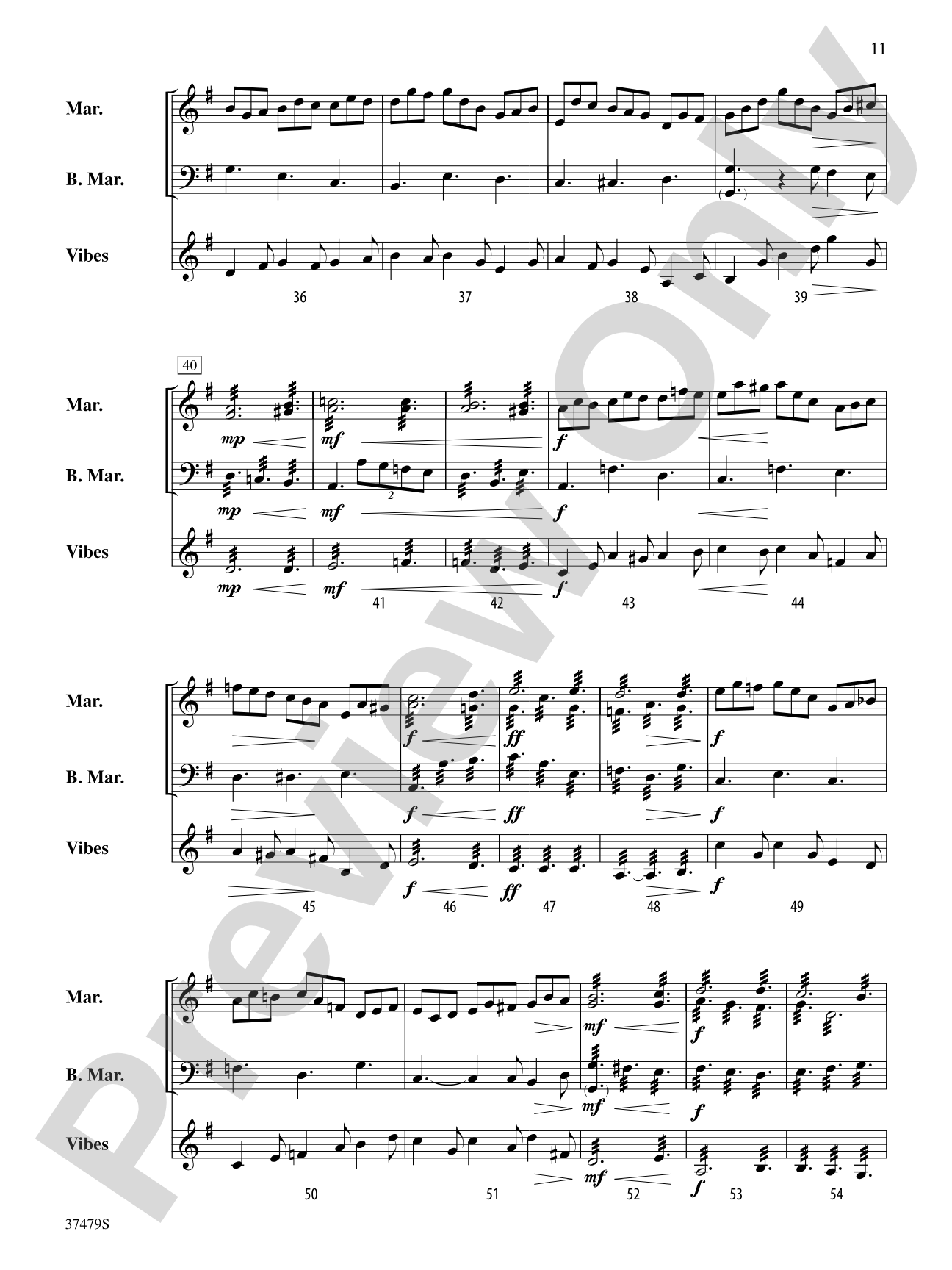
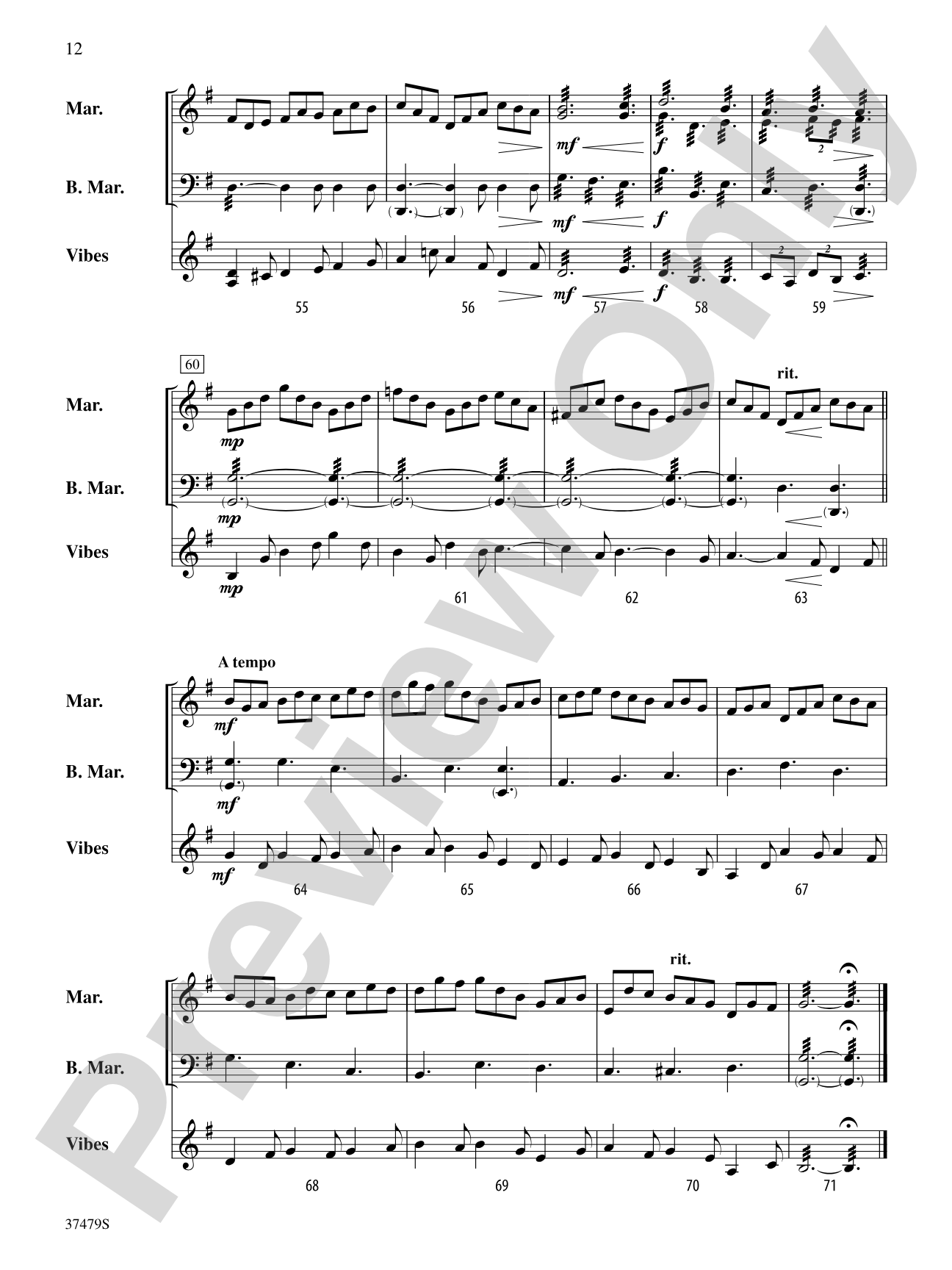
Classic Mallet Trios contains four classics arranged for marimba (two players) and vibraphone. Bizet's delightful "Habanera" from Carmen and J. S. Bach's soothing "Jesu, Joy of Man's Desiring" are two of music's most revered masterpieces. In addition, Handel's "Adagio" and A. Scarlatti's rhythmic "Folia" provide challenging contrasts in styles for percussionists. Wonderfully suited for solo and ensemble applications, these versatile gems will also thrill audiences in concert settings.
"This collection of tasteful arrangements would be good for high school solo and ensemble festivals, concert prelude or lobby music, or even useful for more advanced percussionists looking for accessible gigging or background music."
-Josh Gottry, Percussive Notes


"This collection of tasteful arrangements would be good for high school solo and ensemble festivals, concert prelude or lobby music, or even useful for more advanced percussionists looking for accessible gigging or background music."
-Josh Gottry, Percussive Notes
Don't just read it, hear it, play along with it, and watch your students grow with it. In MakeMusic Cloud, Classic Mallet Trios: Mallet Instrument Book comes alive with professional accompaniment, adjustable tempo, and built-in practice tools that turn solo practice into real progress.
Open in the Player
Jump straight in and assign it today.
Start Your Free Trial
Open this title and explore the full library in minutes.
Sample Audio
1
Classic Mallet Trios - Folia
--:--
2
Classic Mallet Trios - Habanera
--:--
3
Classic Mallet Trios - Handel Adagio
--:--
4
Classic Mallet Trios - Jesu Joy of Man's Desiring
--:--
Classic Mallet Trios - Folia
0:00
0:00
Sample Video
No sample videos found.
Additional Details
Series:
Alfred’s Percussion Performance Series
Publisher:
Alfred Music
Page Count:
12
SKU:
00-PK-0004871
More about this title
About the Composer: Brian Slawson
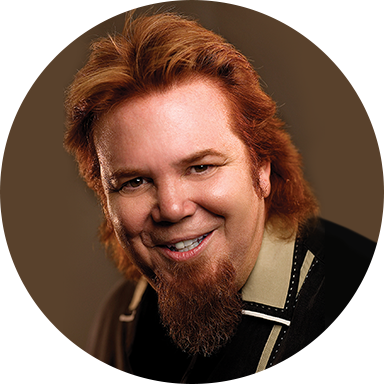
Brian Slawson's career bridges classical training and genre-crossing artistry. After earning his education at Juilliard, he built a reputation as an innovative percussionist through Grammy-nominated recordings, national television appearances, and collaborations with luminaries spanning from Leonard Bernstein and Aaron Copland to Stevie Ray Vaughan and Jessye Norman. His debut album Bach On Wood reached Billboard's Top 10 and introduced countless listeners to classical music through percussion.
Beyond performance, Slawson has shaped music education as a featured artist in major curriculum programs and a principal timpanist with the Brevard Symphony Orchestra. His multimedia production company has created music for film and television, while his endorsements with Ludwig-Musser, Zildjian, and Vic Firth reflect his standing within the percussion community. Lionel Hampton once called him one of the finest percussionists of his generation.
Why we love this
These arrangements strike an uncommon balance between musical substance and practical accessibility. Rather than oversimplifying beloved masterworks, Slawson preserves their harmonic and melodic integrity while distributing the material across two marimbas and vibraphone in ways that sound idiomatic to each instrument. The pairing of contrasting styles (Baroque counterpoint alongside operatic melodrama and Renaissance dance rhythms) gives percussion ensembles genuine musical range within a compact format.
What to expect
Opening with Bach's tranquil chorale brings a contemplative elegance to any performance space. The collection then sweeps through operatic drama, baroque formality, and Renaissance rhythmic vitality, each piece announcing its own character without sacrifice to ensemble cohesion. These arrangements feel polished and purposeful rather than transcribed.
Who it's for
High school percussionists preparing for solo and ensemble festivals, advanced percussionists seeking sophisticated repertoire suited to lobby and background music contexts, and percussion ensembles looking for stylistically diverse material that builds musicianship without extreme technical demands.
How to get the most out of it
- Balance the two marimba lines by thinking of them as equals rather than melody and accompaniment. The interplay between parts demands careful listening from both players, especially in Bach's contrapuntal passages where phrases trade between registers.
- Let the vibraphone's shimmer define the ensemble's color without overwhelming it. The motor speed should support ensemble pulse without drawing attention away from the marimba's articulation.
- Approach the Bizet with rhythmic confidence. The habanera rhythm sits comfortably on mallet instruments, but it demands precision from all three players to feel inevitable rather than labored.
- Use dynamic control to shape phrase direction. These pieces reward a singing approach; resist the impulse to treat them as exercises in technical facility.
How to use it
The four pieces work beautifully as a standalone percussion feature in a full concert or as sophisticated prelude music for chamber programming. High school students preparing festival entries will find these especially valuable for building interpretive depth alongside technical facility. Alternatively, select individual pieces to complement other mallet literature on a recital program.
Skills your students will build
- Balancing independent melodic lines between marimba players while maintaining ensemble unity
- Coordinating three different mallet percussion timbres (two marimbas plus vibraphone) toward cohesive sound
- Executing Bach's counterpoint on mallet keyboards
- Shaping legato phrases across the marimba range
- Reading and performing in multiple keys and time signatures across contrasting musical styles