
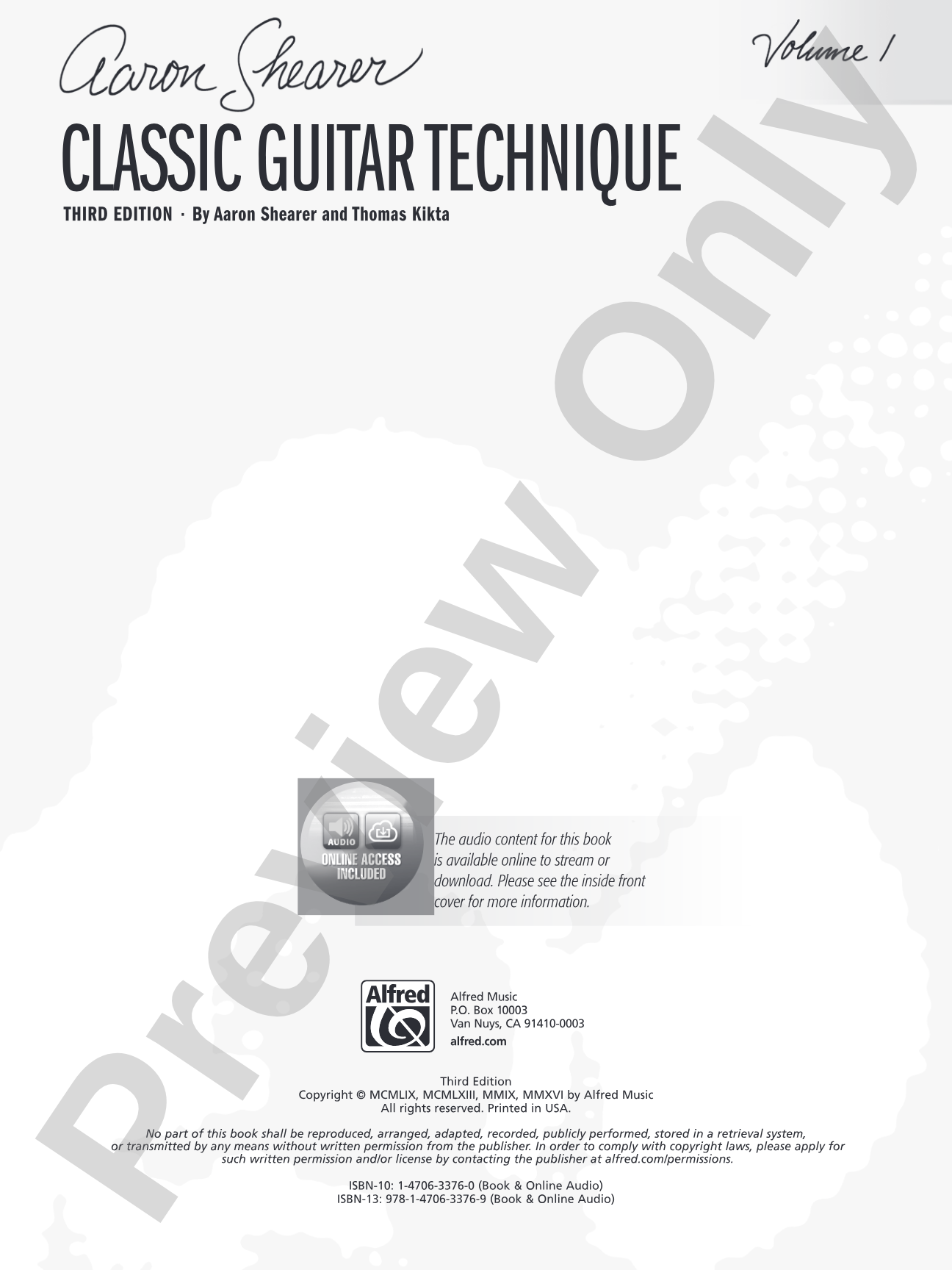
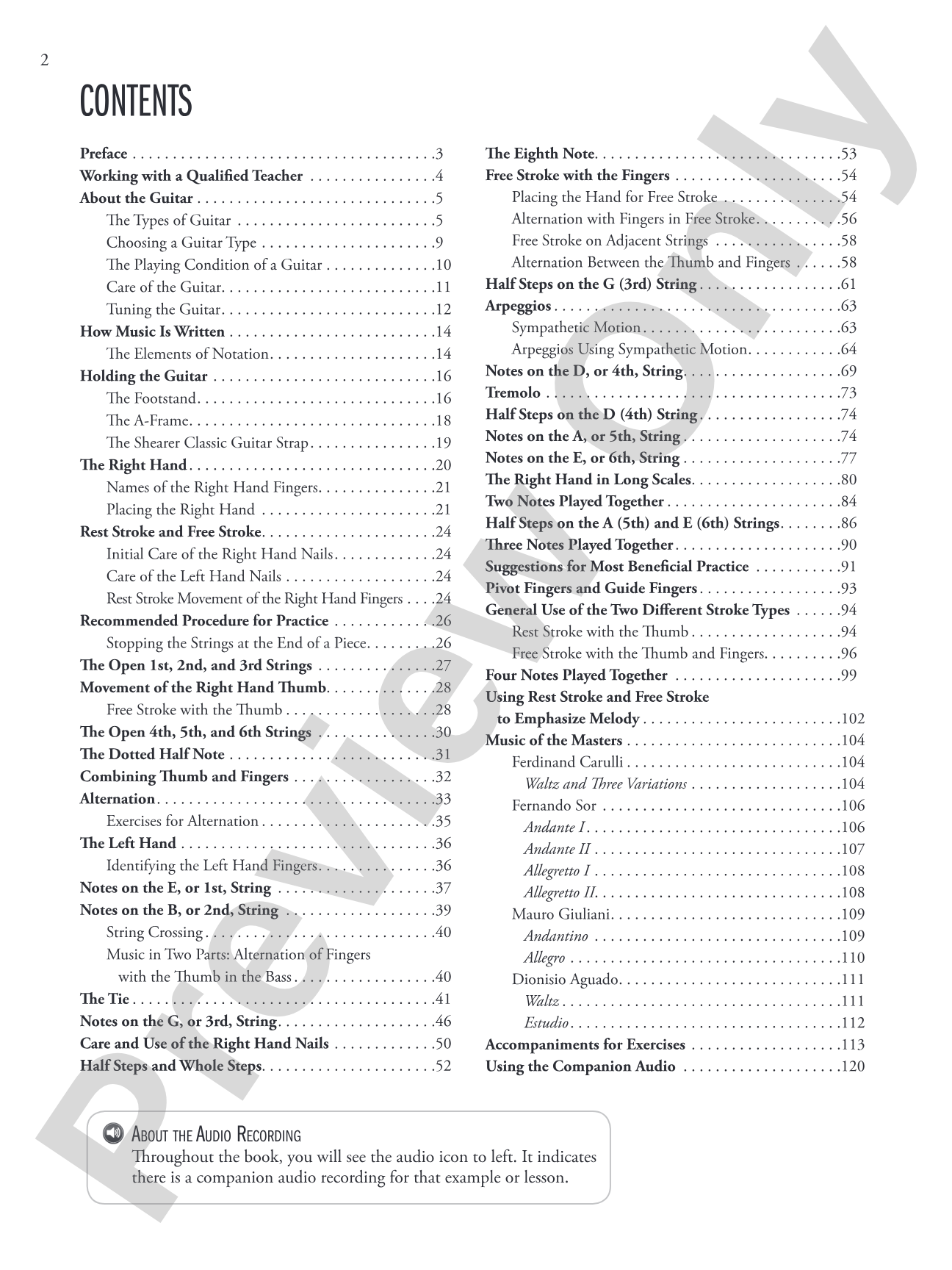

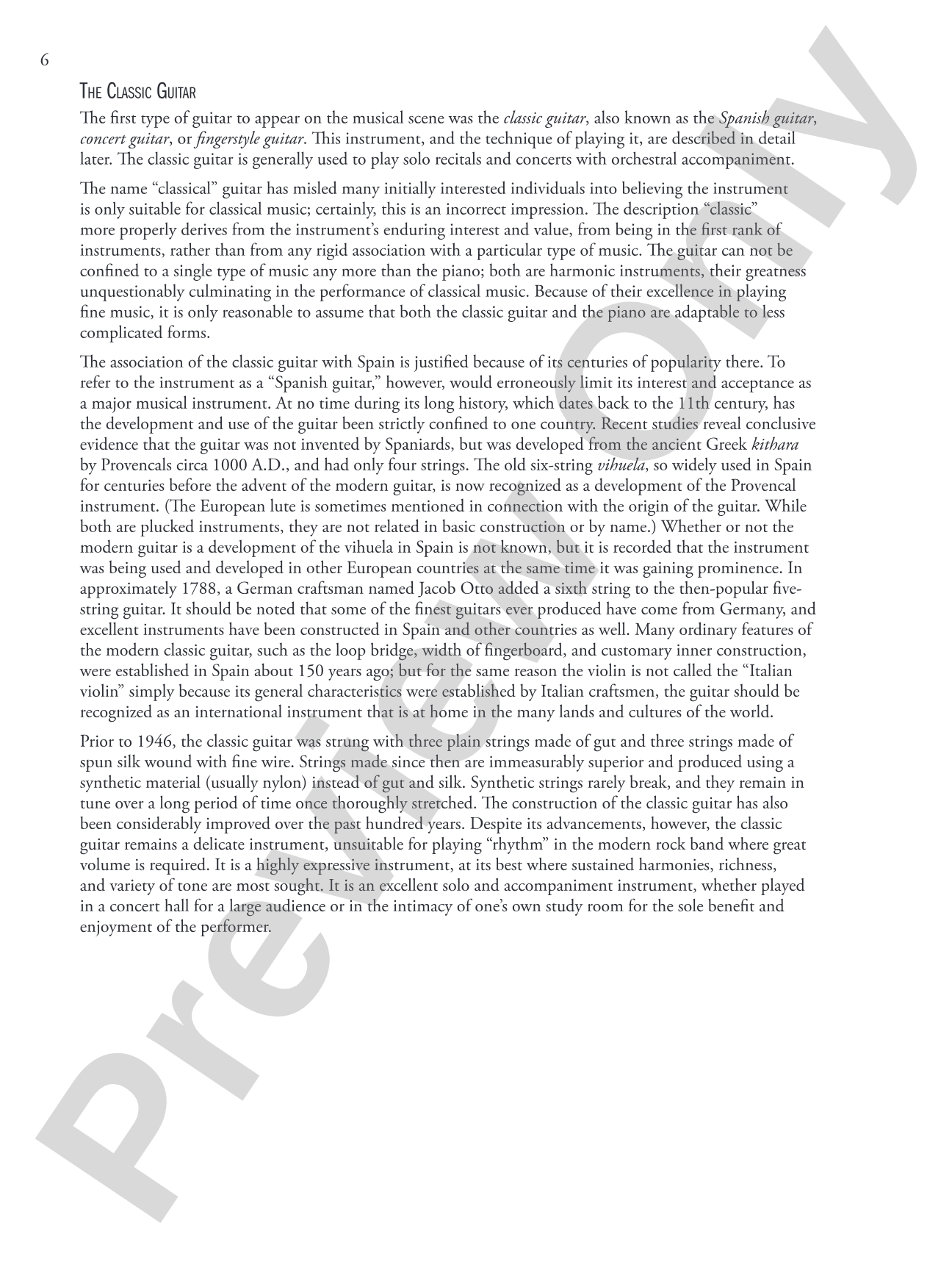
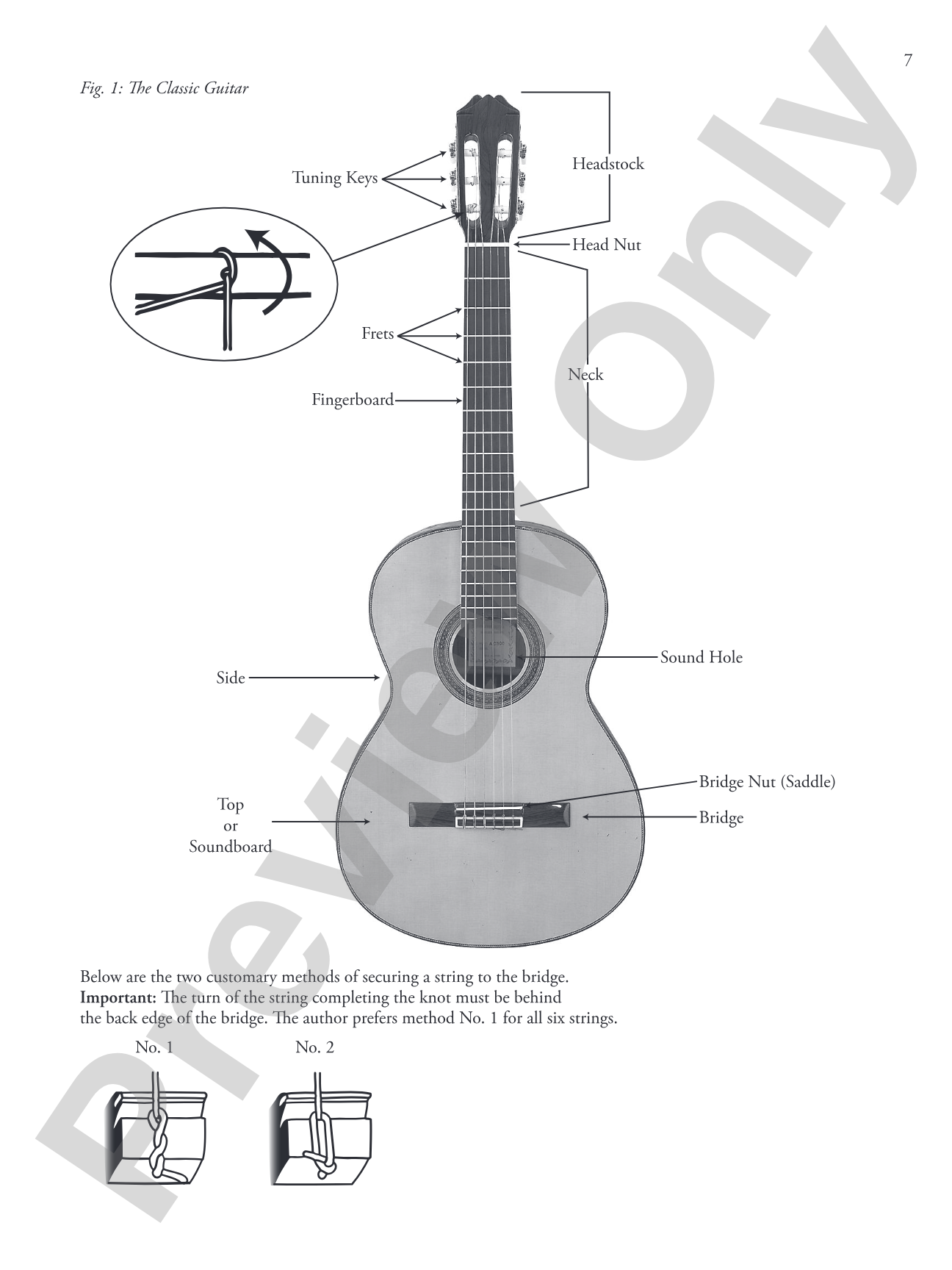
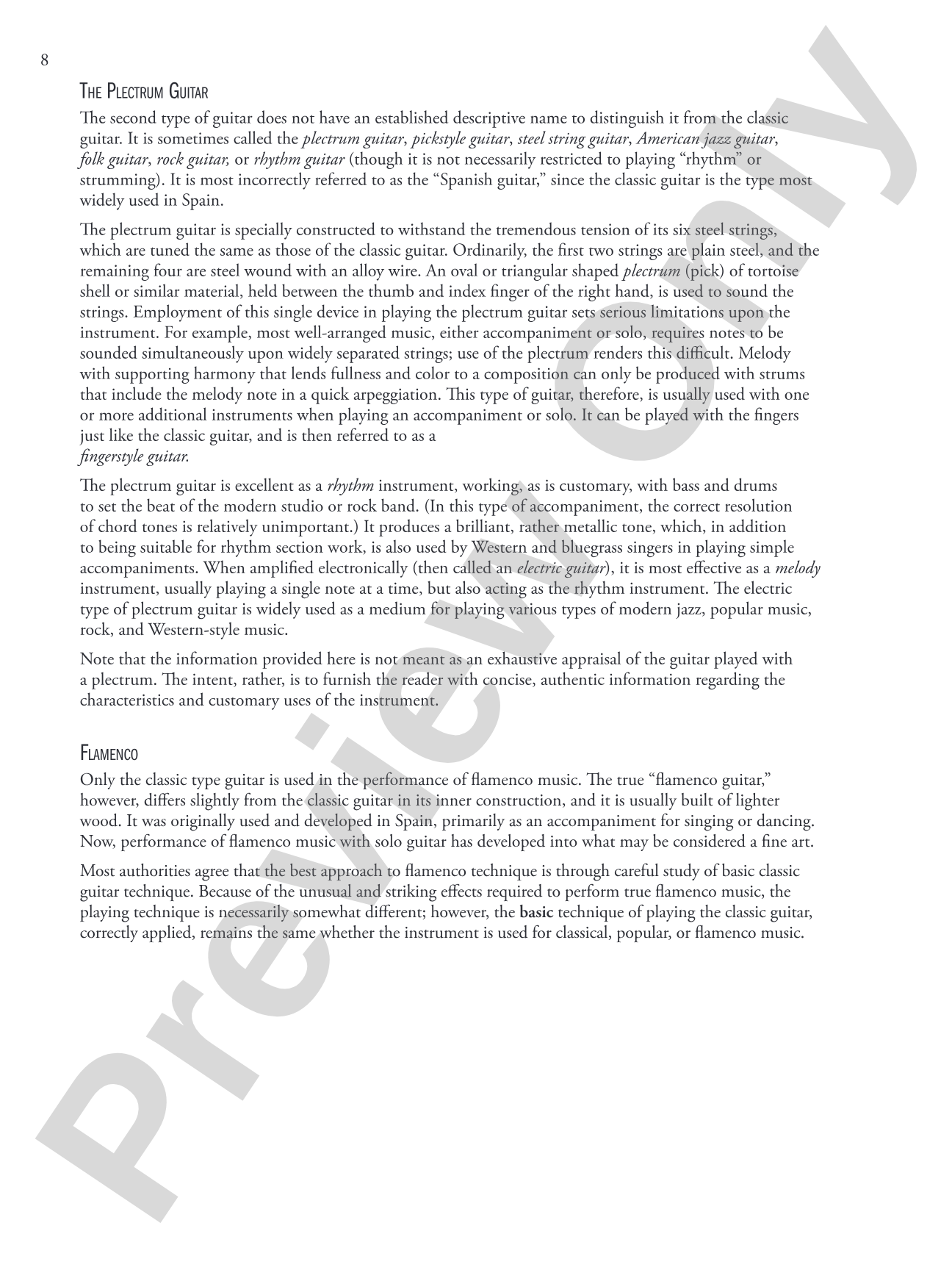
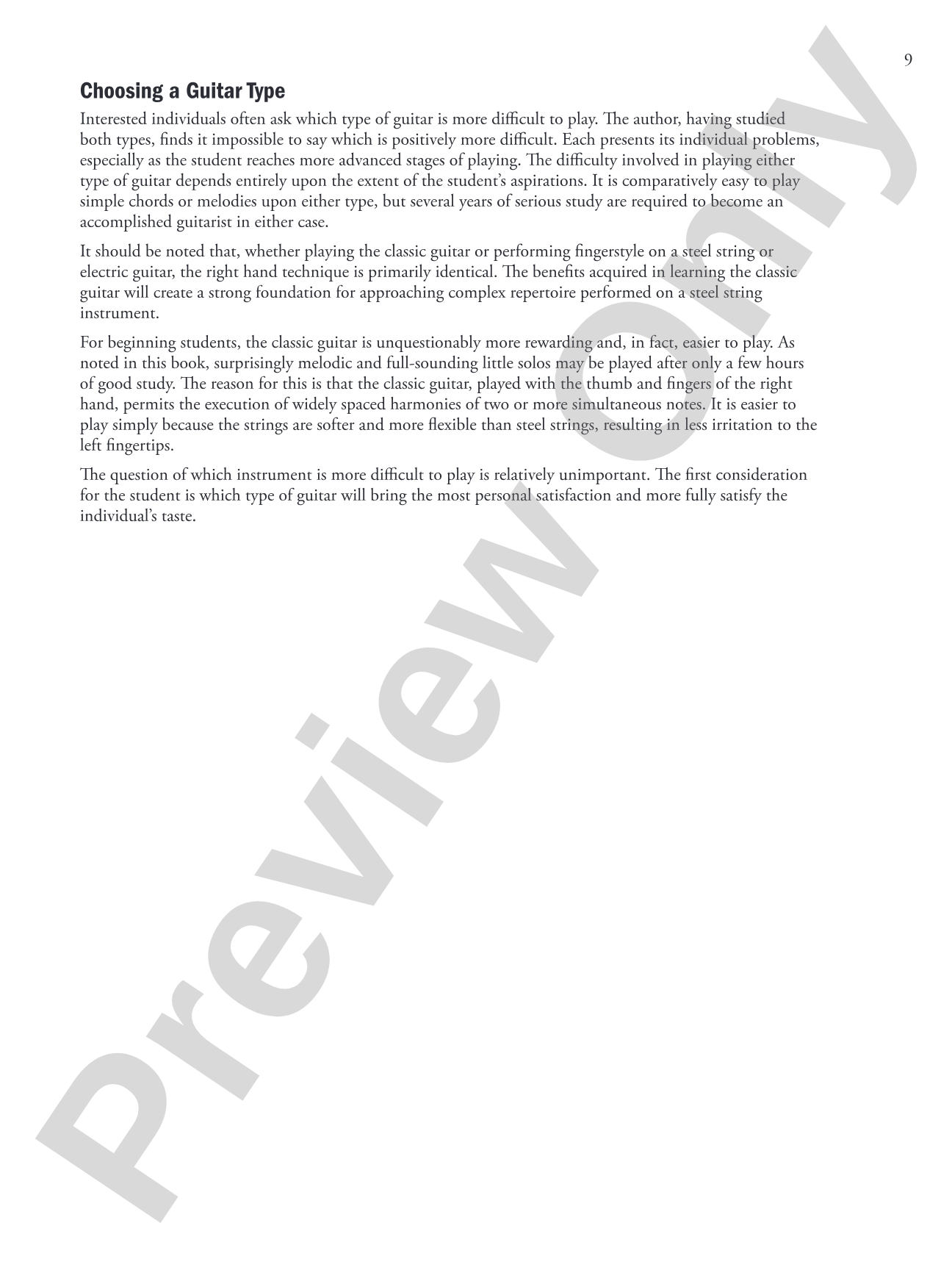
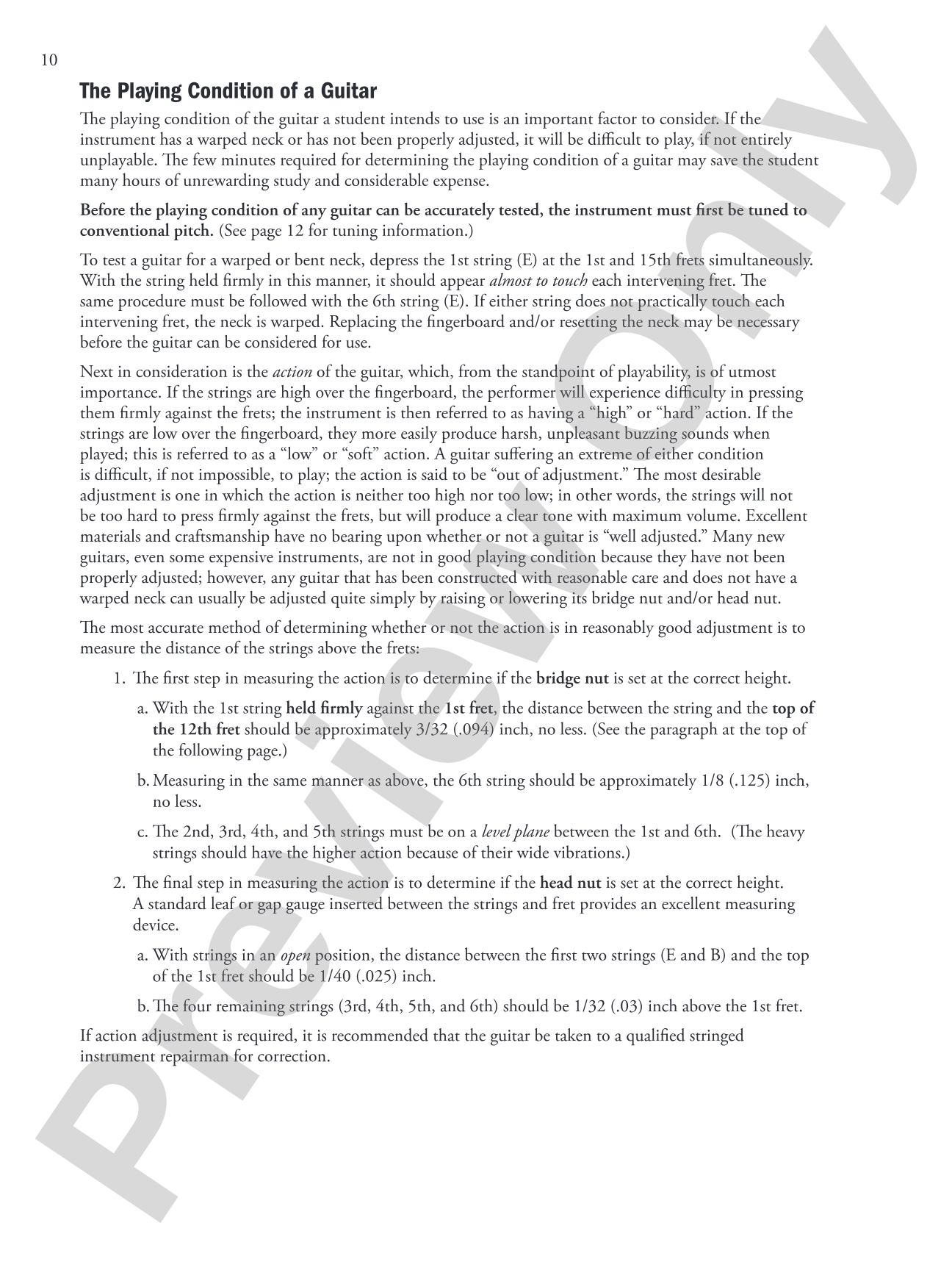
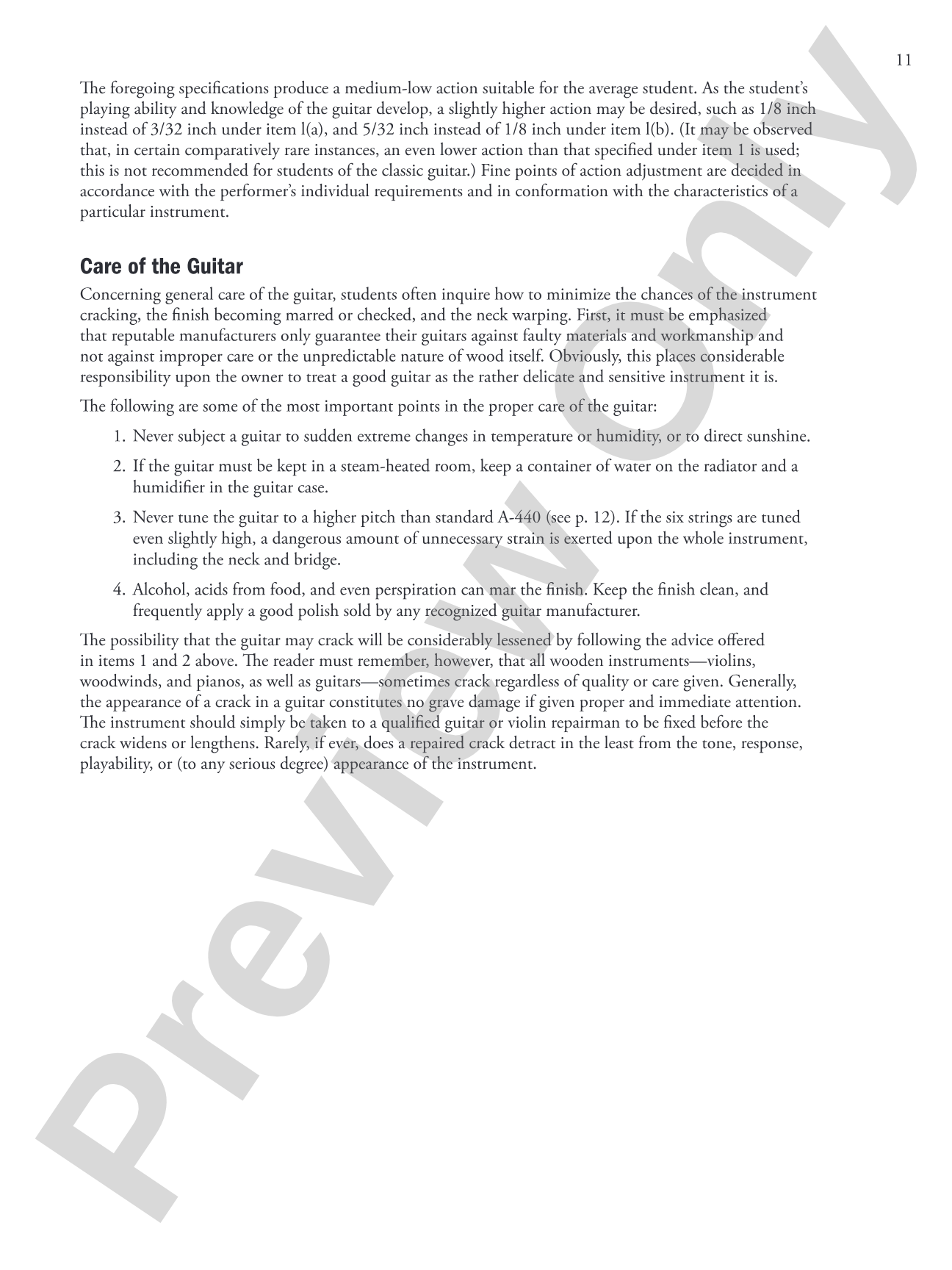
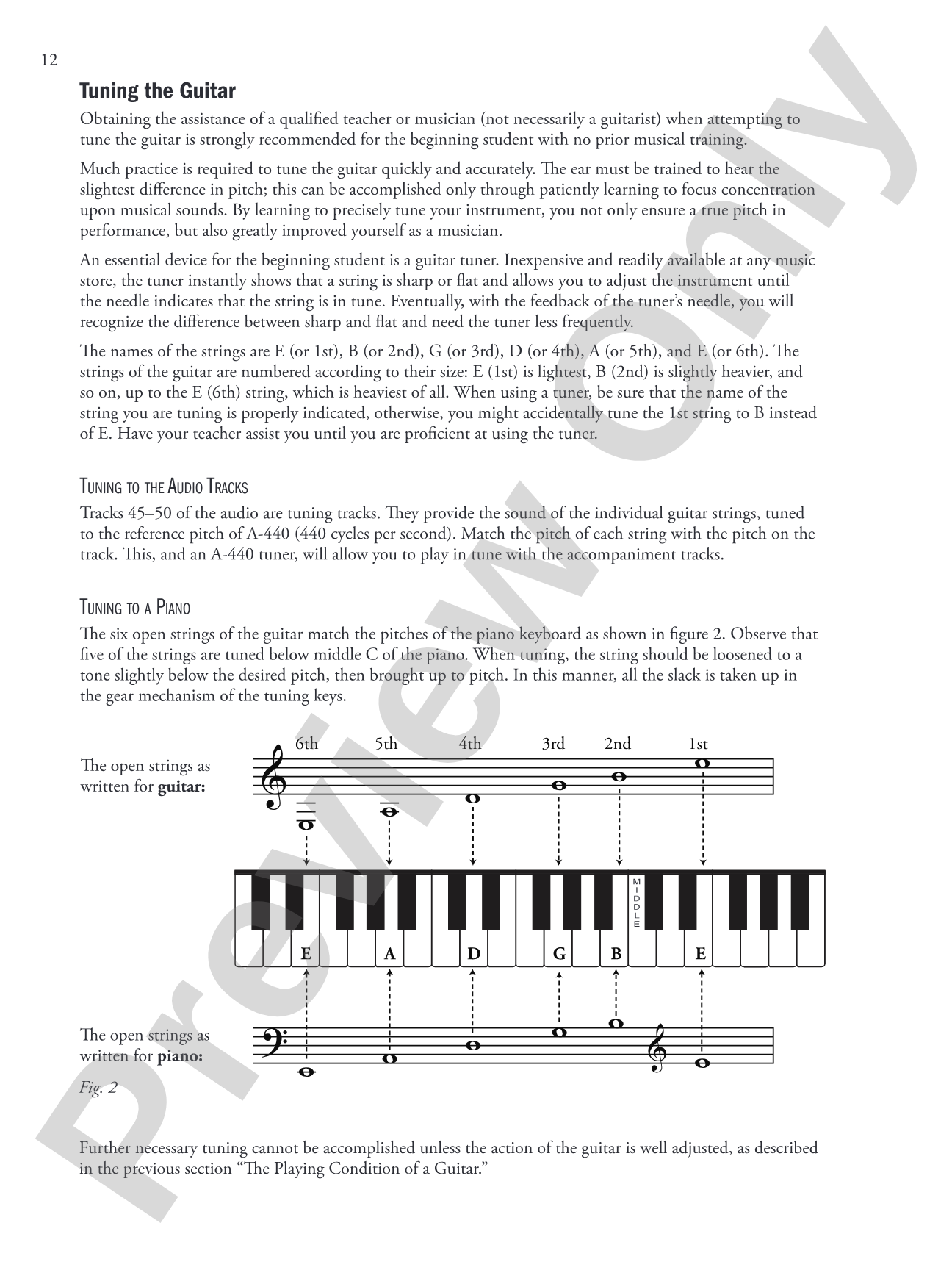
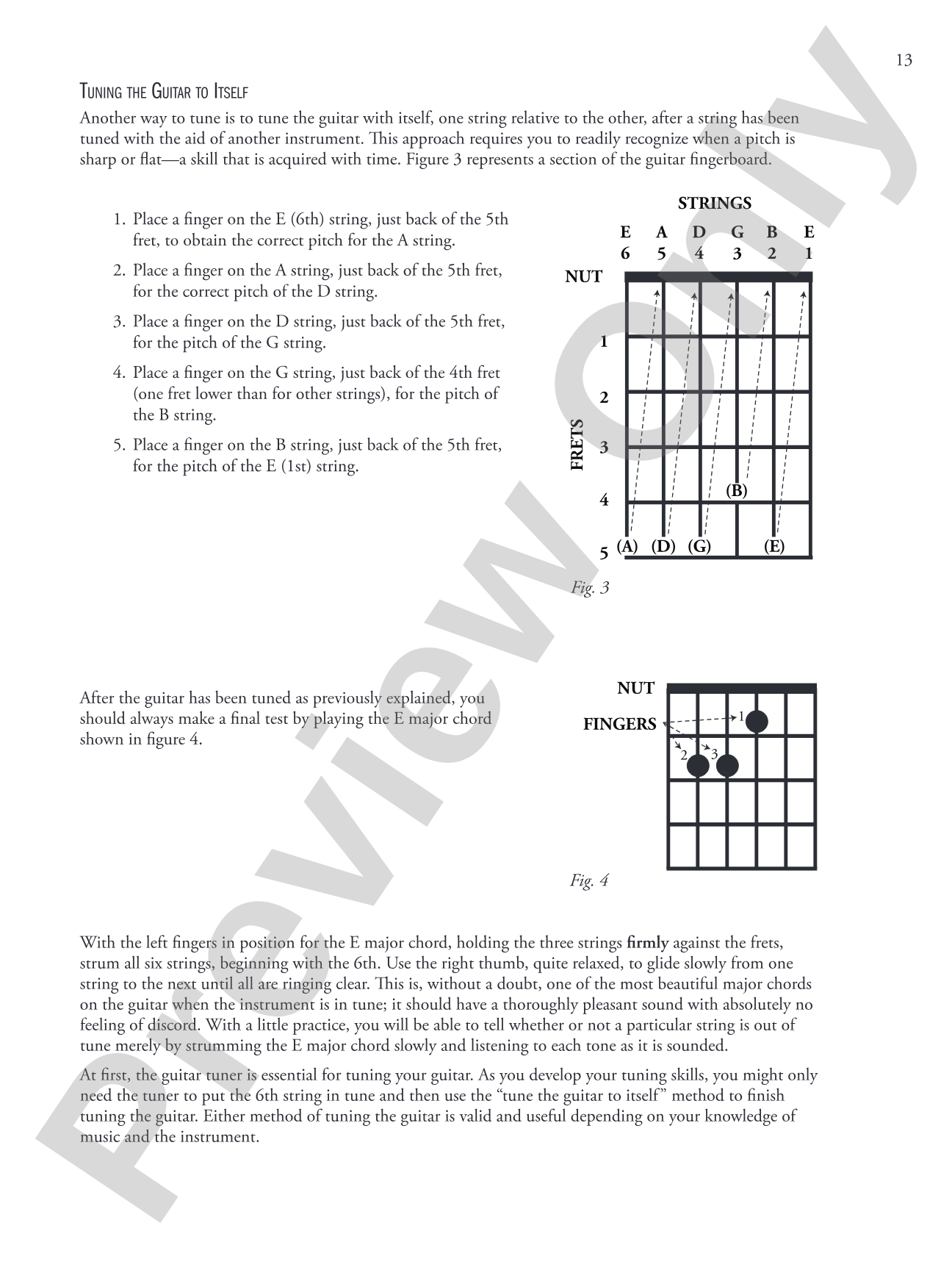
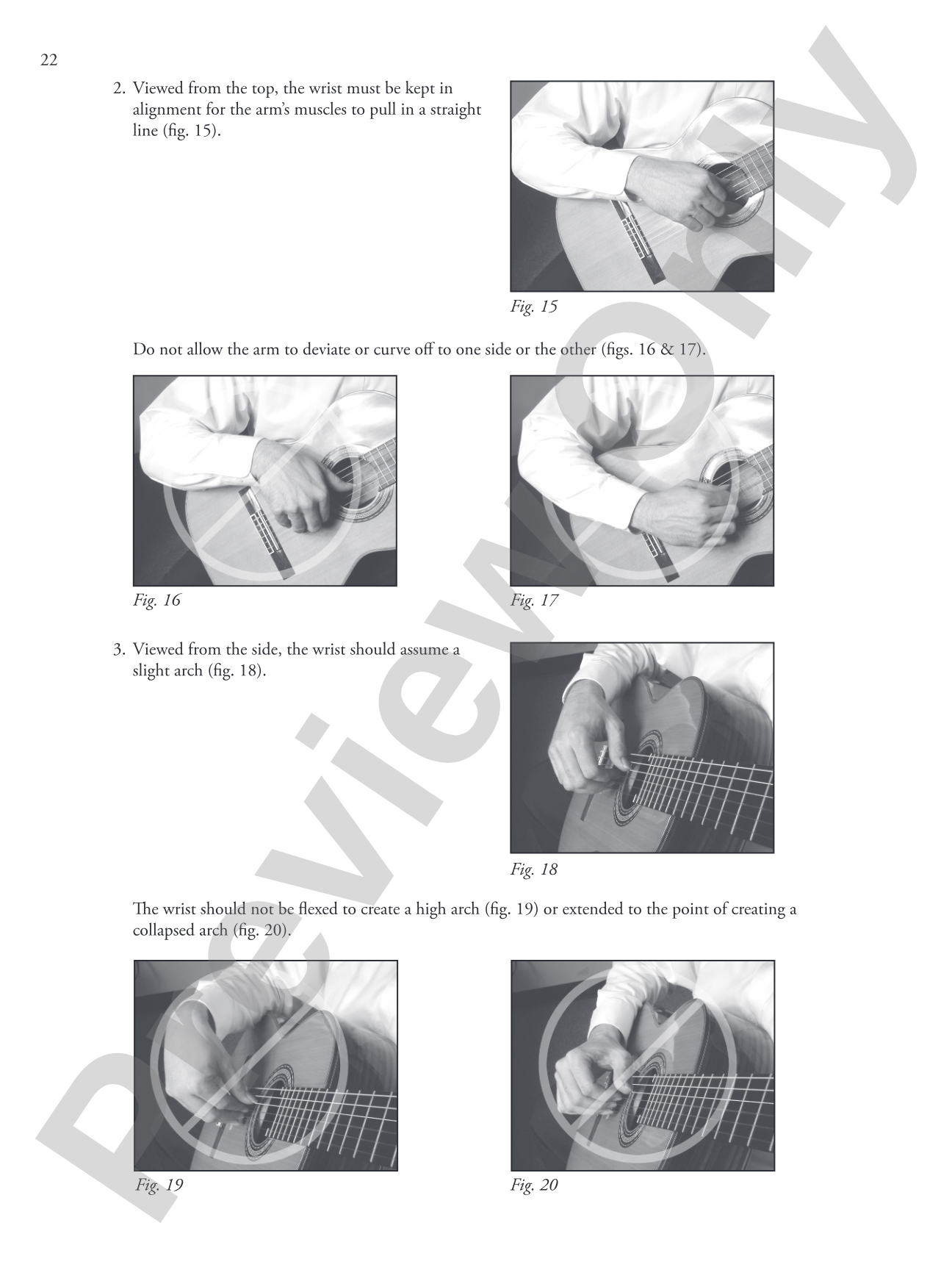
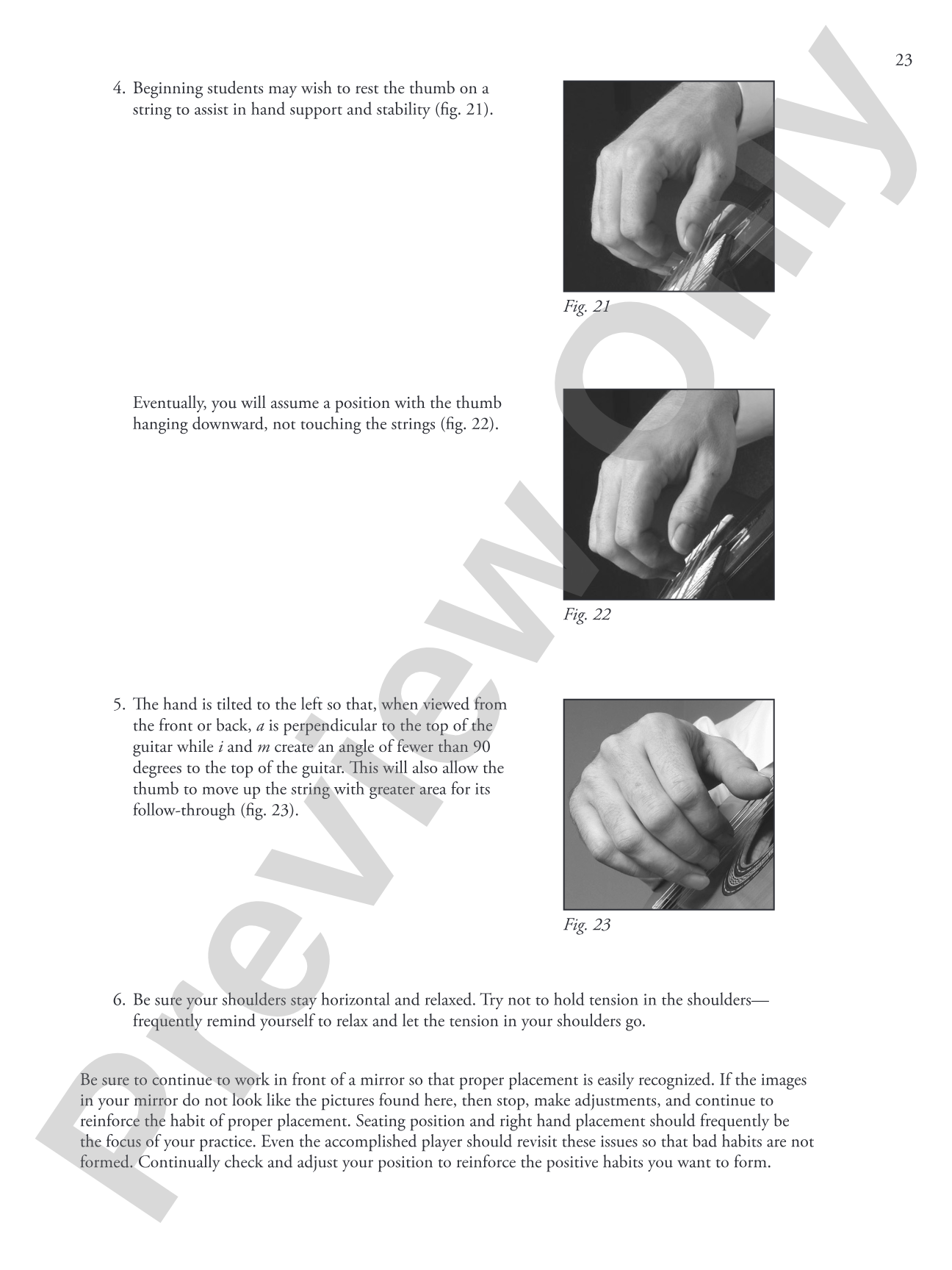
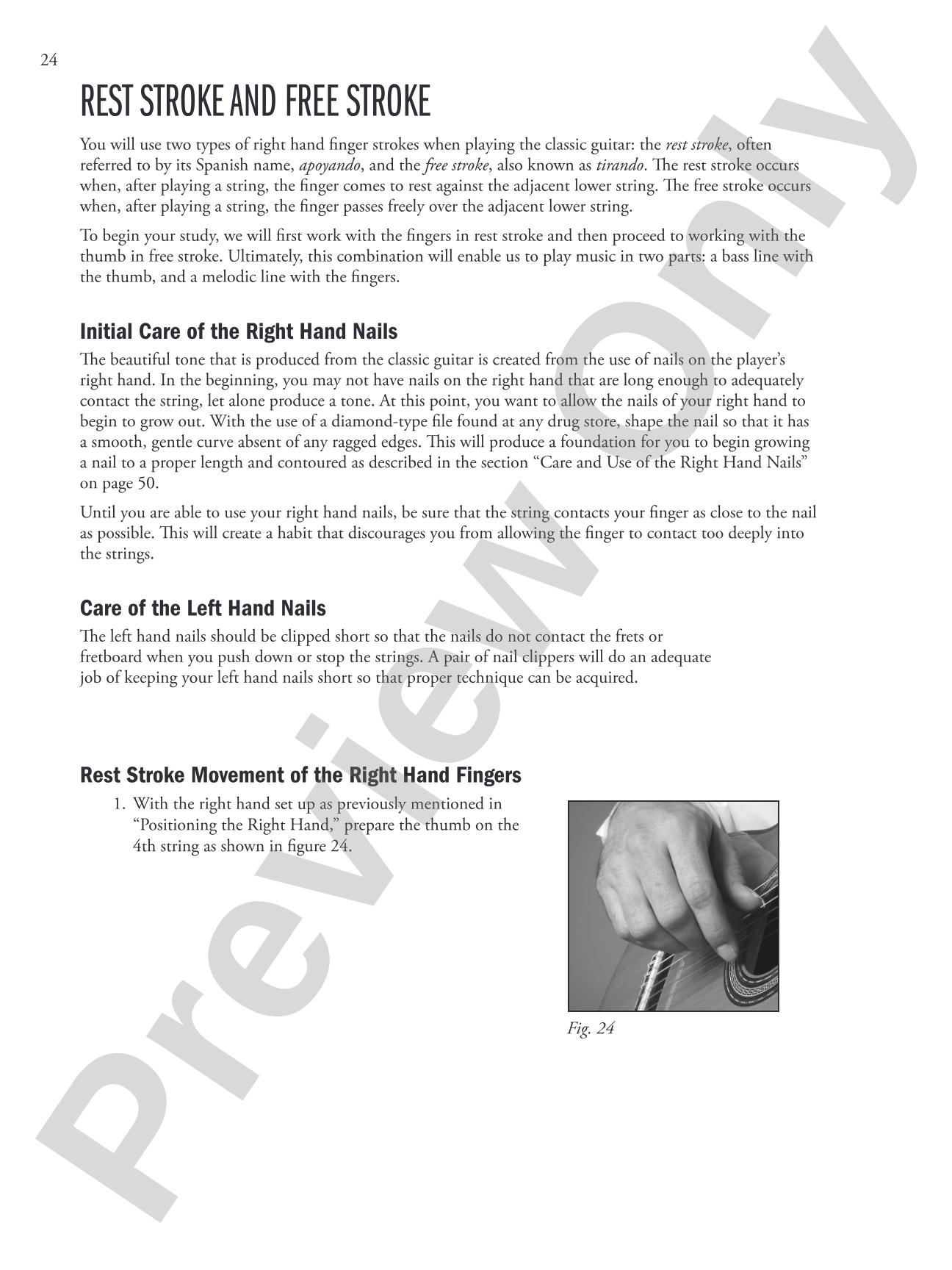

Classic Guitar Technique, Volume 1 (Third Edition)
By Aaron Shearer and Thomas Kikta
Item: 00-PB-0002706
$19.99
Pickup currently not available
Related Items
Classic Guitar Technique, Volume 1 (Third Edition): Guitar Book & Online Audio |
$19.99
|
View |
Description
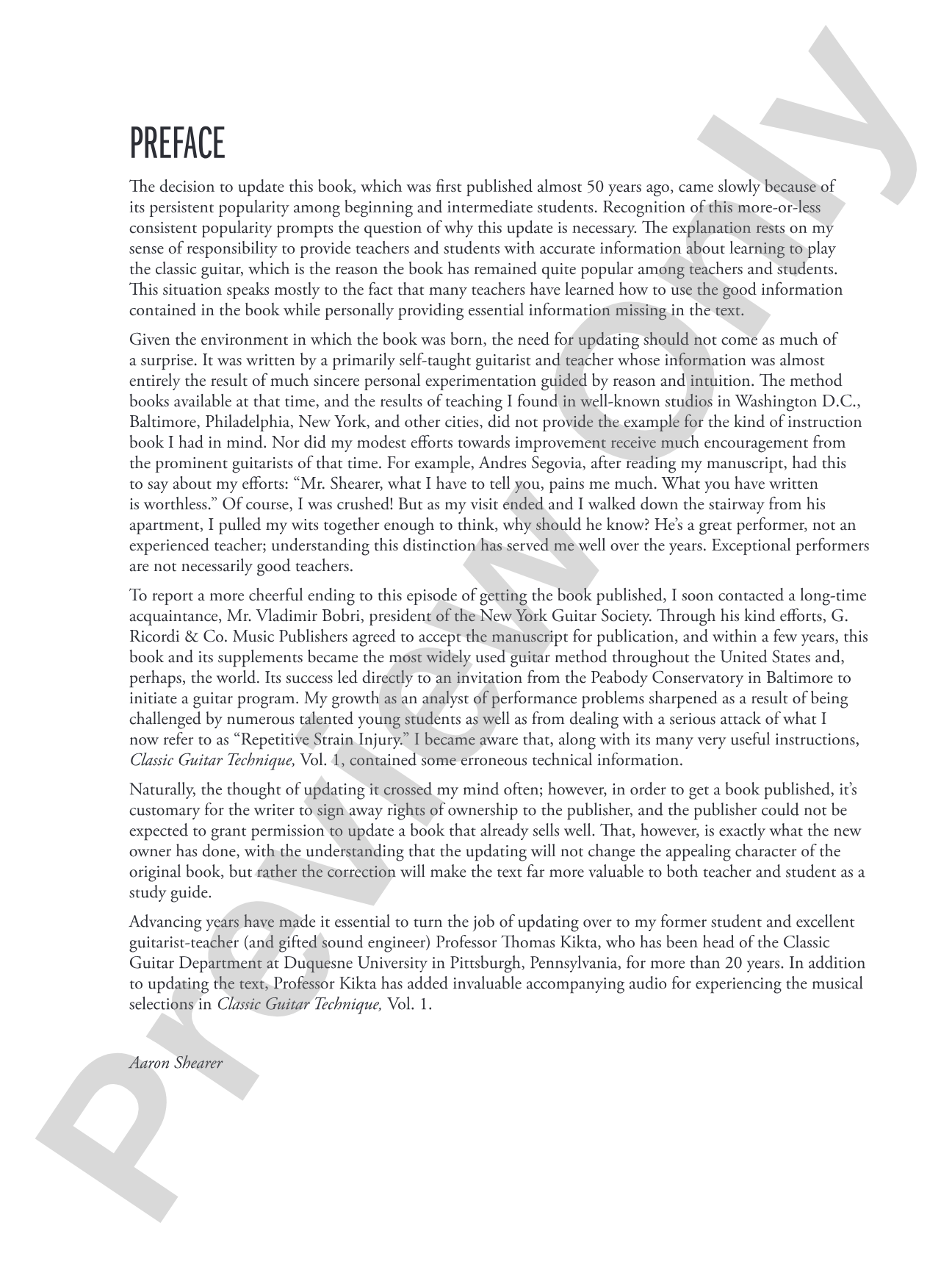
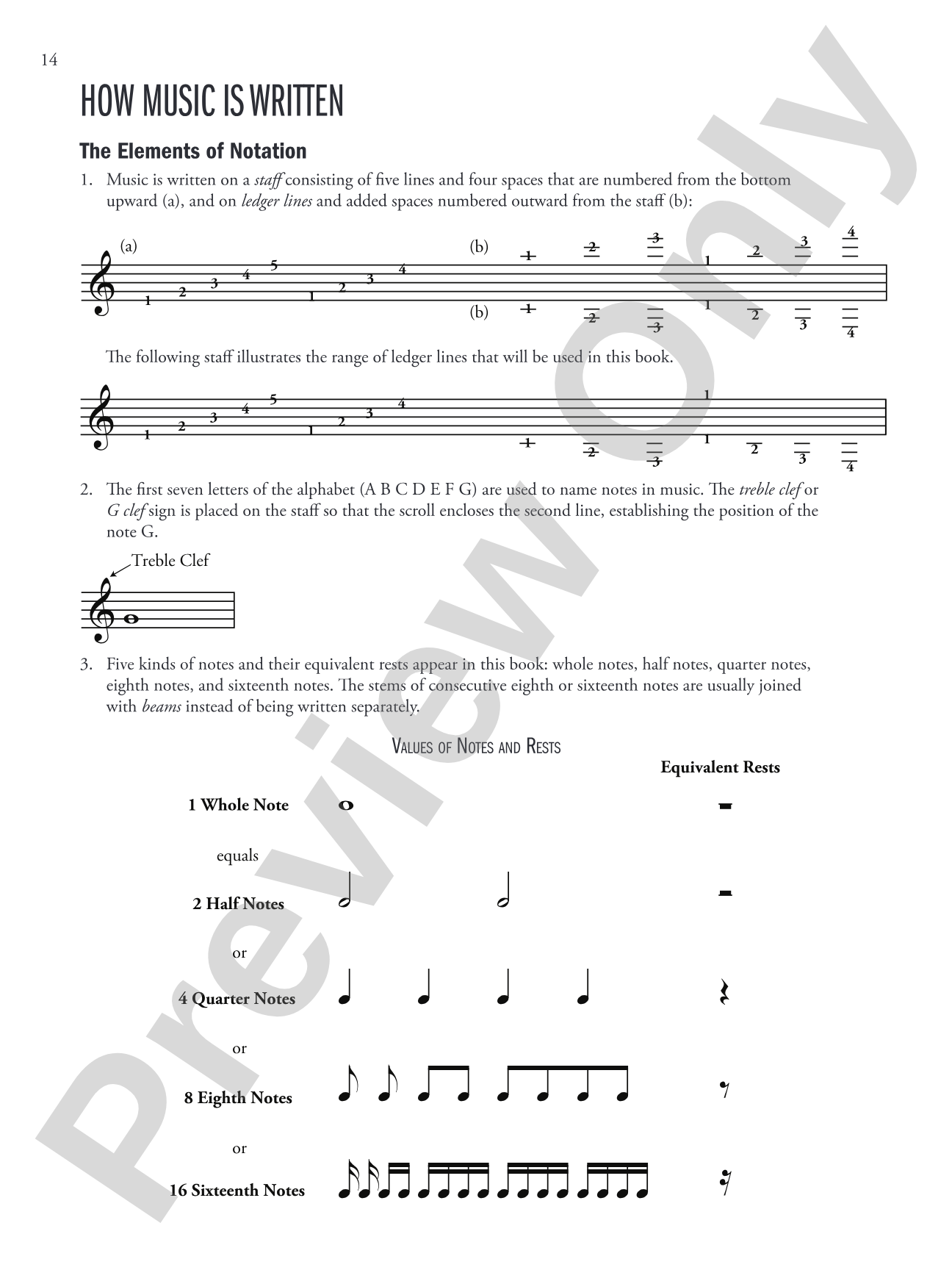
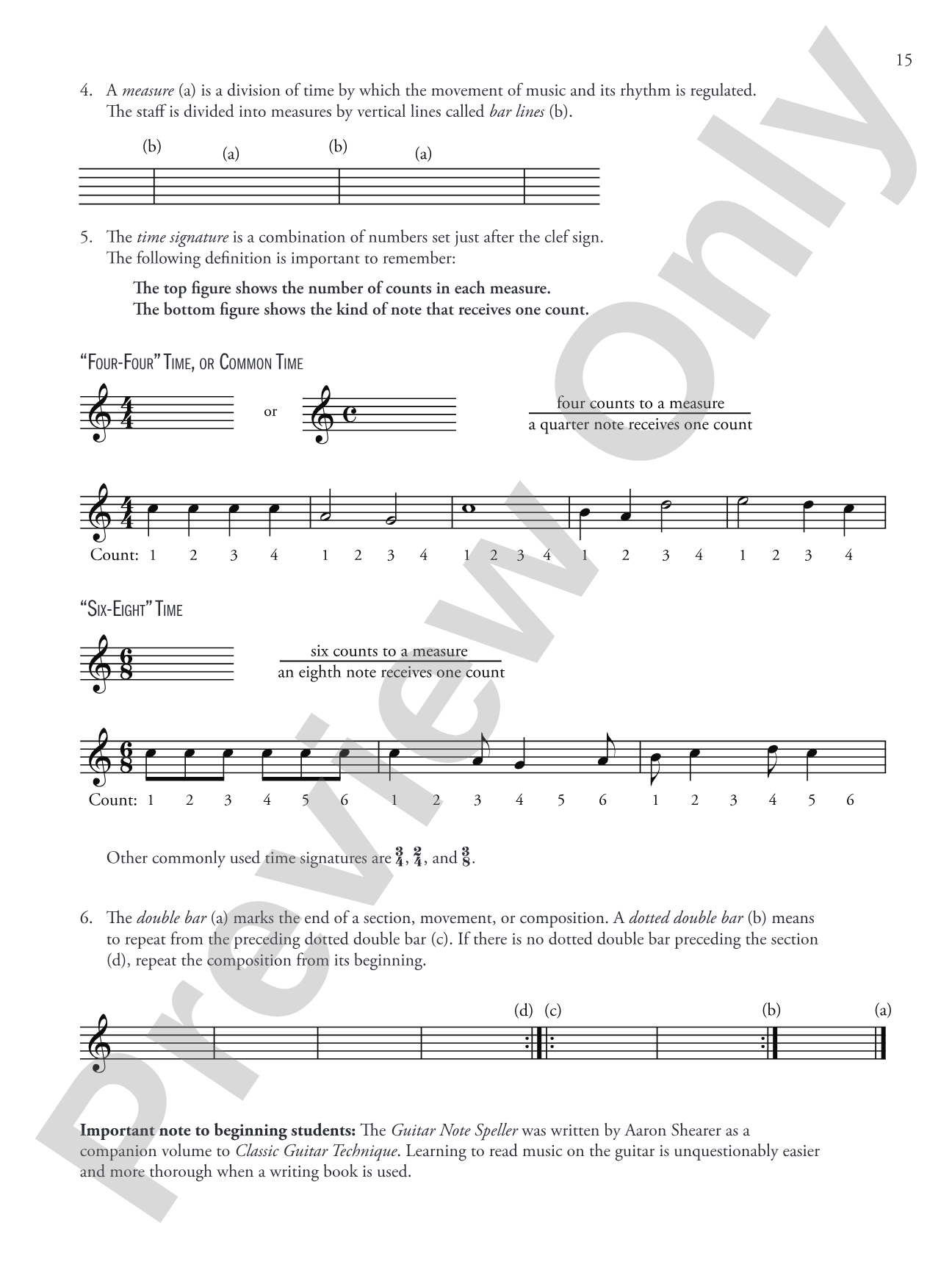
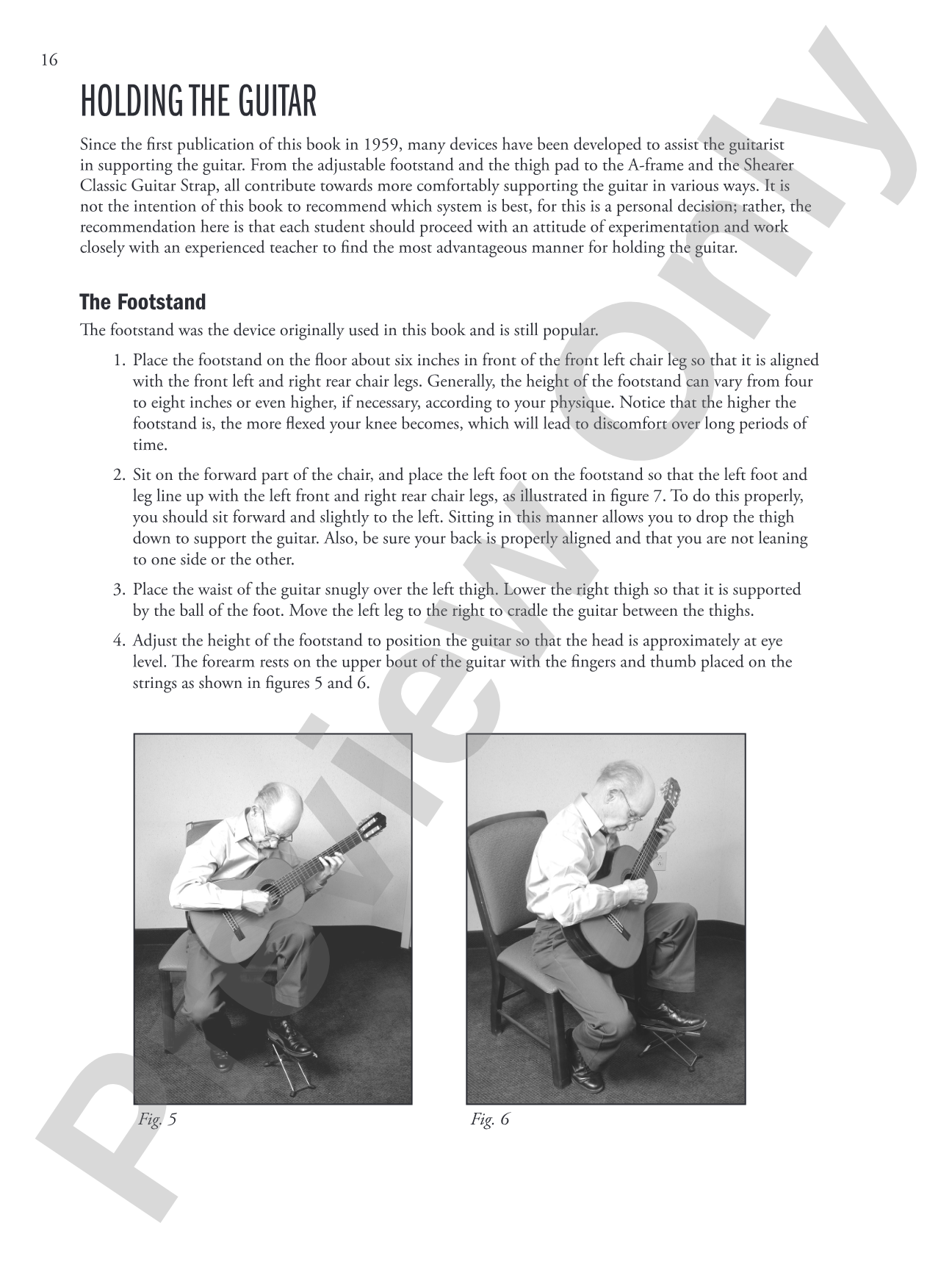
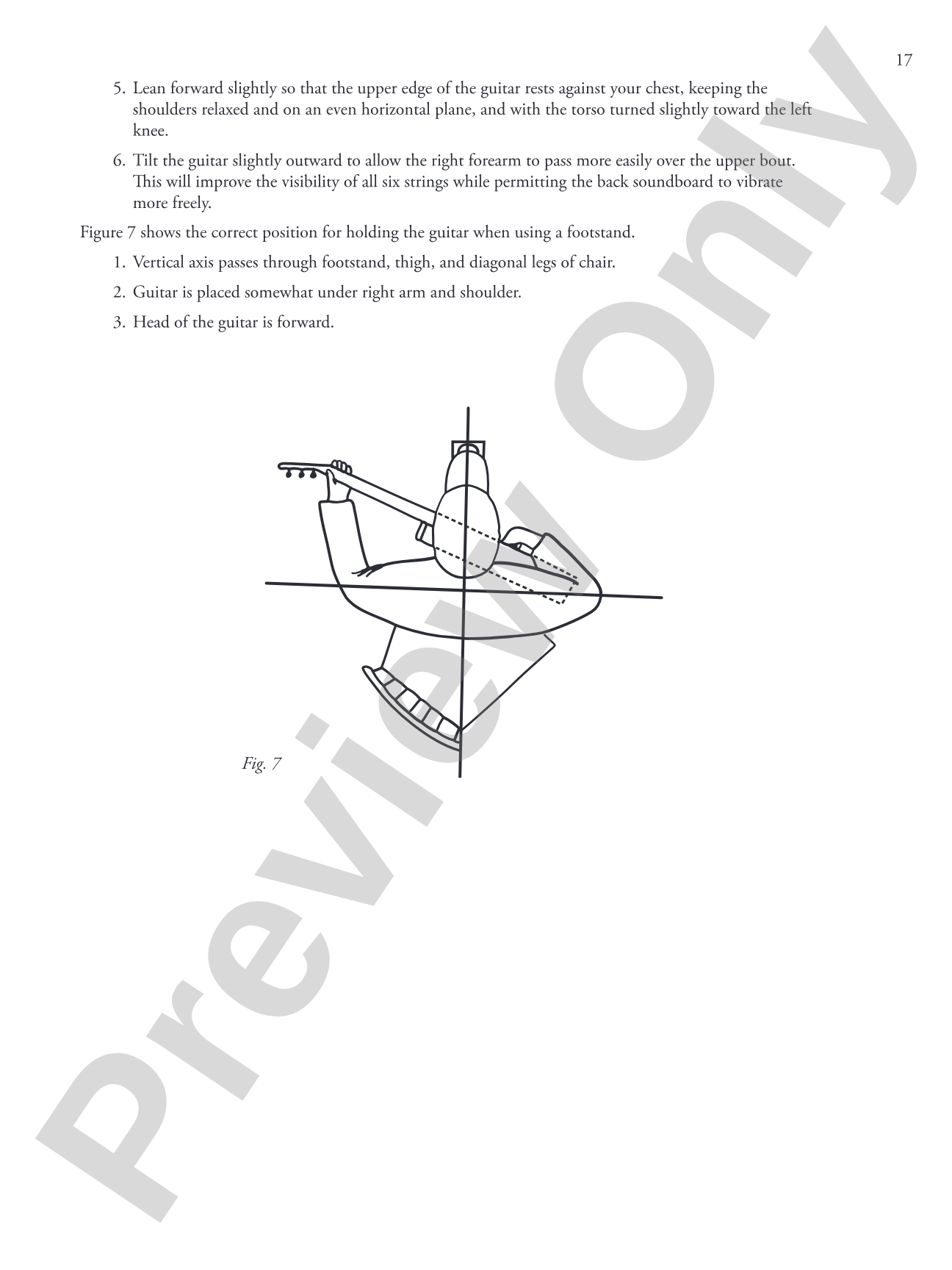
Aaron Shearer's Classic Guitar Technique has long been the core method used by generations of classic guitarists. Alfred Music is proud to present the third edition, and first major revision, of Volume 1 of this benchmark work. Completely re-edited and updated in collaboration with Thomas Kikta (one of Aaron's former students and the head of Duquesne University's Classic Guitar Department), the third edition maintains the character and appeal of the original book while providing new critical insights into core techniques that had not been addressed in previous editions. Also, for the first time, companion online audio recordings are included with the book, providing demonstrations, play-along tracks, and duet opportunities to ensure students correctly emulate the tone and feel of the music.


Discover MakeMusic Cloud: thousands of interactive titles your students can play along with today.
Sample Audio
1
Track 25
--:--
2
Track 30
--:--
3
Track 37
--:--
4
Track 44
--:--
Track 25
0:00
0:00
Sample Video
No sample videos found.
Additional Details
Series:
Shearer Series
Publisher:
Alfred Music
Page Count:
120
SKU:
00-PB-0002706
More about this title
About the Composer: Aaron Shearer
Aaron Shearer transformed classical guitar pedagogy in America during the latter half of the 20th century, establishing rigorous technical standards that remain the foundation of serious classical guitar study. His method books emerged from decades of private teaching and performance experience, distilling complex technical problems into systematic, solvable exercises that build genuine musical literacy alongside mechanical skill.
Why we love this
This third edition benefits from Thomas Kikta's perspective as both a Shearer student and pedagogue, bringing fresh clarity to technique topics that the original sometimes left implicit. The addition of recorded demonstrations and play-along tracks finally gives students an auditory model for tone production and interpretation, something every serious classical guitarist needs but few methods provide convincingly.
What to expect
Working through Shearer's exercises can feel methodical and even austere at first, but the clarity emerges quickly; each technical challenge isolates a single element so thoroughly that progress becomes visible and tangible. There is deep satisfaction in this kind of systematic mastery, and the musical intuition that develops through careful observation of right and left hand coordination tends to transfer naturally to repertoire learning.
Who it's for
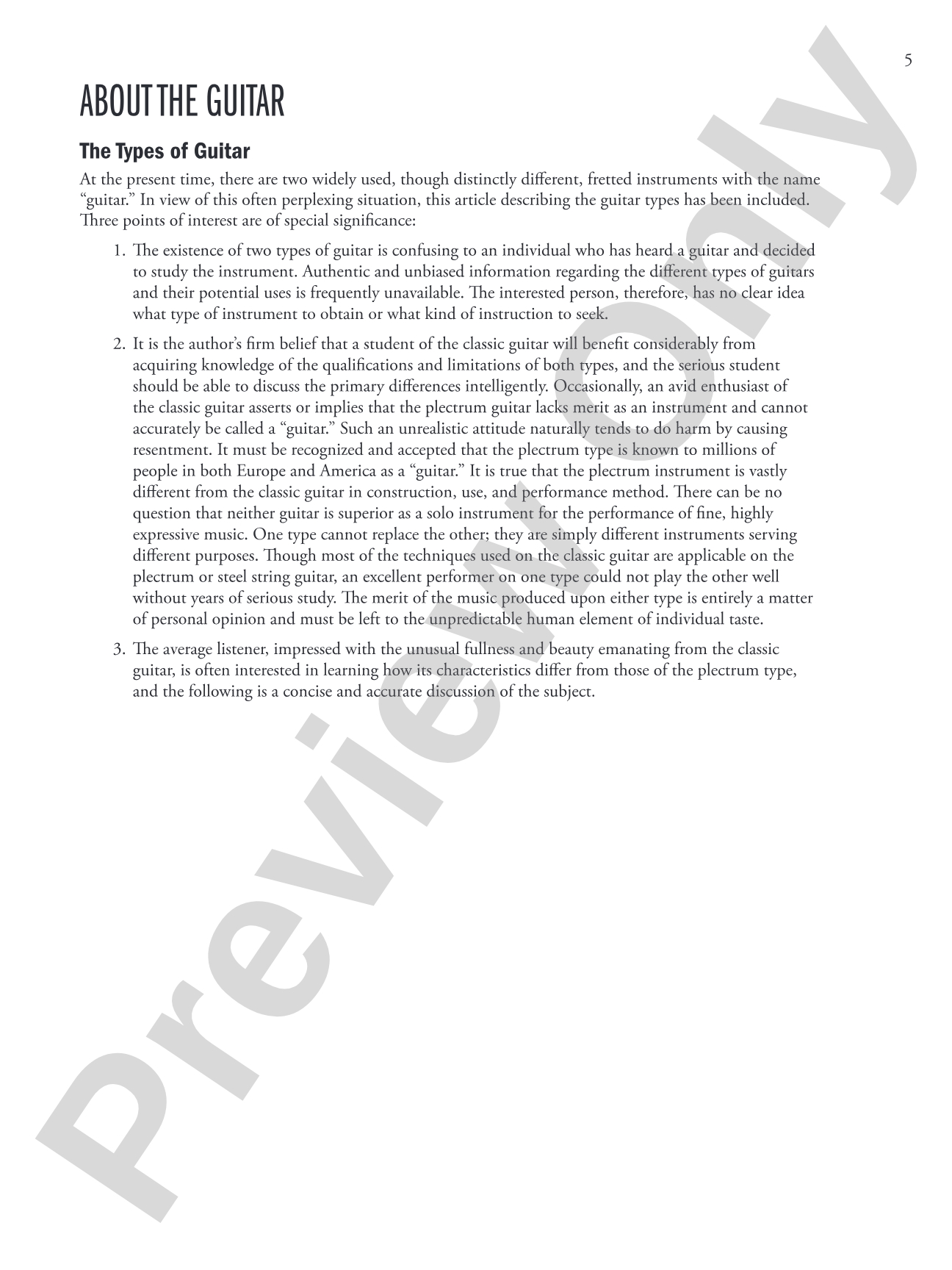
This book serves serious classical guitar students from early intermediate stages onward, as well as adult learners committing to traditional classical training. Teachers building classical technique curricula will find the comprehensive organization and pedagogical clarity invaluable, whether using it as the primary method or as a systematic reference work for problem solving.
How to get the most out of it
- Spend time listening to the audio demonstrations before attempting each exercise; Shearer's approach depends on understanding how correct tone actually sounds, not just how it feels under your fingers.
- Work through exercises slowly enough that you can observe your own left-hand positioning and right-hand angle; rushing through repetitions defeats the method's core purpose.
- Use the duet tracks to develop steady tempo and ensemble awareness while building fundamentals; the social element helps students commit to consistent practice habits.
- Return to earlier exercises periodically as your technique advances; Shearer designed the progression so that previous material deepens and reveals new layers of control at higher levels of mastery.
How to use it
Build a classical guitar curriculum around this method as your technical spine, supplementing with repertoire pieces that address the same technical priorities at each stage. Use it as a diagnostic tool in private lessons to identify specific technical gaps, then prescribe targeted exercises that students can work on independently between lessons.
Skills your students will build
- Right-hand posture, stroke production, and tone control across all strings
- Left-hand positioning, finger independence, and intonation accuracy
- Scales and arpeggios in multiple positions and keys
- Tremolo technique and finger articulation patterns
- Reading standard notation fluently across the full fretboard
- Building muscular endurance and consistent technical execution under fatigue