

Classic Alleluia Canon: SAB Choral Octavo
From Nina
Music by Giovanni Paisiello / ed. and arr. Patrick M. Liebergen
Item: 00-PO-0001235
$1.85
Minimum order quantity: 20 copies
Pickup currently not available
Related Items
Classic Alleluia Canon: PianoTrax Digital Download |
$9.99
|
View |
Description
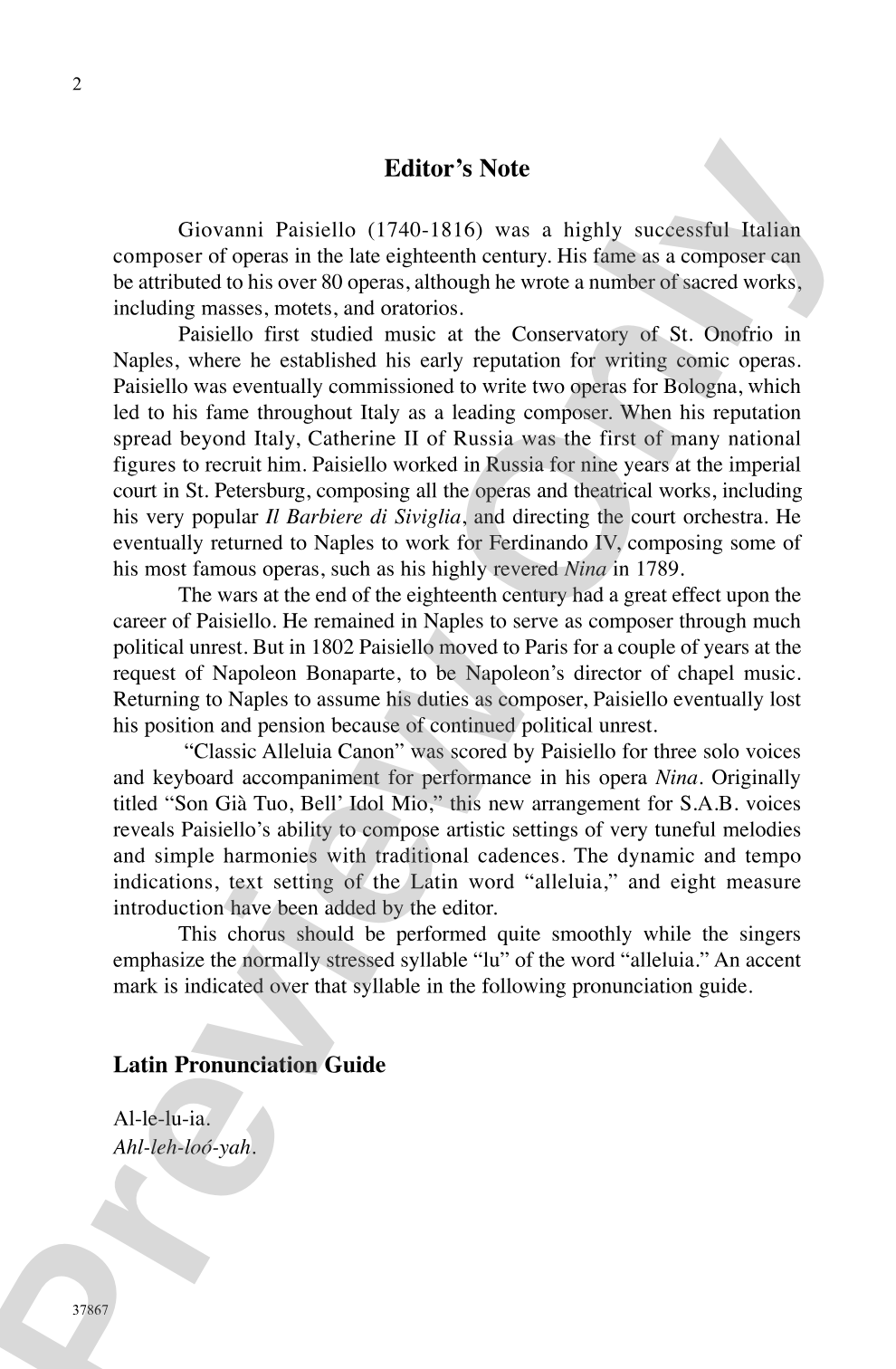
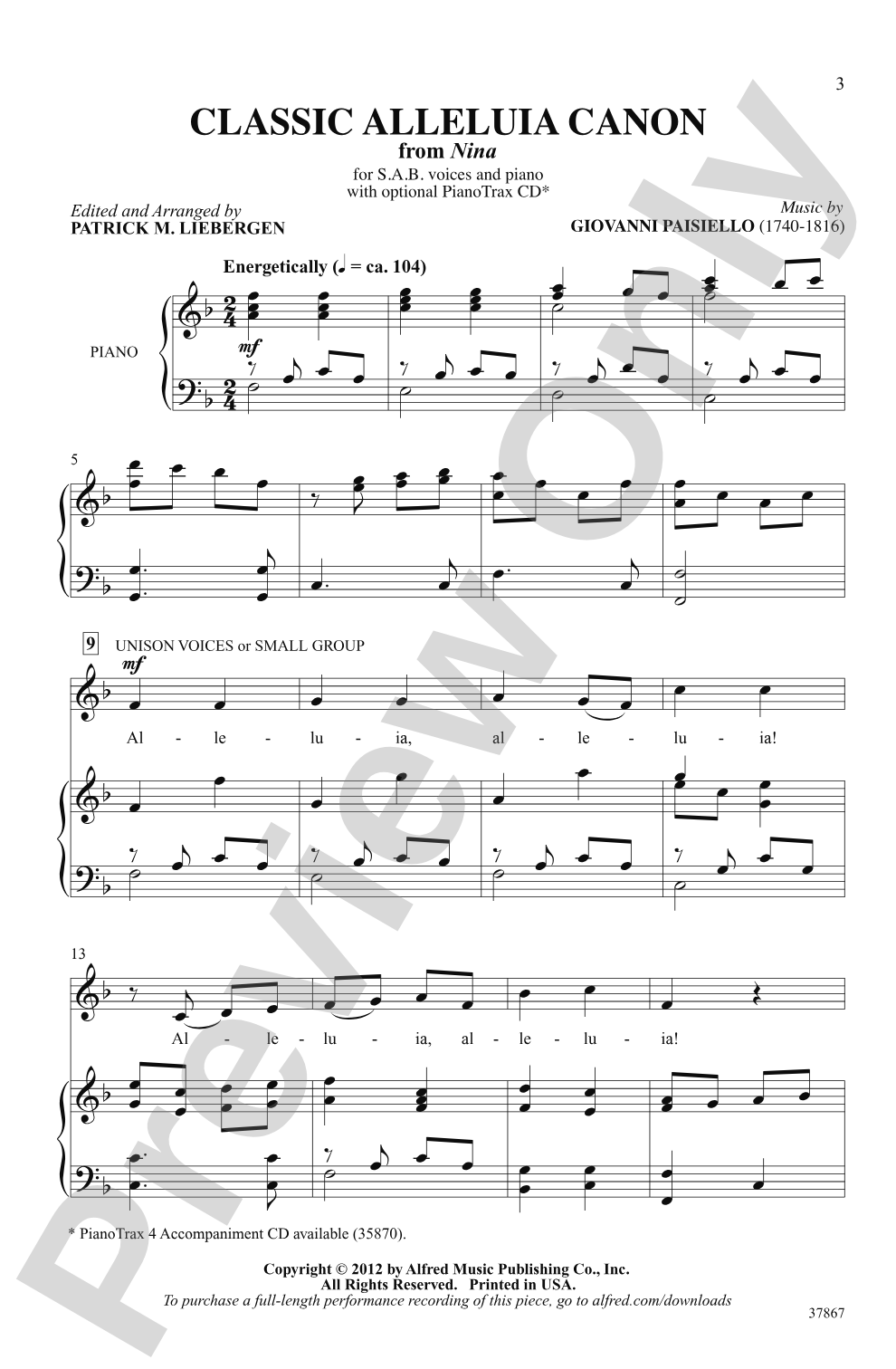
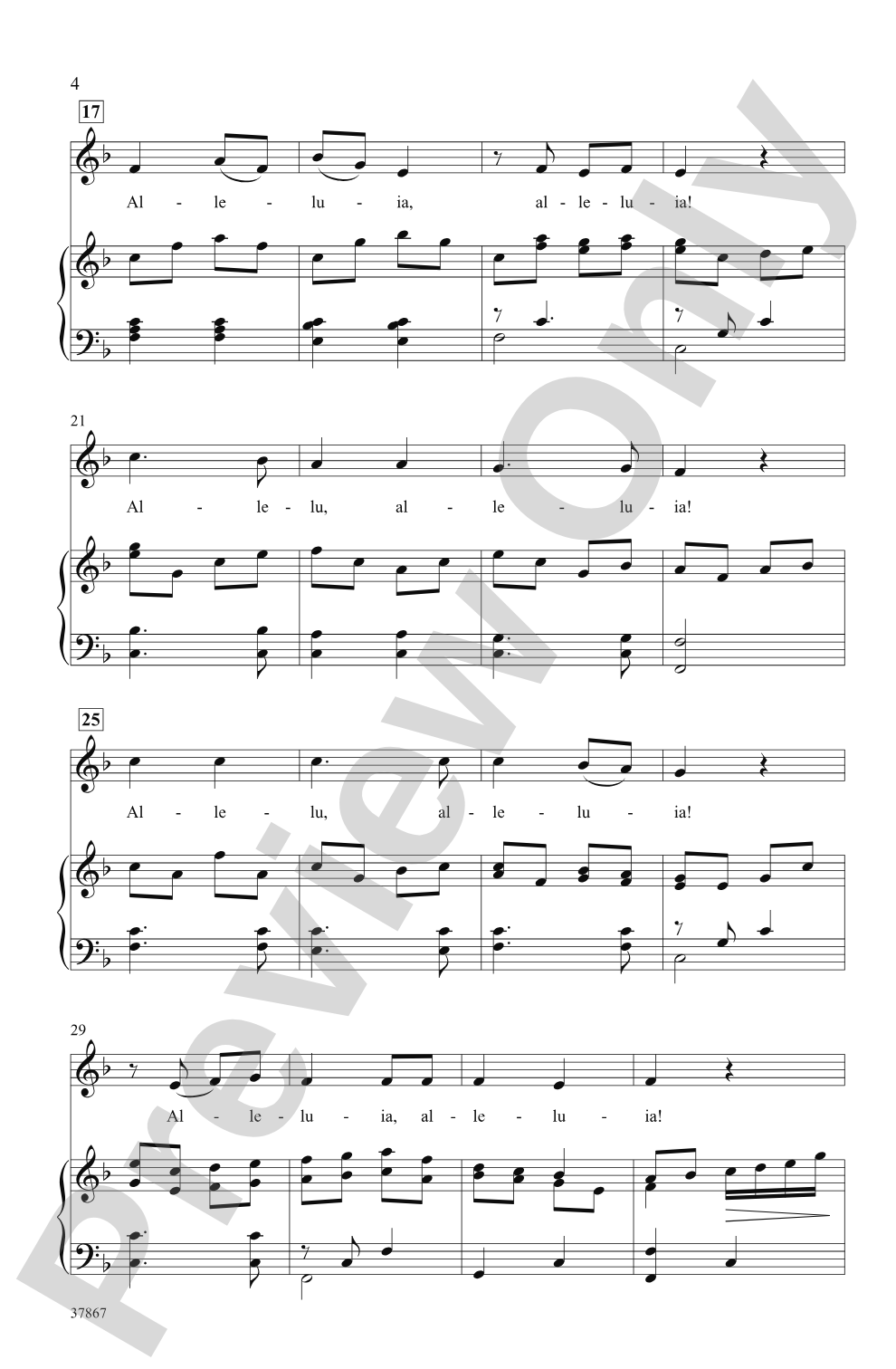
Set entirely on "Alleluia," this trio from the opera Nina reveals Paisiello's ability to compose tuneful melodies and simple harmonies with traditional cadences. A straightforward round, requiring little more than a one-octave range from any voice part. Accompaniment available on PianoTrax 4 CD (00-35870).


Classic Alleluia Canon: SAB Choral Octavo isn't in MakeMusic Cloud just yet...but it could be. Let us know you'd like to see it, and you'll help shape what comes next. In the meantime, start a free trial and dive into thousands of interactive titles your students can play along with today.
Request This Title
Tell us you want it.
Start Your Free Trial
Explore everything that's ready to play right now.
Sample Audio
1
Audio File
--:--
0:00
0:00
Sample Video
No sample videos found.
Additional Details
Series:
Alfred Choral Designs
Publisher:
Alfred Music
Page Count:
12
SKU:
00-PO-0001235
More about this title
About the Composer: Giovanni Paisiello
Giovanni Paisiello (1740-1816) was one of the most prolific opera composers of the late eighteenth century, with over one hundred stage works to his name. Based primarily in Naples and later at the Russian imperial court, he excelled at writing vocal music that prioritized melody and clarity, earning him a reputation as a master of the buffa style. His gift for crafting singable lines with elegant harmonic support made his work accessible to performers and audiences alike, and it remains relevant in the classroom precisely because it doesn't sacrifice musicality for ease.
Paisiello's operas were performed across Europe during his lifetime, and his instrumental works circulated widely among amateur musicians. Though overshadowed by his younger contemporaries Mozart and Rossini, his compositions reveal a craftsman deeply attuned to what voices could do naturally. This alleluia canon exemplifies his approach: simple construction serving expressive purpose.
Why we love this
Paisiello gives you a piece that works immediately. The single-word text removes any diction concerns, the range sits comfortably for developing singers, and the round structure builds ensemble listening without requiring complex rhythmic coordination. It's the kind of repertoire that reminds students why people have sung together for centuries.
What to expect
Luminous and buoyant. The repeating text and gentle harmonic progression create a meditative quality that doesn't feel static; instead, it echoes like voices in a cathedral space, each entrance enriching what came before. There's an understated joy in the simplicity.
Who it's for
Any choir director working with developing singers in grades 5-8 or adult community choirs seeking accessible liturgical music. The piece works equally well for high school students building foundational ensemble skills or as a teaching tool for understanding canonic form without the complexity of a fugue.
How to get the most out of it
- Establish the pulse before the first voice enters. Paisiello's simplicity depends entirely on rhythmic steadiness; any wavering in the conductor's beat will expose it.
- Shape the text 'Alleluia' with the natural accent pattern of the syllables rather than singing it mechanically. Let the vowels breathe between entries.
- Balance the entrances so each voice part remains audible as it joins. In a round, hearing the layering is what makes the form work musically.
- Consider the recorded accompaniment as a guide to tempo and harmonic color, not as a crutch. Your singers should feel confident singing unaccompanied if needed.
How to use it
Place this early in a concert as a palette cleanser between more demanding pieces, or pair it with other classical sacred settings to create a short, unified group. It also serves beautifully as an opener to a liturgical or seasonal concert, setting a contemplative tone before larger works.
Skills your students will build
- Entering on cue while listening to other vocal lines
- Sustaining a melodic line independently without harmonic support
- Maintaining a steady pitch through a repeated, single-word text
- Understanding canonic form through direct experience
- Blending voice parts in close harmonic proximity