
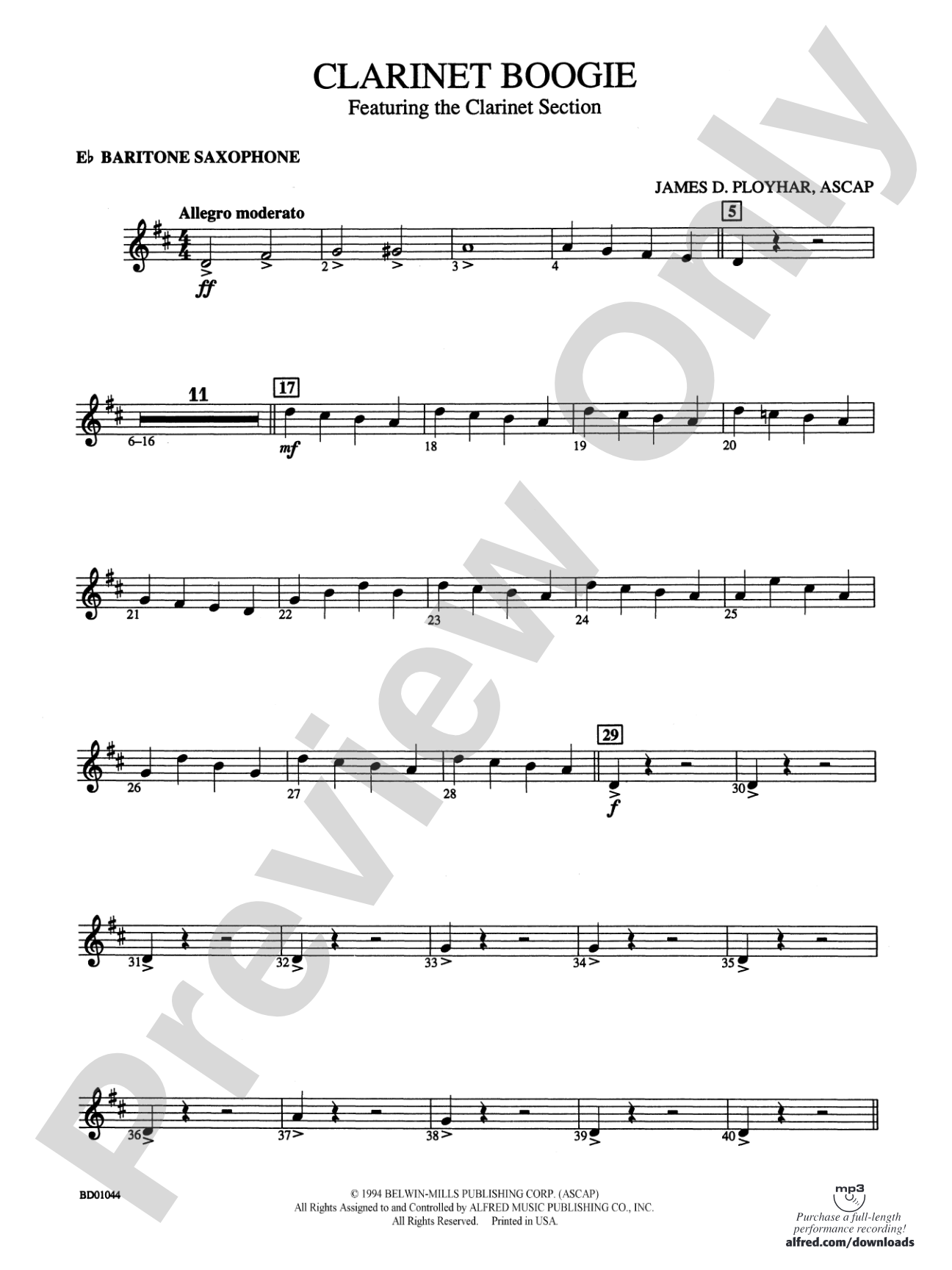

Clarinet Boogie: E-flat Baritone Saxophone
Featuring the Clarinet Section
By James D. Ployhar
Grade: 2 (Easy)
Item: 00-PC-0015588_BTX
$3.00
Pickup currently not available
Description
Let your clarinet section boogie on down into the solo spotlight. The sounds of big band jazz will then be heard, with your clarinets leading the way. This is a "feel good" concert selection that will also serve to motivate all your clarinet players.


Don't just read it, hear it, play along with it, and watch your students grow with it. In MakeMusic Cloud, Clarinet Boogie: E-flat Baritone Saxophone comes alive with professional accompaniment, adjustable tempo, and built-in practice tools that turn solo practice into real progress.
Open in the Player
Jump straight in and assign it today.
Start Your Free Trial
Open this title and explore the full library in minutes.
Sample Audio
1
Audio File
--:--
0:00
0:00
Sample Video
No sample videos found.
Additional Details
Series:
Belwin Young Band
Publisher:
Alfred Music
Page Count:
240
SKU:
00-PC-0015588_BTX
More about this title
About the Composer: James D. Ployhar

James D. Ployhar has shaped music education through more than 800 published compositions and arrangements. His influence extends far beyond the concert hall: he authored the Contemporary Band Course, a foundational text now published by Alfred Music and adopted throughout Norway after translation into multiple languages. His compositional voice emerged from rigorous study in orchestration with Knud Havalde of the Danish Royal Philharmonic Orchestra and formal training in composition under Morris Hutchings Ruger at California State University–Long Beach.
Plyohar spent over 19 years in public school music teaching while simultaneously building a reputation as a clinician and conductor across the United States, Canada, Europe, and beyond. The National Band Association recognized his sustained contributions to band music with its Citation of Excellence. His work has appeared on network television and been performed internationally from Japan to the Pacific Rim nations. He holds degrees from Valley City State University and Northern Colorado University and maintains active involvement in university-level workshops and conducting engagements.
Why we love this
This arrangement gives your clarinet section a genuine spotlight moment without overshadowing the rest of the band. Ployhar's big band idiom feels accessible at Grade 2 yet maintains the authentic swing and groove that makes jazz exciting to play. The section feature structure keeps rehearsal attention on your reeds while the full ensemble learns to support a solo section with style.
What to expect
Clarinet Boogie delivers pure entertainment value, radiating the swagger and energy of a vintage big band jam session. Your audience will immediately recognize the jazzy, feel-good groove, while your clarinets experience the thrill of commanding the stage with confident, swinging lines that get genuine applause.
Who it's for
Band directors seeking an accessible, motivating concert piece that puts clarinet players center stage and builds confidence through a rewarding solo feature. This works especially well for Grade 2 ensembles with solid clarinet sections who are ready for a featured moment but benefit from the simpler supporting parts typical of the Belwin Young Band series.
How to get the most out of it
- Encourage the clarinet section to listen to classic big band recordings before rehearsal so they absorb the swing feel and phrasing naturally rather than mechanically.
- Balance the solo clarinets against ensemble sections by having supporting instruments play with lighter articulation and a laid-back feel.
- Work the rhythm section separately first to lock in the groove; the soloists will settle in once the foundation is solid.
- Aim for a relaxed, bouncy feel rather than strict metronomic precision—jazz breathing and slight rhythmic flexibility make boogie styles come alive.
How to use it
Place this in the lighter half of a concert to reset audience energy or close out the show on an upbeat, memorable note. It pairs naturally alongside other Belwin Young Band novelty selections or balances a program that otherwise leans on traditional concert music. The accessible Grade 2 level means it stays performance-ready even when rehearsal time is tight.
Skills your students will build
- Swing articulation and phrasing in a big band context
- Jazz style playing with relaxed rhythmic feel
- Solo confidence and section feature ensemble awareness
- Supporting other musicians through light, unobtrusive accompaniment
- Understanding of big band arrangement textures and voicing