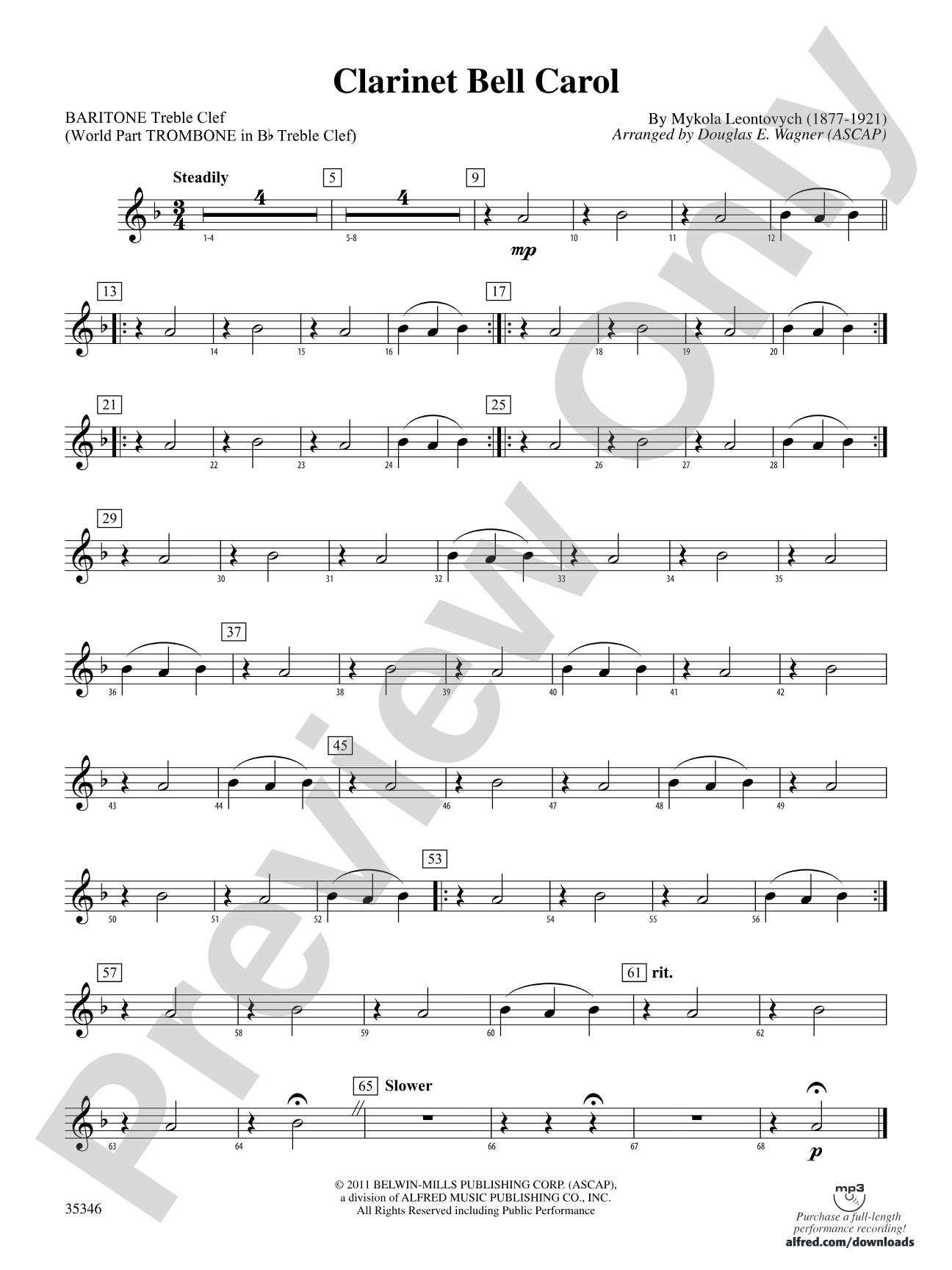
Clarinet Bell Carol: (wp) Baritone T.C. Sheet Music Preview

Clarinet Bell Carol: (wp) Baritone T.C.

Clarinet Section Feature

By Mykola Leontovych / arr. Douglas E. Wagner

Grade: 1 (Very Easy)

Item: 00-PC-0014901_wpBTC1

Digital Download
$3.00
Description
The original work, scored for unaccompanied choir, was an inspired effort by Ukraine-born composer and educator Mykola Dmytrovych Leontovych. Douglas Wagner's new setting, as the title implies, features your clarinetists giving them a left-handed holiday workout. Very comfortable for the whole band and right in the pocket for the clarinet section, this one will be a hit on your students' very first holiday program!

Don't just read it, hear it, play along with it, and watch your students grow with it. In MakeMusic Cloud, Clarinet Bell Carol: (wp) Baritone T.C. comes alive with professional accompaniment, adjustable tempo, and built-in practice tools that turn solo practice into real progress.

Sample Audio
0:00
0:00
Sample Video
Additional Details
Series: Belwin Beginning Band
Publisher: Alfred Music
Page Count: 134
SKU: 00-PC-0014901_wpBTC1

More about this title

About the Composer: Mykola Leontovych

Mykola Leontovych (1877-1921) was a Ukrainian composer, conductor, and educator whose work helped establish a distinctly Ukrainian classical music tradition. He drew deeply from folk melodies and choral traditions of his homeland, creating works that blended nationalist sentiment with accessible, singable lines. His choral compositions remain central to Ukrainian musical heritage and continue to inspire arrangements for instrumental ensembles worldwide.

Why we love this

Douglas Wagner's arrangement captures the infectious, folk-rooted character of Leontovych's original while giving your clarinet section a genuine spotlight at a level where they can actually shine. Grade 1 scoring for the full band removes any rehearsal obstacles, yet the writing never feels thin or dumbed-down. It's a smart programming choice for early December when you need something festive that builds ensemble confidence rather than creating stress.

What to expect

Warm and sing-able, with the unmistakable character of Ukrainian folk melody. The arrangement feels uncluttered and genuine, allowing the bell-like quality of the clarinet feature to emerge naturally over a supportive harmonic foundation. There's a lightness to it that feels festive without veering into novelty.

Who it's for

First-year band students and established ensembles alike will find success with this arrangement. Directors programming early holiday concerts need accessible material that still engages student musicians and audiences, and this delivers both without requiring extensive rehearsal time.

How to get the most out of it

  • Balance the clarinet feature carefully during first readings. The melody sits in a comfortable middle register, but younger clarinetists sometimes play flat when focused on their own part. Encourage them to listen horizontally across the line rather than just attacking individual notes.
  • Keep the accompaniment figures light and rhythmically clean, particularly in the early sections. The tuning and intonation of the full band will improve noticeably if the supporting voices stay precise and transparent.
  • Shape the melodic phrases with subtle dynamic contours. Even at this grade level, the folk tune benefits from gentle swells that reflect the natural breathing points of the melody.

How to use it

This works beautifully as a mid-program piece on an early-season holiday concert, offering contrast to more formal or challenging repertoire. It's also an excellent choice for school assemblies, winter celebrations, or informal performance settings where you want to showcase your students' progress while keeping the mood accessible and celebratory.

Skills your students will build

  • Playing as a featured section while maintaining ensemble balance
  • Sustaining lyrical melodic lines at Grade 1 difficulty
  • Reading and performing straightforward concert band textures
  • Responding to phrasing and dynamic shaping cues

You May Also Like