

Clap Your Hands, Rejoice!: 2-Part Choral Octavo
Words and music by Andy Beck
Item: 00-PO-0000711
$2.20
Minimum order quantity: 20 copies
Pickup currently not available
Description
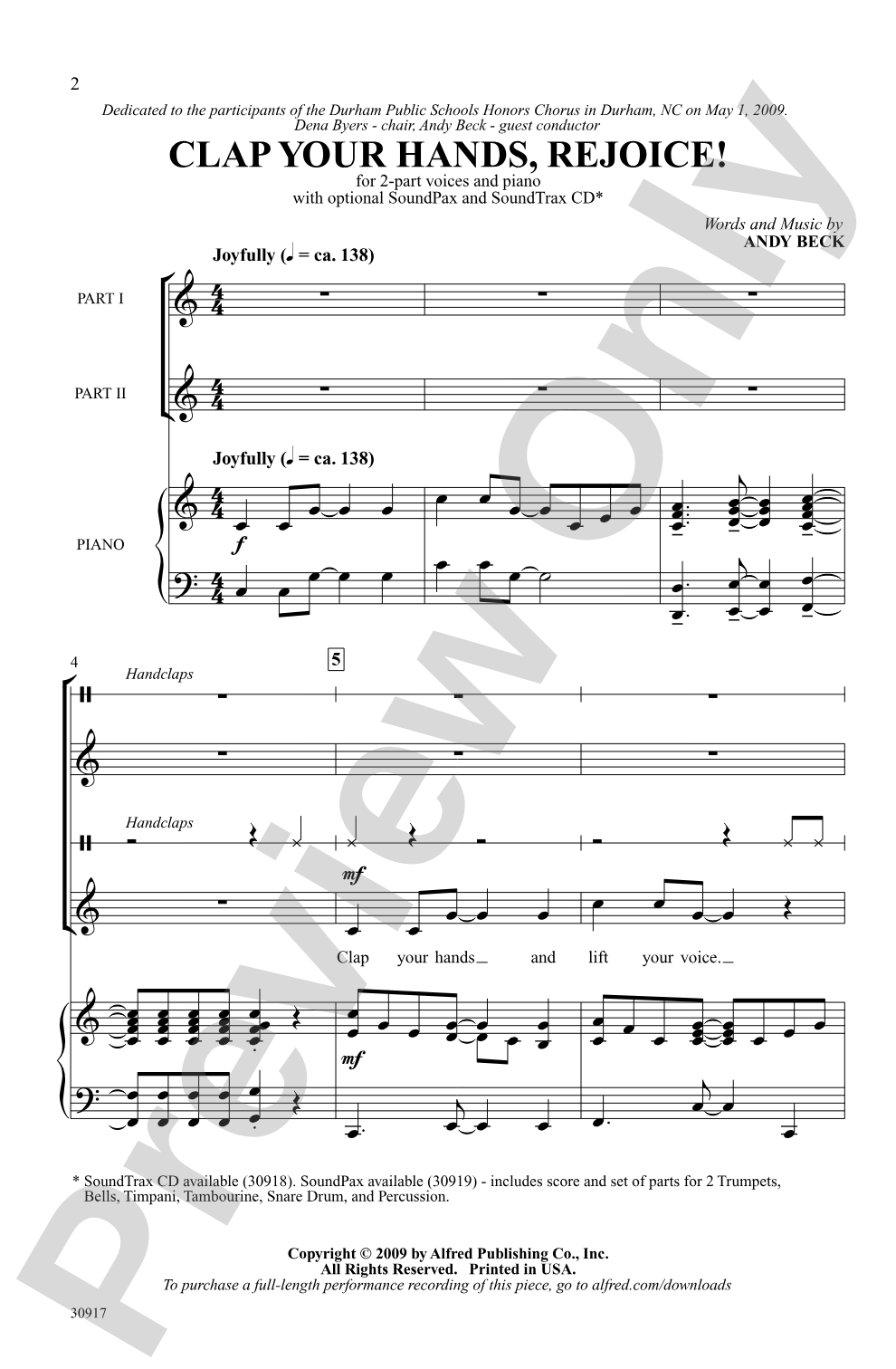
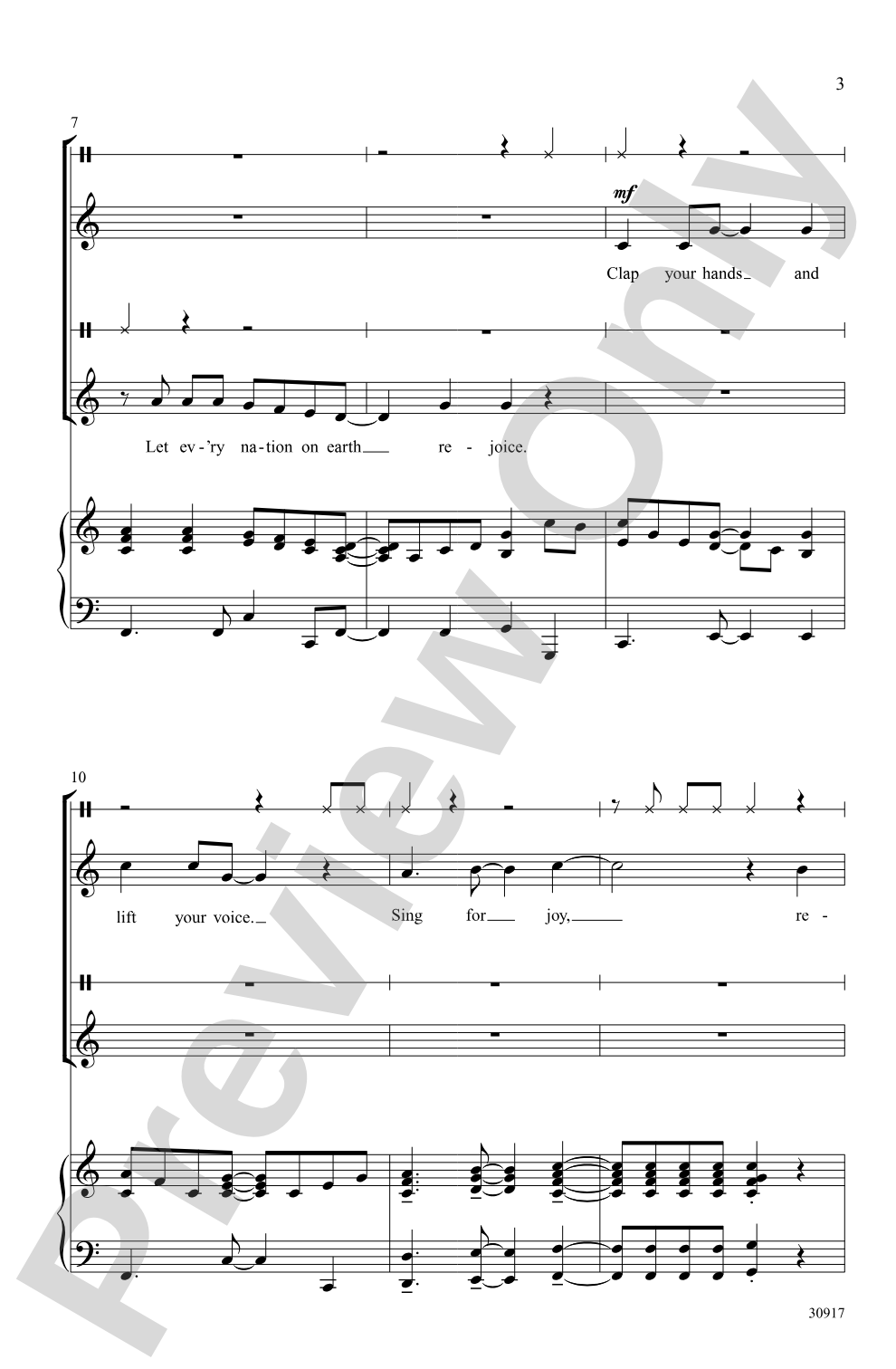
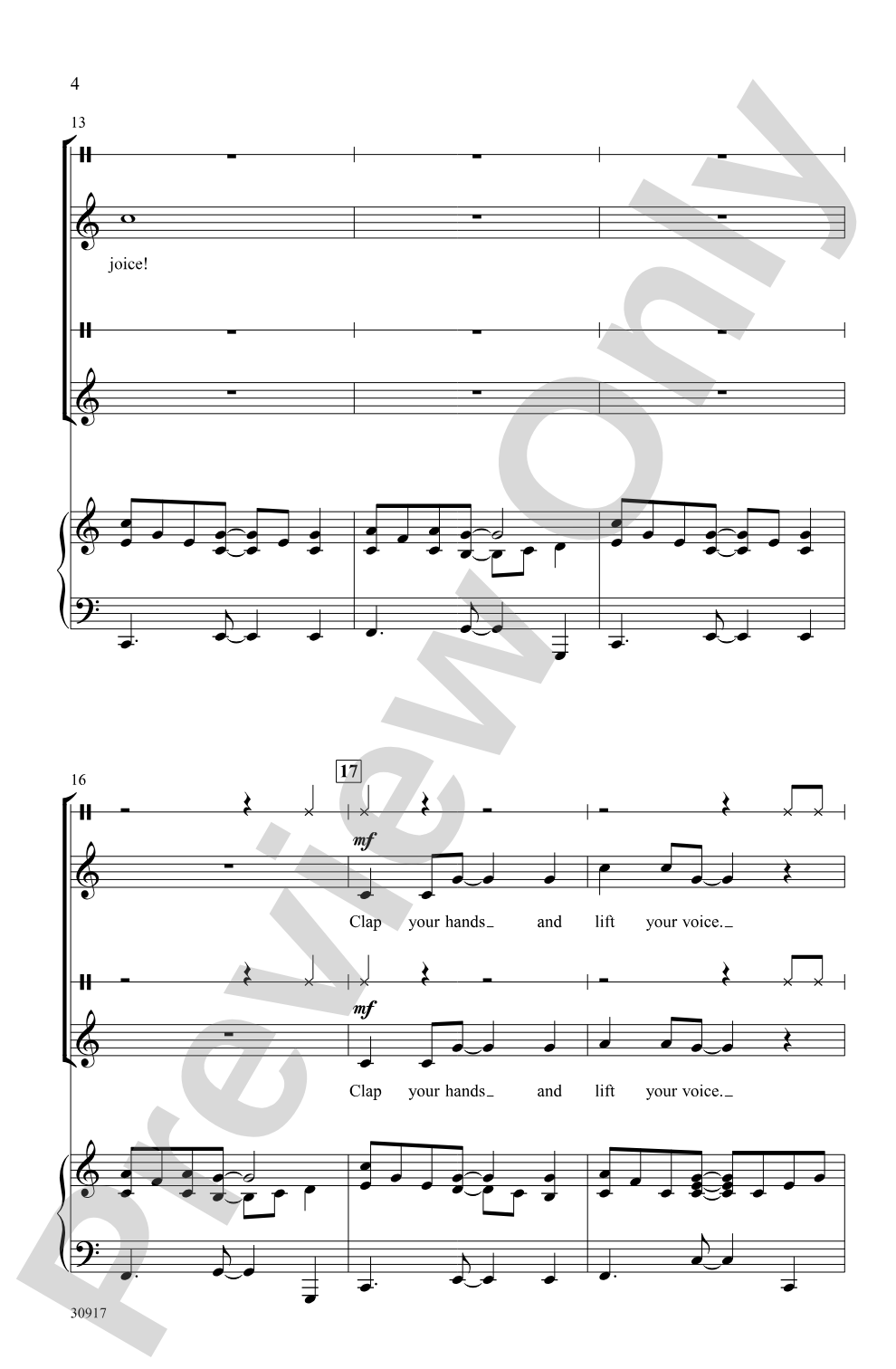
Joyful vocal phrases are punctuated with rhythmic handclaps throughout this thrilling concert and festival piece for developing choirs. A few optional cued notes introduce your group to simple triad singing, and a buoyant descant creates a third layer in the add-on ostinato section and at the triumphant end. Featured on the Danza! Movement DVD (00-31225).


Clap Your Hands, Rejoice!: 2-Part Choral Octavo isn't in MakeMusic Cloud just yet...but it could be. Let us know you'd like to see it, and you'll help shape what comes next. In the meantime, start a free trial and dive into thousands of interactive titles your students can play along with today.
Request This Title
Tell us you want it.
Start Your Free Trial
Explore everything that's ready to play right now.
Sample Audio
1
Audio File
--:--
0:00
0:00
Sample Video
No sample videos found.
Additional Details
Series:
Alfred Choral Designs
Publisher:
Alfred Music
Page Count:
16
SKU:
00-PO-0000711
More about this title
About the Composer: Andy Beck

Andy Beck serves as Director of Choral Publications at Alfred Music, overseeing a catalog that reflects his deep commitment to choral pedagogy and artistry. His compositional output exceeds 450 works across choral octavos, vocal resources, and children's musicals; he has also authored foundational sight-singing and technique resources widely used in choral programs. As a guest conductor, choreographer, and clinician, Beck works regularly with honor choirs and all-state groups across the United States, bringing both compositional expertise and performance experience to every project.
A tenor vocalist himself, Beck has maintained his performing career through musical theatre, chamber choir singing, and studio work with Alfred Music since 1992. He holds degrees in Music Education from Ithaca College (Bachelor's) and Northwest Missouri State University (Master's), grounding his prolific work in solid pedagogical training. His reputation extends globally; performances of his music appear regularly on YouTube, demonstrating the reach and resonance of his approach to choral writing.
Why we love this
Beck crafts pieces that feel effortless to teach and impossibly fun to perform. The rhythmic handclaps and optional triads give your singers concrete engagement points without overwhelming developing voices, while the descant layer offers a natural pathway into three-part texture that doesn't require splitting your group.
What to expect
Pure celebratory energy. The joyful vocal phrases soar with optimism, and the handclaps create infectious rhythmic momentum that draws the audience into the choir's joy. By the triumphant final section, the descant adds luminous brightness to the ensemble sound, creating a moment of genuine jubilation that singers remember long after the concert ends.
Who it's for
Developing choirs with mixed-voice or treble-voice configurations who are ready to step beyond unison work but still building confidence with part independence. This piece welcomes singers at the early-intermediate level while offering directors a tool for teaching triadic harmony and ensemble rhythmic precision in a musical context that never feels like drill.
How to get the most out of it
- Shape the handclap sections with crisp, unified articulation; treat the rhythm as a percussion ensemble in miniature, giving it as much attention as you would a snare drum line.
- Introduce the optional cued triad notes early in rehearsal as listening exercises before asking singers to voice them, so harmonic awareness builds alongside vocal execution.
- Bring the descant forward in the ostinato and final sections with a slight dynamic lift, but keep it connected to the main voices rather than separated; the three layers should sound woven together.
- Use the movement and staging suggestions as a rehearsal framework, not a blueprint; adapt them to your space and your singers' comfort level with embodied performance.
How to use it
This works beautifully as an opening or closing piece on a concert program, its uplifting energy and accessibility making it an ideal audience connector without sacrificing musicality. It also pairs naturally with other concert-festival repertoire that values movement and joy; consider programming it alongside other secular choral works that celebrate ensemble singing rather than introspection.
Skills your students will build
- Rhythmic unison while sustaining melodic phrases
- Triadic harmony and vertical listening through optional cued notes
- Part independence in a descant-based three-part texture
- Rhythmic precision in ensemble handclapping
- Integration of movement and staging with vocal performance