Clair de lune: 2nd Violin Sheet Music Preview

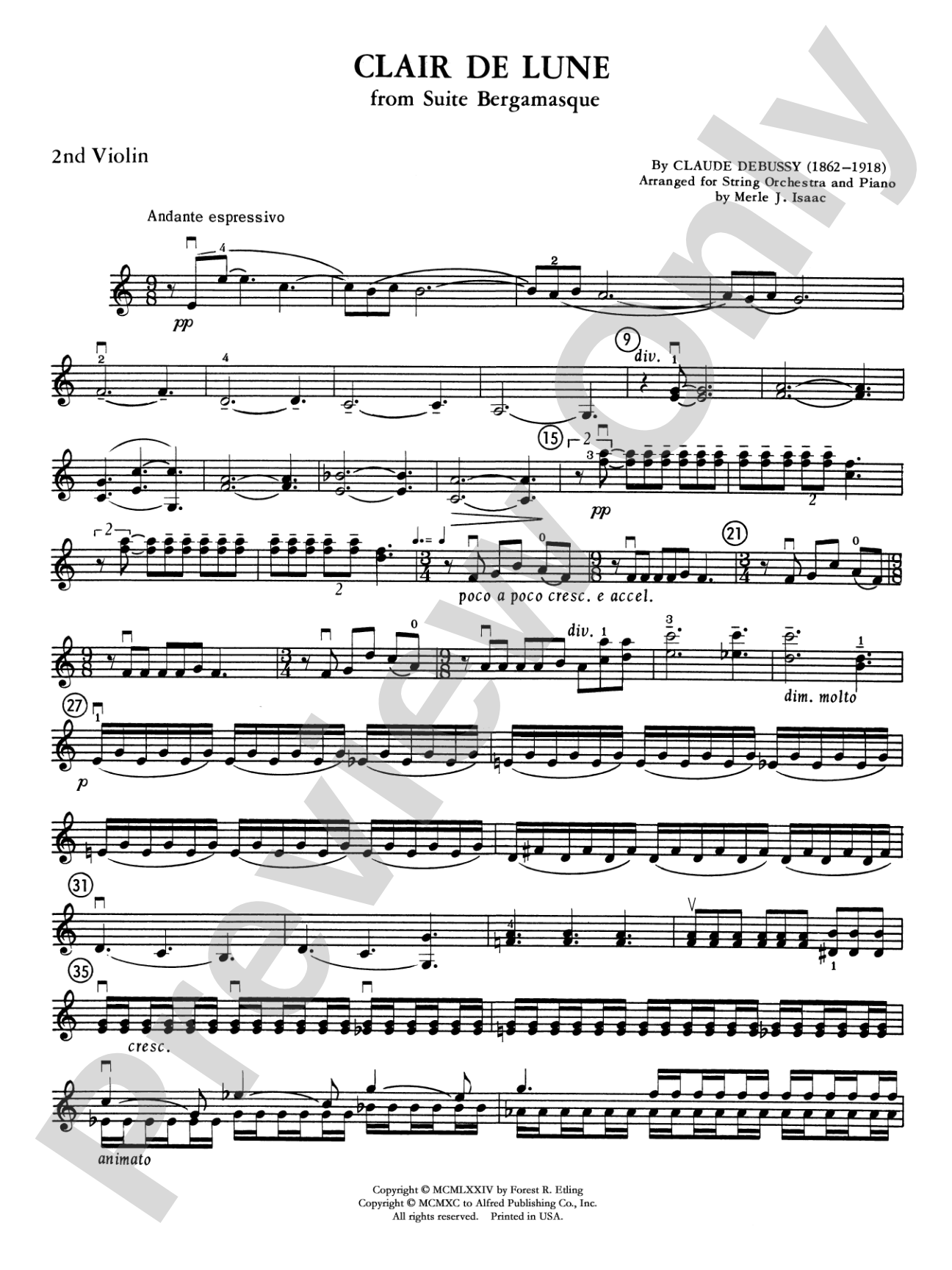
Clair de lune: 2nd Violin

(from Suite Bergamasque)

By Claude Debussy / arr. Merle J. Isaac

Grade: 3

Item: 00-PC-0000094_VN2

Digital Download
$5.99
Description

Don't just read it, hear it, play along with it, and watch your students grow with it. In MakeMusic Cloud, Clair de lune: 2nd Violin comes alive with professional accompaniment, adjustable tempo, and built-in practice tools that turn solo practice into real progress.

Sample Audio
No sample audio found.
Sample Video
Additional Details
Series: Highland/Etling String Orchestra
Publisher: Alfred Music
Page Count: 134
SKU: 00-PC-0000094_VN2

More about this title

About the Composer: Claude Debussy

Claude Debussy (1862-1918) revolutionized music by rejecting the heavy romanticism of his predecessors and creating an entirely new harmonic language. His impressionistic approach used color, texture, and suggestion rather than traditional development, influencing composers across all genres for generations.

In the concert hall and classroom, Debussy's music teaches young musicians how to listen differently. His work demonstrates that musical structure need not follow Germanic formulas, opening ears to new possibilities in harmony, timbre, and orchestration.

Why we love this

Isaac's arrangement brings this cornerstone of the piano repertoire into the string orchestra at a manageable Grade 3 level without sacrificing the impressionistic magic that makes Clair de lune endure. The piece offers your ensemble genuine musical substance alongside the pedagogical benefits of exploring how colors and textures shape meaning in orchestral writing. For contest and festival settings, it stands apart as music that audiences genuinely want to hear.

What to expect

Soft light reflecting off still water; a moment suspended in time where tension dissolves into gentle acceptance. The piece moves through subtle harmonic shifts and delicate textural layers that reward close listening, building to moments of radiance before settling back into quietude.

Who it's for

String orchestras at the intermediate level who are ready for the emotional and harmonic sophistication that Impressionism demands. Players need secure fundamentals in intonation and vibrato to bring out the colors Debussy's writing requires, but the arrangement keeps technical demands reasonable so musicians can focus on tone production and ensemble listening.

How to get the most out of it

  • Shape phrases with sustained, singing tone rather than rhythmic precision; let the lines breathe and overlap as if floating in moonlight
  • Balance the melody through the first and second violins while keeping inner voices (violas and cellos) present but transparent
  • Use dynamic control to create depth; softer accompaniment passages throw the main line into relief without relying on sudden tempo changes
  • Attend to the harmonic progression through the ear rather than mechanical counting; sustained chords will settle into their own resonance if players listen to the full texture

How to use it

Program this as the emotional centerpiece of a concert, paired with contrasting works that highlight its unique character. The Grade 3 level makes it accessible for student orchestras while maintaining the sophistication that speaks to mature audiences, making it ideal for spring festivals, concerto competitions, or concerts built around the theme of musical impressionism.

Skills your students will build

  • Sustaining lyrical melodic lines with consistent vibrato and tone quality
  • Blending and balancing within the string section while maintaining independence of voice
  • Responding to subtle dynamic gradations and harmonic color changes
  • Reading and executing the flowing, non-metric phrasing characteristic of impressionistic music
  • Creating ensemble resonance through active listening rather than mechanical pulse

You May Also Like