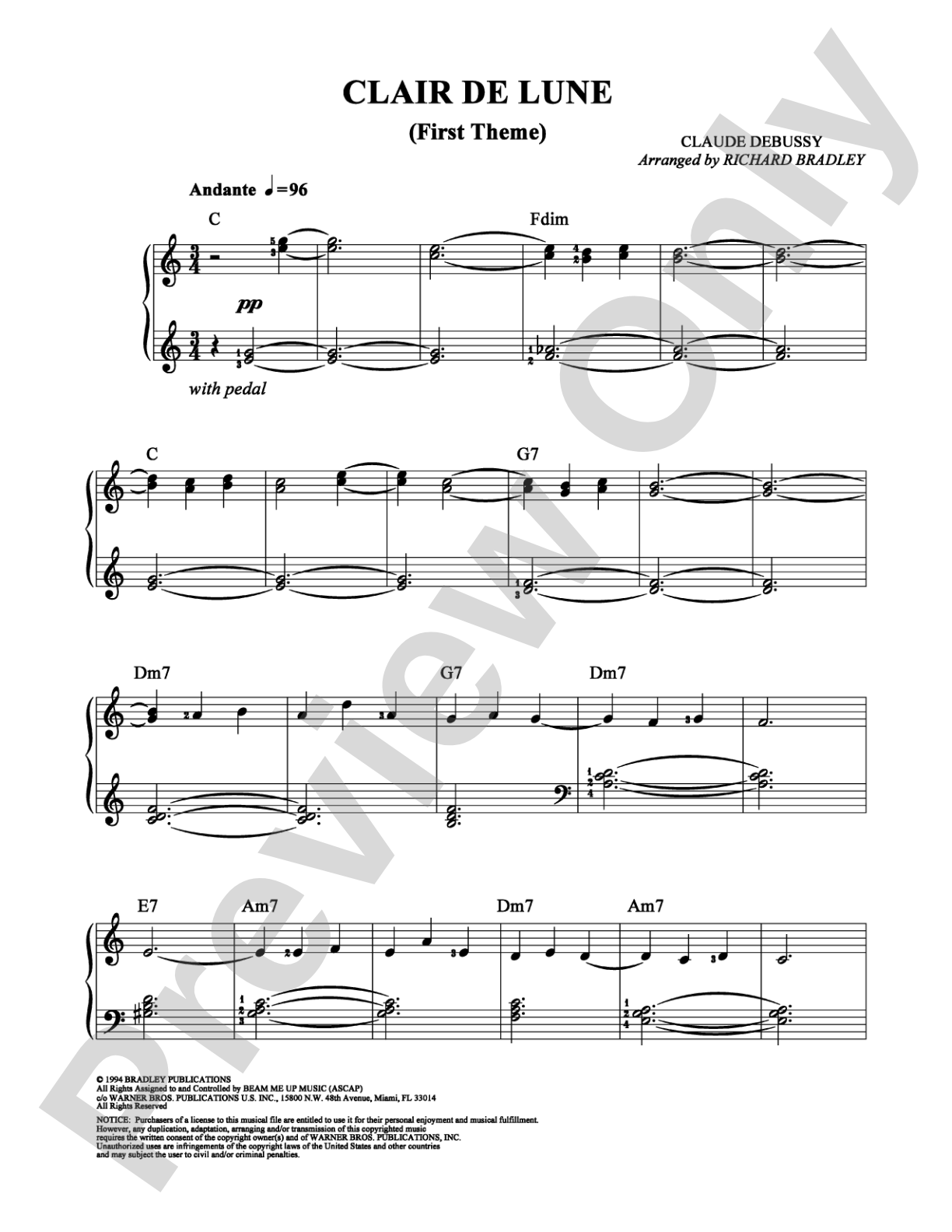
Clair de Lune: Easy Piano Digital Sheet Music

Clair de Lune: Easy Piano Digital Sheet Music

Claude Debussy

Item: 00-PS-0000274

Digital Download
$3.99
Description

Clair de Lune: Easy Piano Digital Sheet Music isn't in MakeMusic Cloud just yet...but it could be. Let us know you'd like to see it, and you'll help shape what comes next. In the meantime, start a free trial and dive into thousands of interactive titles your students can play along with today.

Sample Audio
No sample audio found.
Sample Video
Additional Details
SKU: 00-PS-0000274

More about this title

About the Composer: Claude Debussy

Claude Debussy (1862-1918) was a French composer who fundamentally reshaped how Western music could sound and function. He moved away from the heavy Romantic tradition toward impressionism, using piano as a tool for color, atmosphere, and suggestion rather than narrative drama. Clair de Lune, part of his Suite bergamasque, stands as one of his most beloved works and remains a cornerstone of the piano repertoire.

Why we love this

This accessible arrangement preserves the meditative beauty of Debussy's original while removing technical barriers that might otherwise keep intermediate pianists from experiencing one of music's most transcendent works. Students encounter genuine artistry and harmonic sophistication without being overwhelmed by velocity or hand-span demands. The piece rewards attention to tone color and pedal work, teaching musicality as much as technique.

What to expect

Moonlight filtered through water; soft, shimmering, and tinged with quiet longing. The music hovers between major and minor, between stillness and subtle motion, creating a sense of reverie that draws the listener inward. A single moment stretched into five minutes of intimate reflection.

Who it's for

Intermediate pianists seeking meaningful repertoire that balances artistic depth with technical accessibility. Students ready to move beyond simple pieces but not yet prepared for the full original are ideal candidates. Solo recitalists and students in private lessons will find this especially useful.

How to get the most out of it

  • Shape the opening melody with a singing tone quality; imagine a solo vocalist floating above the accompaniment rather than striking the keys rhythmically.
  • Use the sustain pedal judiciously to blur harmonies and create the dreamlike wash characteristic of the piece, but change it frequently enough to maintain clarity.
  • Resist the urge to rush through the middle sections; let the harmonies breathe and the form unfold at a pace that reveals its architecture.
  • Pay close attention to dynamic gradations (the soft dynamic shades matter more here than volume changes); the piece communicates through restraint and nuance.

How to use it

Program this as an intermission piece or as a recital finale that sends the audience out in a contemplative mood. It works beautifully as a solo item for students demonstrating musical maturity at recitals or competitions. Pairing it with other impressionistic works or early-20th-century piano literature creates a cohesive thematic program.

Skills your students will build

  • Pedal control and harmonic blending
  • Singing tone production and phrasing
  • Independence of the hands in textural roles
  • Interpretation of dynamic and color subtleties without tempo variation
  • Reading and performing with stylistic understanding of early 20th-century piano music

You May Also Like