
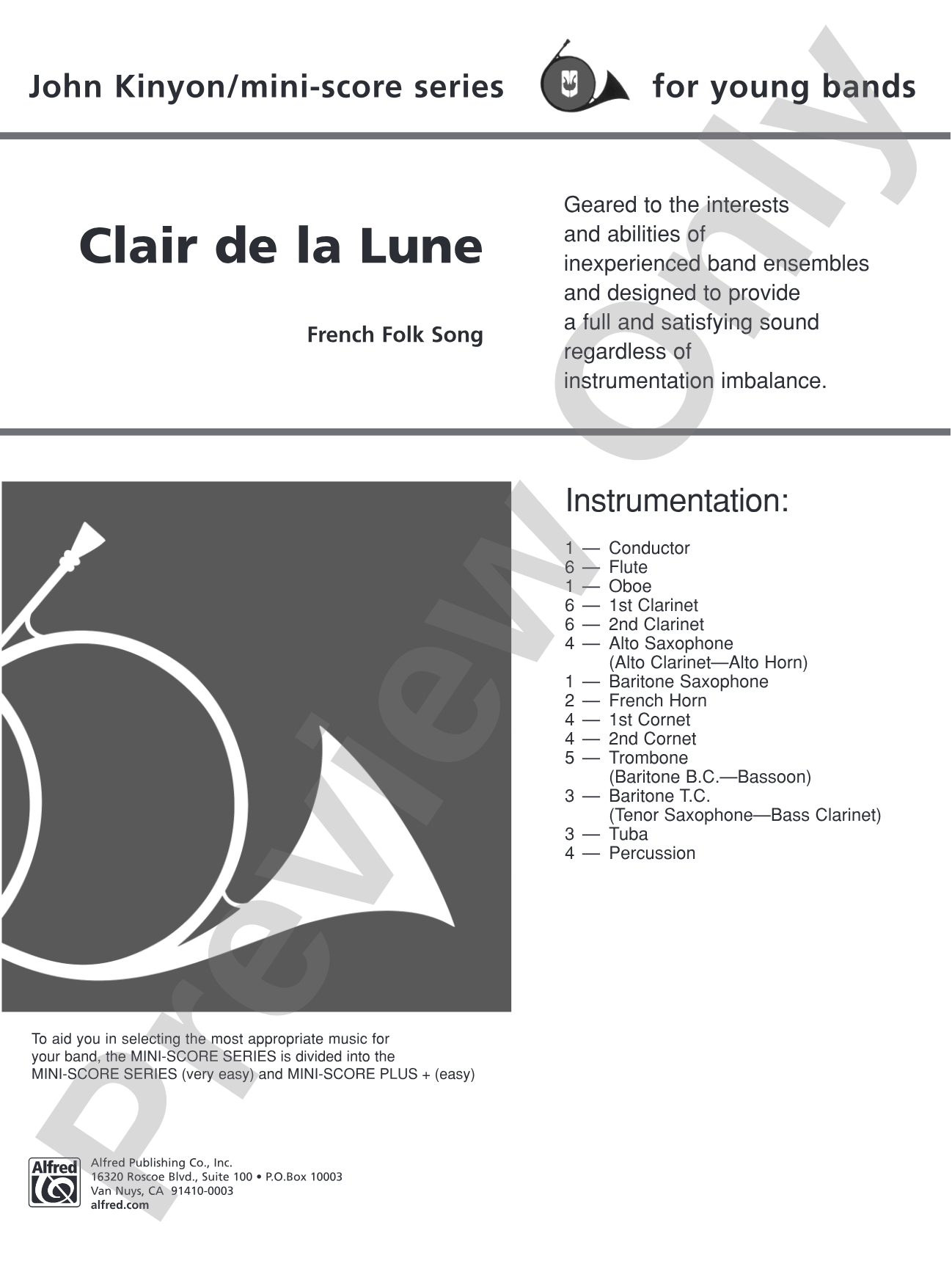

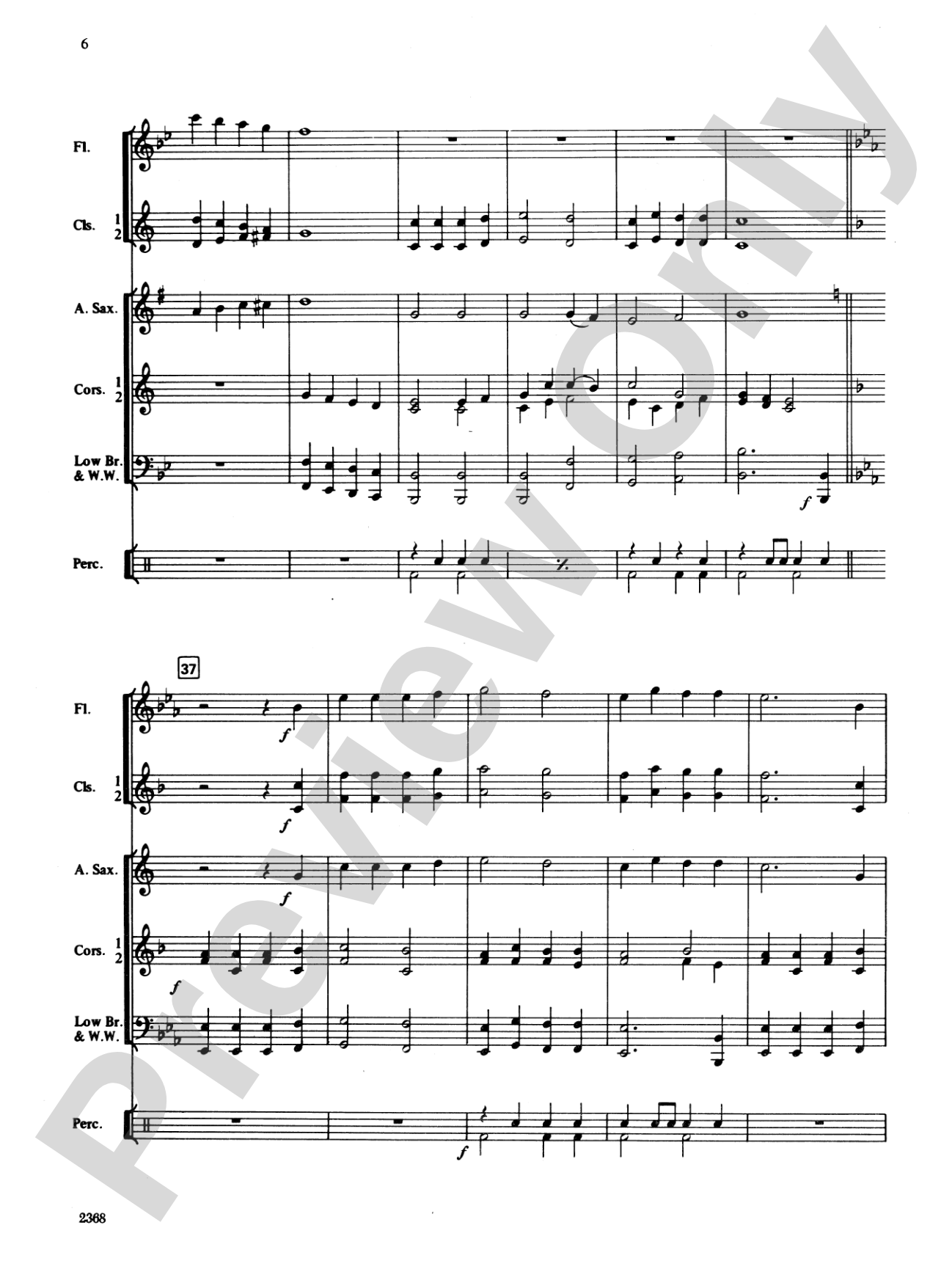
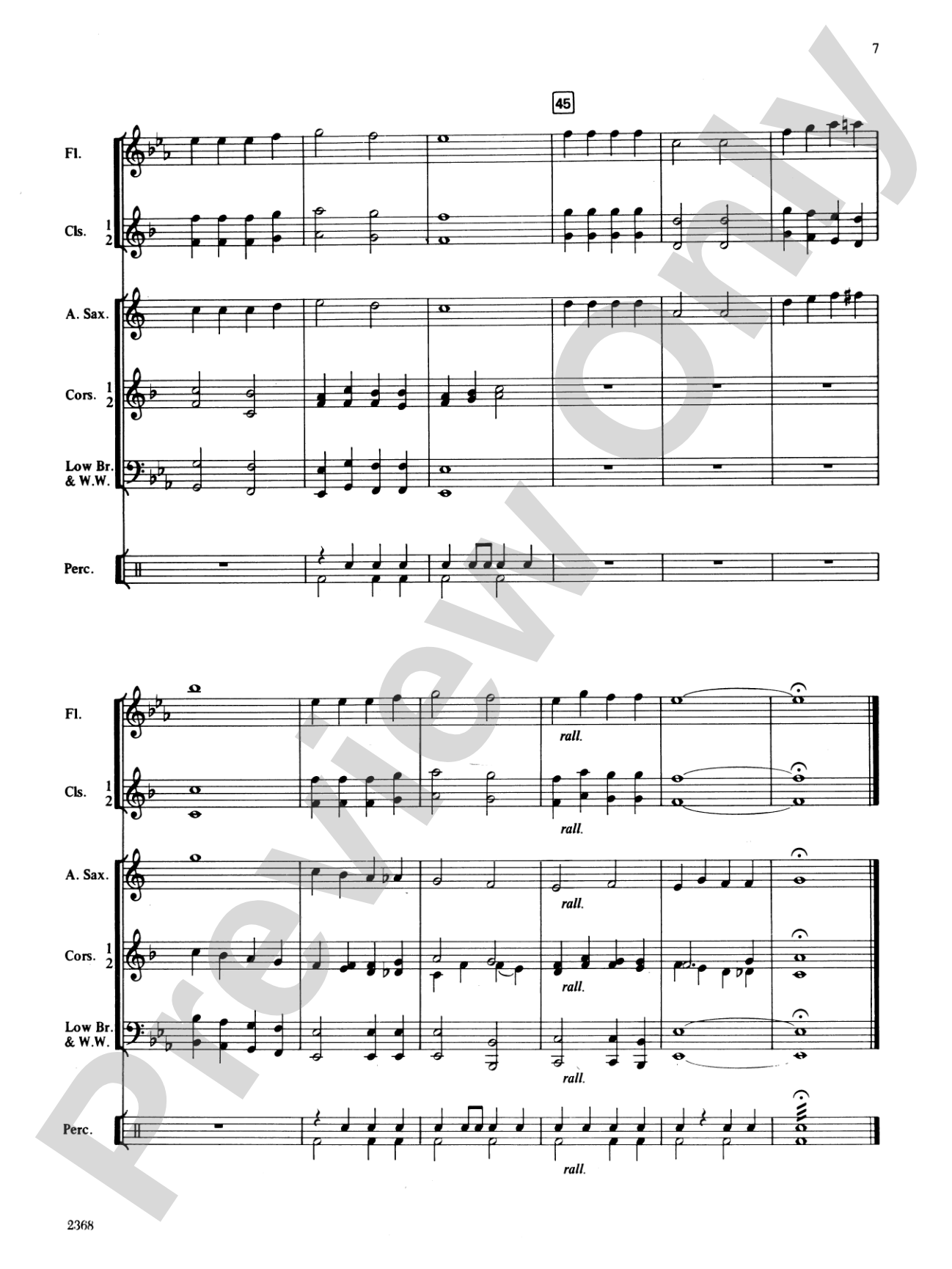


Clair de la Lune
Arr. John Kinyon
Grade: 1 (Very Easy)
Item: 00-PK-0000747

$35.00
Pickup currently not available
Buy Extra Parts (Digital PDF Download)
| Product | Price | Quantity |
|---|---|---|
| Clair de la Lune: Score | $5.00 | |
| Clair de la Lune: Flute | $3.00 | |
| Clair de la Lune: Oboe | $3.00 | |
| Clair de la Lune: 1st B-flat Clarinet | $3.00 | |
| Clair de la Lune: 2nd B-flat Clarinet | $3.00 | |
| Clair de la Lune: E-flat Alto Saxophone | $3.00 | |
| Clair de la Lune: E-flat Baritone Saxophone | $3.00 | |
| Clair de la Lune: 1st F Horn | $3.00 | |
| Clair de la Lune: 1st B-flat Cornet | $3.00 | |
| Clair de la Lune: 2nd B-flat Cornet | $3.00 | |
| Clair de la Lune: 1st Trombone | $3.00 | |
| Clair de la Lune: Baritone T.C. | $3.00 | |
| Clair de la Lune: Tuba | $3.00 | |
| Clair de la Lune: 1st Percussion | $3.00 |
Parts Added to Cart!
Description
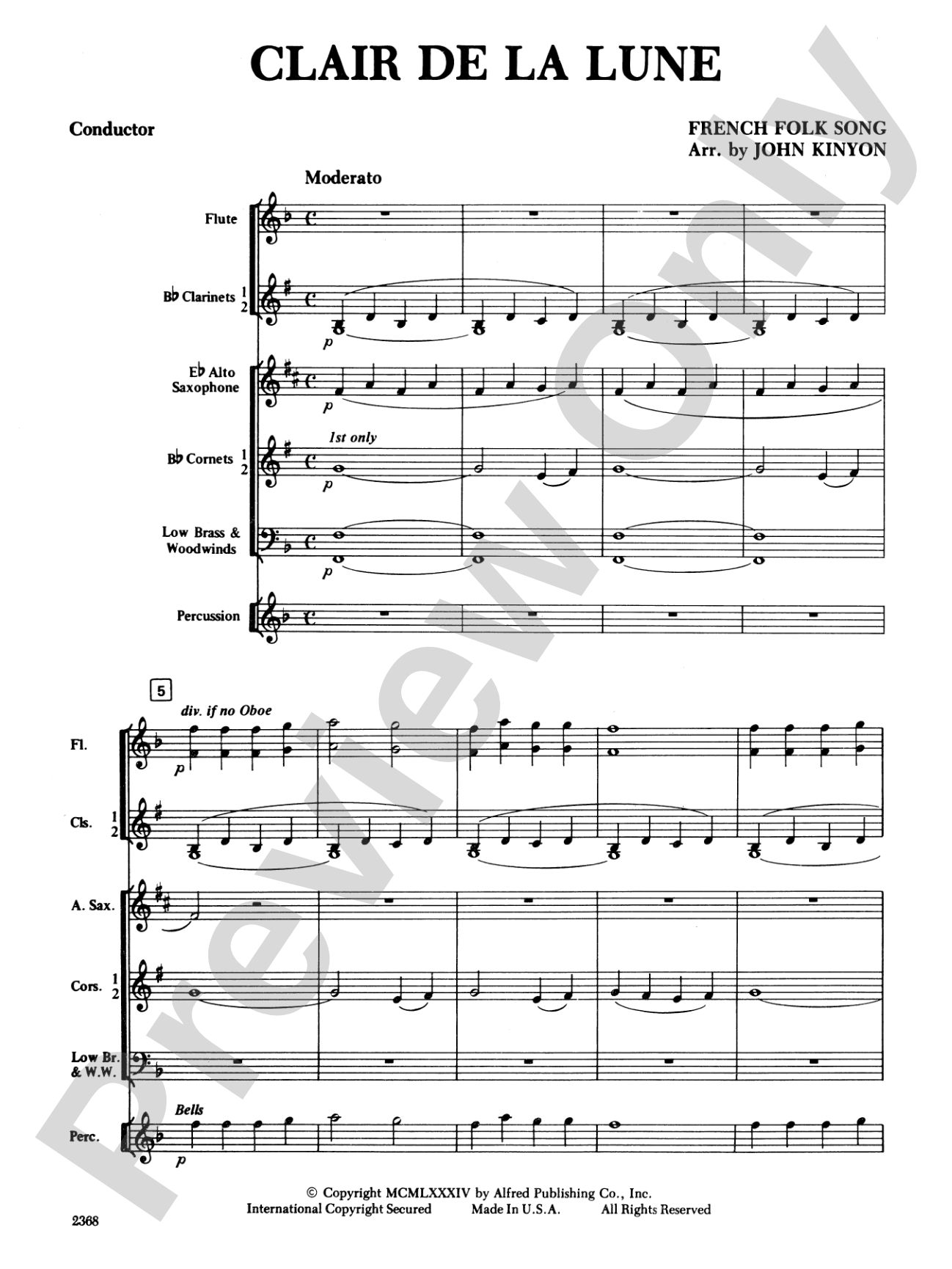
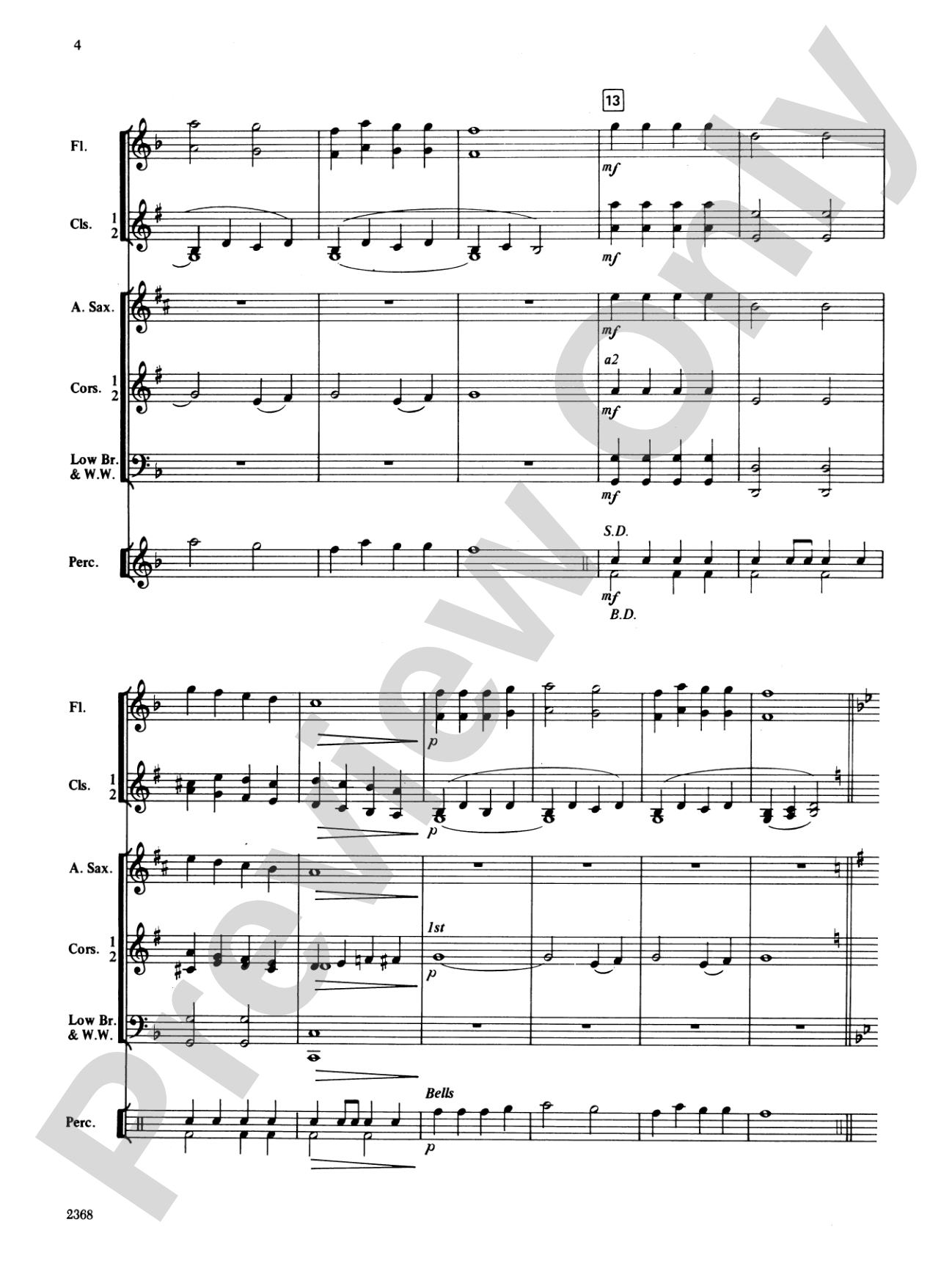
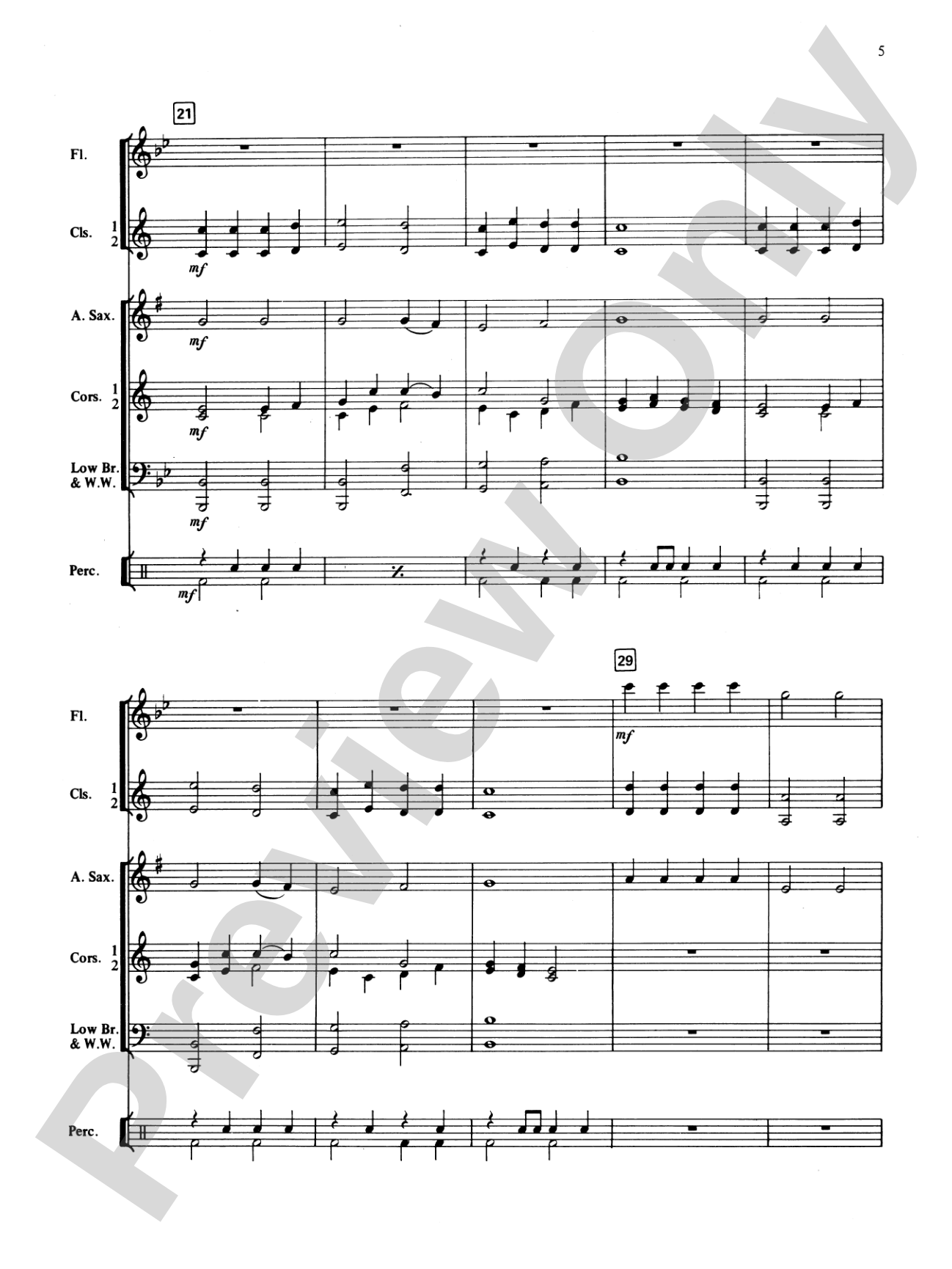
Clever treatment of this familiar French folk song spells instant success---the Kinyon way. The melody is passed from voice to voice while modulating through several keys. (Grade 1)


Don't just read it, hear it, play along with it, and watch your students grow with it. In MakeMusic Cloud, Clair de la Lune comes alive with professional accompaniment, adjustable tempo, and built-in practice tools that turn solo practice into real progress.
Open in the Player
Jump straight in and assign it today.
Start Your Free Trial
Open this title and explore the full library in minutes.
Sample Audio
No sample audio found.
Sample Video
No sample videos found.
Additional Details
Series:
Mini Score Series
Publisher:
Alfred Music
Page Count:
1
SKU:
00-PK-0000747
More about this title
About the Arranger: John Kinyon

John Kinyon earned degrees from Ithaca College and the Eastman School of Music, followed by an honorary doctorate from Limestone College in South Carolina. His career spans instrumental music direction in K-12 settings, educational leadership at Warner Brothers Music in New York, and music education faculty work at the University of Miami.
Kinyon has become synonymous with accessible band arranging, publishing more than 250 works for Alfred across Grade 1 to Grade 3 levels. His catalog includes original marches, ballads, and overtures alongside thoughtful arrangements of familiar material, all written with the teaching musician's needs in mind.
Why we love this
Kinyon's gift for keeping Grade 1 ensembles engaged without overwhelming them shines here. The voice-to-voice melody passing builds sectional listening and independence while the key modulations add harmonic interest that feels purposeful rather than arbitrary, making this arrangement rewarding for both students and audience.
What to expect
Elegant and luminous, this treatment preserves the gentle beauty of the original while keeping the texture light and moving. The passing melody creates a sense of conversation between voices, turning a quiet French classic into an engaging ensemble experience.
Who it's for
Beginning concert bands working at Grade 1 level who want to play a piece everyone recognizes without settling for a basic arrangement. This works equally well for students experiencing their first harmonic modulation or for established beginning bands seeking a polished addition to a concert program.
How to get the most out of it
- Balance the melody line as it moves between sections; mark entrances clearly in each part so no one misses their moment to carry the tune forward.
- Keep articulation consistent across all sections during the modulations to maintain phrase cohesion even as the harmonic center shifts.
- Let the texture stay transparent at Grade 1 tempo; resist the urge to rush, which will muddy the passing melodic lines.
How to use it
Program this as a contrast to more rhythmically active Grade 1 pieces; its lyrical quality and shorter length make it an effective opener or interlude on a mixed concert. It also pairs beautifully with folk-based programming or as a bridge between educational and performance-quality repertoire.
Skills your students will build
- Tracking melodic lines across different instrumental sections and entering securely on the pulse
- Listening for and understanding key modulation in real time
- Balancing sustained harmony with moving melody
- Maintaining phrase shape and legato articulation during key changes