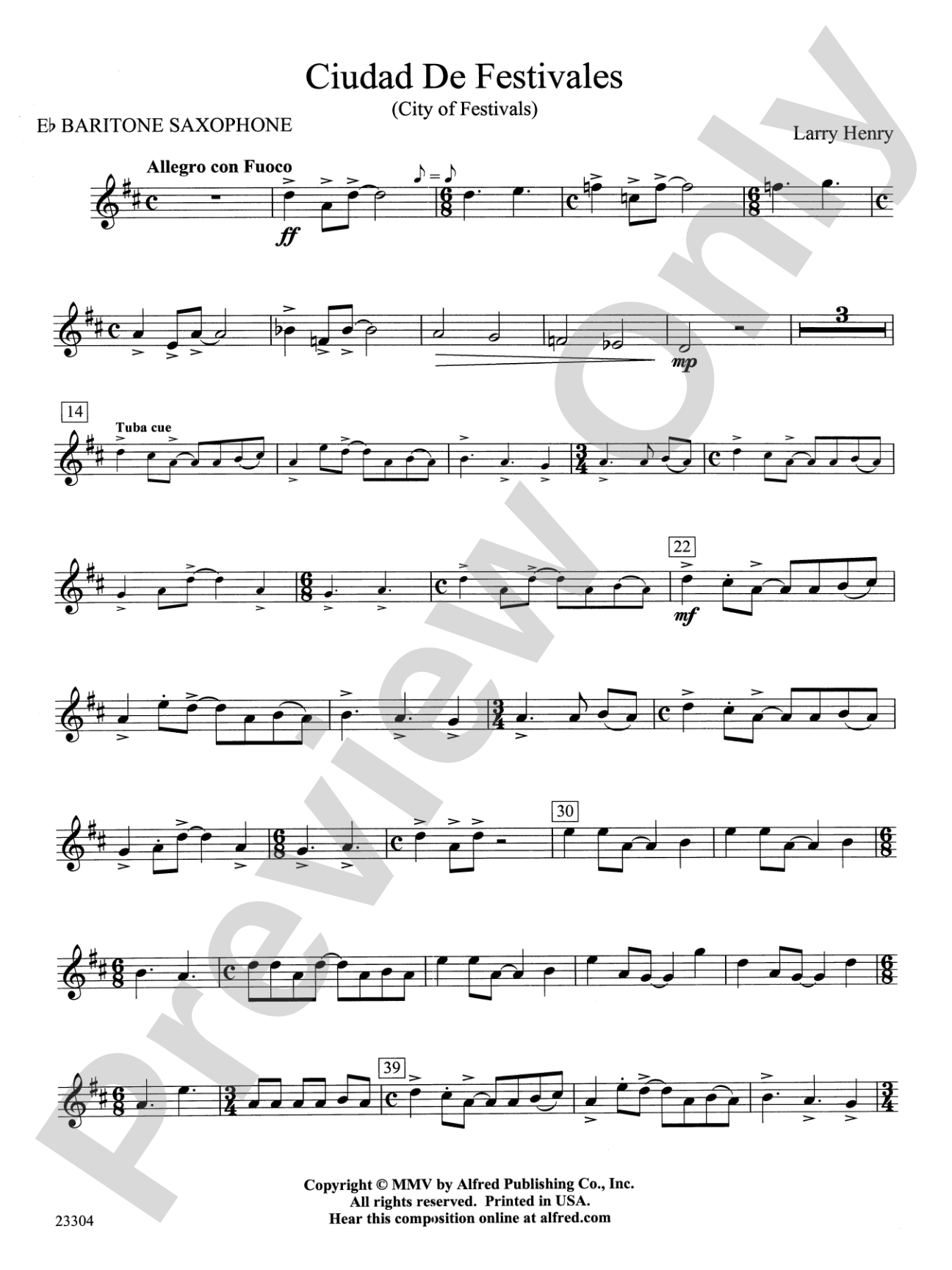
Ciudad de Festivales: E-flat Baritone Saxophone Sheet Music Preview

Ciudad de Festivales: E-flat Baritone Saxophone

By Larry Henry

Grade: 2 (Medium Easy)

Item: 00-PC-0000654_BTX

Digital Download
$3.00
Description
Written in A-B-A form, Ciudad de Festivales begins with a rousing introduction using thematic and rhythmic motives. After an initial statement of the melody by a solo trumpet, the piece develops adding instruments and contrapuntal lines. The B section is introduced by a trumpet duet leading to a baritone solo. A short interlude leads to the return of the A section with the addition of obbligato woodwind parts. The introductory themes are used once again as the coda brings the piece to a spirited conclusion.

Don't just read it, hear it, play along with it, and watch your students grow with it. In MakeMusic Cloud, Ciudad de Festivales: E-flat Baritone Saxophone comes alive with professional accompaniment, adjustable tempo, and built-in practice tools that turn solo practice into real progress.

Sample Audio
0:00
0:00
Sample Video
Additional Details
Series: Young Symphonic
Publisher: Alfred Music
SKU: 00-PC-0000654_BTX

More about this title

Why we love this

Larry Henry writes for young bands with real musical intelligence. Ciudad de Festivales gives conductors the chance to teach formal structure (A-B-A) through a piece that actually sounds polished and exciting at Grade 2. The scoring is transparent enough for students to hear what they're doing while the orchestration feels full.

What to expect

A celebration with architectural shape. The piece opens with festive energy and purpose, unfolds with lyrical moments that give breath and contrast, and surges back to life with renewed vigor. There's a sense of joy throughout that comes from clear melodies and purposeful orchestration rather than relentless volume.

Who it's for

Conductors building bands at the Grade 2 level who want repertoire that teaches form without sacrificing musicality. This works equally well for developing ensembles at the middle school level and for older high school or adult bands prioritizing accessibility and quick preparation.

How to get the most out of it

  • Shape the opening introduction with clear articulation on those rhythmic motives; let the rhythmic energy carry forward into the trumpet's solo statement rather than treating it as a separate moment.
  • Balance the baritone solo in the B section by having upper woodwinds pull back slightly, so the solo voice projects naturally without needing to play louder than is comfortable.
  • Use the short interlude as a reset point for tempo and focus before the A section returns; a slight breath here helps the ensemble recenter for the restatement.
  • Highlight the obbligato woodwind parts when the A section returns by lightly bringing them forward in rehearsal, then letting them recede to their proper balance in performance.

How to use it

Program this as an opening work on a concert where you want to establish a musical tone and confidence in your ensemble early. It pairs well alongside longer or more challenging pieces because it demonstrates control and polish. The spirited conclusion also makes it a strong closer for a shorter program or the opening set of a larger concert.

Skills your students will build

  • Listening for and balancing solo voices within the ensemble
  • Playing in A-B-A form with clear sectional awareness
  • Maintaining rhythmic precision in motivic material
  • Responding to contrapuntal textures and obbligato lines
  • Dynamic control in lyrical passages (baritone solo section)
  • Trumpet range and articulation in both solo and ensemble contexts

You May Also Like