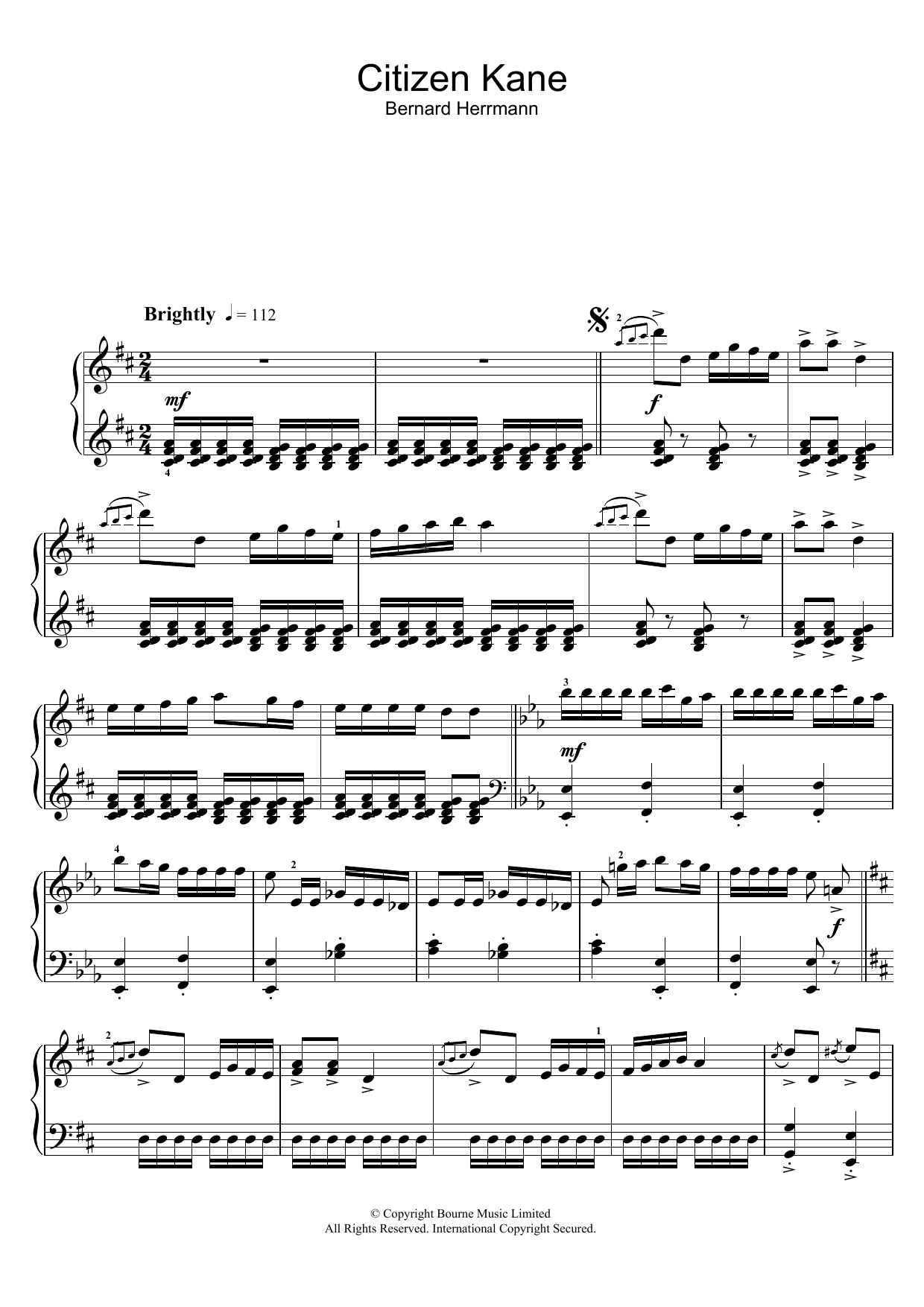
Citizen Kane (Overture): Piano Solo

As performed by Bernard Herrmann

Item: 35-DS00365604

Digital Download
$5.99

One moment…

One moment…

Description

Citizen Kane (Overture): Piano Solo isn't in MakeMusic Cloud just yet...but it could be. Let us know you'd like to see it, and you'll help shape what comes next. In the meantime, start a free trial and dive into thousands of interactive titles your students can play along with today.

Sample Audio
No sample audio found.
Sample Video
Additional Details
Publisher: Hal Leonard
Page Count: 4
SKU: 35-DS00365604

More about this title

About the Artist: Bernard Herrmann

Bernard Herrmann revolutionized film scoring by treating the orchestra as a dramatic instrument equal to the screenplay itself. His work for Orson Welles' Citizen Kane (1941) remains a masterclass in how musical themes can underscore psychological complexity and narrative tension, influencing generations of composers who followed.

Why we love this

This overture condenses Herrmann's orchestral genius into a solo piano arrangement that retains the architectural brilliance of the original. Your students will encounter compositional sophistication rooted in film narrative without needing an ensemble, and the piece rewards careful attention to voice leading and texture that mirrors the score's dramatic weight.

What to expect

Restless and architecturally ambitious. The opening establishes an unsettled foundation that builds toward moments of grandeur, creating the sensation of uncovering layers of a story rather than hearing it told. There is orchestral thinking compressed into the keyboard, with colors and masses suggesting an ensemble even as you play alone.

Who it's for

Intermediate to advanced pianists comfortable with chromatic harmony and the interpretive demands of twentieth-century concert music. This works well for students who thrive on understanding how music functions narratively, or who want to explore the intersection of film and concert repertoire.

How to get the most out of it

  • Shape the opening theme with a vocal, singing line while maintaining rhythmic clarity in the accompaniment; the melody wants to breathe like a film theme.
  • Honor the harmonic shifts and color changes as you would in a contemporary classical work; Herrmann's chromaticism serves the emotional arc, not ornament.
  • Balance clarity with drama at the climactic sections; resist the urge to crash through them, instead letting the harmonic momentum carry the sound forward.

How to use it

Position this as a bridge between film music appreciation and serious piano repertoire in a recital or concert context. It pairs naturally with other twentieth-century character pieces or can stand alone as a compelling seven-minute solo that demonstrates how film composition informs broader musical literacy.

Skills your students will build

  • Chromatic harmony and voice leading in functional contexts
  • Maintaining thematic clarity across textural and registral shifts
  • Interpreting twentieth-century film music idioms at the keyboard
  • Shaping long-line melodies over complex accompaniment patterns
  • Understanding narrative pacing and dramatic timing in instrumental music

You May Also Like