Circus Tumblers Sheet Music Preview

Circus Tumblers: Piano

By Christopher Goldston

Item: 98-DW9132

Digital Download
$2.95
Description
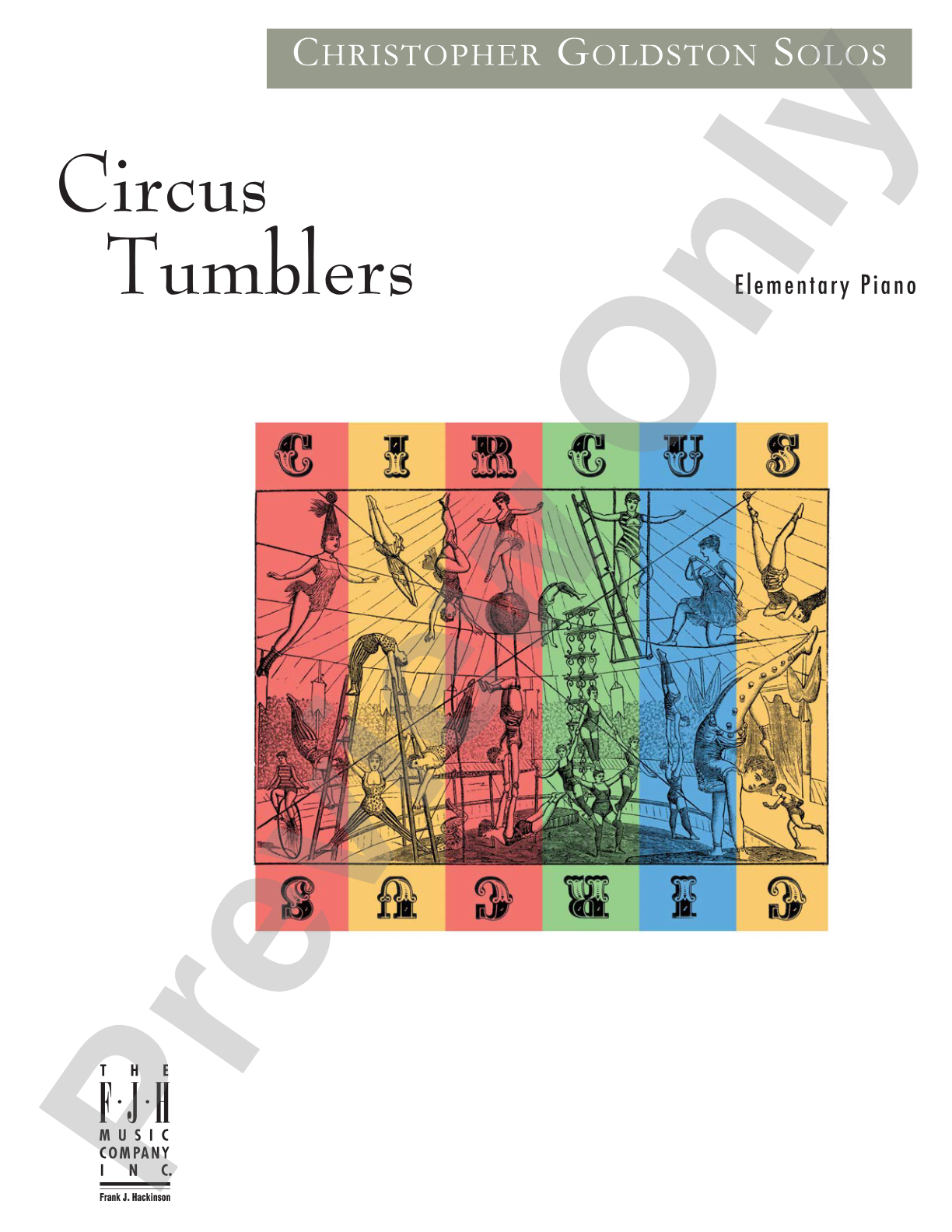
Lively, happy-go-lucky melody seems to "tumble" up and down in playful rhythmic patterns that capture the spirit of the circus. Young pianists will enjoy this piece as it features contrasting dynamics and the opportunity to use a broad range of the keyboard.

Circus Tumblers: Piano isn't in MakeMusic Cloud just yet...but it could be. Let us know you'd like to see it, and you'll help shape what comes next. In the meantime, start a free trial and dive into thousands of interactive titles your students can play along with today.

Sample Audio
No sample audio found.
Sample Video
Additional Details
Series: Written For You
Publisher: The FJH Music Company, Inc.
SKU: 98-DW9132

More about this title

About the Composer: Christopher Goldston

Christopher Goldston

Christopher Goldston earned his Master of Music in piano performance and pedagogy from Northwestern University and his Bachelor of Music in piano performance from the University of North Carolina-Greensboro. He has served on the faculty at Columbia College Chicago, Roosevelt University, and Sherwood Conservatory of Music, and continues to teach both in-person and online from his Chicago studio.

Goldston's compositional voice has been recognized across the music education world. In 1991, he received the National Federation of Music Clubs Lynn Freeman Olson Composition Award for his debut work, Night Train. He has led the MTNA Composition Competition as national coordinator since 2010 and served as president of both the Illinois State Music Teachers Association and the Chicago Area Music Teachers Association. Named an MTNA Foundation Fellow in 2020, he went on to serve as MTNA National Secretary-Treasurer from 2021 to 2023. His commissioned work Four Virtues for oboe, violin, and piano premiered at the 2022 MTNA National Conference.

Why we love this

Goldston writes with a keen ear for what young pianists find genuinely playful to perform. The rhythmic tumbling patterns feel natural under the hands, and the dynamic contrasts give students immediate cause to shape their playing without requiring technical facility beyond their level. The piece delivers real joy in performance without asking for maturity the player doesn't yet possess.

What to expect

Imagine acrobats launching themselves into the air with absolute confidence and carefree energy. The melody bounces up and down across the keyboard in quick, spirited gestures, tumbling through unexpected rhythmic shifts that feel more delightful than disorienting. The whole piece radiates optimism and infectious good humor, capturing that moment when the circus comes alive.

Who it's for

This piece suits young pianists in their early elementary years who have solid technique in hand position and basic rhythmic reading but are ready to explore pieces with genuine personality. It works equally well for students building confidence in recital playing and for teachers seeking repertoire that makes students look forward to practice.

How to get the most out of it

  • Let the melody's playful contour guide your phrasing; the piece wants a light touch even in louder moments, so avoid heaviness at higher dynamics.
  • Map out the keyboard geography before you play through it several times. Knowing where the wider intervallic jumps land will let you relax and tumble through them without tension.
  • Lean into the rhythmic character by feeling the pulse clearly. This isn't a lyrical piece, so keep your tempo steady and let the syncopation sparkle.
  • Balance the hand parts intentionally. Let the melody sing without overwhelming it, and use the accompaniment to support rather than dominate.

How to use it

Program this as a stand-alone recital opener or closer to set a bright, energetic tone. It pairs well alongside other playful character pieces at an all-elementary recital, or slot it into a spring concert where you want an immediate lift in the room's energy.

Skills your students will build

  • Playing with dynamic contrast (soft to loud to soft again)
  • Managing keyboard geography and wide intervallic leaps with confidence
  • Reading and executing playful rhythmic syncopation
  • Balancing melody and accompaniment in both hands
  • Sustaining a steady tempo through rhythmically varied figures

You May Also Like