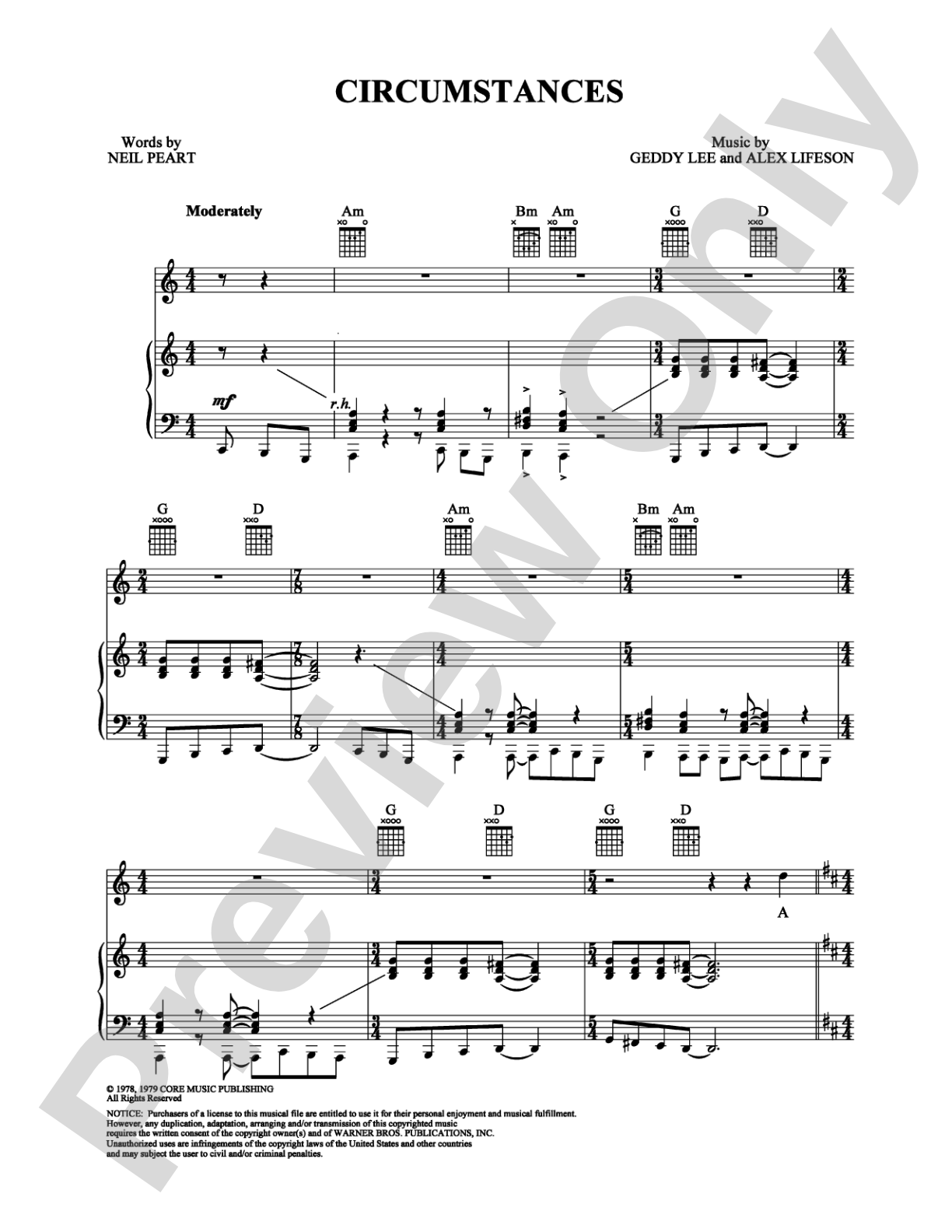
Circumstances: Piano/Vocal/Chords Digital Sheet Music

Circumstances: Piano/Vocal/Chords Digital Sheet Music

Rush, Geddy Lee, Alex Lifeson

Item: 00-PS-0004159

Digital Download
$3.99
Description

Circumstances: Piano/Vocal/Chords Digital Sheet Music isn't in MakeMusic Cloud just yet...but it could be. Let us know you'd like to see it, and you'll help shape what comes next. In the meantime, start a free trial and dive into thousands of interactive titles your students can play along with today.

Sample Audio
No sample audio found.
Sample Video
Additional Details
SKU: 00-PS-0004159

More about this title

About the Artist: Rush

Rush stands as one of rock music's most technically demanding and intellectually ambitious bands. Formed in Toronto in 1968, the trio of Geddy Lee (vocals and keyboards), Alex Lifeson (guitar), and Neil Peart (drums and lyrics) built a career on complex time signatures, philosophical lyrics, and instrumental virtuosity that influenced generations of musicians across rock, metal, and progressive genres.

Why we love this

"Circumstances" gives singers and pianists access to one of Rush's most musically engaging compositions without requiring the full band arrangement. The interplay between vocal melody and piano voicing reveals the harmonic sophistication beneath what might sound like straightforward rock radio fare, making it rewarding for musicians who want to understand how the band constructs its songs.

What to expect

The piece balances melodic accessibility with harmonic intrigue, anchored by the piano's grounded accompaniment pattern. It has the thoughtful quality of progressive rock rendered intimate; the listener moves through shifts in dynamic and harmonic color that feel earned rather than decorative.

Who it's for

This arrangement suits singers and pianists working in jazz ensembles, cabaret settings, or contemporary music recitals who want to explore rock repertoire with harmonic depth. It also works for pianists arranging for voice students who need material that challenges rhythmic independence and harmonic awareness without requiring the technical demands of the original recording.

How to get the most out of it

  • Anchor the left hand to establish the rhythmic foundation firmly; Rush's catalog depends on precise timing, and the piano part carries harmonic weight that a vocalist needs to lock into.
  • Shape the vocal line with the piano's dynamic arc rather than singing through it uniformly. The accompaniment suggests moments of intensity and restraint that the voice should mirror.
  • Pay attention to any chord notations that suggest substitutions or upper extensions; they often unlock the distinctive character of Rush's harmonic language.
  • Balance clarity in the upper vocal register with the piano's full texture. The arrangement should support rather than fight the melodic line.

How to use it

Pair this with other art-rock or progressive repertoire in a recital that explores how rock music engages complex harmony and song structure. It also works as a bridge piece between classical standards and contemporary song interpretation in a mixed-genre vocal recital.

Skills your students will build

  • Reading and performing syncopated rhythms in a rock context
  • Interpreting chord symbols and understanding upper extensions in harmonic analysis
  • Coordinating independent rhythmic figures between voice and piano
  • Recognizing and executing the dynamic shapes embedded in written accompaniment patterns

You May Also Like