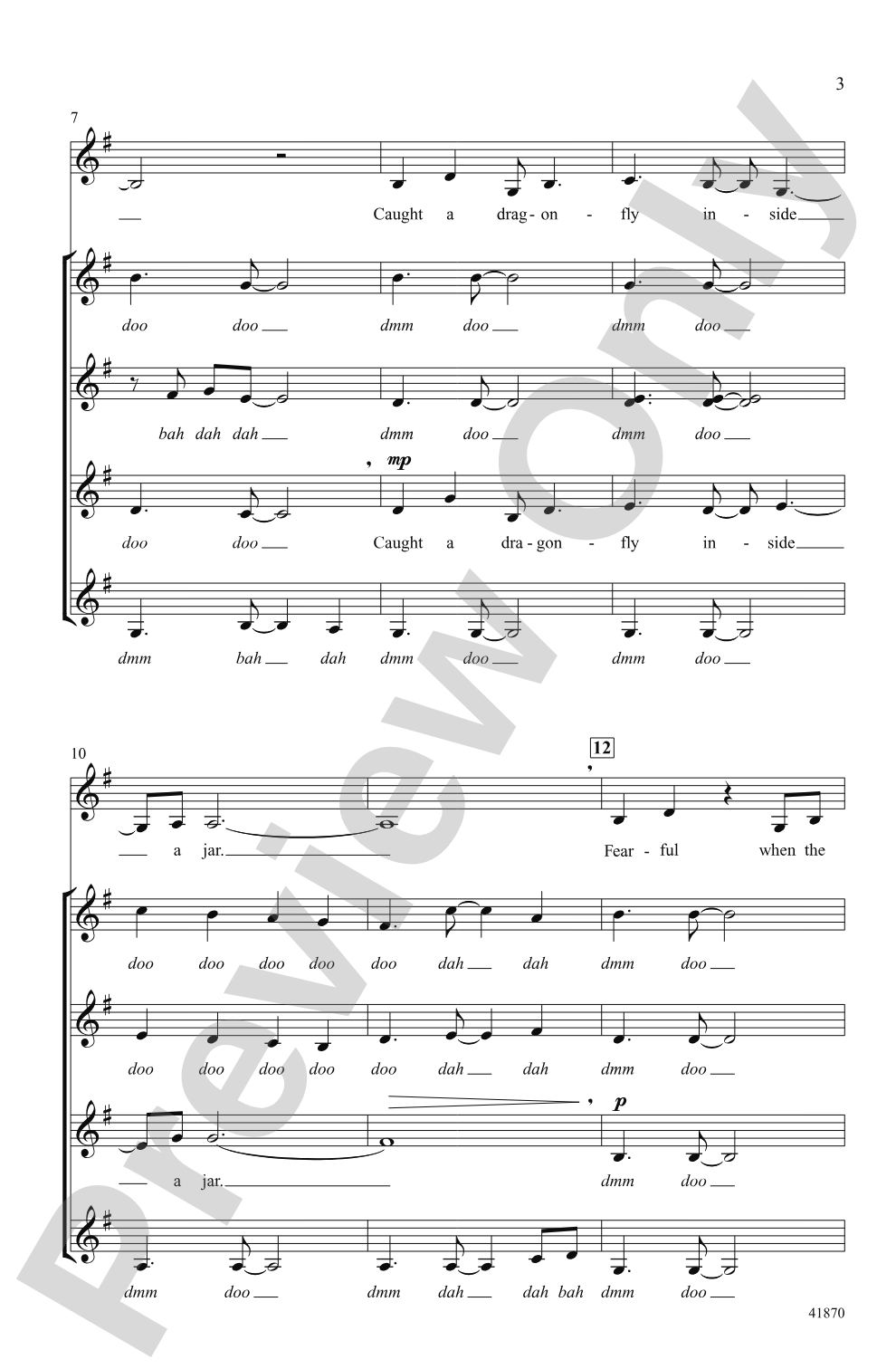
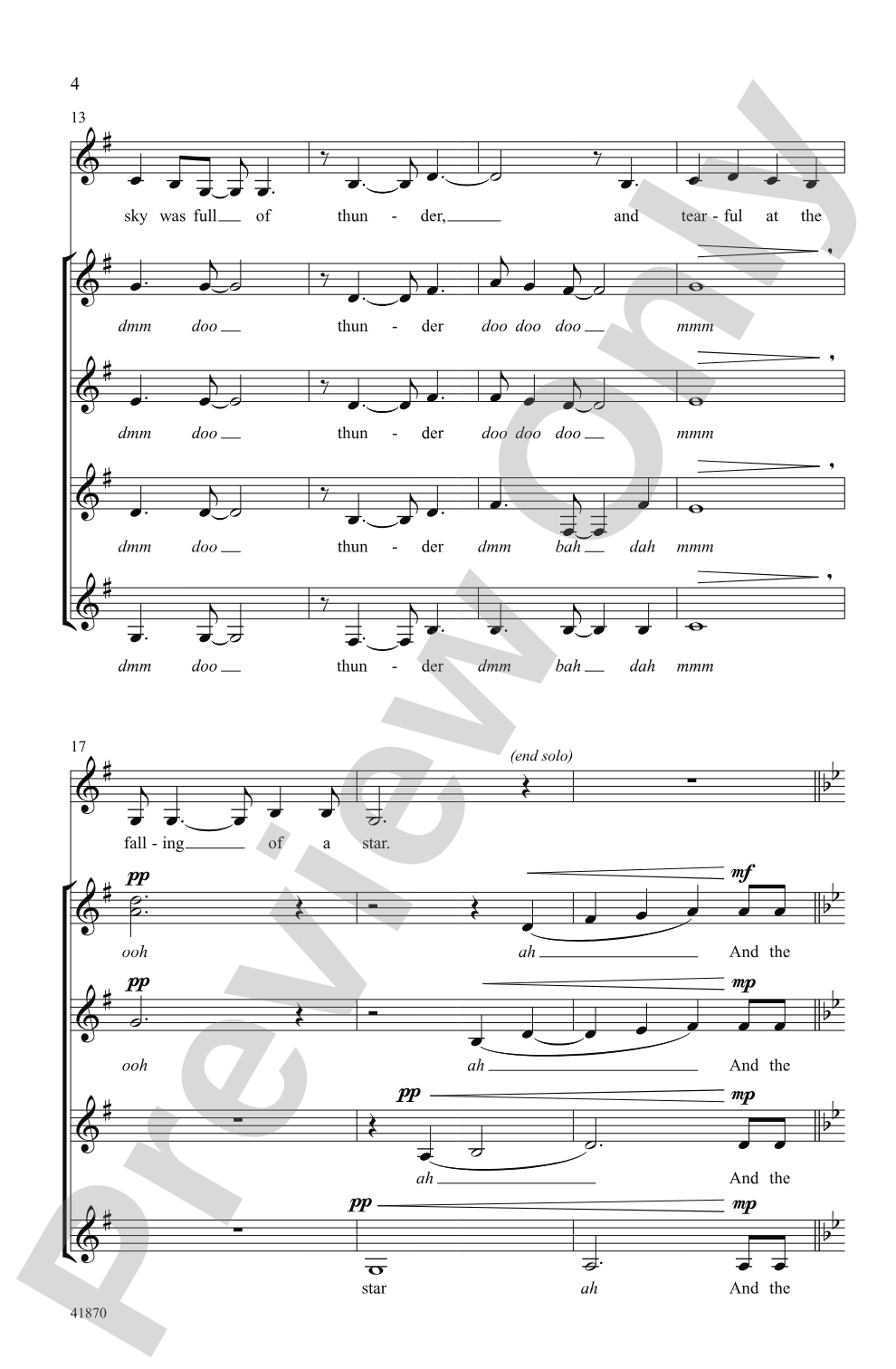
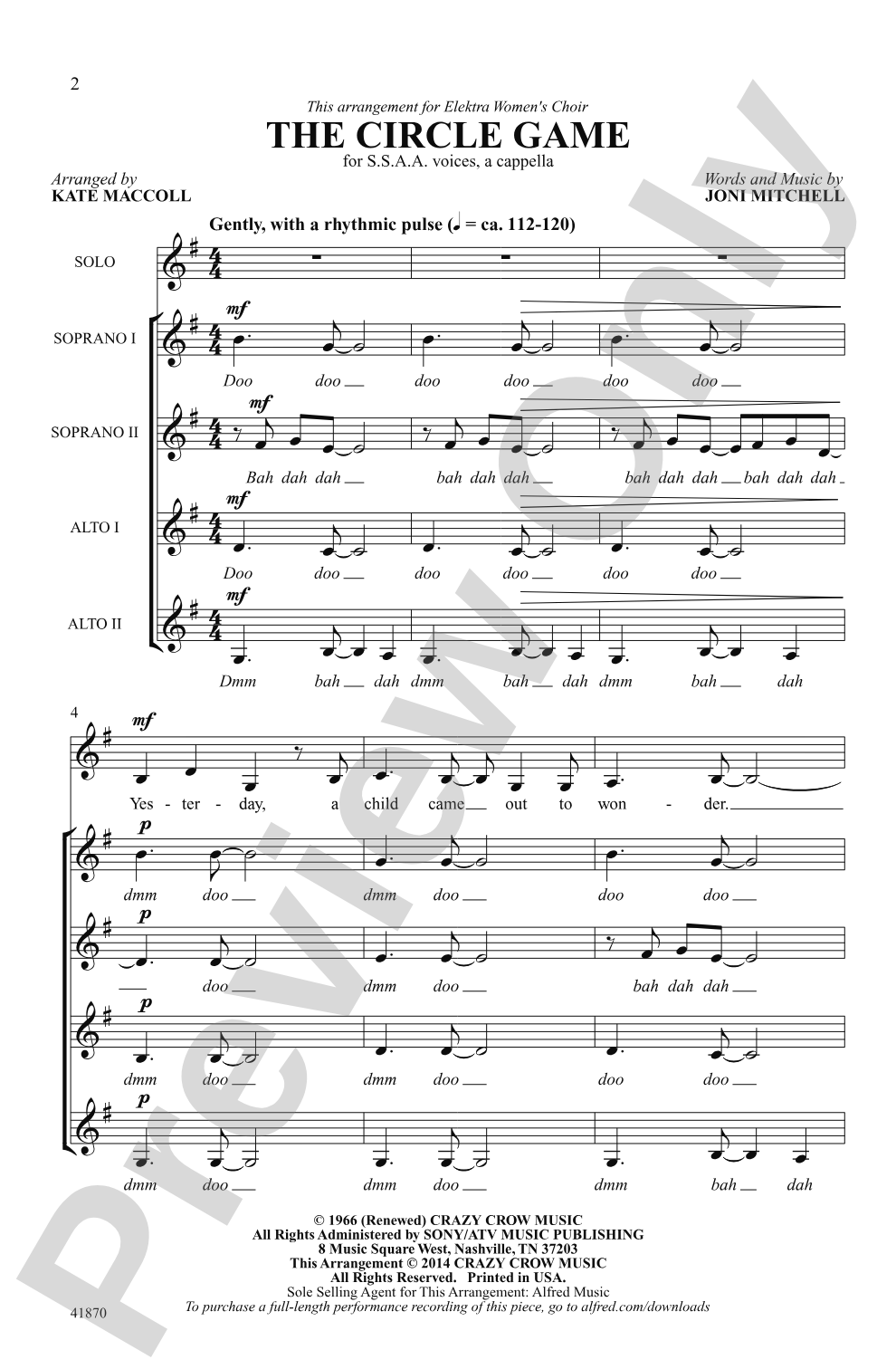
Circle Game, The Sheet Music Preview

Circle Game, The: SSAA, a cappella Choral Octavo

Words and music by Joni Mitchell / arr. Kate MacColl

Item: 00-PO-0001994

Digital Download
$2.00

Minimum order quantity: 20 copies

One moment…

Description
Originally created for Vancouver's Elektra, this concert arrangement features a soloist as it weaves the melody through every section in the ensemble. Multiple key changes add to the musicality of this delightful setting of a Joni Mitchell favorite.

Circle Game, The: SSAA, a cappella Choral Octavo isn't in MakeMusic Cloud just yet...but it could be. Let us know you'd like to see it, and you'll help shape what comes next. In the meantime, start a free trial and dive into thousands of interactive titles your students can play along with today.

Sample Audio
0:00
0:00
Sample Video
Additional Details
Series: Alfred Pop Choral Series
Publisher: Alfred Music
Page Count: 16
SKU: 00-PO-0001994

More about this title

About the Composer: Joni Mitchell

Joni Mitchell is a Canadian singer-songwriter whose influence on folk, pop, and jazz music spans more than five decades. Her sophisticated harmonic language, introspective lyrics, and innovative approach to melody and form have shaped generations of musicians across multiple genres. Mitchell's work appears regularly in educational settings because her songs reward careful listening and offer rich material for arrangers seeking to deepen choral artistry.

Why we love this

Kate MacColl's arrangement respects the song's folk roots while creating genuine ensemble writing that keeps every voice engaged. The strategic use of key changes and the featured soloist approach give this piece personality and shape, making it feel like a special discovery rather than a straightforward pop cover. Your singers will connect with Mitchell's timeless melody while developing their musicianship through real harmonic and textural variety.

What to expect

There's an unhurried, reflective quality to this arrangement that captures the contemplative spirit of Mitchell's original while maintaining the melodic accessibility that made the song a classic. The key changes create gentle surprises that lift the piece forward, and the interplay between soloist and ensemble gives the familiar melody new angles to discover with each rehearsal.

Who it's for

This arrangement suits experienced high school choirs and confident college ensembles with solid intonation and blend. It works equally well for advanced community choirs and professional pop vocal groups seeking fresh repertoire that honors the original while offering interpretive depth.

How to get the most out of it

  • Balance the featured soloist carefully against the surrounding voices. The arrangement weaves the melody through different sections, so support the soloist without overwhelming them, especially when accompanying voices double or move in counterpoint.
  • Approach the key changes as musical landmarks rather than technical hurdles. Each shift should feel intentional and fresh, giving the ensemble a moment to reset and explore new harmonic territory.
  • Shape the phrasing across the full arc of the piece rather than phrase-by-phrase. A cappella singing requires deliberate attention to breath and line continuity, which becomes especially important when multiple key areas are at play.
  • Trust the simplicity of your sound. Without instrumental support, focus on clarity of vowels, precise rhythmic unison in tutti sections, and the warmth that comes from truly blended voices.

How to use it

Program this as a concert closer or centerpiece that gives audiences a moment of recognition and beauty. Its sophisticated yet approachable character makes it ideal for mixed concerts featuring pop, folk, and contemporary repertoire, or as a palate-cleansing contrast to heavier or more dramatic pieces.

Skills your students will build

  • Modulation and key awareness through multiple key changes
  • A cappella blend and tuning without instrumental reference
  • Soloistic singing within an ensemble context
  • Counterpoint and textural variety within SSAA voicing
  • Musical interpretation of a well-known song

You May Also Like