
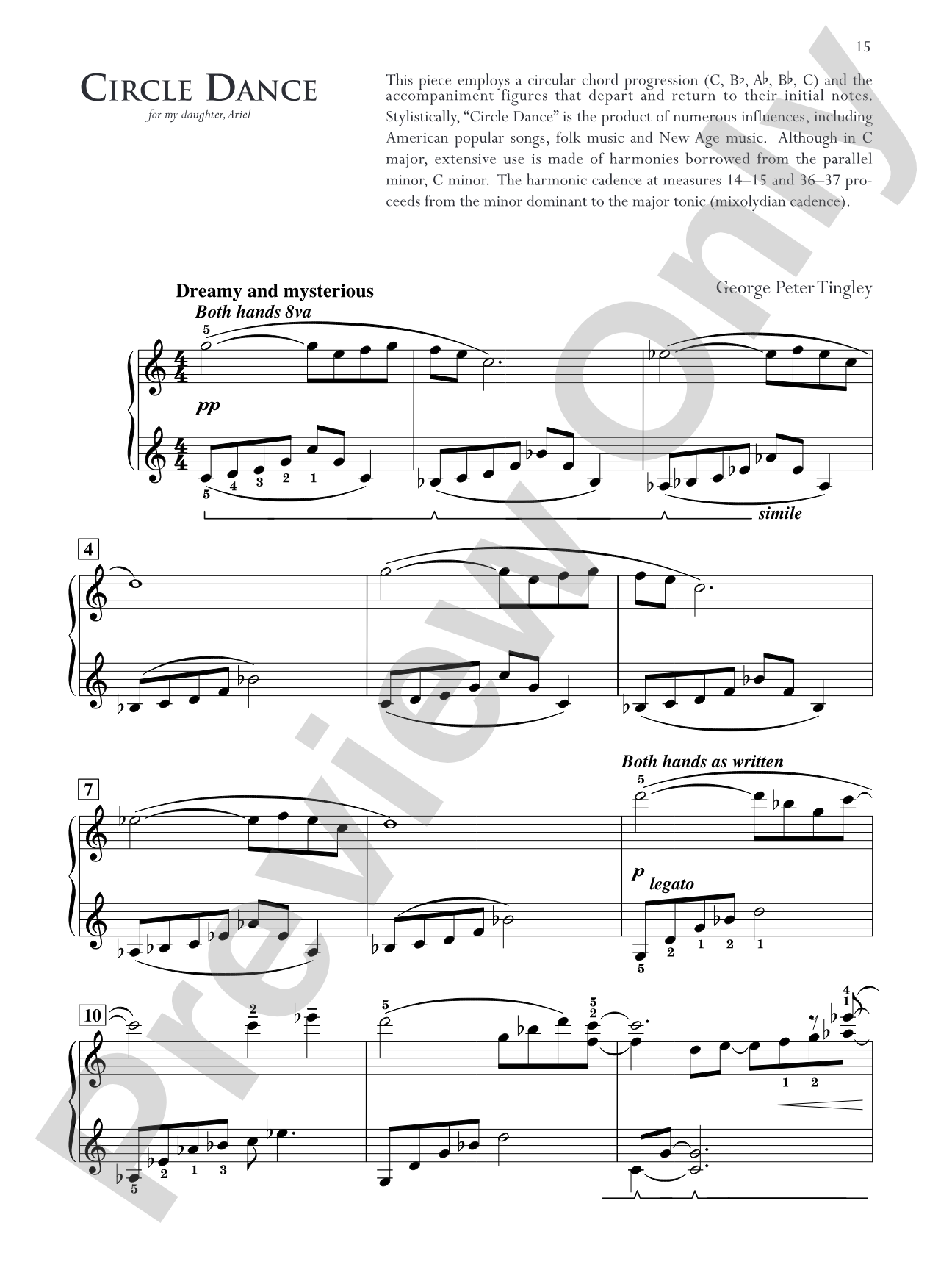

Circle Dance: Piano
7 Intermediate to Late Intermediate Piano Solos That Reflect and Celebrate Styles of Past Masters
By George Peter Tingley
Level: Intermediate / Late Intermediate
Item: 00-PS-0016690
$4.99
Pickup currently not available
Description
Reflect and celebrate the styles of past masters with these pieces ranging from early to late intermediate in level. One might hear echoes of such composers as Beethoven, Tchaikovsky and sounds suggestive of European folk music. Program notes are included explaining the construction of the solos and specific influences.


Circle Dance: Piano isn't in MakeMusic Cloud just yet...but it could be. Let us know you'd like to see it, and you'll help shape what comes next. In the meantime, start a free trial and dive into thousands of interactive titles your students can play along with today.
Request This Title
Tell us you want it.
Start Your Free Trial
Explore everything that's ready to play right now.
Sample Audio
No sample audio found.
Sample Video
No sample videos found.
Additional Details
Publisher:
Alfred Music
Page Count:
24
SKU:
00-PS-0016690
More about this title
About the Composer: George Peter Tingley
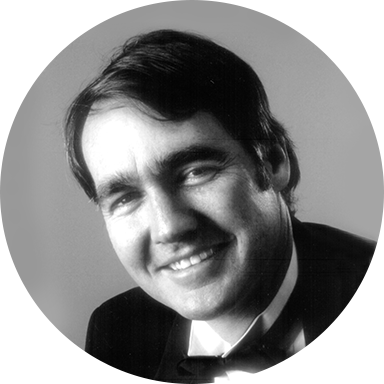
George Peter Tingley began his musical journey on violin at age four before switching to piano at ten, where he immediately started improvising and composing. He holds a B.A. in Piano Performance from California State University, Hayward, and both Bachelor and Master degrees in Music Theory from USC. During the 1970s, he studied composition privately with Nadia Boulanger in Paris, then returned to establish a private teaching studio and launch a prolific career in educational music publishing.
Since 1989, Tingley has published over 75 piano pieces for students and teachers. His compositions have reached audiences far beyond the classroom; he wrote Kristi's Theme for Olympic figure skater Kristi Yamaguchi in 1992, which was orchestrated by Warner Bros. and performed on televised skating competitions. Based in Point Richmond, California, Tingley continues to compose music that bridges classical tradition with accessible pedagogy.
Why we love this
Tingley writes with genuine affection for the composers who shaped him, but these pieces never feel like pastiche. The collection invites students to hear how musical languages evolve and connect across centuries and continents, which deepens listening skills far more than technical studies alone. The included program notes turn analysis into conversation rather than lecture, making this a teaching tool as much as a performance collection.
What to expect
These pieces breathe with the elegance of 19th-century salon music while harboring delightful surprises from unexpected harmonic corners and rhythmic gestures. You'll recognize echoes of the composers you admire, but Tingley's voice remains distinct; the collection feels like thoughtful conversation about music rather than devoted imitation. The European folk idioms add warmth and character that make each piece memorable long after you've learned the notes.
Who it's for
Intermediate to late intermediate pianists ready to explore how composers build on tradition without simply copying it. Students who enjoy both structured classical forms and the character and color of folk-influenced melodies will connect especially well with this collection. Teachers seeking repertoire that combines technical growth with musical depth and historical awareness.
How to get the most out of it
- Study the program notes before you begin; they identify the stylistic influences in each piece and reveal how Tingley constructed the musical arguments.
- Listen for the folk music elements embedded alongside classical forms; they often appear as unexpected harmonic turns or rhythmic figures that give each piece its personality.
- Shape the phrasing the way you would in a Bach prelude or a Romantic character piece, allowing the derived styles to emerge through your own musical choices rather than mechanical imitation.
How to use it
Use individual pieces within a student recital to showcase different stylistic periods and influences; the program notes give audiences a framework for listening. This collection works beautifully as a bridge between classical repertoire and contemporary composition courses, showing students how composers engage with history. Select pieces strategically across a season to alternate with more austere or modern works, allowing the folk elements to provide tonal variety and audience connection.
Skills your students will build
- Recognizing and interpreting stylistic characteristics of different composers and historical periods
- Reading and executing varied harmonic language ranging from classical to folk-influenced progressions
- Shaping long melodic lines with structural awareness and period-appropriate phrasing
- Identifying how composers adapt traditional forms and textures for pedagogical repertoire