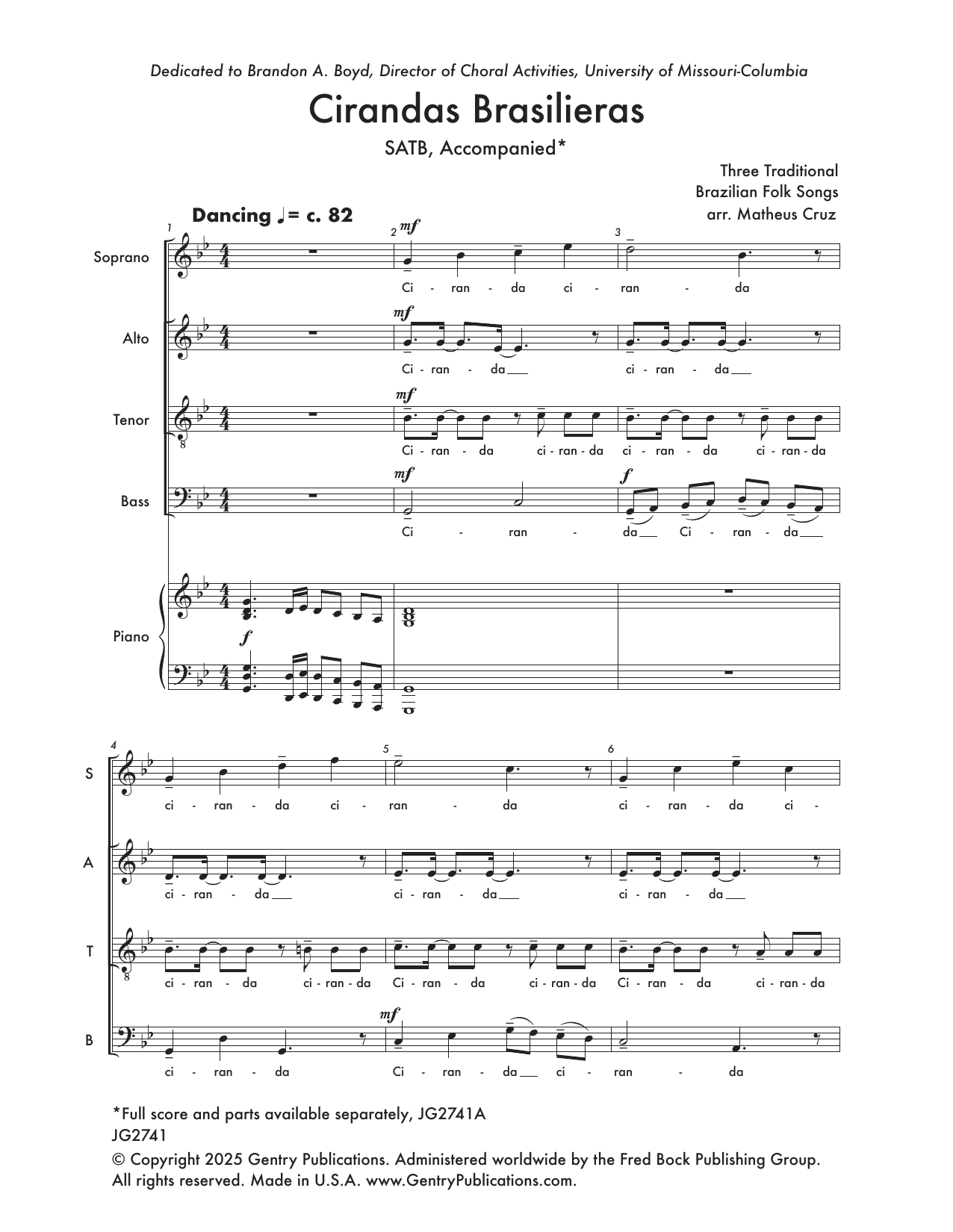
Cirandas Brasileiras Sheet Music Preview

Cirandas Brasileiras: SATB Choral Octavo

Arranged by Matheus Cruz

Item: 35-DS01504559

Digital Download
$3.60
Description

Cirandas Brasileiras: SATB Choral Octavo isn't in MakeMusic Cloud just yet...but it could be. Let us know you'd like to see it, and you'll help shape what comes next. In the meantime, start a free trial and dive into thousands of interactive titles your students can play along with today.

Sample Audio
No sample audio found.
Sample Video
Additional Details
Publisher: Hal Leonard
Page Count: 15
SKU: 35-DS01504559

More about this title

Why we love this

Matheus Cruz has crafted arrangements that honor the rhythmic complexity and melodic warmth of Brazilian traditional music while remaining accessible to four-part choirs. The voicings sit naturally in each part, making this a refreshing departure from typical concert octavos without demanding superhuman ranges or rhythmic acrobatics.

What to expect

Warm, conversational, and grounded in joy. The cirandas themselves are rooted in Brazilian circle dances and folk traditions, so this arrangement carries an inherent sense of community and movement. Even when the harmonies shift, there is always a feeling of forward momentum and celebration.

Who it's for

Choirs with some rhythmic maturity and a director interested in expanding beyond standard European concert repertoire. The SATB voicing works for secondary and college ensembles seeking something with genuine cultural weight that still feels singable.

How to get the most out of it

  • Establish the pulse through body movement during rehearsal. Brazilian music lives in the body first; once singers feel the underlying rhythmic grid, the syncopations fall into place naturally.
  • Layer the piece by learning each voice separately on the neutral syllables that match the text's consonant clusters. This prevents singers from rushing ahead into pronunciation before they own the pitches.
  • Anchor your rehearsals with a recording of authentic Brazilian choro or samba ensembles. Hearing how these melodies and rhythms function in their original context shapes phrasing and articulation decisions.

How to use it

Pair this with other world music selections to build a concert around global folk traditions, or use it as a colorful contrast to a program of Renaissance motets or American standards. A single performance in spring or as part of a cultural awareness series also works well, especially if you can add context about the cirandas' role in Brazilian music and dance.

Skills your students will build

  • Reading and performing syncopated rhythms in duple meter
  • Singing in Portuguese with natural phrasing and vowel consistency
  • Understanding call-and-response structures and ensemble texture
  • Maintaining rhythmic independence while blending with other voice parts

You May Also Like