Cinema Paradiso Sheet Music Preview

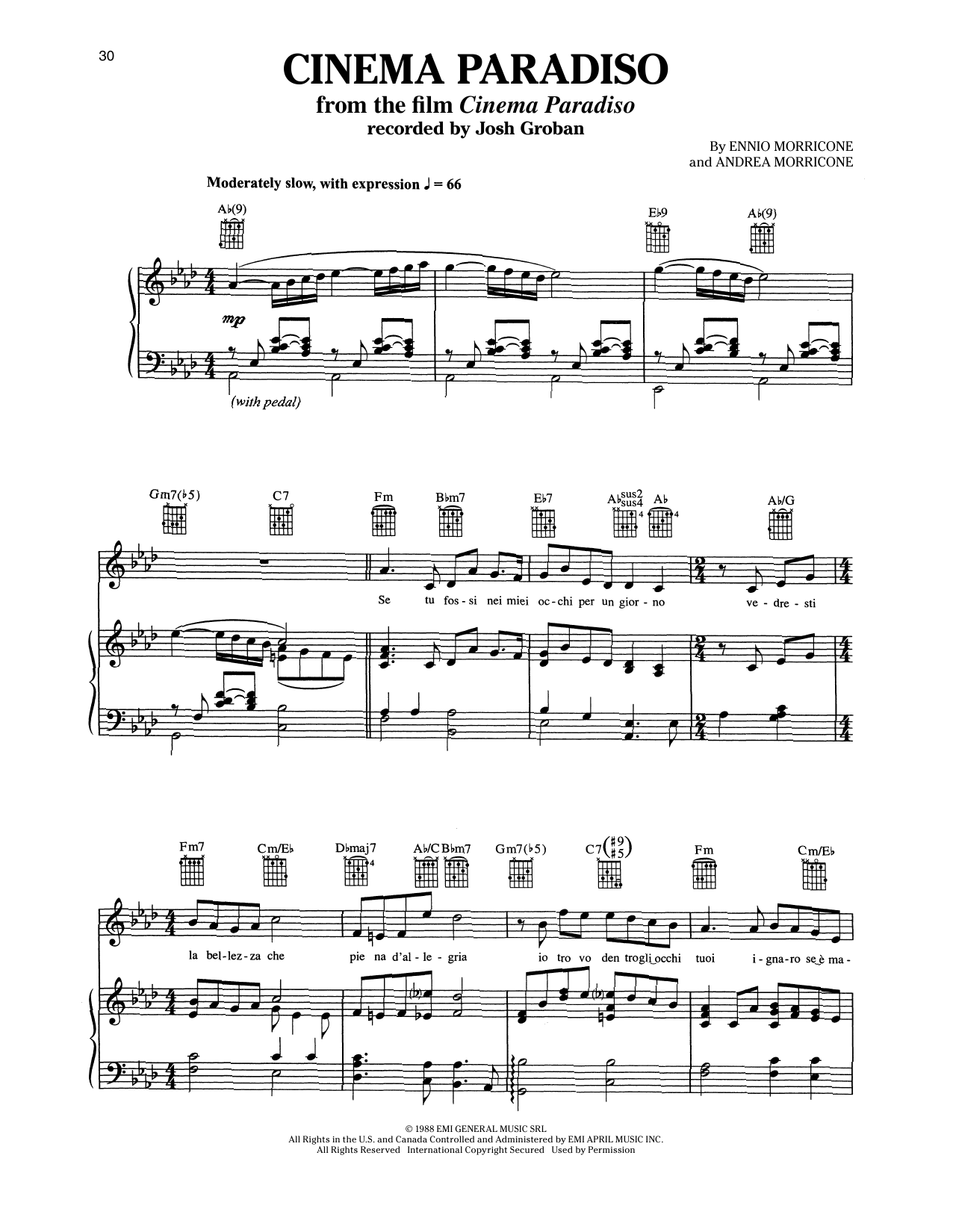
Cinema Paradiso: Piano Vocal

As performed by Andrea Morricone

Item: 35-DS01638133

Digital Download
$5.99
Description

Cinema Paradiso: Piano Vocal isn't in MakeMusic Cloud just yet...but it could be. Let us know you'd like to see it, and you'll help shape what comes next. In the meantime, start a free trial and dive into thousands of interactive titles your students can play along with today.

Sample Audio
No sample audio found.
Sample Video
Additional Details
Publisher: Hal Leonard
Page Count: 4
SKU: 35-DS01638133

More about this title

About the Artist: Andrea Morricone

Andrea Morricone is the son of legendary film composer Ennio Morricone, inheriting both his father's gift for melody and his deep understanding of how music serves narrative. Where Ennio shaped cinema through sweeping orchestral themes, Andrea has carved his own path by bringing those same compositional sensibilities to contemporary settings, including arrangements and adaptations that make classic film music accessible to singers and pianists.

Why we love this

This arrangement captures the bittersweet nostalgia of Cinema Paradiso in a form your singers can actually perform. The piano part sits in a comfortable register that doesn't fight the voice, and the four pages strike the right balance between accessibility and genuine emotional depth.

What to expect

The piece wraps you in the warmth of Italian cinema and childhood memory. There's a tender quality to the melody, a sense of looking back with both joy and ache, while the harmonic language stays grounded and singable rather than reaching for complexity.

Who it's for

Vocalists preparing recital material, singers building repertoire that bridges classical and contemporary styles, and piano teachers looking for meaningful duet material that doesn't demand virtuosity from either player.

How to get the most out of it

  • Find the natural phrasing in the vocal line by singing through without accompaniment first; the piano will follow more organically once you understand where the breath points live.
  • Treat the piano part as dialogue rather than strict accompaniment. Moments where the two lines move independently create intimacy; resist the urge to lock everything together.
  • Shape the dynamics gradually rather than jumping between levels. This score rewards a singer who thinks in terms of a slow climb and gentle release across phrases.

How to use it

Pair this with other film music arrangements for a thematic concert, or use it as a standalone showcase piece for a vocalist who needs something that feels substantial in a short format. The emotional arc works equally well as a recital closer or as part of a larger program exploring storytelling through song.

Skills your students will build

  • Phrasing across longer melodic lines with natural breath placement
  • Balancing ensemble awareness between voice and piano parts
  • Expressive interpretation of lyrical material with emotional restraint

You May Also Like