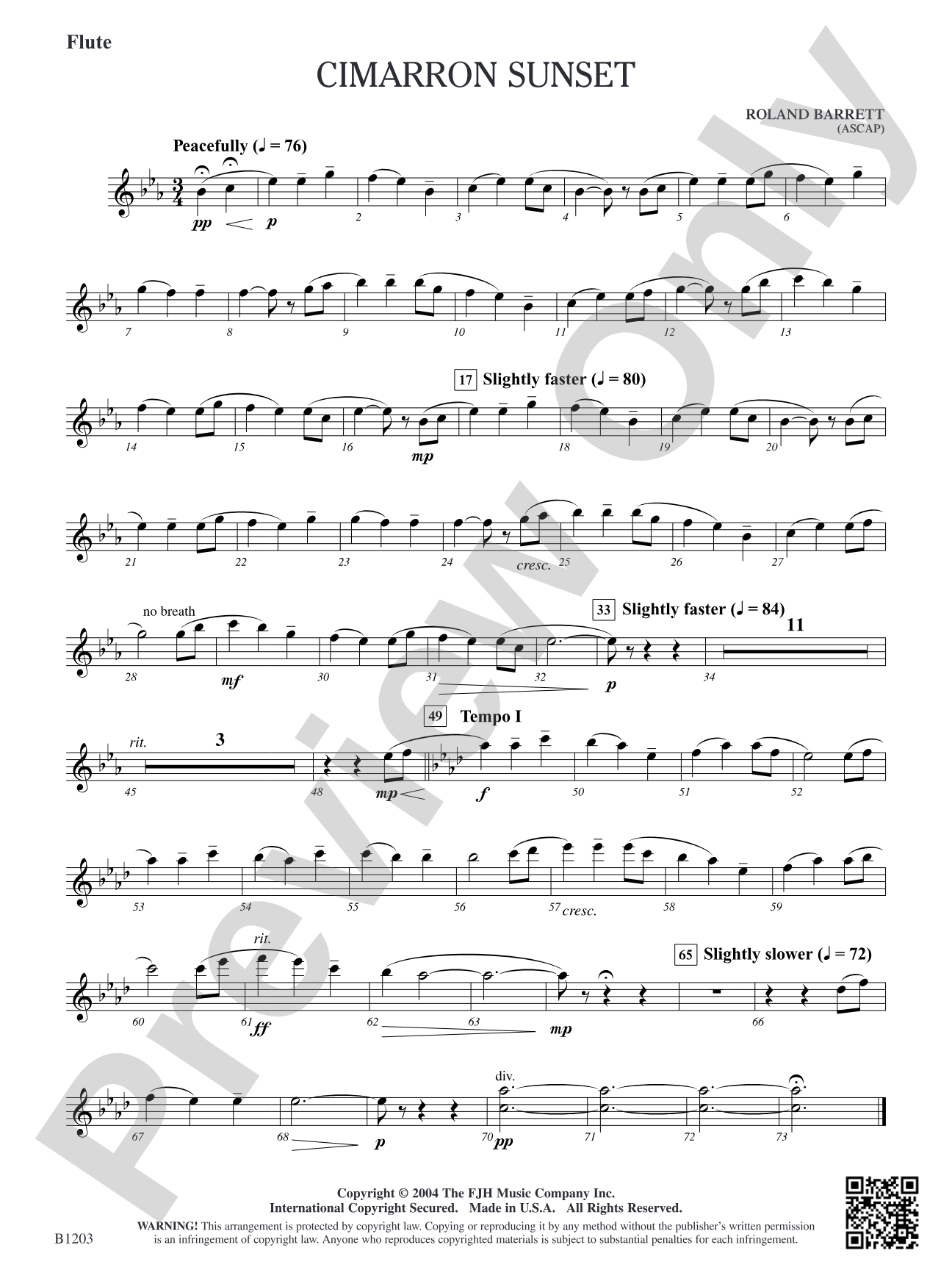
Cimarron Sunset: Flute Sheet Music Preview

Cimarron Sunset: Flute

By Roland Barrett

Grade: 2

Item: 98-PC-DB1203_F1

Digital Download
$7.00
Description
This gorgeous new work captures the quiet, natural elegance of the Cimarron Territory - the present-day "panhandle" of the state of Oklahoma. After the melody is presented in a light orchestration, the rest of the group joins as the texture builds toward a magnificent key change. An ideal study in phrasing, musicality, and breath support, this easy lyrical piece is a peaceful change of pace for your next concert.

Cimarron Sunset: Flute isn't in MakeMusic Cloud just yet...but it could be. Let us know you'd like to see it, and you'll help shape what comes next. In the meantime, start a free trial and dive into thousands of interactive titles your students can play along with today.

Sample Audio
0:00
0:00
Sample Video
Additional Details
Series: FJH Young Band
Publisher: The FJH Music Company, Inc.
SKU: 98-PC-DB1203_F1

More about this title

About the Composer: Roland Barrett

Roland Barrett

Roland Barrett has shaped American band music for decades, first as Assistant Director of Bands for fifteen years, then as a composer and theorist at the University of Oklahoma since 2001. His work spans symphonic band, chamber ensembles, and marching arrangements; he continues to arrange for the Pride of Oklahoma marching band while teaching undergraduate and graduate composition and 20th-century theory.

With over two hundred published works to his name, Barrett's compositions have reached All-State and All-Region honor bands across the country, earned multiple ASCAP awards, and appeared on NPR and national conferences including the Midwest Band & Orchestra Convention. His music balances accessibility with compositional craft, making him a trusted voice in the young band repertoire.

Why we love this

Barrett writes lyricism without sentimentality. The quiet opening and gradual textural buildup give your ensemble room to shape phrases naturally, and the key change arrives not as a shock but as a satisfying deepening of the journey. It's the kind of piece that teaches musicality through its own restraint.

What to expect

The piece unfolds like a landscape at golden hour, grounded and calm at first, then gradually revealing hidden depths. There's a meditative quality to the opening that shifts into something warmer and more radiant as the ensemble joins the story.

Who it's for

Grade 2 bands looking to develop expressive playing without tackling dense harmonic language. Ideal for ensembles with solid fundamentals in intonation and balance but still building confidence in longer-lined phrasing.

How to get the most out of it

  • Resist the urge to rush during the opening light orchestration. Let the melody breathe, and coach your principal line to shape phrases as if singing rather than stating.
  • Mark the key change clearly in rehearsal and use it as a landmark for dynamic architecture. Everything from that point forward should feel like an arrival, not a departure.
  • Watch the balance between melody and accompaniment as the texture builds. The new voices entering should enhance, not overwhelm, what came before.

How to use it

Place this early in a concert to establish an introspective mood, or use it as a palate cleanser between more energetic works. It pairs naturally with other American repertoire and works well as a spring concert centerpiece when you want to showcase lyrical growth.

Skills your students will build

  • Sustaining long phrases with consistent air support
  • Balancing melody against growing accompaniment textures
  • Responding to gradual dynamic and harmonic shifts
  • Reading and executing key changes smoothly
  • Ensemble phrasing across multiple voices

You May Also Like