
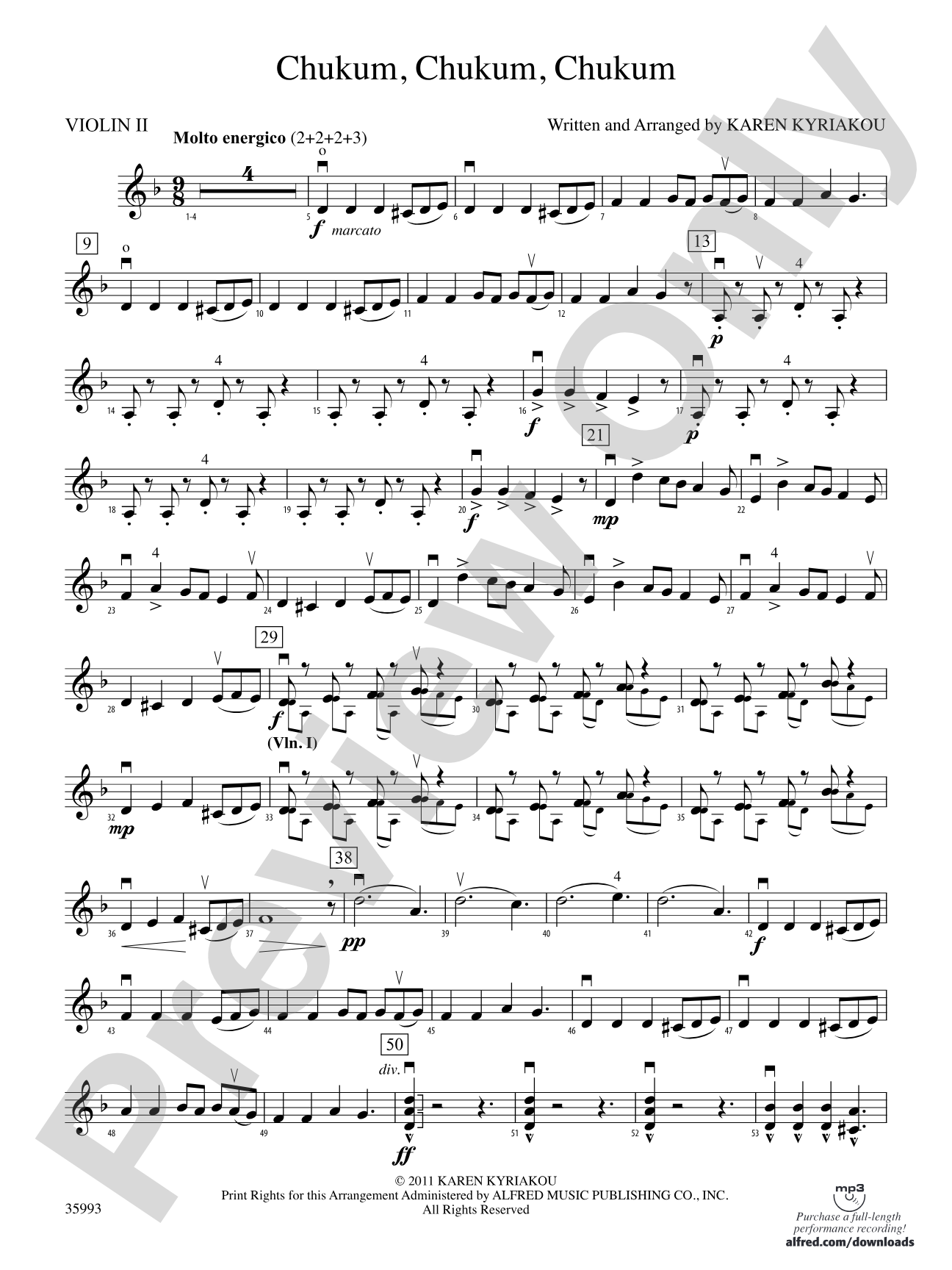

Chukum, Chukum, Chukum: 2nd Violin
By Karen Kyriakou
Grade: 3.5
Item: 00-PC-0015068_VN2
$5.99
Pickup currently not available
Description
Imagine chasing a bug around the room and it constantly eludes you! That's the energy of this piece written in a folk style using the rhythms of Eastern European circle dances. Each section is featured and the irregular 9/8 time signature and interesting rhythms provide great teaching opportunities.


Don't just read it, hear it, play along with it, and watch your students grow with it. In MakeMusic Cloud, Chukum, Chukum, Chukum: 2nd Violin comes alive with professional accompaniment, adjustable tempo, and built-in practice tools that turn solo practice into real progress.
Open in the Player
Jump straight in and assign it today.
Start Your Free Trial
Open this title and explore the full library in minutes.
Sample Audio
1
Audio File
--:--
0:00
0:00
Sample Video
No sample videos found.
Additional Details
Series:
Highland/Etling String Alternatives
Publisher:
Alfred Music
Page Count:
124
SKU:
00-PC-0015068_VN2
Instrumentation:
string
More about this title
About the Composer: Karen Kyriakou
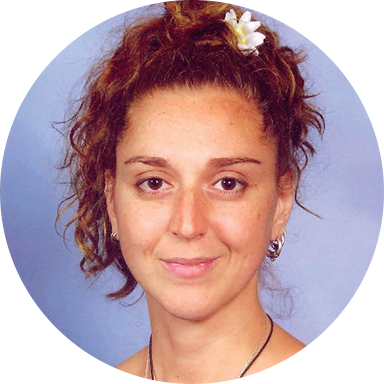
Karen Kyriakou brings together formal training and hands-on classroom experience in her work as a violinist, composer, and conductor. She holds degrees in Music Education from the University of Melbourne and Monash University, and has spent her career working directly with student ensembles, community groups, and school orchestras across Victoria, Australia. Her compositional practice spans educational works for string ensembles, theatrical scores, and world music arrangements with her ensemble Kazband.
Beyond traditional string pedagogy, Kyriakou has pioneered innovative music education projects, including work with deaf musicians and an Auslan choir performance of Beethoven's Ninth Symphony with the Melbourne Symphony Orchestra. She regularly leads workshops on improvisation and composition, serves on the committee of the Australian Strings Association, and maintains a freelance role as composer in residence for school and community ensembles.
Why we love this
The irregular 9/8 meter combined with Eastern European folk rhythms creates rhythmic challenges that feel organic rather than imposed, giving students a genuine musical reason to work through meter changes. Kyriakou's writing ensures every section gets its moment, so no stand sits idle while others carry the piece, and the bug-chase scenario makes the harmless chaos of the rhythms instantly relatable to young players.
What to expect
The energy of a folk celebration where nothing quite holds still: rhythms shift, sections trade motifs, and the overall effect is playful rather than sophisticated. The 9/8 meter gives it an almost mischievous quality, like watching that bug dart unpredictably across the room, creating forward momentum without heaviness.
Who it's for
String orchestras at the late intermediate level (Grade 3-4) who are ready to tackle non-standard meters in a musically natural context. This piece works equally well for full orchestras and smaller sectional groups, making it adaptable to various ensemble sizes.
How to get the most out of it
- Keep the tempo steady despite the meter's irregularity; students will lock in faster if the pulse remains consistent from measure to measure.
- Highlight the folk character by encouraging vibrato restraint in the melody sections, letting the straightforward Eastern European dance idiom speak clearly.
- Assign the conductor's primary focus to cueing section entries, especially when parts interlock; the 9/8 signature will tempt players to rush back in.
- Isolate rhythmic sections in rehearsal using just pizzicato and counting before adding bows; the irregular meters become concrete when players feel the pulse with plucked notes.
How to use it
Program this alongside other world music selections to build a concert theme, or use it mid-season as a technical checkpoint that demonstrates your orchestra's rhythmic growth. Its accessible folk language and modest length make it a strong opener for a student-centered concert or a fitting encore that leaves audiences smiling.
Skills your students will build
- Reading and performing in 9/8 meter with consistent pulse
- Navigating irregular rhythmic patterns derived from Eastern European dance forms
- Responding to section cues in an ensemble with interlocking parts
- Balancing melodic clarity with rhythmic precision in a folk idiom