
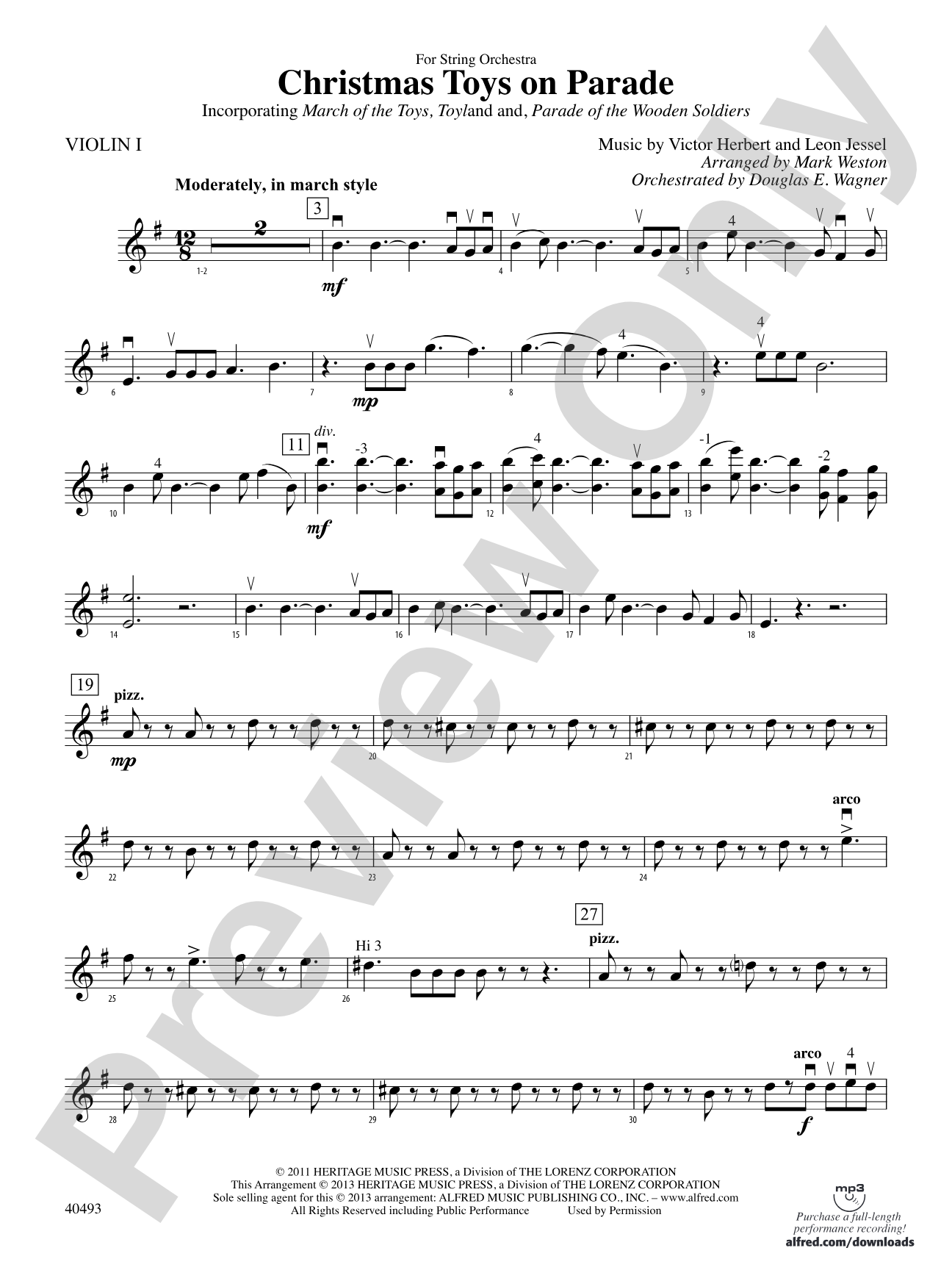

Christmas Toys on Parade: 1st Violin
Featuring: March of the Toys / Toyland / Parade of the Wooden Soldiers
Music by Victor Herbert and Leon Jessel / arr. Mark Weston, orch. Douglas E. Wagner
Grade: 2.5
Item: 00-PC-0016023_VN1
$7.99
Pickup currently not available
Description
Delight your audiences with this imaginative medley of three fun Christmas standards, celebrating the lighter side of the season, including "March of the Toys," "Toyland," and "Parade of the Wooden Soldiers." The idiomatic string writing will truly flatter your ensemble as these engaging tunes bring back those fond memories of Christmases past. A refreshing change of pace for any December concert!


Don't just read it, hear it, play along with it, and watch your students grow with it. In MakeMusic Cloud, Christmas Toys on Parade: 1st Violin comes alive with professional accompaniment, adjustable tempo, and built-in practice tools that turn solo practice into real progress.
Open in the Player
Jump straight in and assign it today.
Start Your Free Trial
Open this title and explore the full library in minutes.
Sample Audio
1
Audio File
--:--
0:00
0:00
Sample Video
No sample videos found.
Additional Details
Series:
Belwin Intermediate String Orchestra
Publisher:
Alfred Music
Page Count:
144
SKU:
00-PC-0016023_VN1
More about this title
About the Composer: Victor Herbert
Victor Herbert (1859-1924) composed over 40 operettas and became one of America's most performed composers during the early 20th century. His gift for memorable melody and sophisticated orchestration earned him recognition as both a serious musician and a composer of popular entertainment; he founded the American Composers Orchestra and served as a conductor and cellist of considerable skill.
Leon Jessel (1871-1942) was a German composer and conductor best known for his operettas and light orchestral works. "The Parade of the Wooden Soldiers," his most enduring composition, demonstrates his talent for crafting infectious, character-driven music that bridges classical technique and popular appeal.
Why we love this
This medley captures three beloved melodies in string writing that actually sounds good in young ensembles; the Grade 2.5 arrangement preserves the charm of the originals without requiring virtuosity. The variety of tempos and characters within a single piece gives your orchestra natural contrasts to shape, making this feel like three separate experiences rather than one extended march. It's practical December programming that audiences genuinely enjoy and students genuinely want to play.
What to expect
The opening march pulses with character and toy-box energy, evoking the simple joy of mechanical playthings in motion. "Toyland" shifts into a gentler, more reflective mood where the melody floats over rolling accompaniment, creating warmth without sentiment. The finale returns to spirited march character with steady, marching rhythms that feel satisfying to play and immediately recognizable to listeners.
Who it's for
String orchestras at the early intermediate level benefit most from this arrangement, which sits comfortably between simple unison pieces and multi-movement works requiring advanced ensemble independence. Directors programming December concerts need engaging, audience-friendly repertoire that doesn't require a full three-month rehearsal commitment. This works equally well for schools with developing orchestras and for experienced youth orchestras looking for a lighter, fun addition to a winter program.
How to get the most out of it
- Balance the inner voices carefully in the march sections; the arrangements give violas and lower strings important harmonic material that supports the melody rather than disappearing beneath it.
- Shape each of the three tunes as distinct movements with clear character changes. Mark tempo transitions precisely so section entries land cleanly without rushed or dragging moments.
- Listen for rhythmic cleanness in the busier passages; young players often rush when reading higher note densities. A steady conductor pulse helps here more than quick tempos.
- Bring out the lyrical quality in the middle section of "Toyland" by encouraging a singing tone from your first violins, supported by warm sustained notes from the lower strings.
How to use it
Program this in the second half of your winter concert after a more serious selection; the immediate shift in mood and audience energy will feel intentional and refreshing. The three-movement structure works well as a standalone piece, or you could pair it with another holiday selection if your concert theme is strictly seasonal. If you're building a December program around lighter fare, this anchors the programming with professional string writing and clear audience appeal.
Skills your students will build
- Playing in multiple tempos and meter changes within a single work
- Balancing melody and accompaniment in lyrical passages
- Maintaining ensemble rhythmic precision in march-style sections
- Reading and executing clear articulation and phrasing across different musical characters
- Coordinating section entries and cutoffs across three distinct musical ideas