
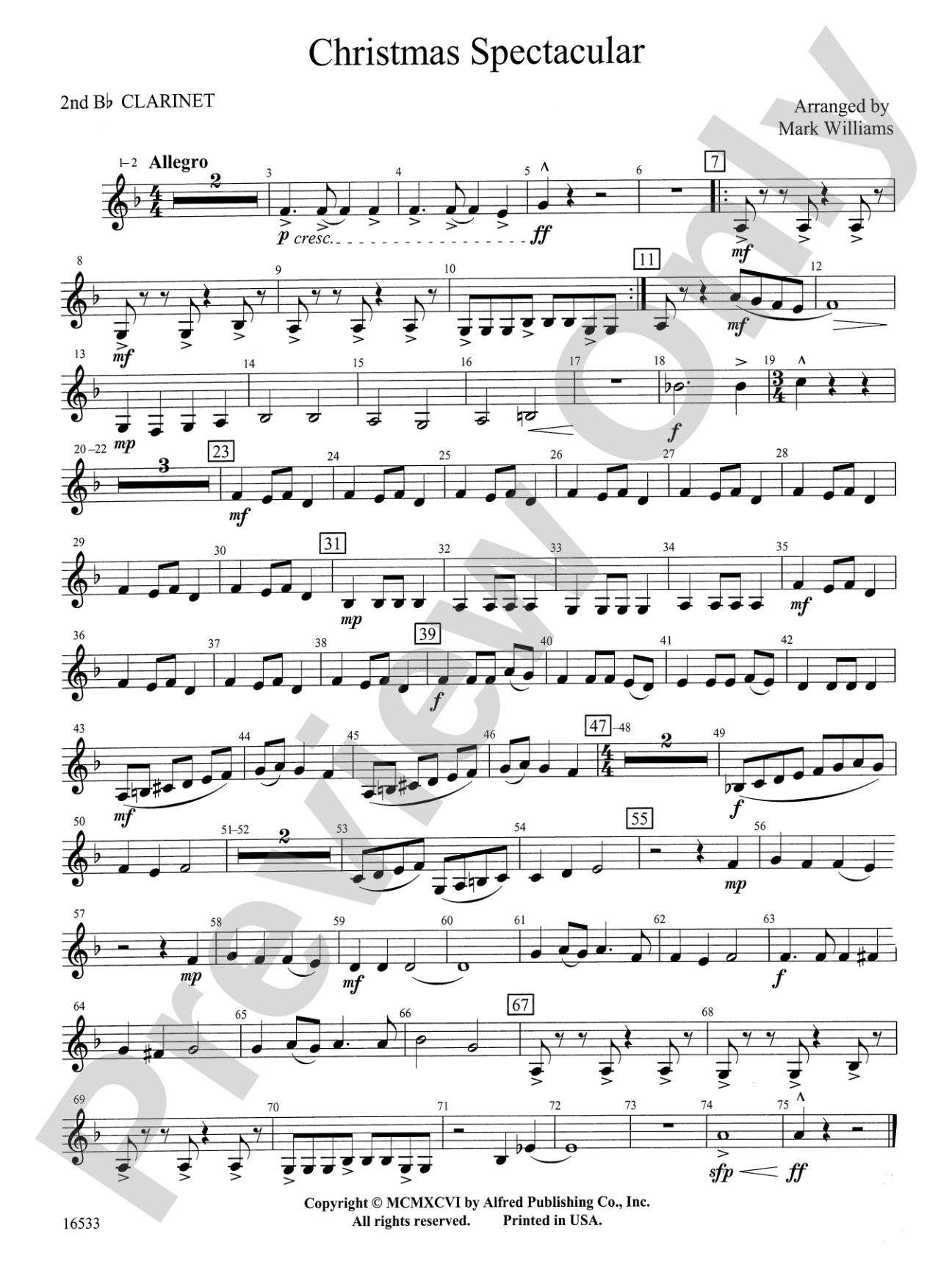

Christmas Spectacular: 2nd B-flat Clarinet
Arr. Mark Williams
Grade: 1.5 (Easy)
Item: 00-PC-0000181_C2
$3.00
Pickup currently not available
Description
The sparkling sounds and driving rhythms of this excellent selection provide a welcome change from more routine holiday fare. Featuring "Good King Wenceslas," "Carol of the Bells," and "Hark, the Herald Angels Sing," this arrangement is guaranteed to keep your students and audiences interested and involved.


Don't just read it, hear it, play along with it, and watch your students grow with it. In MakeMusic Cloud, Christmas Spectacular: 2nd B-flat Clarinet comes alive with professional accompaniment, adjustable tempo, and built-in practice tools that turn solo practice into real progress.
Open in the Player
Jump straight in and assign it today.
Start Your Free Trial
Open this title and explore the full library in minutes.
Sample Audio
1
Audio File
--:--
0:00
0:00
Sample Video
No sample videos found.
Additional Details
Series:
Challenger Band Series
Publisher:
Alfred Music
Page Count:
116
SKU:
00-PC-0000181_C2
More about this title
About the Arranger: Mark Williams

Mark Williams built his reputation composing and arranging for young musicians across the United States, Canada, and Australia. A woodwind specialist trained at Eastern Washington University, he held deep expertise in elementary band pedagogy and created over 200 published works for concert band, orchestra, and choir. His collaboration on the Accent on Achievement Band Method shaped how countless teachers approach instrumental instruction.
Beyond the page, Williams was an active clinician, guest conductor, and performer. He served as woodwind arranger for the 560th Air Force Band and led the Spokane British Brass Band as conductor and artistic director. His compositions earned recognition from the Western International Band Clinic and multiple ASCAP Special Awards, reflecting the care and craft he brought to every arrangement.
Why we love this
This arrangement respects the Grade 1.5 level while delivering genuine musicality. Rather than reducing these carols to their barest outlines, Williams finds the harmonic interest and rhythmic drive in three beloved melodies, ensuring your band sounds polished without requiring advanced technical demands. It's the kind of accessible holiday programming that earns applause from audiences while keeping rehearsal time manageable.
What to expect
Bright and propulsive, with the warmth of tradition. The carols maintain their gentle character while moving forward with energy and rhythmic momentum that keeps the music from feeling static or overly sentimental. You'll hear crisp articulation in the reeds, solid harmonic support from the lower voices, and moments where the full band blends into something genuinely festive.
Who it's for
Band directors programming winter concerts for Grade 1.5 ensembles, including middle school beginners and strong elementary bands. This suite also works well for community, church, or volunteer concert bands seeking repertoire that balances accessibility with genuine musical interest.
How to get the most out of it
- Balance the melodic lines so familiar tunes remain recognizable; resist the urge to overpower the main voices with counter-melodies or accompanimental parts.
- Tap into the 'sparkling' quality mentioned in the score by paying attention to articulation in the upper woodwinds, especially during faster rhythmic figures.
- Treat each of the three carols as distinct musical landscapes rather than medley segments. Clear transitions and fresh character for each tune will keep both students and listeners engaged throughout.
- Lock the rhythm section into consistent tempo and steady pulse early in rehearsals; this groundwork pays dividends when the full band enters with melodic material.
How to use it
Program this as a complete suite during your winter concert, allowing it to anchor a diverse holiday set. The three-movement structure works equally well as an opening selection to establish energy or as a anchor piece later in the program. Its Grade 1.5 accessibility makes it an excellent choice for mixed-level community or school concerts where you need repertoire that spans multiple ensemble capabilities.
Skills your students will build
- Sustaining lyrical melodic lines while maintaining rhythmic precision
- Reading and executing articulation patterns that shape character
- Balancing independent parts within hymn-like harmonic textures
- Maintaining steady tempo and ensemble unity across meter and phrase changes
- Responding to sectional cues and transitions between distinct musical sections