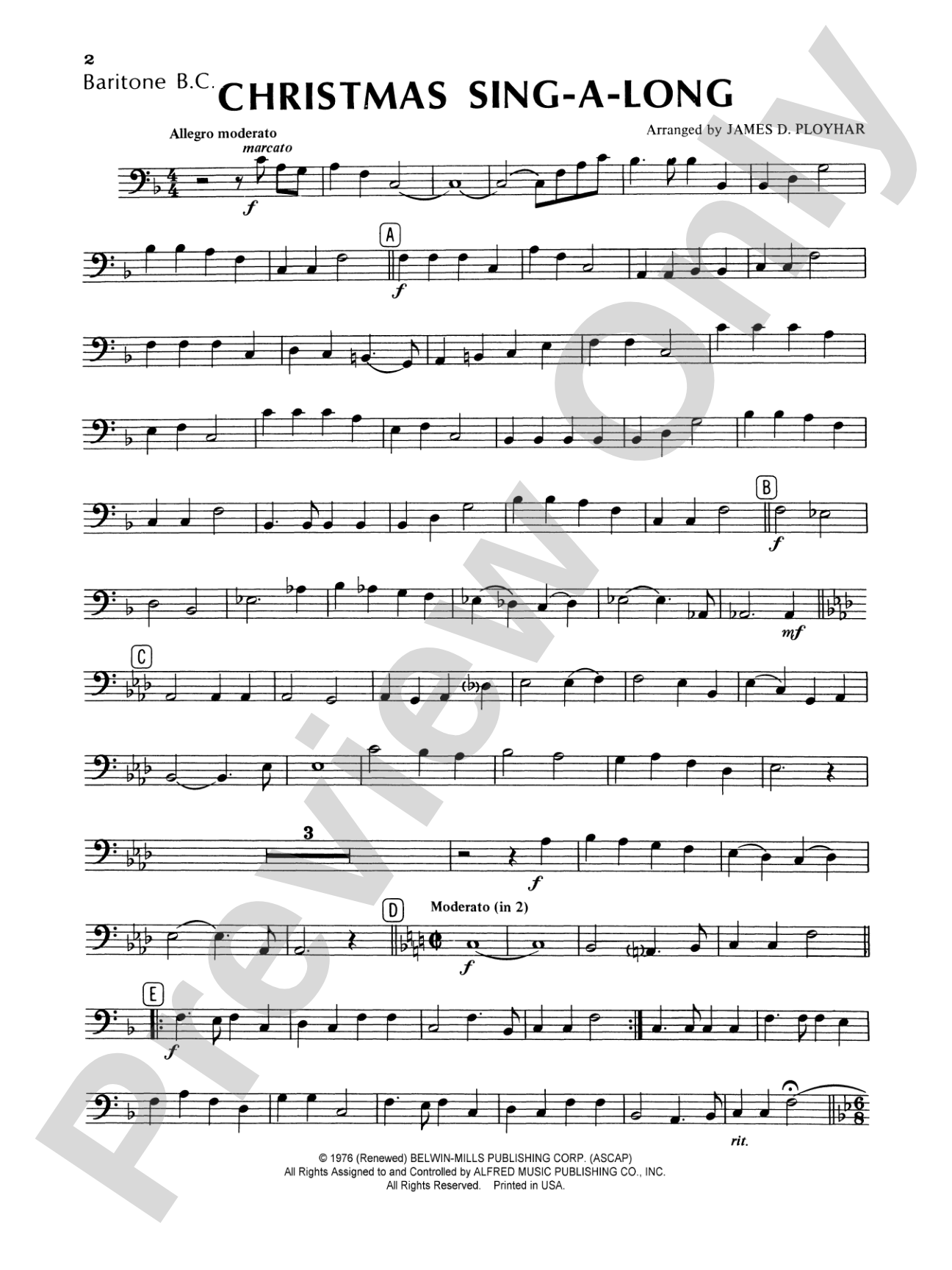
Christmas Sing-a-Long (for Band with Audience Participation): Baritone B.C. Sheet Music Preview

Christmas Sing-a-Long (for Band with Audience Participation): Baritone B.C.

Arr. James D. Ployhar

Grade: 2 (Easy)

Item: 00-PC-0015177_BBC1

Digital Download
$3.00
Description

Don't just read it, hear it, play along with it, and watch your students grow with it. In MakeMusic Cloud, Christmas Sing-a-Long (for Band with Audience Participation): Baritone B.C. comes alive with professional accompaniment, adjustable tempo, and built-in practice tools that turn solo practice into real progress.

Sample Audio
No sample audio found.
Sample Video
Additional Details
Series: Belwin Concert Band
Publisher: Alfred Music
Page Count: 240
SKU: 00-PC-0015177_BBC1

More about this title

About the Arranger: James D. Ployhar

James D. Ployhar

James D. Ployhar has established himself as a cornerstone voice in music education through more than 800 published works spanning multiple genres and ensemble types. His pedagogical influence extends far beyond the United States; he authored the Contemporary Band Course, now published by Alfred Music, which has been translated into French and Norwegian and remains in active use throughout Norway and beyond.

Plyohar's compositional training included study under Morris Hutchings Ruger at California State University-Long Beach, complemented by extensive orchestration work alongside Knud Havalde of the Danish Royal Philharmonic Orchestra. His career encompasses nineteen years as a public school music educator, a sustained presence as a clinician and conductor at universities and colleges across North America and Europe, and recognition including the National Band Association Citation of Excellence and the Distinguished Alumnus Award from Valley City State University.

Why we love this

Ployhar understood that audience participation transforms a concert from a performance into a shared celebration, and this arrangement proves it. The Grade 2 accessibility means your ensemble can focus on ensemble balance and clear articulation rather than technical survival, allowing singers and audience alike to engage with genuine musicality. Programming a sing-a-long midway through your winter concert signals a shift in energy and gives musicians a chance to experience music-making as something joyful and inclusive rather than formal.

What to expect

The blend of familiar holiday melodies with band instrumentation creates a warm, accessible soundscape that invites singers and listeners in rather than asking them to observe from a distance. There's an inherent joy in hearing traditional songs supported by live ensemble sound, and the Grade 2 scoring ensures nothing muddies the clarity of the melodies people already know.

Who it's for

Band directors programming a winter or holiday concert who want to shift the dynamic from performance-centered to inclusive and celebratory. This works equally well for middle school, high school, and community bands seeking repertoire that engages audiences beyond passive listening. Ensembles at Grade 2 level will find the arrangement manageable while maintaining musical substance.

How to get the most out of it

  • Establish clear visual cues for audience entries during rehearsal with your band; decide whether you'll use a conductor gesture, printed cues in the program, or both.
  • Balance the instrumental parts so they support rather than overshadow the singing; the audience and soloists should never strain to be heard over the band.
  • Rehearse the transitions between instrumental sections and sung passages until they feel seamless; any hesitation will break the celebratory momentum.
  • Consider placing singers strategically in relation to your band so their sound projects outward into the hall without requiring amplification.

How to use it

Place this in the second half of your concert after you've established your ensemble's technical capabilities with more formal repertoire. The sing-a-long format works particularly well as a penultimate piece before a finale, or as a genuine conclusion if you want your concert to end with shared celebration rather than virtuosic display. It signals to your audience that music-making is something they're invited to join.

Skills your students will build

  • Balancing ensemble sound to support vocal soloists and singing audience members
  • Managing tempo and rhythm in pieces designed for flexible ensemble pacing
  • Clear articulation and phrase shaping in Grade 2 concert band arrangement
  • Listening beyond one's own part to blend with voices rather than instruments alone
  • Navigating transitions between instrumental sections and sung passages with precision

You May Also Like