
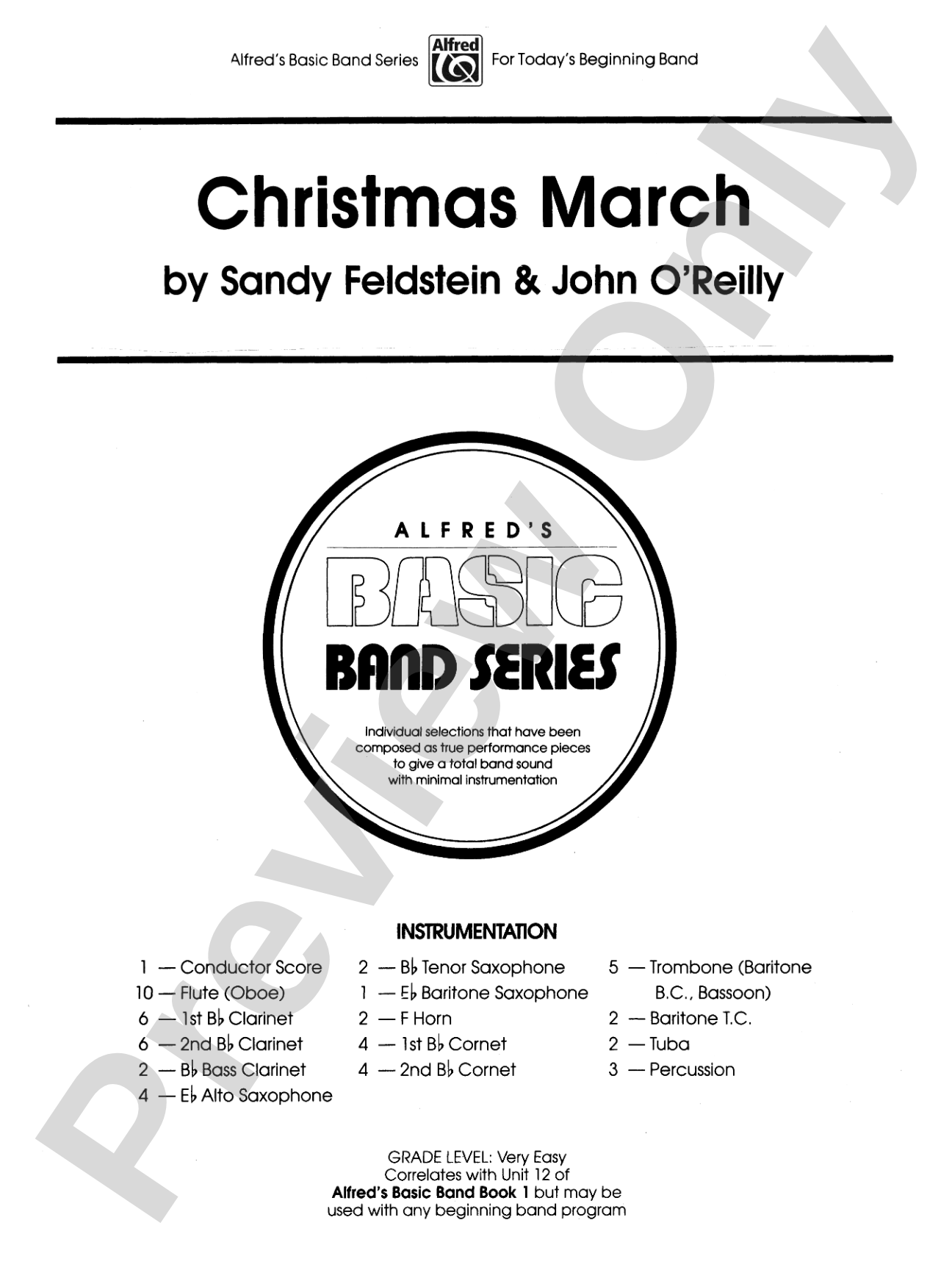
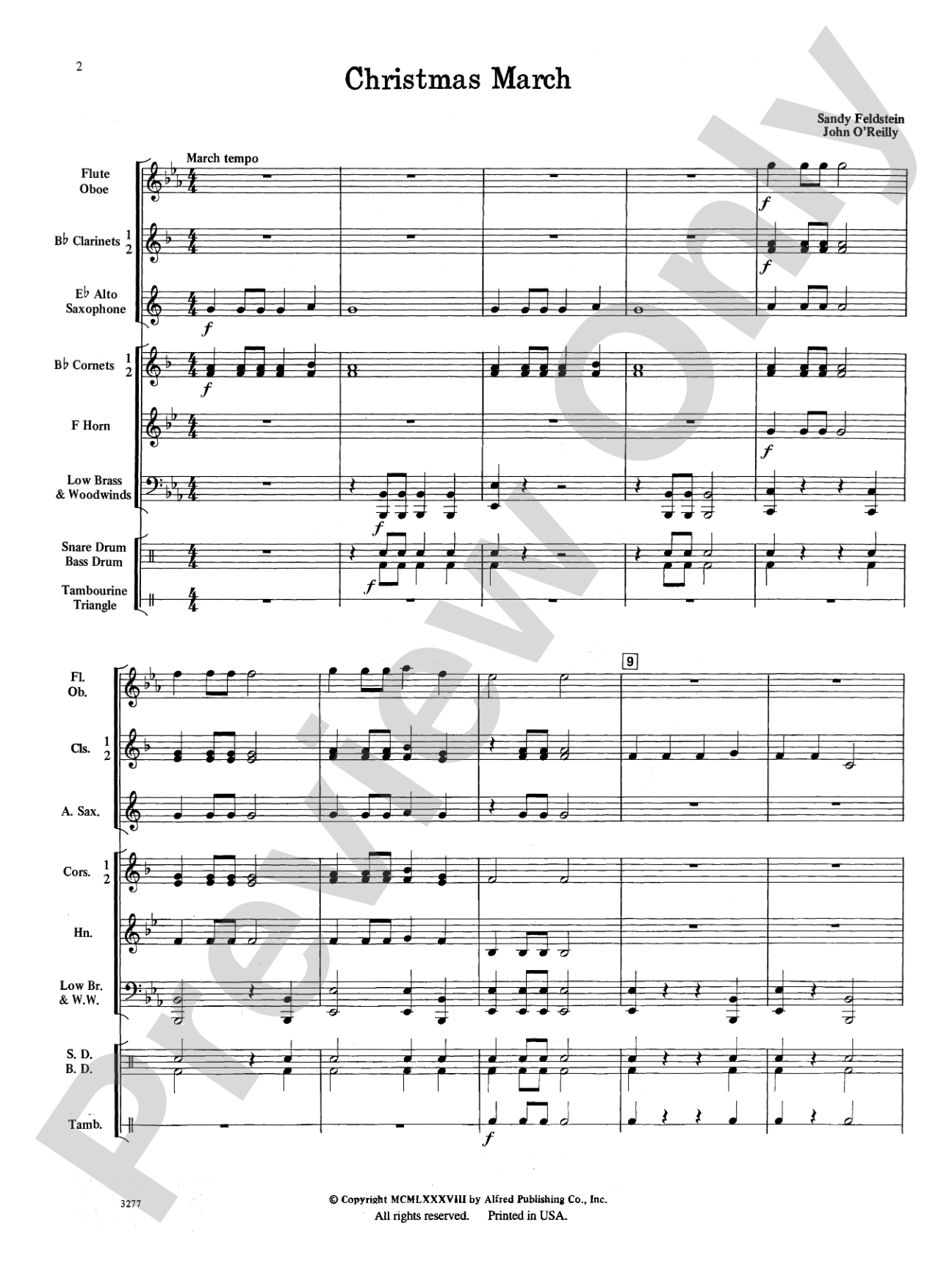
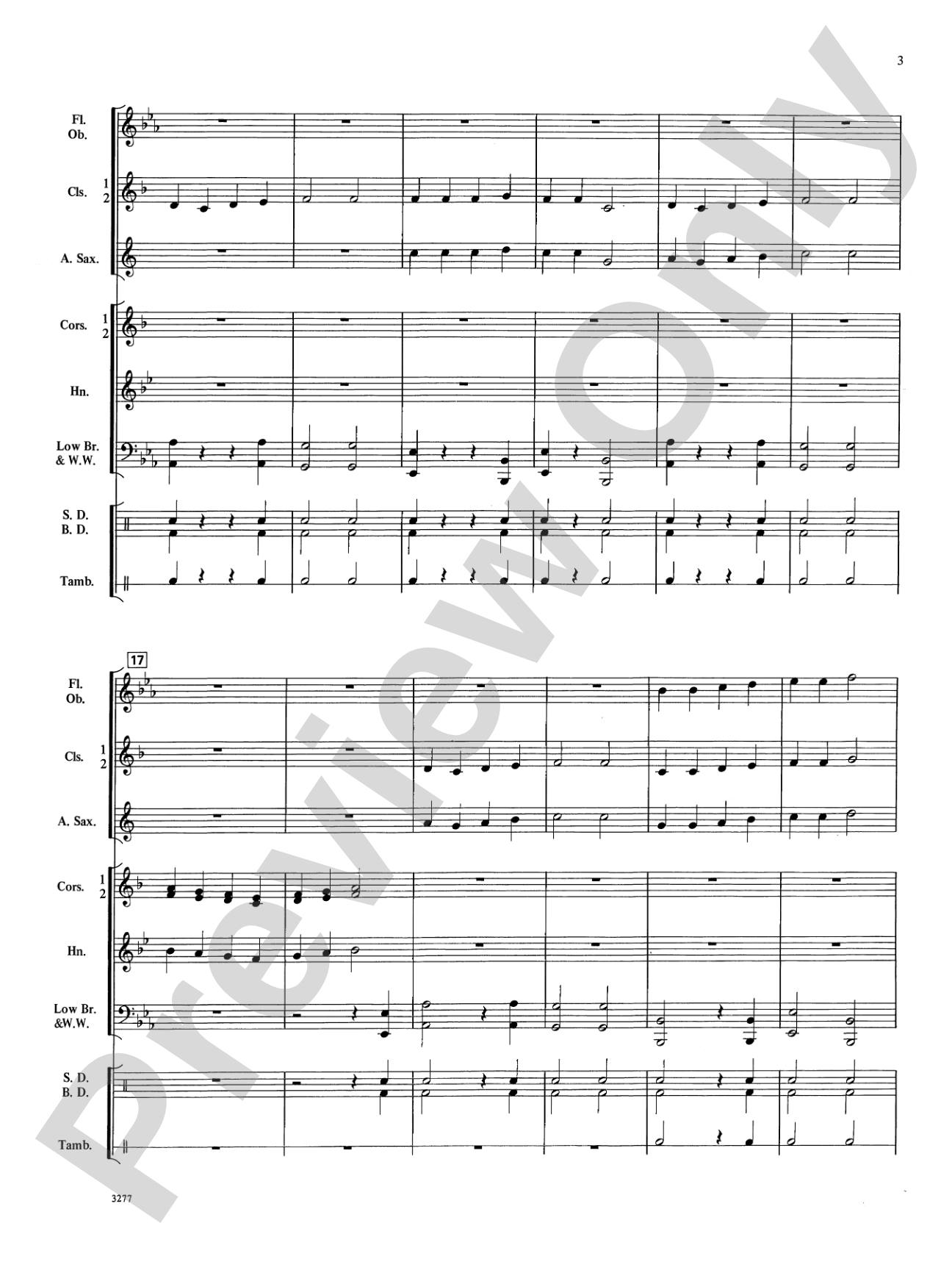
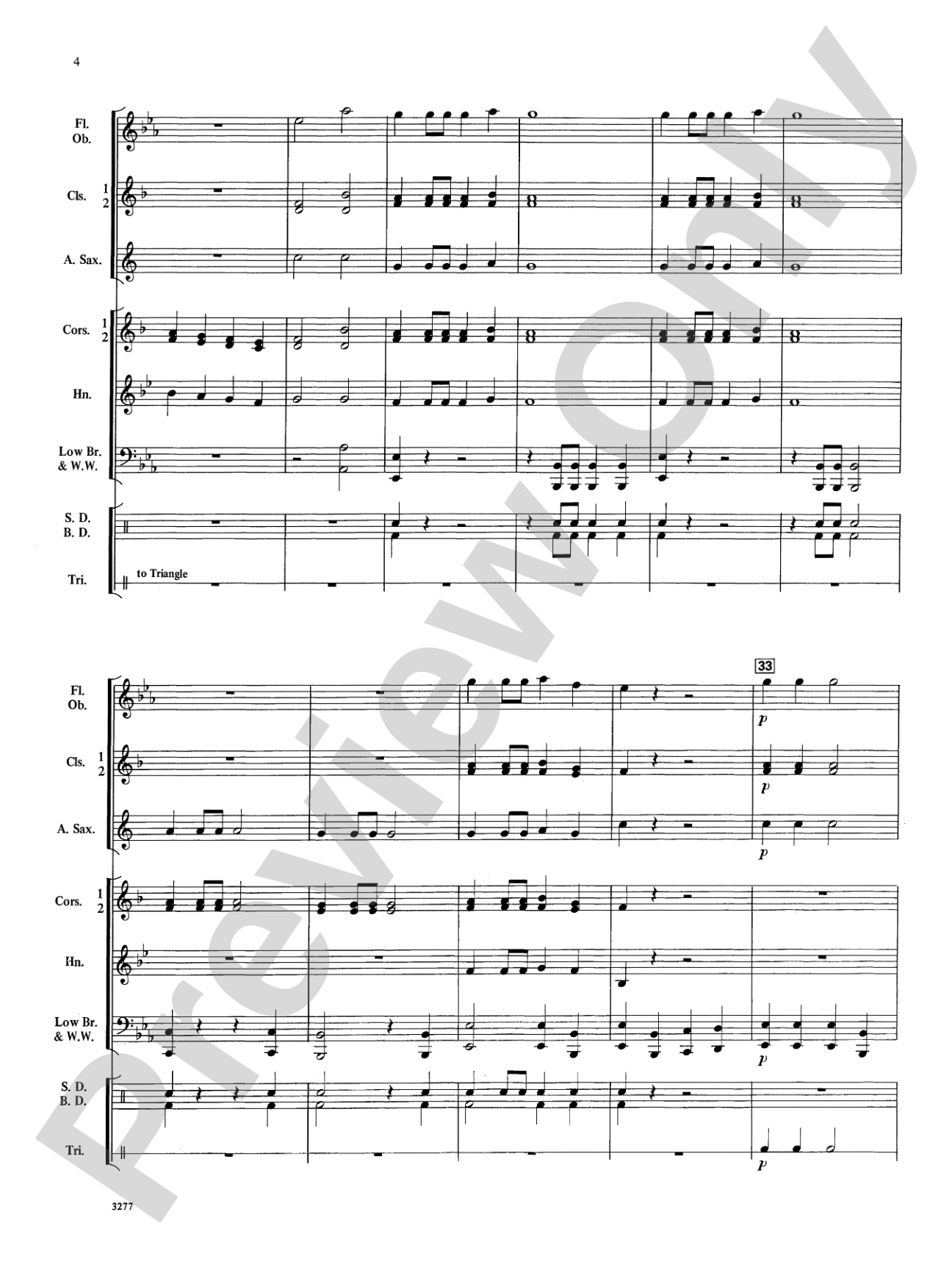
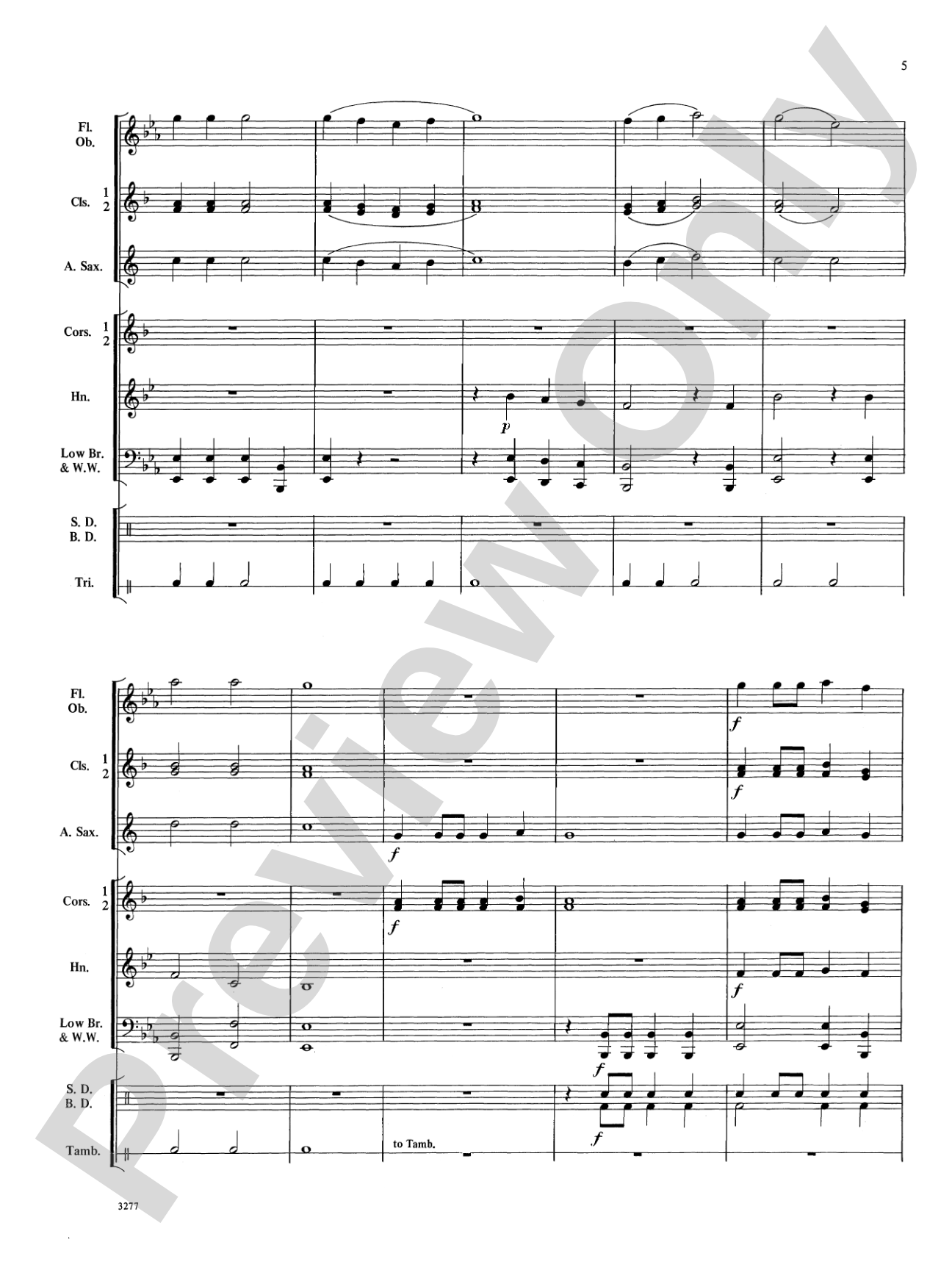
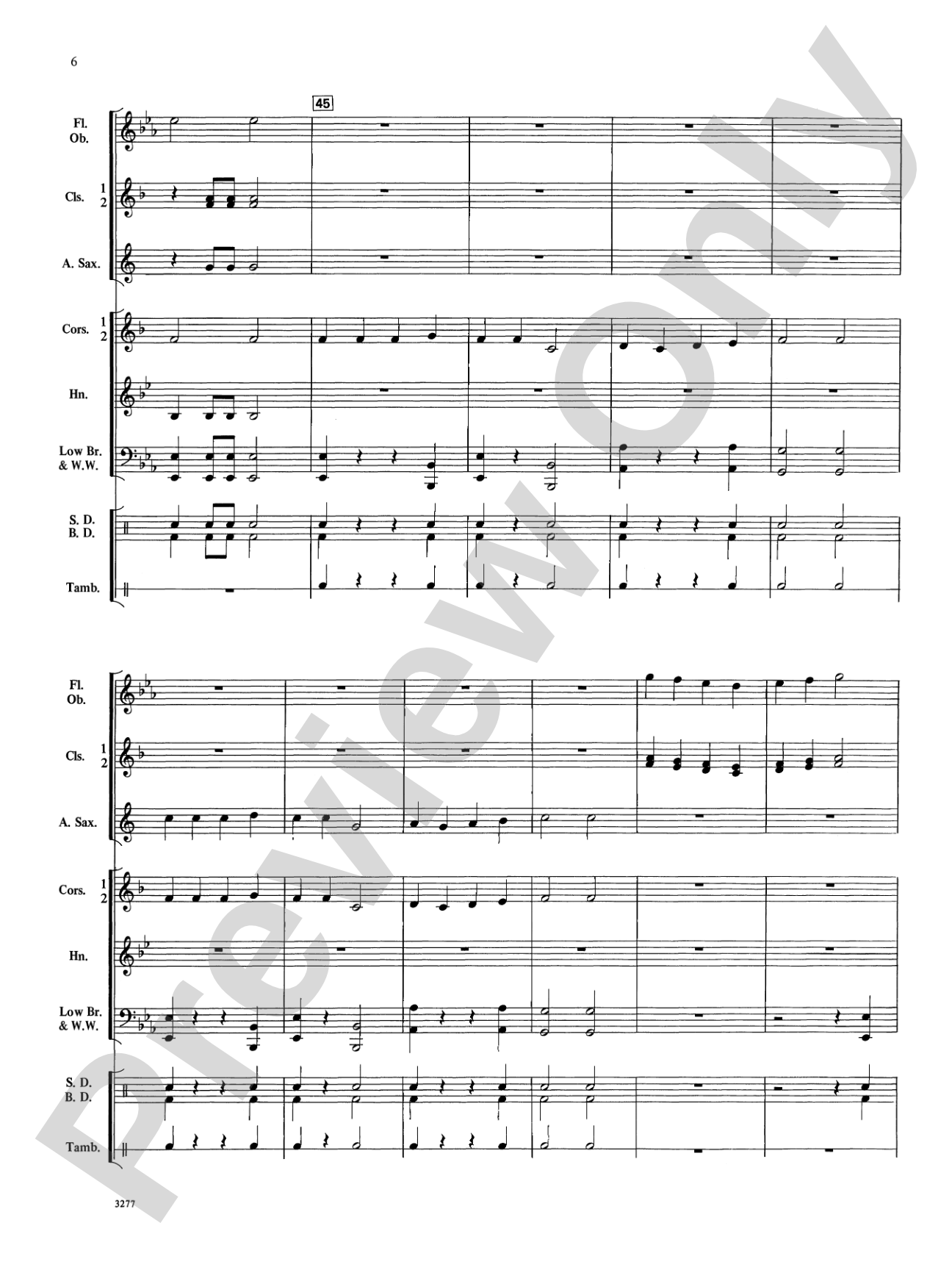
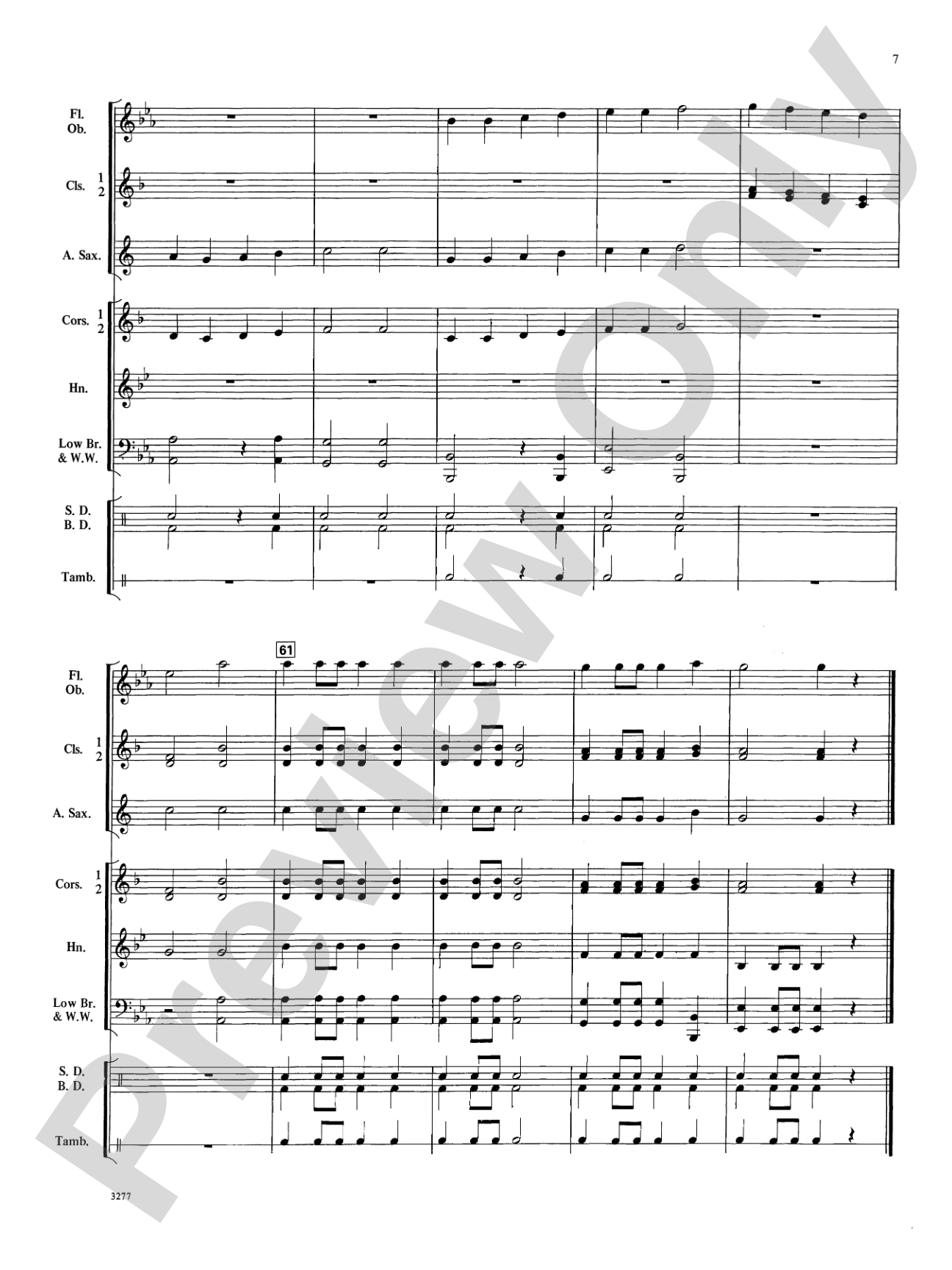


Christmas March: Concert Band Conductor Score & Parts
Arr. Sandy Feldstein and John O'Reilly
Grade: 1 (Very Easy)
Item: 00-PK-0001844

$42.00
Pickup currently not available
Buy Extra Parts (Digital PDF Download)
| Product | Price | Quantity |
|---|---|---|
| Christmas March: Score | $5.00 | |
| Christmas March: Flute | $3.00 | |
| Christmas March: 1st B-flat Clarinet | $3.00 | |
| Christmas March: 2nd B-flat Clarinet | $3.00 | |
| Christmas March: B-flat Bass Clarinet | $3.00 | |
| Christmas March: E-flat Alto Saxophone | $3.00 | |
| Christmas March: B-flat Tenor Saxophone | $3.00 | |
| Christmas March: E-flat Baritone Saxophone | $3.00 | |
| Christmas March: 1st F Horn | $3.00 | |
| Christmas March: 1st B-flat Cornet | $3.00 | |
| Christmas March: 2nd B-flat Cornet | $3.00 | |
| Christmas March: 1st Trombone | $3.00 | |
| Christmas March: Baritone T.C. | $3.00 | |
| Christmas March: Tuba | $3.00 | |
| Christmas March: 1st Percussion | $3.00 |
Parts Added to Cart!
Related Items
Christmas March: Concert Band Conductor Score & Parts |
$42.00
|
View |
Description
Open your winter concert with this rousing march based on the all-time favorite carol 'Good King Wenceslas.' All sections of the band get a chance to show their Christmas spirit as they are featured playing the melody. (Grade 1---Correlates with Unit 7 of Alfred's Basic Band Method)


Don't just read it, hear it, play along with it, and watch your students grow with it. In MakeMusic Cloud, Christmas March: Concert Band Conductor Score & Parts comes alive with professional accompaniment, adjustable tempo, and built-in practice tools that turn solo practice into real progress.
Open in the Player
Jump straight in and assign it today.
Start Your Free Trial
Open this title and explore the full library in minutes.
Sample Audio
No sample audio found.
Sample Video
No sample videos found.
Additional Details
Series:
Basic Band Series
Publisher:
Alfred Music
Page Count:
100
SKU:
00-PK-0001844
More about this title
About the Arranger: Sandy Feldstein
Sandy Feldstein has been a cornerstone of band education for decades, with a catalog of over 500 published works. His arrangements and compositions for beginning and intermediate bands are known for their musical substance and accessibility, making them standard repertoire in school programs nationwide.
Fieldstein's work with the Alfred's Basic Band Method established him as a thoughtful pedagogue who understands what young musicians need to develop confidence and musicianship. His pieces balance technical appropriateness with genuine artistic content, ensuring students play music that matters.
Why we love this
This march gives every section a meaningful moment with the melody, which keeps young musicians engaged and invested in the ensemble sound. The 'Good King Wenceslas' tune is immediately recognizable, so your audience connects right away, and the Grade 1 writing means your band can execute it cleanly without weeks of rehearsal.
What to expect
The march rhythm propels the familiar carol forward with warmth and dignity. As sections trade the melody, the piece builds a communal feeling—each group gets to be heard, and the overall effect is one of celebration and inclusion.
Who it's for
Concert bands at the Grade 1 level will find this piece immediately playable and rewarding. Directors preparing a winter concert need reliable, musical repertoire that engages students without demanding excessive rehearsal time.
How to get the most out of it
- Shape the melody expressively rather than playing it straight. Even at this level, the carol benefits from slight rubato and dynamic shading that reflects the story of the text.
- Balance the parts so the featured melody section always sits slightly above the accompaniment, regardless of whether it's the trumpets, woodwinds, or lower voices carrying the tune.
- Use the march tempo as a framework, not a cage. A slight broadening at the cadence moments will give the piece weight and allow the audience to hear the harmonic resolution.
- Check intonation carefully in the lower voices when they support the melody. Clean bass lines and steady harmonic foundations make the featured sections shine.
How to use it
Open your winter concert with this piece to set a festive mood and showcase your ensemble's range of tone colors. It works equally well as a standalone opener or paired with other holiday selections that allow different sections to be featured throughout the program.
Skills your students will build
- Playing a solo melody line with appropriate phrasing and dynamics
- Maintaining steady march tempo while supporting featured sections
- Balanced voicing between melody and accompaniment
- Recognition and articulation of a well-known tune in concert band context