
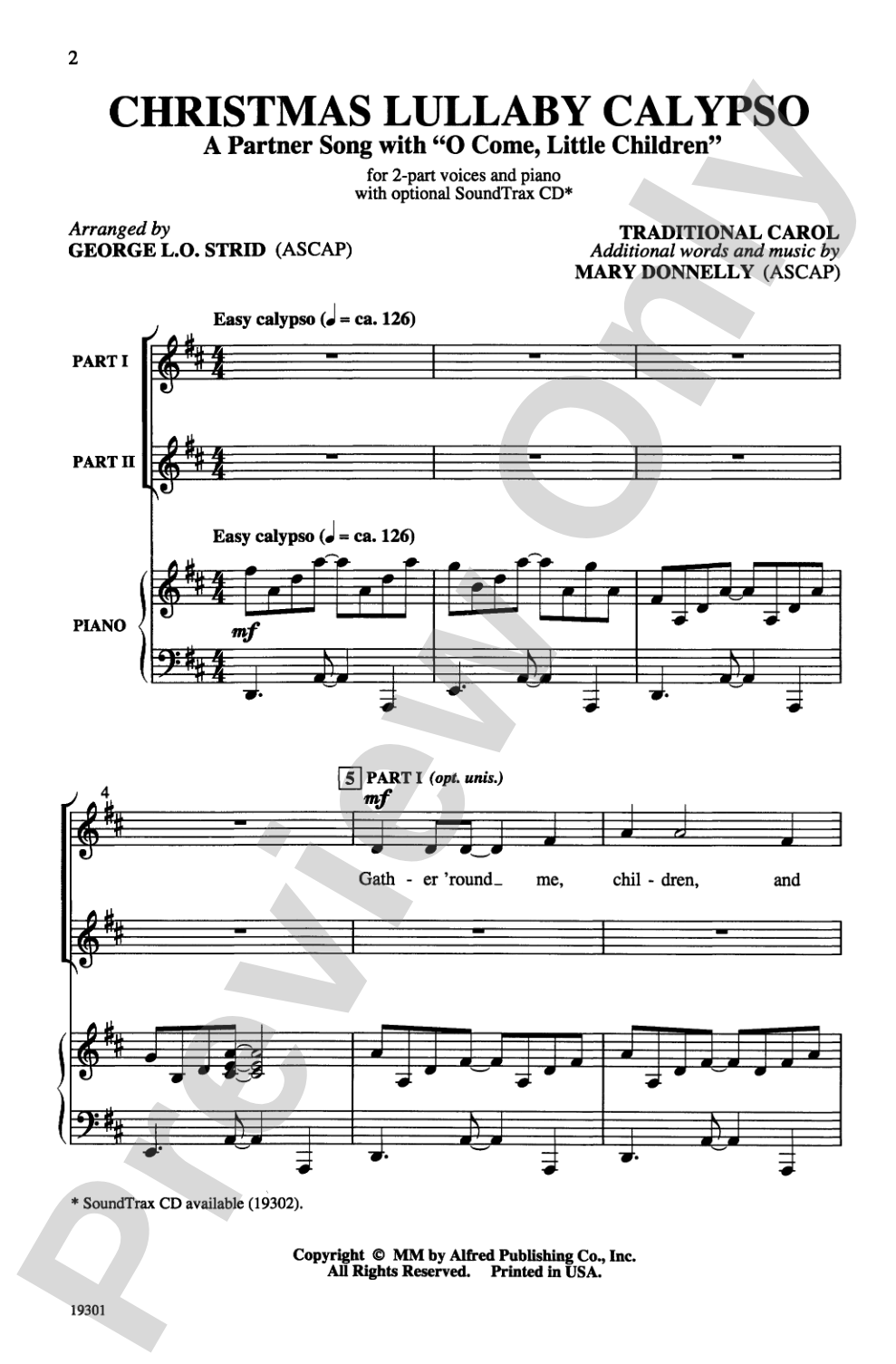
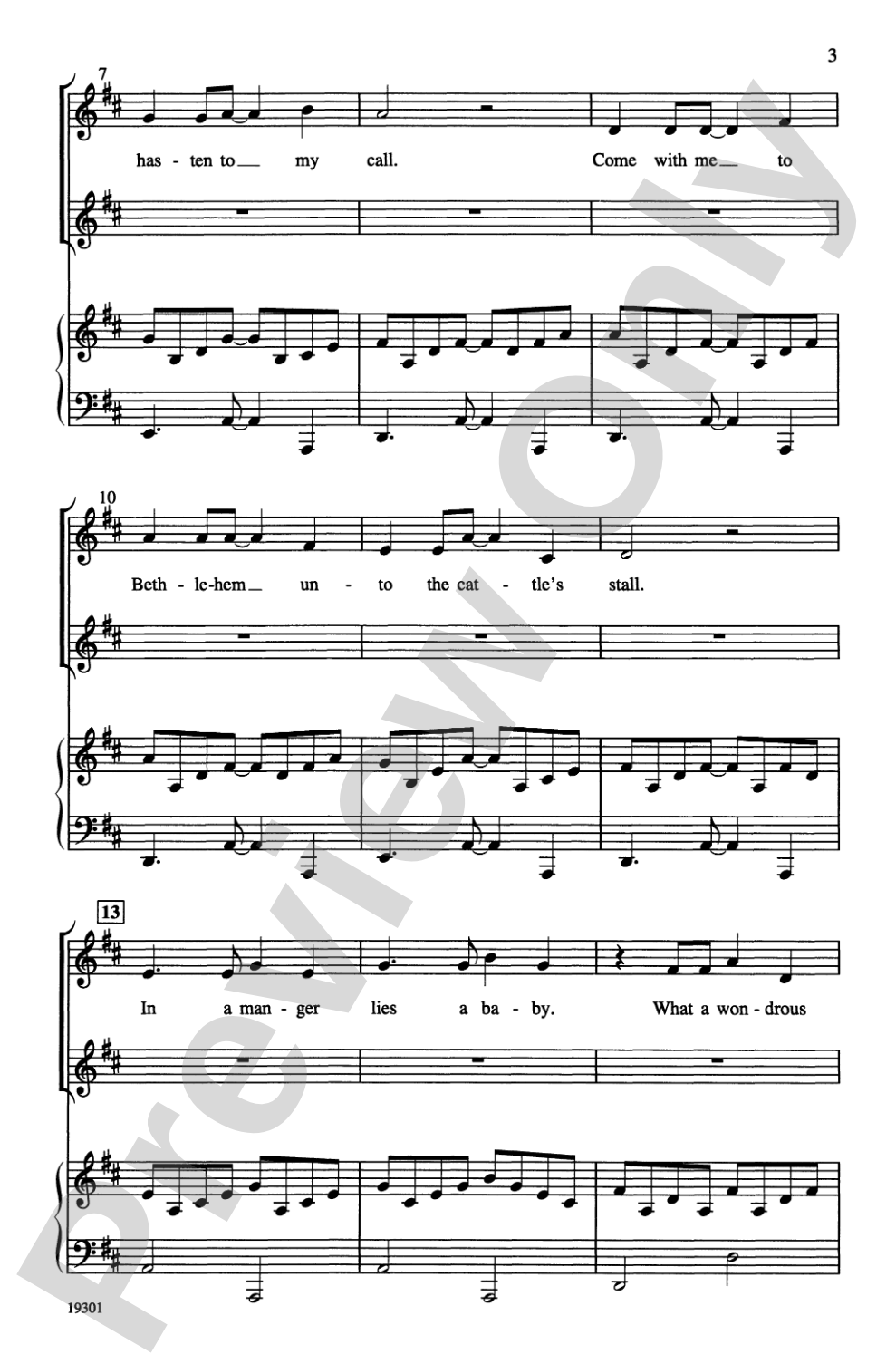

Christmas Lullaby: 2-Part Choral Octavo
A Partner Song with "O Come, Little Children"
Music by Mary Donnelly and George L. O. Strid
Item: 00-PO-0004159
$2.25
Minimum order quantity: 20 copies
Pickup currently not available
Description
Mary Donnelly and George Strid combine a singable new melody with the traditional "O Come, Little Children" to create an effective Caribbean-style choral especially for 2-part groups. The two melodies partner beautifully while the piano plays a gently rocking calypso. Add rhythm instruments for an "island" feel or use the joyous SoundTrax CD. Excellent Christmas literature for young school (or church) groups.


Christmas Lullaby: 2-Part Choral Octavo isn't in MakeMusic Cloud just yet...but it could be. Let us know you'd like to see it, and you'll help shape what comes next. In the meantime, start a free trial and dive into thousands of interactive titles your students can play along with today.
Request This Title
Tell us you want it.
Start Your Free Trial
Explore everything that's ready to play right now.
Sample Audio
1
Audio File
--:--
0:00
0:00
Sample Video
No sample videos found.
Additional Details
Series:
Alfred Archive Edition: Alfred Choral Designs
Publisher:
Alfred Music
Page Count:
8
SKU:
00-PO-0004159
More about this title
About the Composer: Mary Donnelly
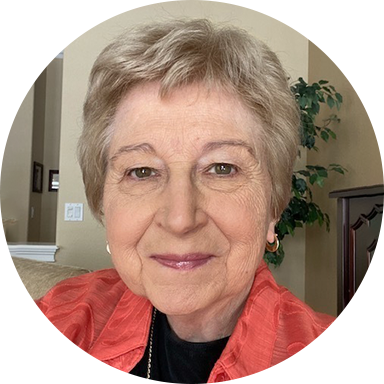
Mary Donnelly grew up in Reno, Nevada, and studied English and French at the University of Nevada before discovering her calling in music education. While still an undergraduate, she organized two children's choruses, a experience that inspired her to pursue formal music training. She completed a Master's Degree in Education at Lesley College in Cambridge, Massachusetts, focusing on integrated arts instruction, and spent thirty years teaching general music and choir in the Washoe County School District.
In 1985, Donnelly began collaborating with George Strid after their principal asked them to write a musical for Reading Week. That first project, The Million Dollar Mystery, launched a prolific partnership that has produced over two hundred songs and twenty-five musicals. A member of ACDA, NEA, and ASCAP, Donnelly brought her classroom expertise and arts integration background to every collaboration, creating repertoire specifically designed for young singers.
Why we love this
This piece solves a real programming challenge: finding genuinely singable two-part Christmas music that avoids tired arrangements. Donnelly and Strid's partner song approach lets younger choirs experience genuine harmonic interaction without overwhelming them technically. The Caribbean lilt and optional rhythm instruments make this something students actually want to rehearse, especially when the alternative is yet another minor-key carol.
What to expect
A warm, gently swaying lullaby infused with island charm, this piece wraps the familiar comfort of "O Come, Little Children" in a new melodic embrace. The piano's rocking calypso accompaniment creates an intimate, almost intimate atmosphere while the two-part writing keeps voices moving in flowing, conversational patterns.
Who it's for
Two-part choirs in elementary through early middle school settings will find this piece immediately accessible and genuinely fun to sing. Church choirs, school holiday programs, and youth music ensembles looking for fresh Christmas literature that respects young voices will connect with the singable melody and gentle Caribbean character.
How to get the most out of it
- Establish the calypso rhythm in the piano part before asking singers to enter; the gentle rocking motion is central to the Caribbean feel, so let your accompanist shape it first.
- If adding rhythm instruments, keep them light and supportive rather than dominant, especially in early rehearsals when the two-part harmony needs clarity.
- Balance the two melodies carefully during partner sections; neither should overshadow the other, so consider seating arrangements that allow both lines equal acoustic presence.
- Use the SoundTrax recording to help singers internalize the island groove, particularly useful if your singers have limited exposure to non-traditional holiday styles.
How to use it
Pair this with other world-music influenced holiday selections to create a refreshing alternative to traditional Christmas programming. It works beautifully as a centerpiece in a concert section devoted to global holiday traditions, or as a gentle opening number that sets a warm, welcoming tone for a holiday assembly.
Skills your students will build
- Two-part harmonic independence and voice part security
- Rhythmic interpretation of Caribbean/calypso styles
- Singing legato lines within a syncopated accompaniment texture
- Blend and balance when two different melodies occur simultaneously
- Flexibility in articulation and style across unfamiliar musical genres