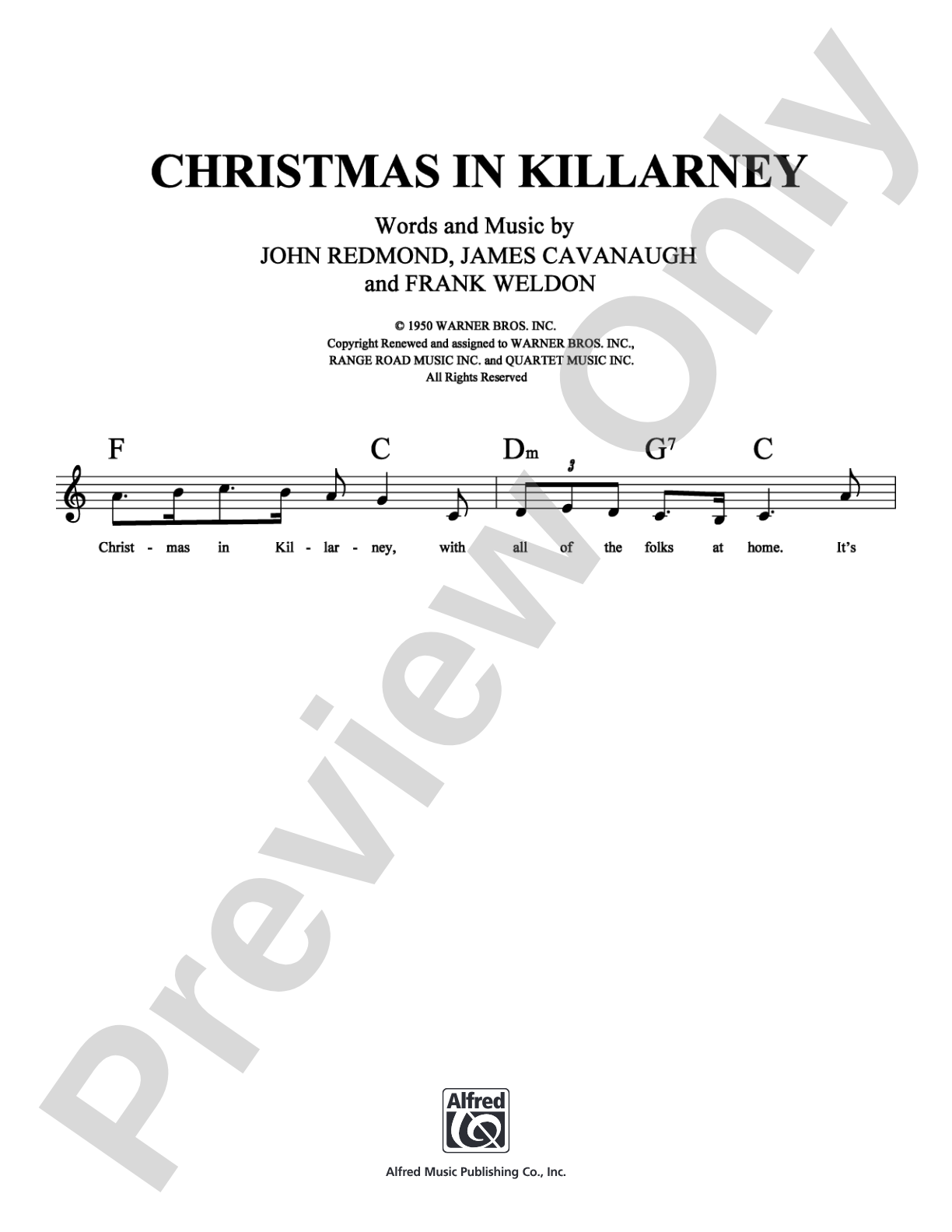
Christmas in Killarney: Lead Sheet Digital Sheet Music

Christmas in Killarney: Lead Sheet Digital Sheet Music

Bing Crosby, John Redmond, Frank Weldon, James Cavanaugh

Item: 00-PS-0008522

Digital Download
$1.99
Description

Christmas in Killarney: Lead Sheet Digital Sheet Music isn't in MakeMusic Cloud just yet...but it could be. Let us know you'd like to see it, and you'll help shape what comes next. In the meantime, start a free trial and dive into thousands of interactive titles your students can play along with today.

Sample Audio
No sample audio found.
Sample Video
Additional Details
SKU: 00-PS-0008522

More about this title

About the Artist: Bing Crosby

Bing Crosby (1903-1977) was an American singer and actor whose smooth baritone and innovative recording techniques shaped popular music in the 20th century. His interpretations of standards and holiday songs became definitive versions for generations of listeners, and his approach to phrasing and vocal control remains a reference point for singers across genres.

Crosby's influence extends beyond performance into music education. His recordings demonstrate masterful lyrical interpretation, rhythmic flexibility, and the art of accompanying oneself within an ensemble sound. For musicians studying vocal jazz phrasing, popular song interpretation, or the American Songbook, his recordings provide essential models of expressive restraint and emotional clarity.

Why we love this

This lead sheet captures a genuine holiday gem that sits perfectly between familiar and fresh. The melody is singable and memorable without being oversaturated in most holiday programs, making it an ideal choice for choirs, vocal jazz ensembles, and soloists seeking repertoire beyond the usual suspects. Crosby's version established the song's character, and a lead sheet lets musicians interpret it through their own lens while honoring the tune's warmth and storytelling.

What to expect

Nostalgic and intimate, this song evokes a specific time and place with genuine longing rather than saccharine sentimentality. The melody unfolds conversationally, inviting the singer to inhabit the story of returning home for the holidays. There is warmth in the harmonic language and an understated elegance in the tunefulness.

Who it's for

Solo singers and vocal ensembles preparing holiday repertoire will find this lead sheet invaluable for learning and arranging. Pianists, guitarists, and small ensemble musicians can use it as a foundation for improvisation and accompaniment exploration. It serves equally well for classical singers exploring popular song repertoire and jazz musicians deepening their standards knowledge.

How to get the most out of it

  • Shape the melodic line with subtle breath placement rather than aggressive dynamic shifts; let the lyrics carry the emotional weight.
  • Experiment with the harmonic accompaniment suggested by the lead sheet. A simple rootposition voicing in a small combo works beautifully, but strings or lush jazz voicings can deepen the nostalgic atmosphere.
  • Approach the rhythm with gentle swing inflection if performing in a jazz or pop context. The melody benefits from conversational phrasing rather than metronomic rigidity.
  • Pay attention to the song's narrative arc about returning to Ireland. Use dynamic contrast and tempo flexibility to highlight key lyrical moments without losing the song's overall warmth.

How to use it

This works as a concert opener or closer during holiday programming, offering singers and audiences a moment of genuine reflection amid more exuberant selections. For vocal jazz ensembles, it provides an accessible entry into the American Songbook. Small vocal chamber groups will find it rewarding as a collaborative learning piece where each player can contribute meaningful accompaniment.

Skills your students will build

  • Interpreting lead sheet symbols and chord changes
  • Vocal phrasing and lyrical storytelling
  • Conversational rhythm and swing inflection
  • Accompanying a melody through chord-based improvisation
  • Balancing melody-driven performance with harmonic exploration

You May Also Like