
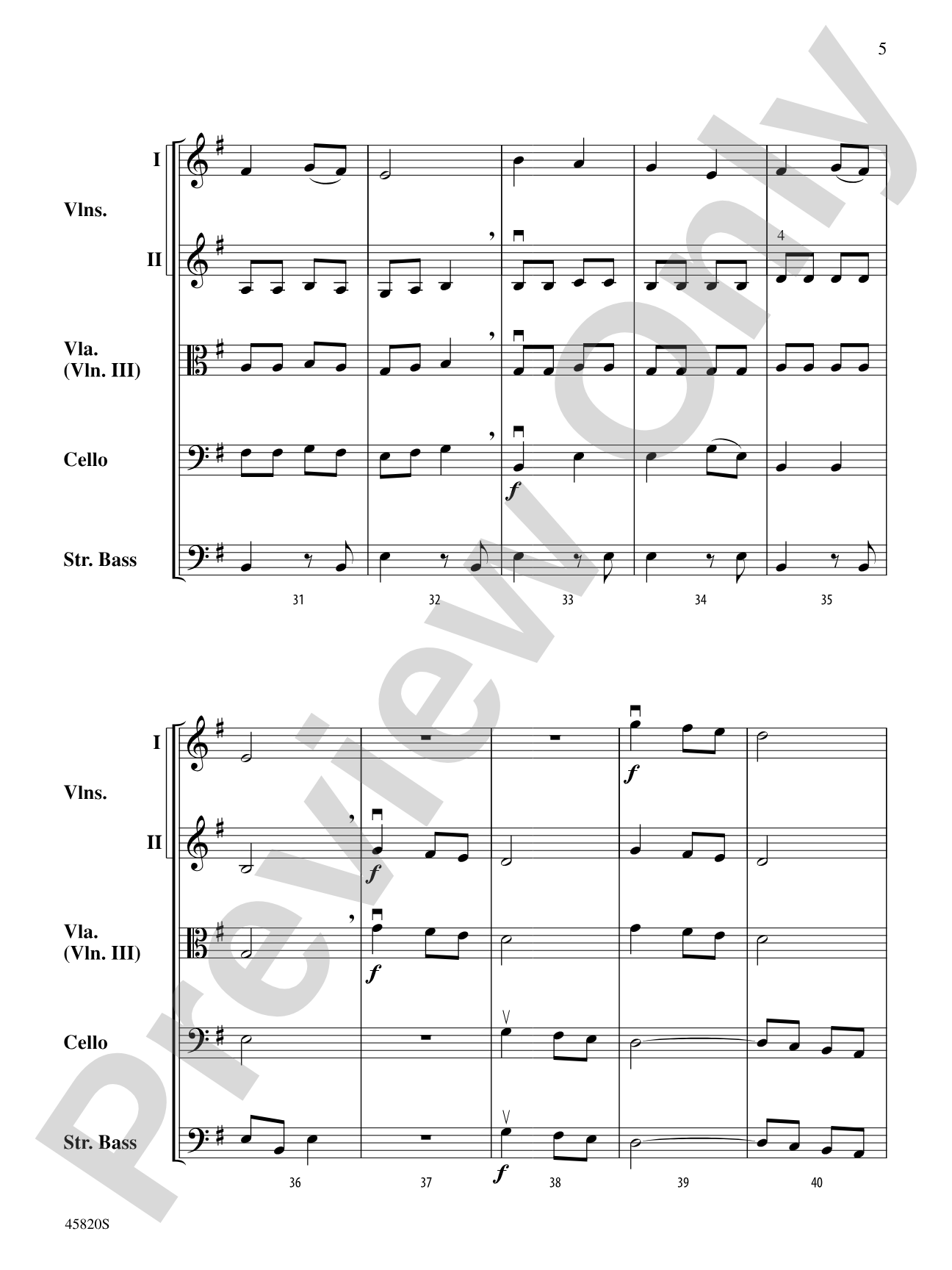
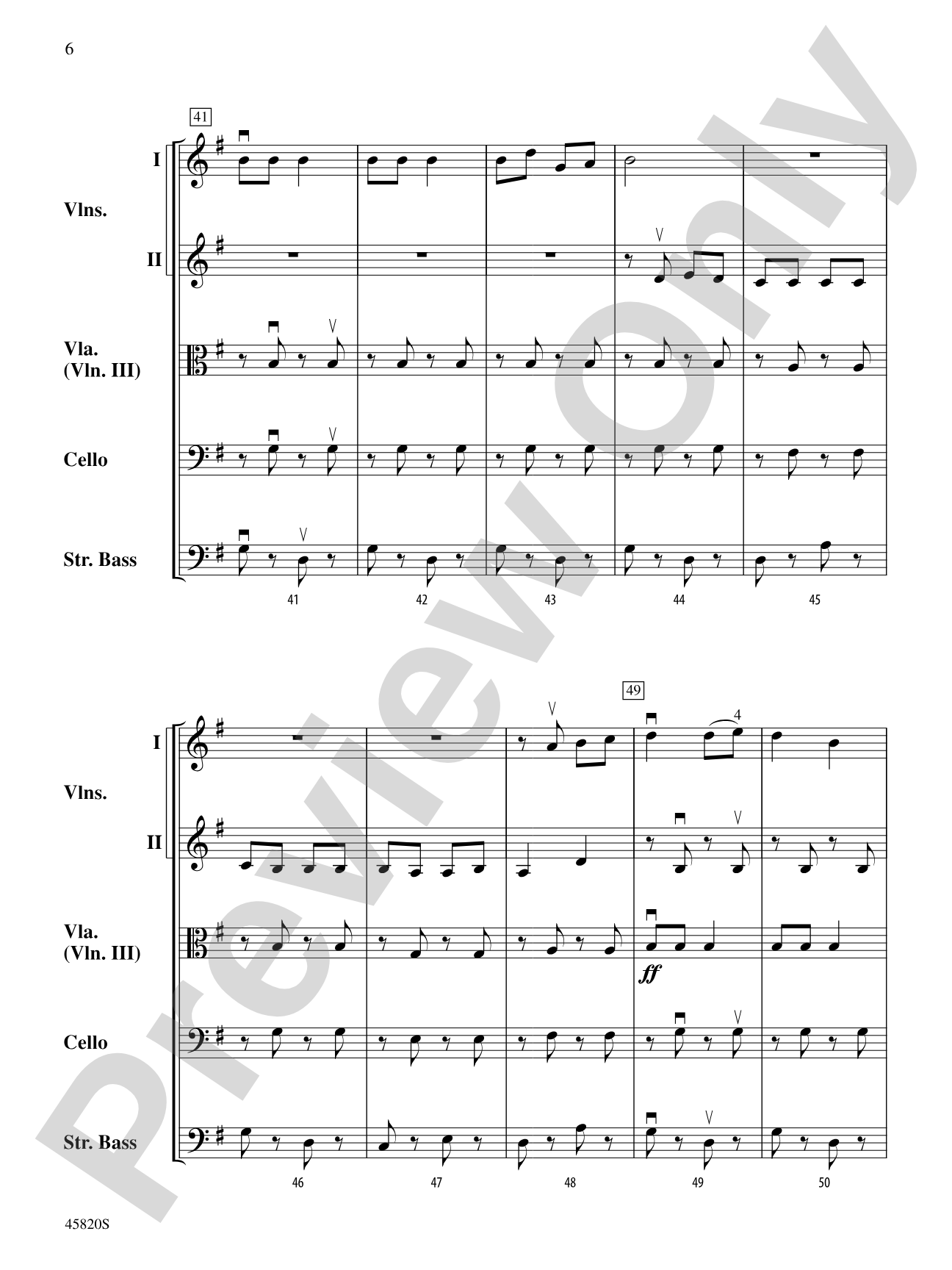
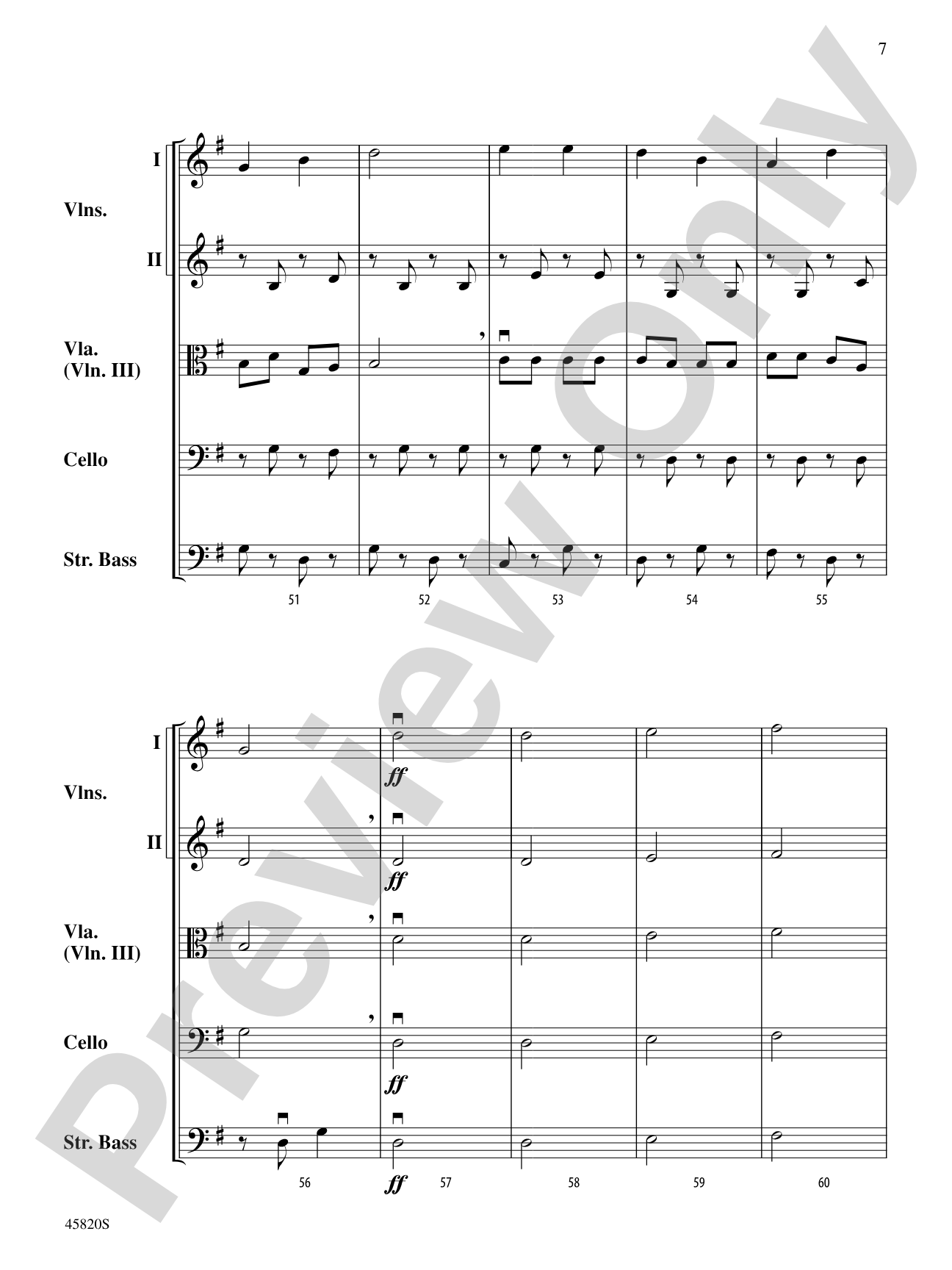
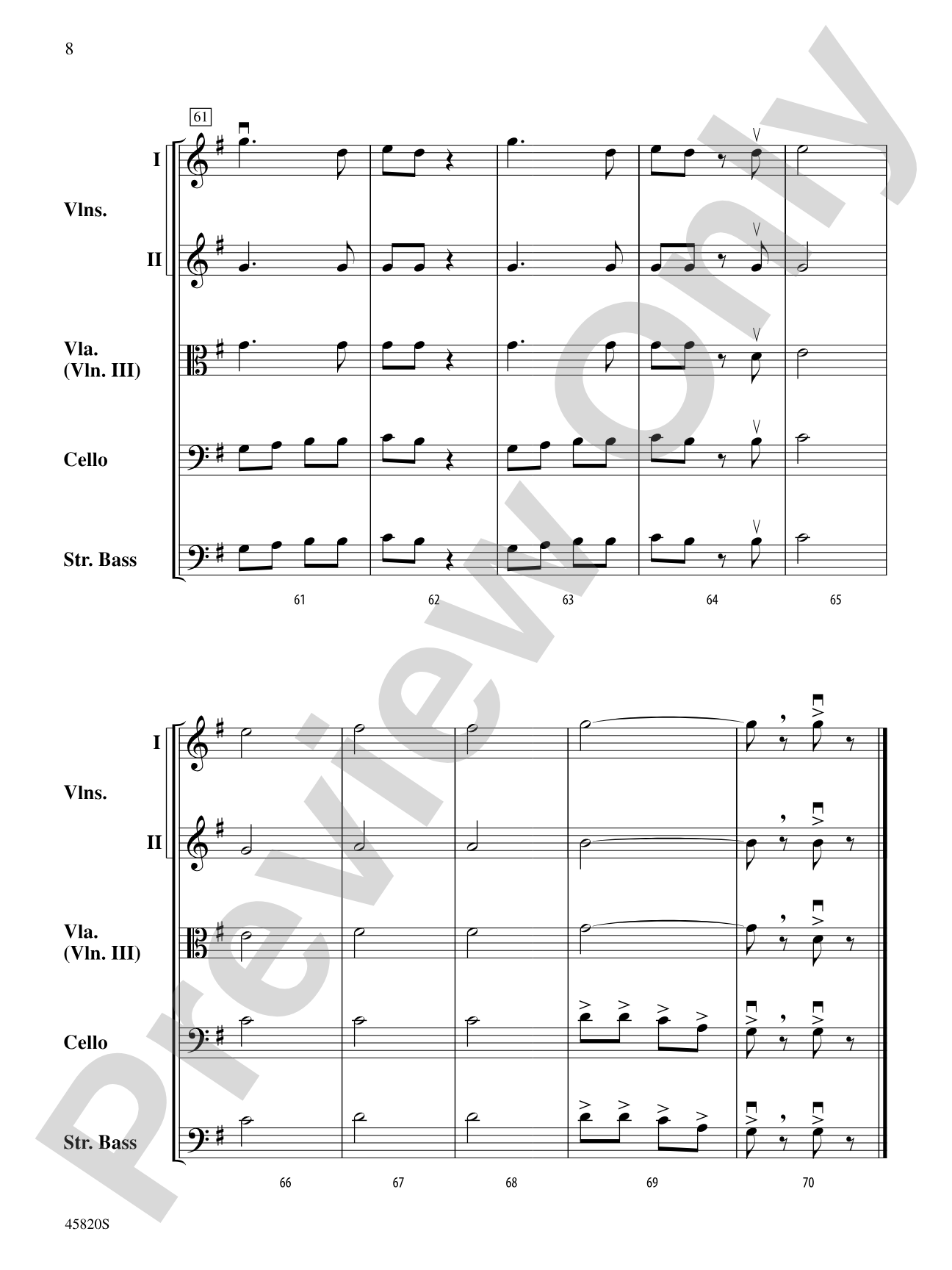

Christmas in a Minute and a Half: String Orchestra Conductor Score & Parts
Arr. Douglas E. Wagner
Grade: 1
Item: 00-PK-0007330

$50.00
Pickup currently not available
Buy Extra Parts (Digital PDF Download)
Parts Added to Cart!
Description
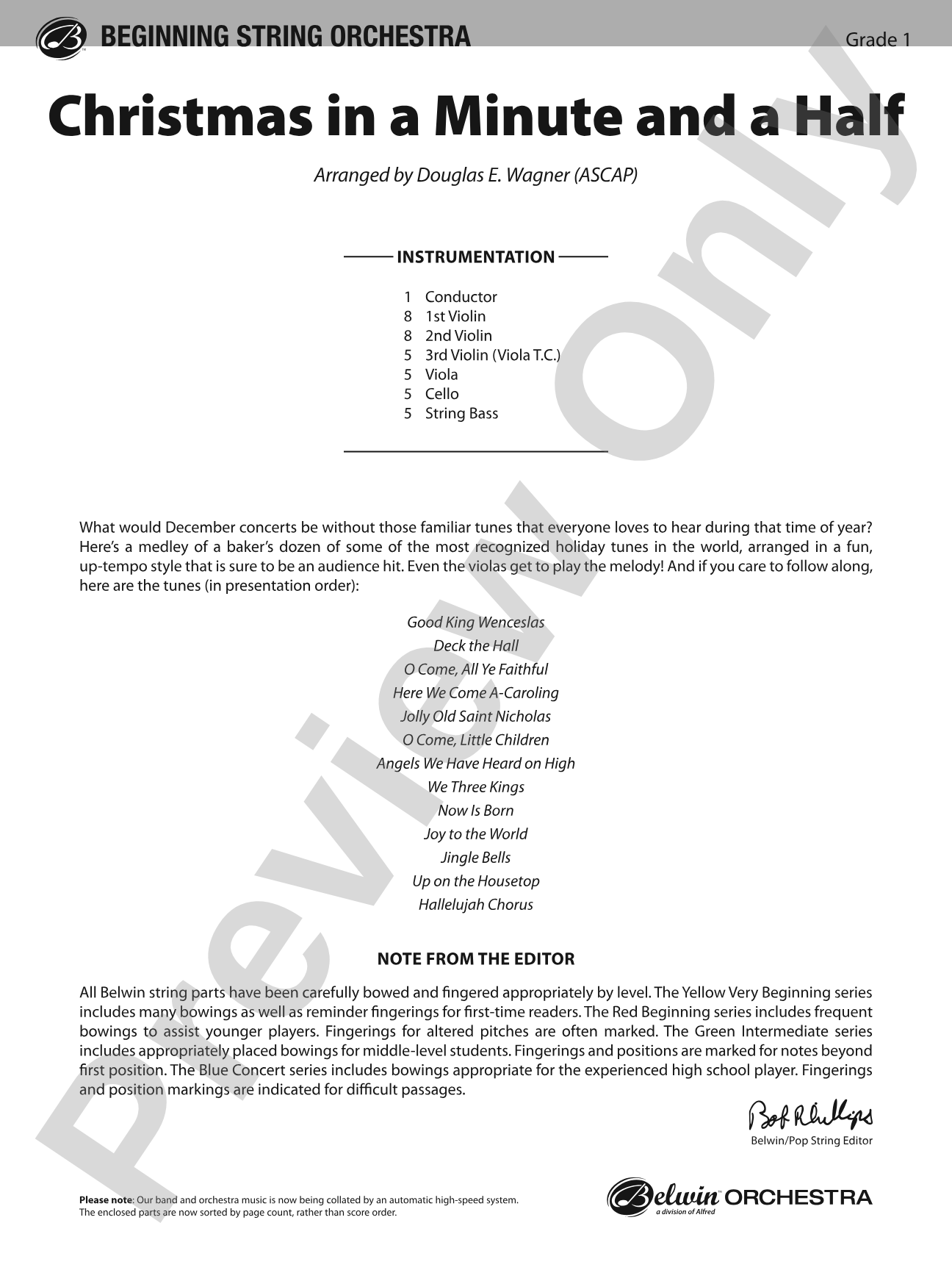
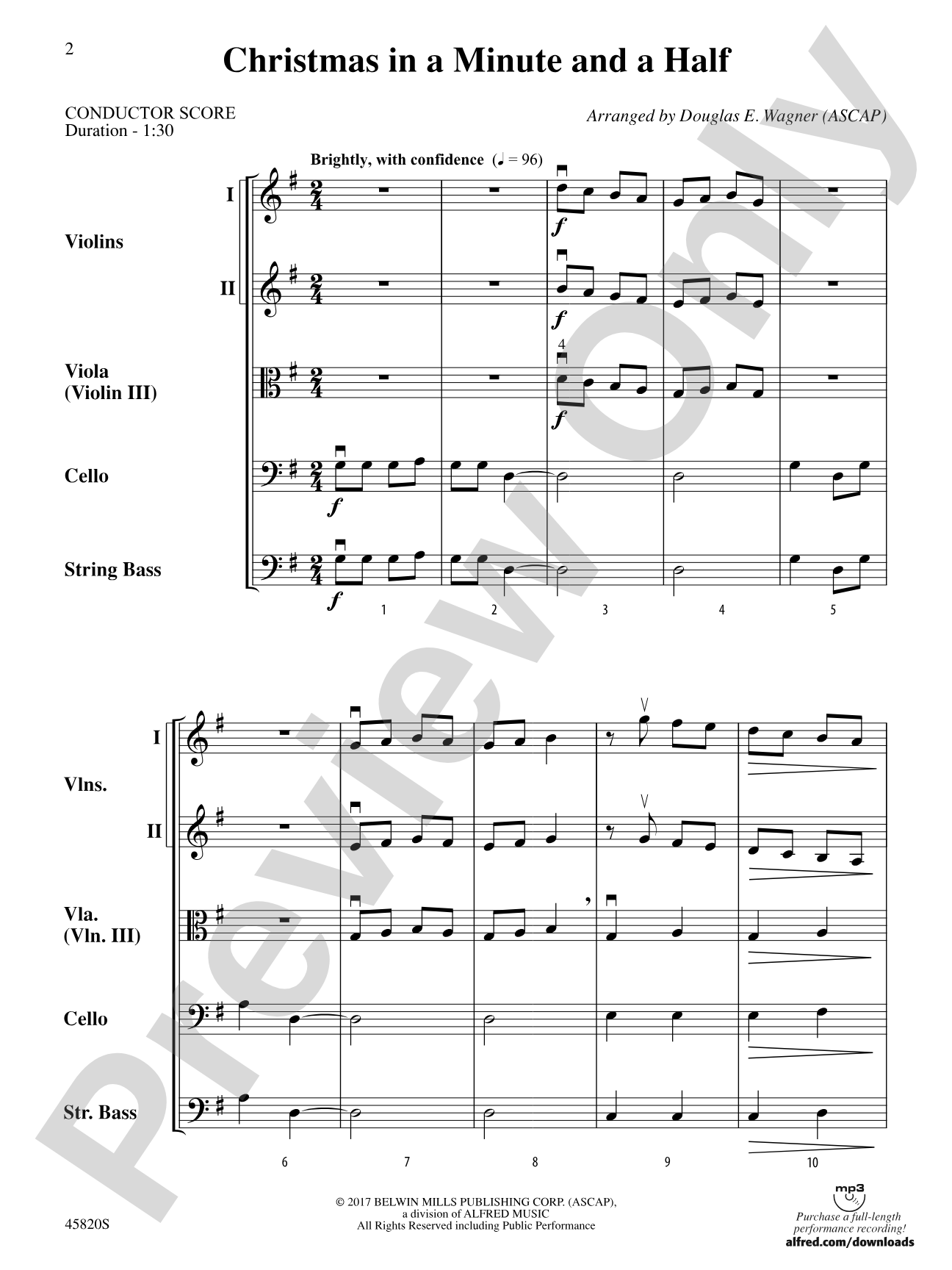
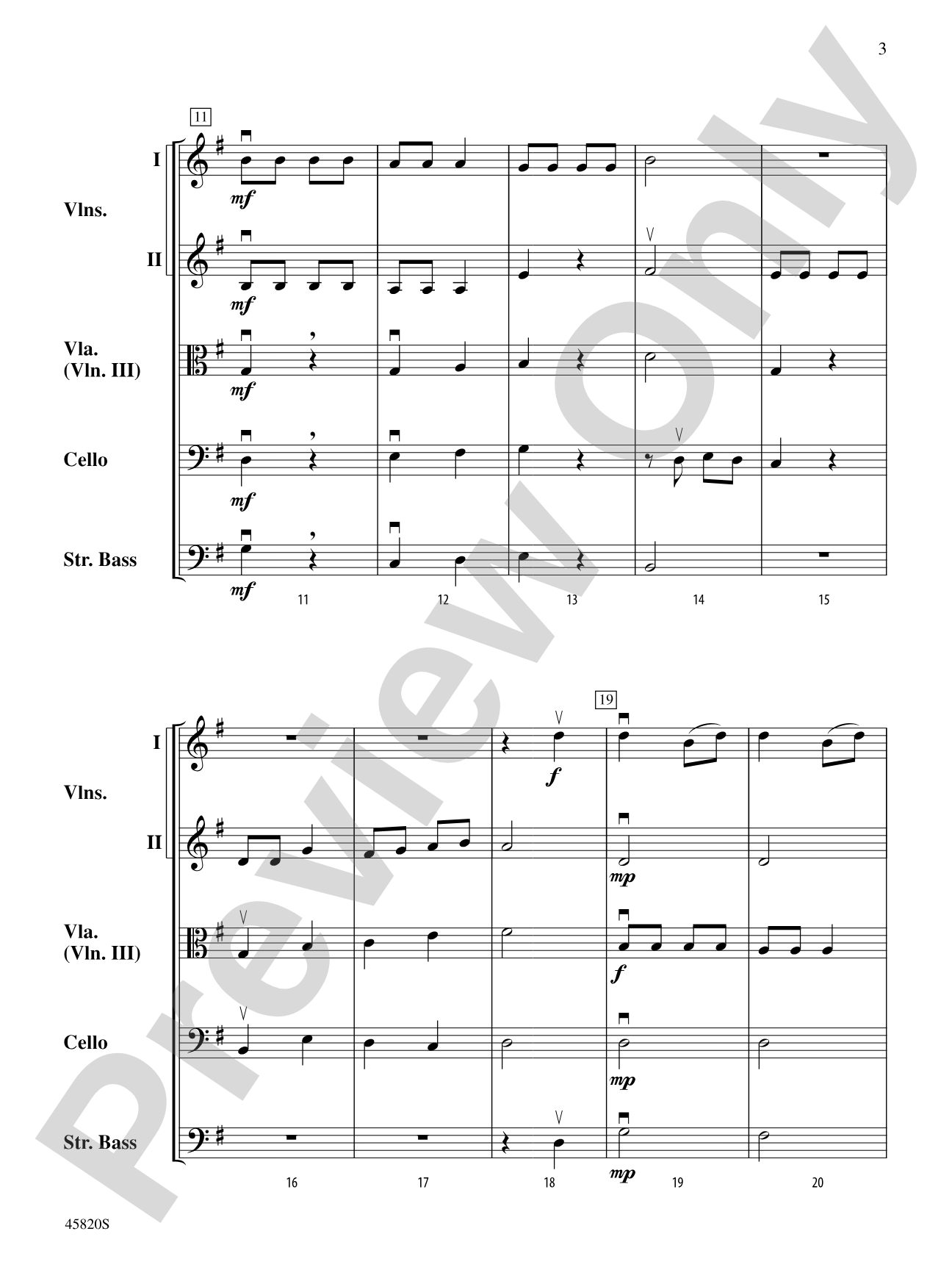
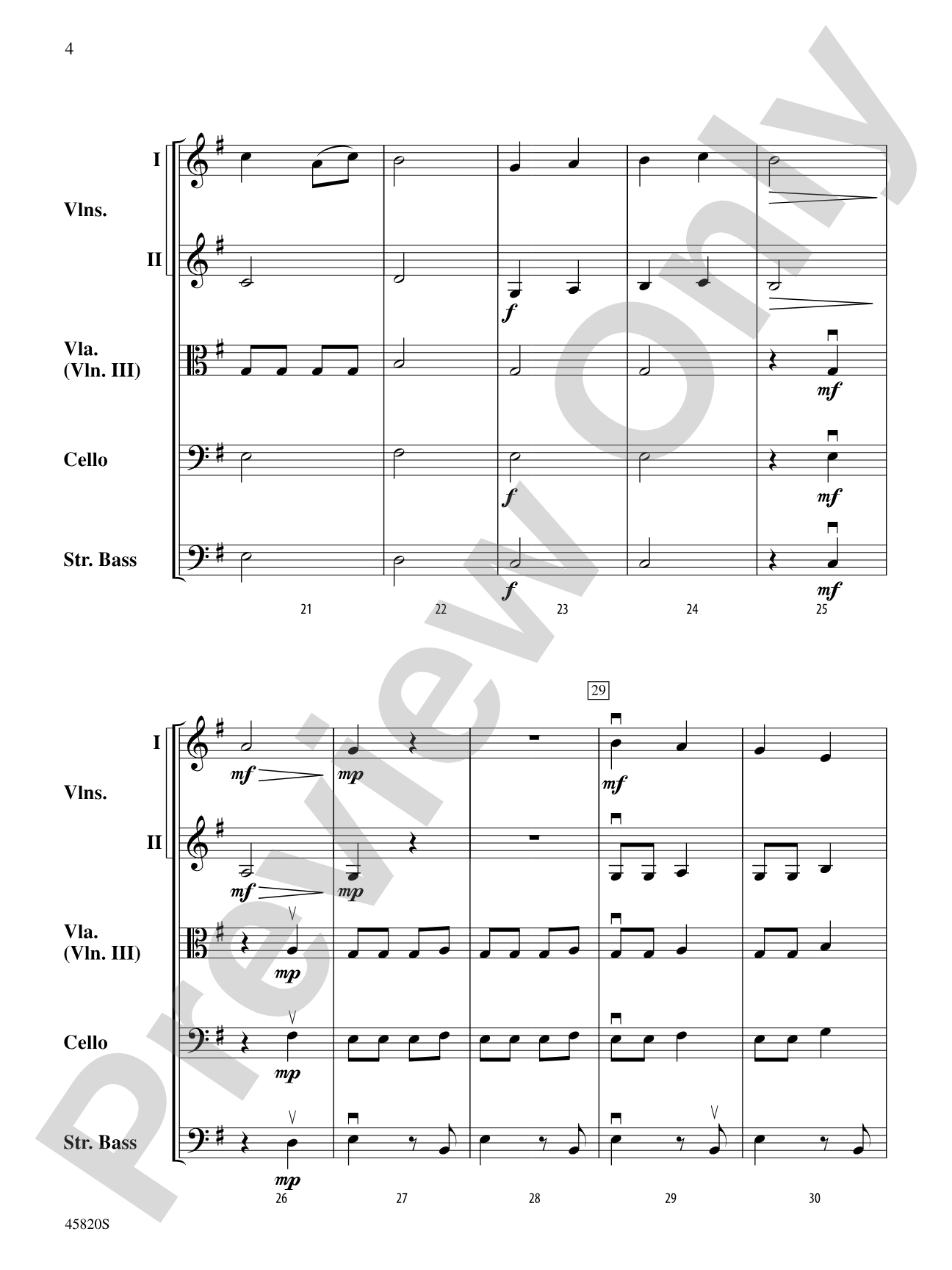
What would December concerts be without those familiar tunes that everyone loves to hear during that time of year? Here's a medley arranged by Douglas E. Wagner of a baker's dozen of some of the most recognized holiday tunes in the world, set in a fun, up-tempo style that is sure to be an audience hit. Even the violas get to play the melody!
The tunes (in presentation order) are: Good King Wenceslas * Deck the Hall * O Come, All Ye Faithful * Here We Come A-Caroling * Jolly Old Saint Nicholas * O Come, Little Children * Angels We Have Heard on High * We Three Kings * Now Is Born * Joy to the World * Jingle Bells * Up on the Housetop * and Hallelujah! Chorus. (1:30)


The tunes (in presentation order) are: Good King Wenceslas * Deck the Hall * O Come, All Ye Faithful * Here We Come A-Caroling * Jolly Old Saint Nicholas * O Come, Little Children * Angels We Have Heard on High * We Three Kings * Now Is Born * Joy to the World * Jingle Bells * Up on the Housetop * and Hallelujah! Chorus. (1:30)
Don't just read it, hear it, play along with it, and watch your students grow with it. In MakeMusic Cloud, Christmas in a Minute and a Half: String Orchestra Conductor Score & Parts comes alive with professional accompaniment, adjustable tempo, and built-in practice tools that turn solo practice into real progress.
Open in the Player
Jump straight in and assign it today.
Start Your Free Trial
Open this title and explore the full library in minutes.
Sample Audio
1
Audio File
--:--
0:00
0:00
Sample Video
Additional Details
Series:
Belwin Beginning String Orchestra
Publisher:
Alfred Music
Page Count:
72
SKU:
00-PK-0007330
More about this title
About the Arranger: Douglas E. Wagner

Douglas E. Wagner studied music at Butler University in Indiana, earning both undergraduate and graduate degrees before spending three decades as a high school music director and administrator. Since 1973, he has published over 3,500 compositions and arrangements across virtually every ensemble type, from choirs and bands to orchestras, handbells, and keyboard music. His catalog has sold more than seventeen million copies worldwide, with performances appearing regularly on radio, television, and concert stages across the United States and internationally.
Wagner now concentrates exclusively on composition from his base in Indianapolis. His prolific output and accessibility across skill levels have made his music a staple in American school music programs, where his arrangements balance musicality with practical teachability.
Why we love this
Wagner's medley packs thirteen recognizable carols into ninety seconds of pure energy, making it an ideal opener or finale that connects instantly with audiences. The scoring ensures every section gets melodic moments, particularly the often-overlooked violas, so your entire ensemble feels engaged rather than relegated to accompaniment patterns. The Grade 1 writing is genuinely playable without sacrificing musicality, and the familiar material means students can focus on ensemble precision and stylistic clarity rather than learning complex new melodies.
What to expect
Cheerful and propulsive, this medley captures the rush and joy of the holiday season without settling into a slow, reverent pace. The up-tempo treatment gives even solemn carols like "O Come, All Ye Faithful" a bright, celebratory character that keeps the ear engaged through thirteen familiar tunes.
Who it's for
String orchestras in Grades 1-3 seeking a festive, high-energy December concert selection that plays well to mixed audiences of all ages. Directors working with developing ensembles will appreciate the accessibility of the writing alongside the satisfying sound that results from straightforward, well-crafted voicings.
How to get the most out of it
- Keep the tempo brisk and consistent throughout the medley; Wagner's arrangement relies on forward momentum to maintain audience energy across the thirteen tunes.
- Balance the frequent melody transfers between sections carefully, ensuring each instrument group has enough volume to project their melodic turn without drowning out the accompaniment.
- Attend to the transitions between tunes; mark them clearly in your parts so students understand where one carol ends and the next begins, especially in the faster sections.
How to use it
Open or close your winter concert with this crowd-pleaser to set a festive tone and send the audience out smiling. It pairs well with a slower, more introspective carol as a contrasting piece, allowing you to showcase both the energy and the expressive range of your young orchestra.
Skills your students will build
- Maintaining steady tempo across rapid melody transfers between parts
- Balancing melodic prominence with accompaniment in homophonic textures
- Reading flowing sixteenth-note passages at moderate tempo
- Executing clean articulation and style shifts within a single piece
- Precision in ensemble unison and octave doublings