
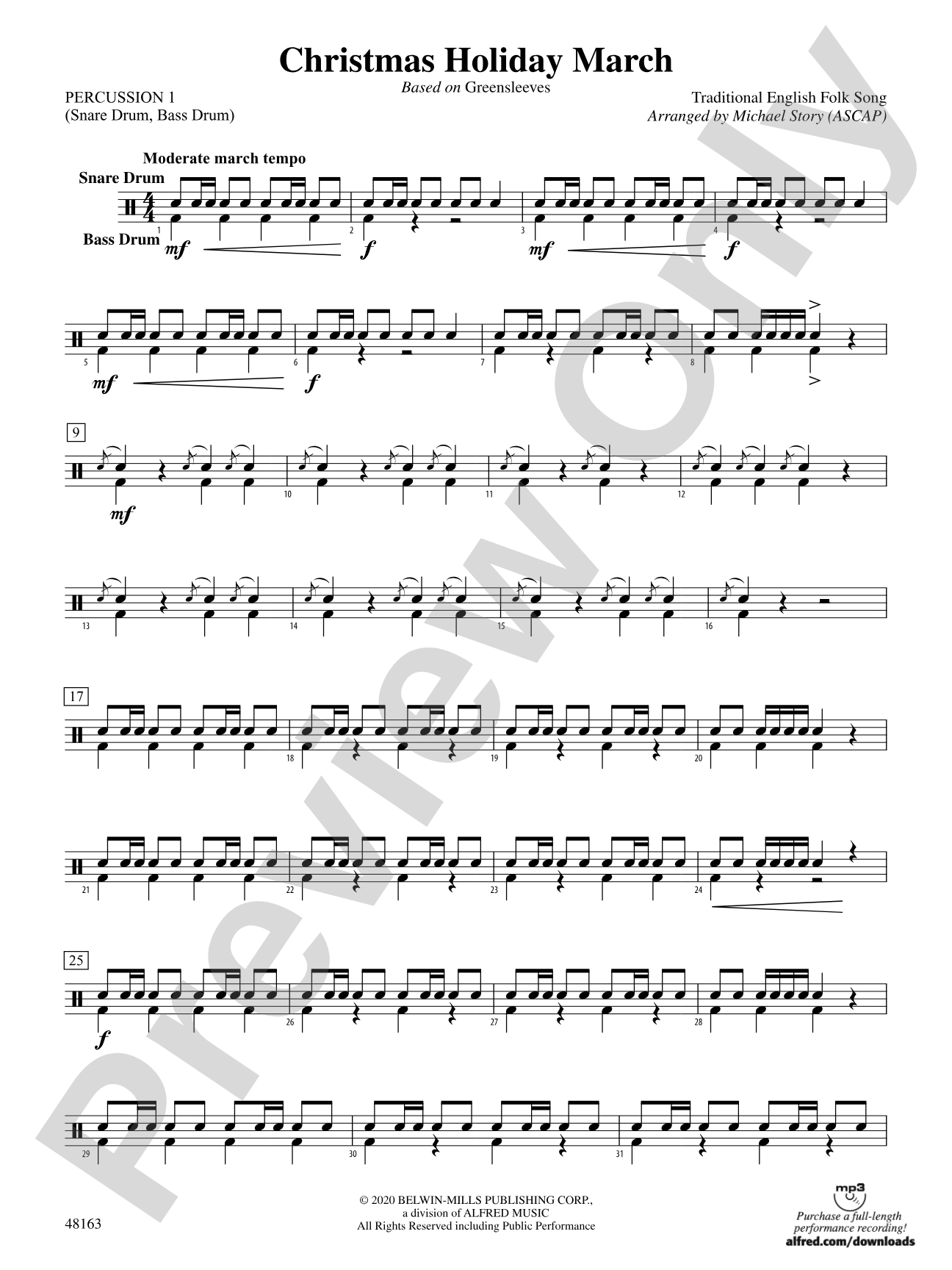

Christmas Holiday March: 1st Percussion
Based on Greensleeves
Traditional English Folk Song / arr. Michael Story
Grade: 1 (Easy)
Item: 00-PC-0018576_PC1
$5.99
Pickup currently not available
Description
This march setting of the 16th-century traditional English folk song Greensleeves is an outstanding fusion piece for beginners. With teaching opportunities for contrasting articulations and phrasing, this is a wonderful selection to march into the holiday season. (2:15) This title is available in MakeMusic Cloud.


Don't just read it, hear it, play along with it, and watch your students grow with it. In MakeMusic Cloud, Christmas Holiday March: 1st Percussion comes alive with professional accompaniment, adjustable tempo, and built-in practice tools that turn solo practice into real progress.
Open in the Player
Jump straight in and assign it today.
Start Your Free Trial
Open this title and explore the full library in minutes.
Sample Audio
1
Audio File
--:--
0:00
0:00
Sample Video
Additional Details
Series:
Belwin Beginning Band
Publisher:
Alfred Music
Page Count:
132
SKU:
00-PC-0018576_PC1
More about this title
About the Composer: Michael Story
Michael Story is a prolific composer and arranger whose catalog spans concert band, wind ensemble, orchestral, and choral literature. His arrangements and original compositions have become staples in band programs across North America, earning recognition for their musicality, accessibility, and pedagogical clarity. Story's work consistently balances engaging musical ideas with practical teaching opportunities, making his output particularly valuable for directors seeking quality repertoire at accessible levels.
Why we love this
Story's treatment of Greensleeves succeeds because it respects the melody's inherent beauty while building genuine musical substance around it. The deliberate focus on contrasting articulations and phrasing gives conductors concrete teaching tools, transforming what could be a surface-level seasonal piece into a lesson in expressive playing. For a Grade 1 ensemble, this combination of accessibility, musicality, and pedagogical depth is rare.
What to expect
Bright and celebratory, yet grounded in the quiet dignity of the original melody. The march context gives the familiar English tune a processional quality, while thoughtful orchestration keeps the sound clean and balanced throughout. There's a sense of familiar warmth meeting festive energy, making this feel appropriate for a winter concert without overselling the seasonal angle.
Who it's for
Grade 1 concert bands preparing for winter concerts and holiday performances. This is ideal for ensembles early in the season when students are still building fundamental skills but capable of playing music with real character. Directors seeking accessible seasonal repertoire that also addresses specific technique goals will find this piece particularly useful.
How to get the most out of it
- Spend time isolating the articulation contrasts in each section during sectional rehearsals. Make sure players understand where they're using legato versus marked attacks, as these differences define the character shifts.
- Shape the phrasing by conducting with clear gesture changes at major structural points. Let the band hear how the familiar melody transforms through different orchestrations when you emphasize these moments with your baton.
- Balance the ensemble so the melodic line sings above the supporting parts. With Grade 1 players, this often means asking brass players to play slightly under full dynamic to allow the lead voice clarity.
- Record a rehearsal and listen back as a group. Young musicians often can't hear their own contribution within the full sound, and playback makes the phrasing and articulation work immediately visible to them.
How to use it
Program this early in a holiday concert to establish the ensemble's musicality before moving into heavier repertoire. Its length (2:15) and accessibility make it an excellent opener that allows the band to settle into the acoustic and build confidence. Pair it with contrasting choral or instrumental selections to round out a themed winter program.
Skills your students will build
- Distinguishing and executing contrasting articulations (legato and marked)
- Shaping lyrical phrases within a march context
- Balancing melody and accompaniment parts
- Reading and responding to conductor gesture for phrasing and dynamics
- Playing a recognizable melody with musical expression rather than technical accuracy alone