

Christmas Hallelu: 3-Part Mixed Choral Octavo
Music by Jay Althouse
Item: 00-PO-0004264
$2.25
Minimum order quantity: 20 copies
Pickup currently not available
Description
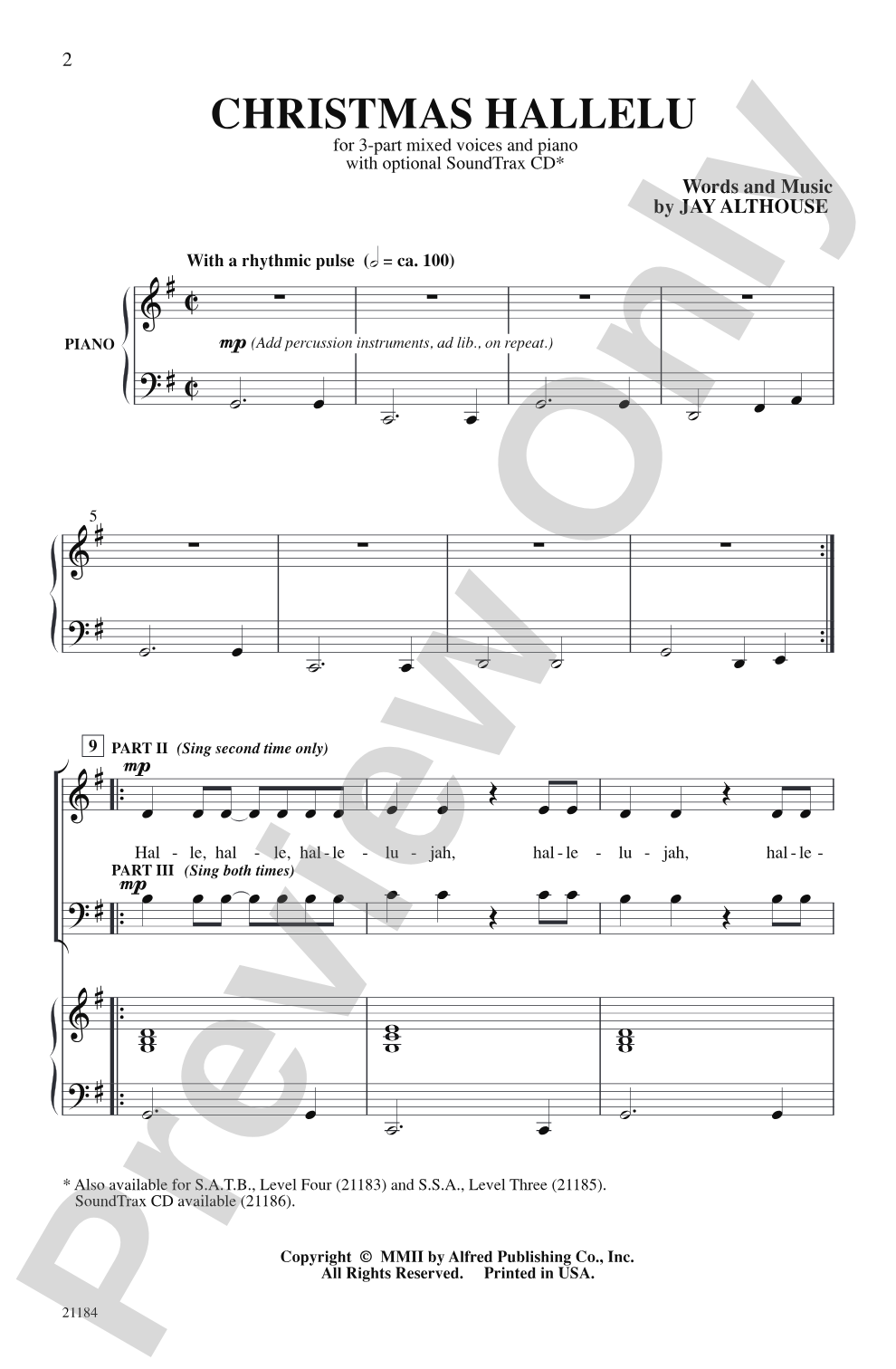
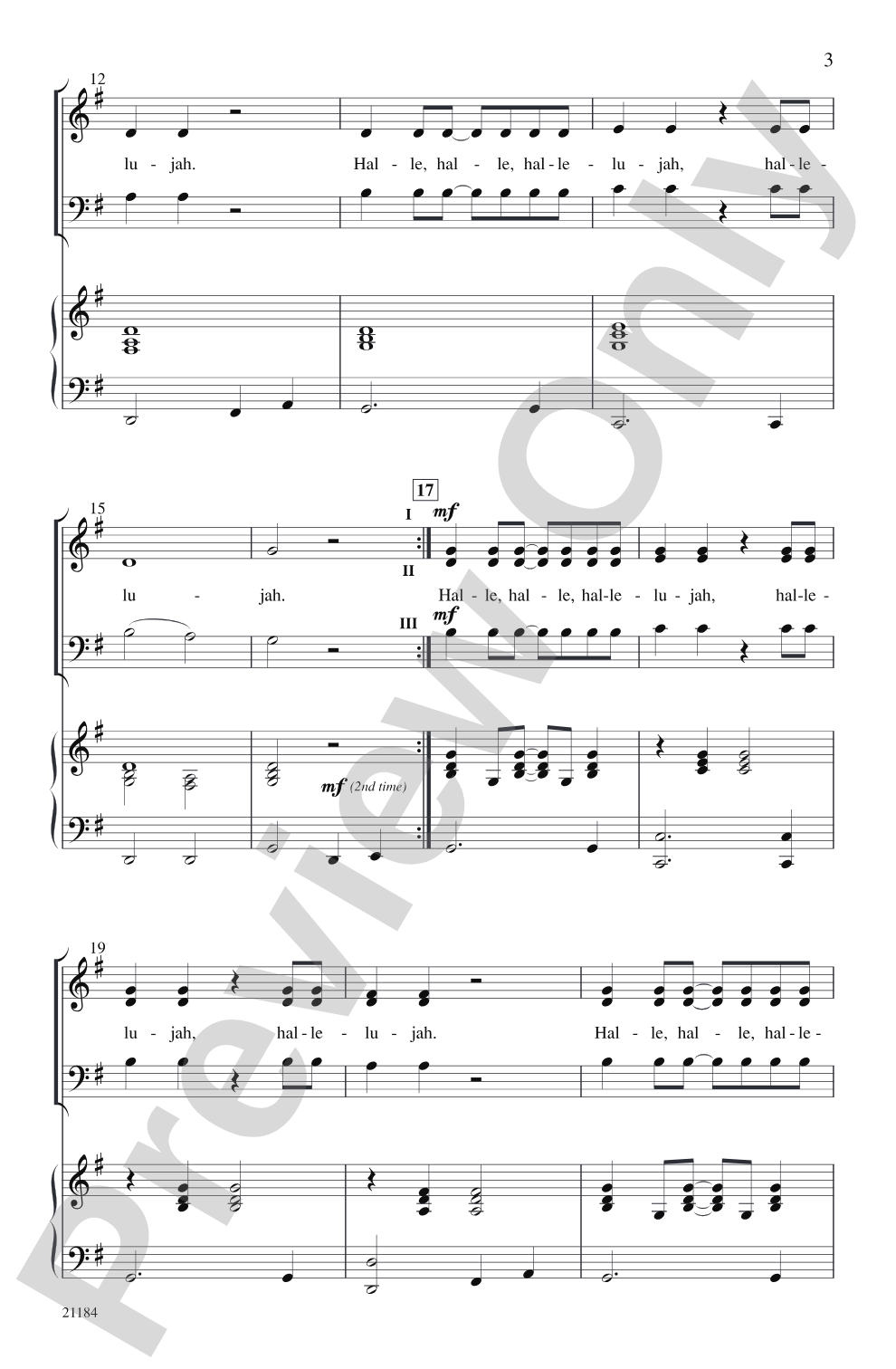
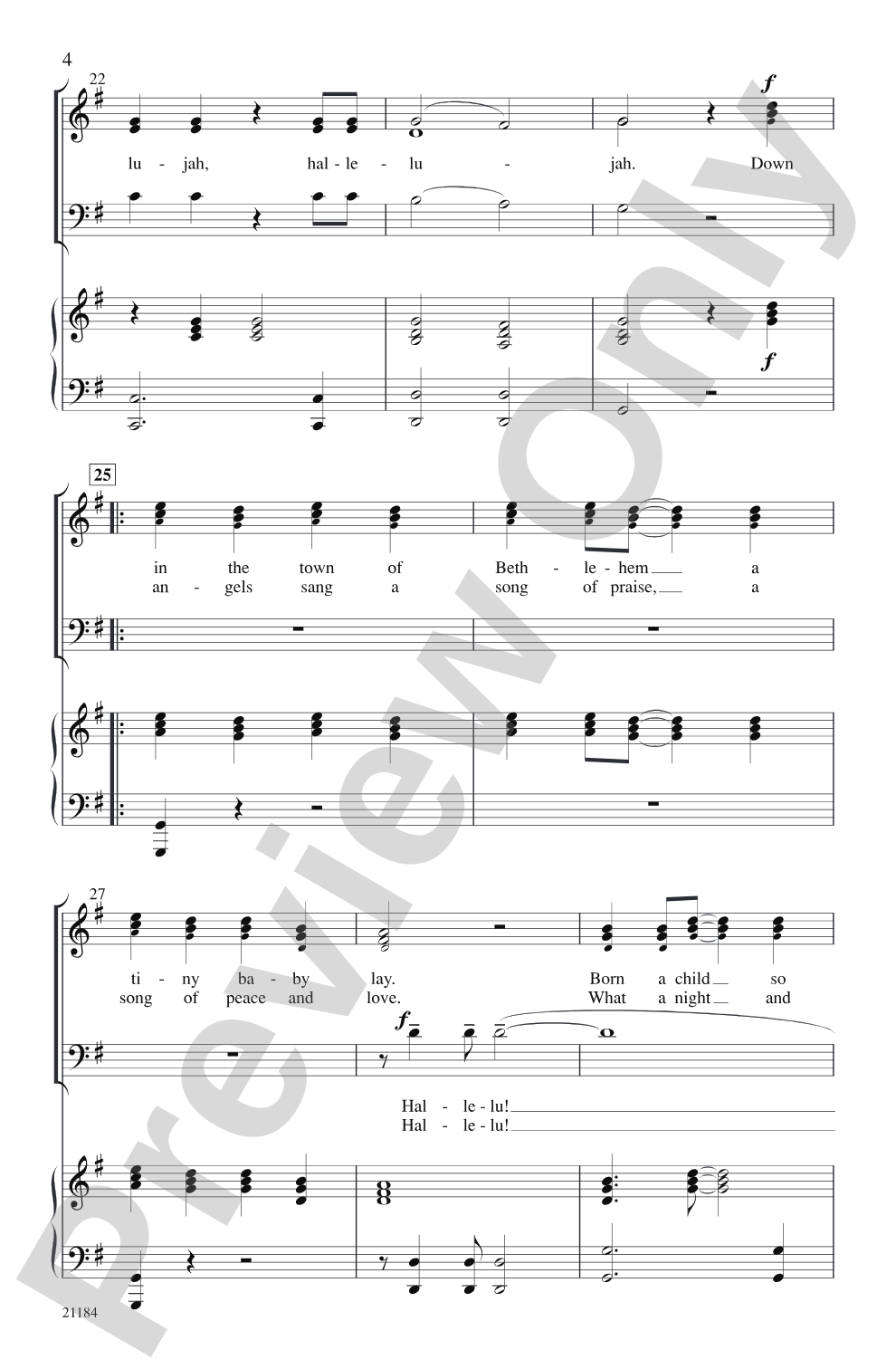
This walking-tempo Christmas piece has a South African feel. It opens with one voice part singing a simple melody. One by one the other voices enter to create an exuberant carol. After a rhythmic interlude featuring an optional solo, the voices disappear in order until only the initial melody is silently heard. Drums can be added as an accompaniment, or use the exciting SoundTrax CD.


Christmas Hallelu: 3-Part Mixed Choral Octavo isn't in MakeMusic Cloud just yet...but it could be. Let us know you'd like to see it, and you'll help shape what comes next. In the meantime, start a free trial and dive into thousands of interactive titles your students can play along with today.
Request This Title
Tell us you want it.
Start Your Free Trial
Explore everything that's ready to play right now.
Sample Audio
1
Audio File
--:--
0:00
0:00
Sample Video
No sample videos found.
Additional Details
Series:
Alfred Archive Edition: Alfred Choral Designs
Publisher:
Alfred Music
Page Count:
12
SKU:
00-PO-0004264
More about this title
About the Composer: Jay Althouse

Jay Althouse holds degrees in Music Education and Music from Indiana University of Pennsylvania, where he was later honored as a Distinguished Alumnus. Early in his career, he spent eight years managing rights and licenses for a major educational publisher while serving on the Executive Board of the Music Publishers Association of America. Today he is recognized as a prolific composer with more than 800 choral works in print, performed regularly across the English-speaking world.
Althouse has shaped music education through multiple channels: as a composer receiving regular ASCAP Special Awards, as a co-author with his wife Sally K. Albrecht of children's musicals and the widely-used Complete Choral Warm-up Book, and as a writer of classroom resources including Ready to Read Music and One-Page Composer Bios. His choral composition "I Hear America Singing," co-written with Albrecht, was performed by the San Francisco Girls and Boys Choirs at President Barack Obama's inauguration. He resides in Wake Forest, North Carolina, where he has served on the boards of the North Carolina Master Chorale and the Folk Art Society of America.
Why we love this
Althouse's gift for melody shines here: the opening unison phrase is so accessible that learners grasp it instantly, then delight in layering it with new voices entering one by one. The South African inflection gives Christmas programming genuine rhythmic and cultural texture without requiring specialized knowledge from your singers. The structural elegance of the opening melody returning silently at the end creates a thoughtful arc that audiences remember.
What to expect
From the first solo voice, this carol radiates warmth and forward motion. As voices accumulate, the texture builds with infectious energy; the South African rhythmic sensibility keeps everything grounded and joyful rather than orchestral. By the end, when that opening melody fades into silence, listeners feel the song lifting away.
Who it's for
This octavo works for mixed choirs of high school age and beyond who are ready to embrace a non-traditional Christmas sound. Singers need secure vocal line reading and comfort with staggered entries, making it ideal for intermediate choirs seeking something more rhythmically alive than standard carols.
How to get the most out of it
- Nail the entrance timing during the layering section by having singers shadow each new voice part during rehearsal before adding them cumulatively; the staggered entries are the piece's defining feature.
- Treat the rhythmic interlude as an ensemble conversation rather than a solo moment; even when a singer is spotlighted, the ensemble's energy should pulse underneath.
- Let the walking tempo feel genuinely unhurried; rushing dulls the South African grooves that give this piece its character.
- If you use recorded accompaniment, balance the choir's voices so they sit above but not buried under the drums; rehearse with the track early so singers aren't fighting it.
How to use it
Program this as an opening number on a Christmas concert to reset audience expectations; its rhythmic confidence and unfamiliar cultural flavor create a striking contrast to more traditional fare that follows. It also works beautifully as a closing piece if you want singers to leave the stage with momentum, or as a standalone highlight in a holiday assembly where you need something energetic but accessible.
Skills your students will build
- Staggered voice entries and cues
- Maintaining pulse and groove in non-traditional meters
- Singing unison melody with cultural authenticity
- Blending in SAB voicing across rhythmic texture