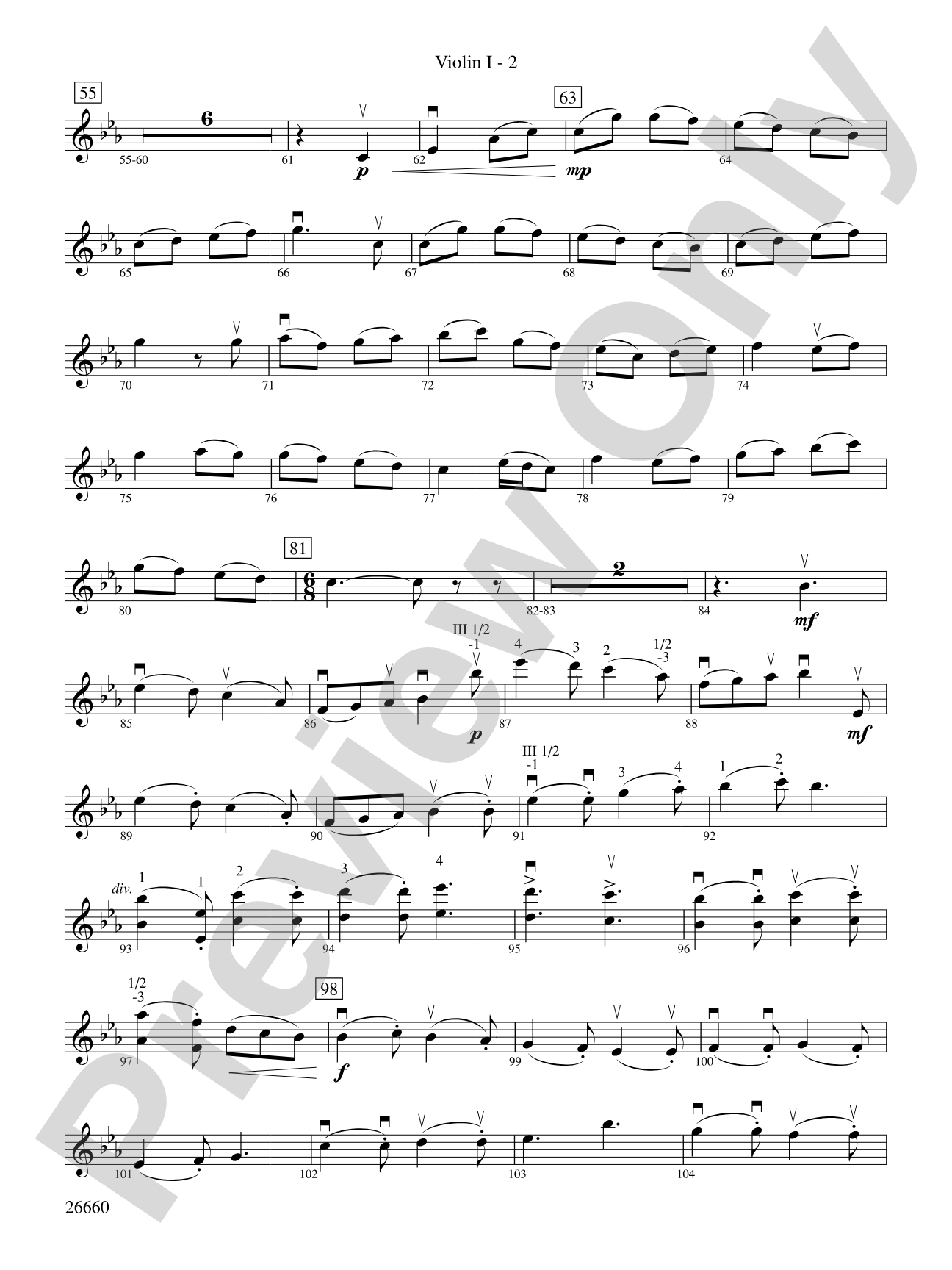
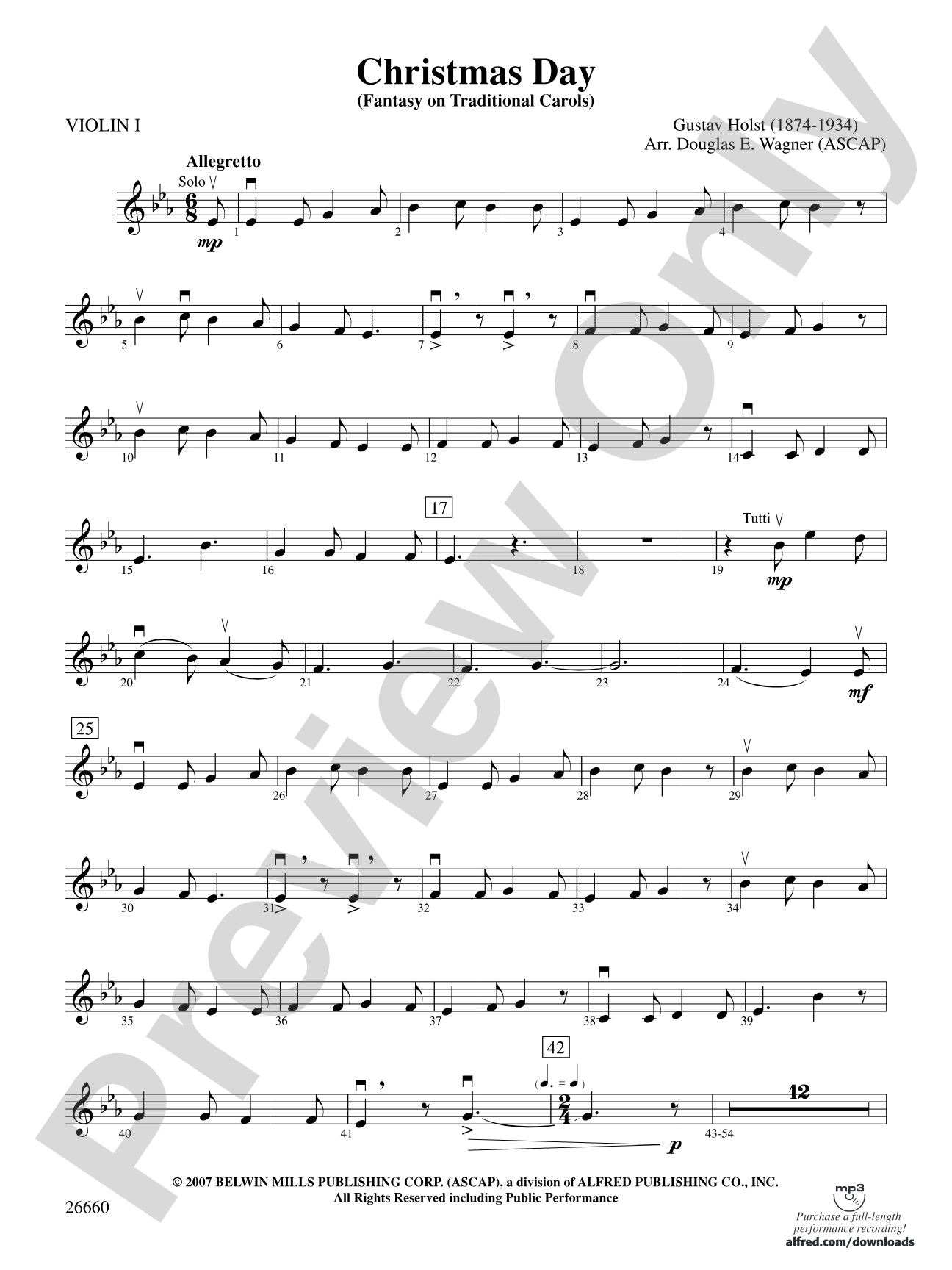
Christmas Day: 1st Violin Sheet Music Preview

Christmas Day: 1st Violin

By Gustav Holst / arr. Douglas E. Wagner

Grade: 4

Item: 00-PC-0001153_VN1

Digital Download
$5.99
Description
Holst masterfully blends variations on "In dulci jubilo" with "God Rest Ye Merry Gentlemen," "Come Ye Lofty, Come Ye Lowly," and "The First Noel." The textures are wonderful; he jumps between carols and even stacking then atop each other! (6:15) This title is available in MakeMusic Cloud.

Don't just read it, hear it, play along with it, and watch your students grow with it. In MakeMusic Cloud, Christmas Day: 1st Violin comes alive with professional accompaniment, adjustable tempo, and built-in practice tools that turn solo practice into real progress.

Sample Audio
0:00
0:00
Sample Video
Additional Details
Series: Belwin Concert String Orchestra
Publisher: Alfred Music
Page Count: 228
SKU: 00-PC-0001153_VN1

More about this title

About the Composer: Gustav Holst

Gustav Holst (1874-1934) was an English composer whose gift for orchestration and structural clarity made him one of the 20th century's most performed classical composers. His masterwork "The Planets" remains iconic, but his output extended far beyond orchestral showpieces; he composed extensively for band, choir, and educational ensembles, always with an ear for what performers and audiences could genuinely connect with.

Holst's approach to arranging existing material, whether hymns or folk melodies, reveals his philosophy: a great tune deserves imaginative treatment, not mere transcription. His "Christmas Day" exemplifies this restraint paired with invention. He respected the source material while finding fresh ways to let it sing across different instrumental voices.

Why we love this

Holst gives you a winter concert centerpiece that feels effortless to conduct yet sounds genuinely sophisticated. The overlapping carols and sudden textural shifts are exciting without being chaotic, and Grade 4 players will feel invested in music that respects their growing abilities.

What to expect

Caroling reimagined through an orchestrator's lens. Familiar melodies emerge and recombine in ways that feel both warm and surprising, with textures that range from transparent unison to richly layered harmony. The six-minute span moves with purpose, never lingering or meandering.

Who it's for

String orchestras at the intermediate-to-advancing level who want holiday repertoire with real musical substance. This works equally well for conductors seeking a short concert opener or finale and for programs where a single arrangement needs to carry significant musical weight.

How to get the most out of it

  • Shape the transitions between carols with clear articulation in the strings. Holst's layering works best when each melody has definition rather than blending into harmonic wash.
  • Use dynamics to clarify which carol is featured at any moment. This helps your ensemble track the musical conversation and gives audiences a pathway through the arrangement.
  • Balance upper and lower voices carefully during stacked carol sections. Distribute the most recognizable melodic material where it can cut through, especially in divisi passages.
  • Find the natural breathing points between card transitions and treat them as structural moments, not interruptions. This pacing choice can elevate the whole performance.

How to use it

Open a winter concert with this arrangement to establish festive energy without resorting to lightweight filler. It also pairs beautifully as a contrasting piece alongside heavier standard repertoire, giving your ensemble a chance to shine with style and precision in music of genuine substance.

Skills your students will build

  • Balancing multiple simultaneous melodic lines in divisi sections
  • Tracking harmonic movement while maintaining independence within the string section
  • Responding to conductor direction for articulation and dynamic clarity across sectional boundaries
  • Sustaining musicality in repeated material through textural and dynamic variation
  • Reading and executing rapid transitions between different musical textures

You May Also Like