
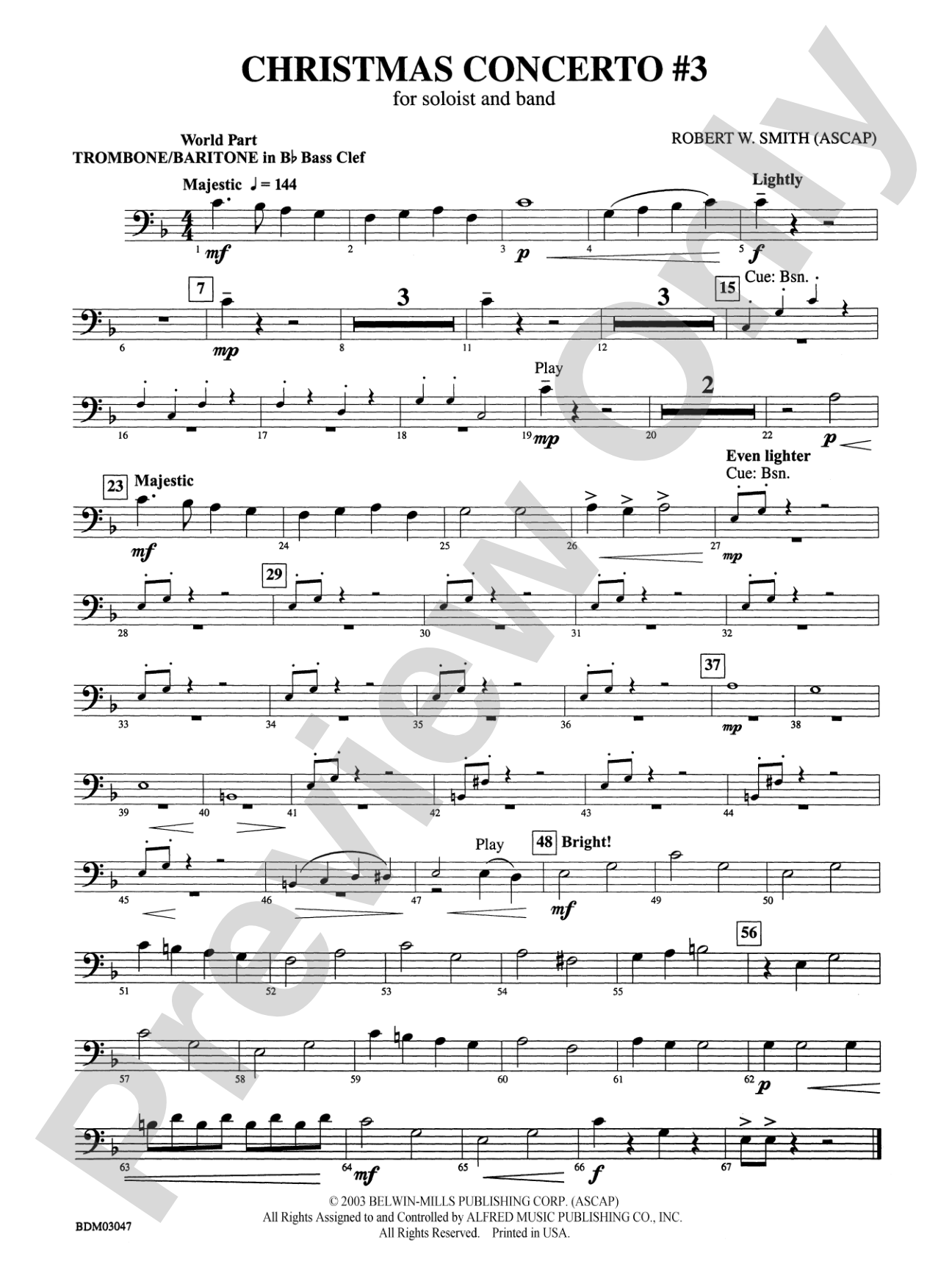
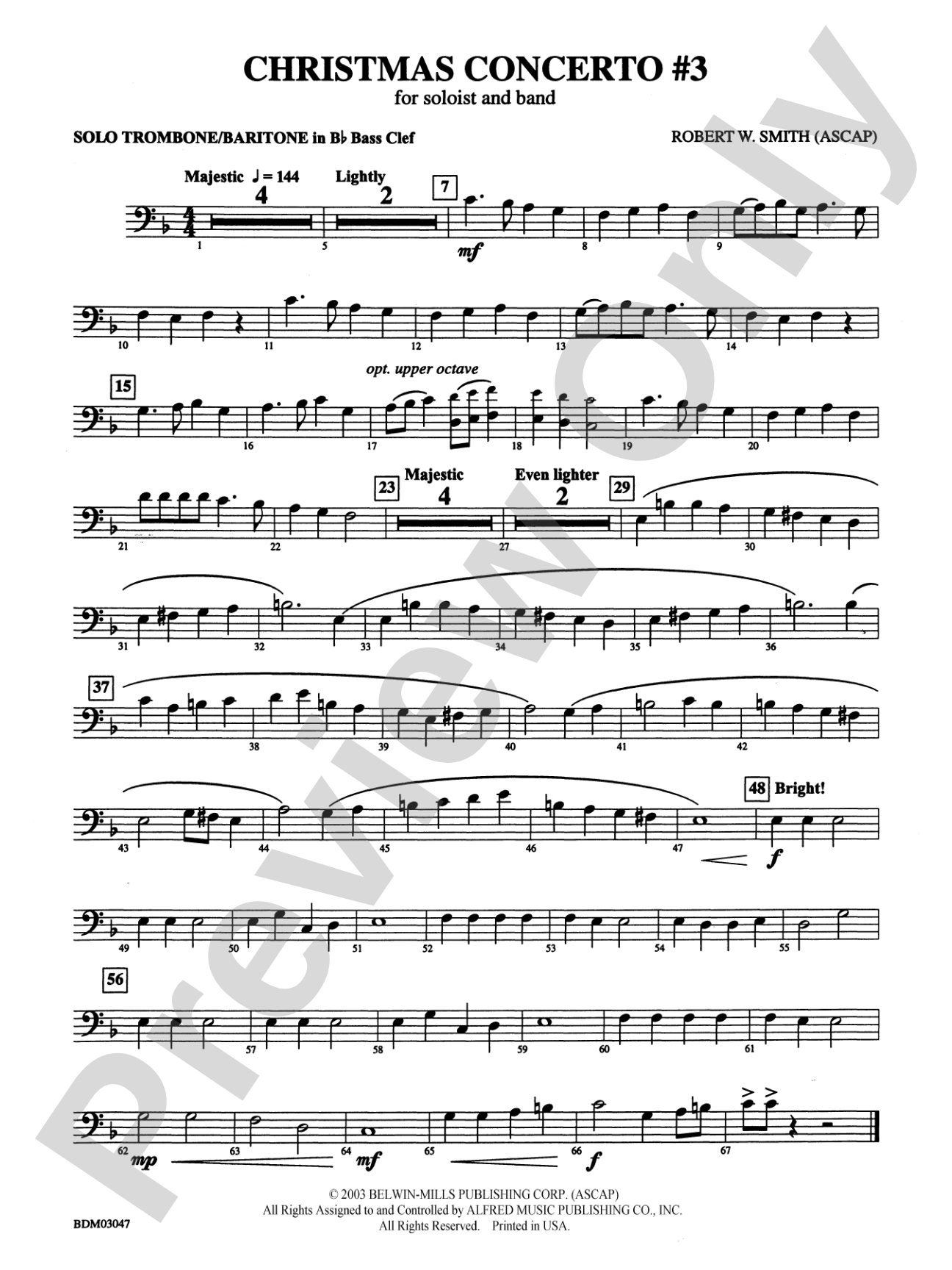

Christmas Concerto #3 (for Soloist and Band): (wp) 1st B-flat Trombone B.C.
For Soloist and Band
By Robert W. Smith
Grade: 1 (Very Easy)
Item: 00-PC-0014679_wpTN1BC
$3.00
Pickup currently not available
Description
We're proud to offer this new work featuring three Christmas favorites woven together and featuring one or more soloists in your band. The National Standards for Music Education support soloistic performance, and this holiday tune will fill the bill. Solo parts are provided for all members of the ensemble. Carols included in the concerto are "Deck the Halls," "God Rest Ye Merry, Gentlemen," and "Jingle Bells." A wonderful new holiday treat - combine it with Christmas Concerto No. 1 and No. 2. (2:08)


Don't just read it, hear it, play along with it, and watch your students grow with it. In MakeMusic Cloud, Christmas Concerto #3 (for Soloist and Band): (wp) 1st B-flat Trombone B.C. comes alive with professional accompaniment, adjustable tempo, and built-in practice tools that turn solo practice into real progress.
Open in the Player
Jump straight in and assign it today.
Start Your Free Trial
Open this title and explore the full library in minutes.
Sample Audio
1
Audio File
--:--
0:00
0:00
Sample Video
No sample videos found.
Additional Details
Series:
Belwin Beginning Band
Publisher:
Alfred Music
Page Count:
140
SKU:
00-PC-0014679_wpTN1BC
More about this title
About the Composer: Robert W. Smith

Robert W. Smith has established himself as one of the most frequently performed composers of concert band and orchestral music in the United States. With over 400 published works, the vast majority released through Alfred Music, Smith's catalog spans from accessible band arrangements to large-scale symphonic works that have earned international recognition. He holds degrees from Troy State University (Alabama) and the University of Miami.
Smith's compositions and arrangements have reached audiences far beyond the concert hall. His work has been featured on major television broadcasts, from Macy's Thanksgiving Day Parade coverage to Olympic Games programming, and his music has been performed at ceremonial events worldwide. As a conductor and clinician, he has worked with ensembles across North America, Europe, Australia, and Asia, bringing his distinctive compositional voice directly to developing musicians.
Why we love this
Smith writes for Grade 1 bands with genuine musicality, never talking down to young ensembles. This concerto gives every section meaningful solo moments while keeping the harmonic language and ranges accessible, which means your students experience the satisfaction of genuine soloistic performance without the technical barriers that often limit beginning band literature.
What to expect
The piece captures the warmth and familiarity of three iconic Christmas carols without saccharine sweetness. Smith's orchestration gives the band enough harmonic color to feel substantial while keeping the melodic spotlight clearly on the soloist(s), creating moments where the ensemble and featured performer(s) lift the well-known melodies into something fresh.
Who it's for
This work is ideal for Grade 1 bands seeking a holiday centerpiece that honors the National Standards for Music Education by featuring soloistic performance opportunities. Directors programming their first holiday concert or seeking accessible arrangements of beloved carols will find the Grade 1 level and Smith's straightforward writing especially valuable.
How to get the most out of it
- Balance the featured soloist(s) carefully against the band; this is not a showcase where the ensemble fades into accompaniment. The carols work best when soloist and band feel equally important to the musical storytelling.
- Let the familiar melodies breathe naturally. Resist over-rehearsing the tuning and intonation of what students already know; focus instead on phrasing and how the three carols connect to one another.
- Rotate soloists across rehearsals if you're providing solo opportunities to multiple band members. This keeps energy fresh and prevents any one soloist from carrying the entire weight of the performance.
How to use it
Program this as the centerpiece of a holiday concert, perhaps bracketing it with one or two other Smith Christmas arrangements or Christmas Concertos No. 1 and No. 2 for a full seasonal program. At just over two minutes, it works equally well as a concert opener that immediately engages audiences with recognizable material or as a mid-program highlight that gives your soloists their moment.
Skills your students will build
- Solo performance and stage presence with ensemble support
- Balancing solo melody against band accompaniment
- Phrasing and expression within melodically simple, well-known material
- Sustaining focus and intonation during ensemble passages that frame the soloist