

Christmas Comes But Once a Year: SSA Choral Octavo
Words and music by Jay Althouse
Item: 00-PO-0005969
$2.05
Minimum order quantity: 20 copies
Pickup currently not available
Related Items
Christmas Comes But Once a Year: SATB Choral Octavo |
$2.05
|
View | |
Christmas Comes But Once a Year: SAB Choral Octavo |
$2.05
|
View | |
Christmas Comes But Once a Year: SATB Choral Octavo |
$2.05
|
View | |
Christmas Comes But Once a Year: SAB Choral Octavo |
$2.05
|
View | |
Christmas Comes But Once a Year: SSA Choral Octavo |
$2.05
|
View |
Description
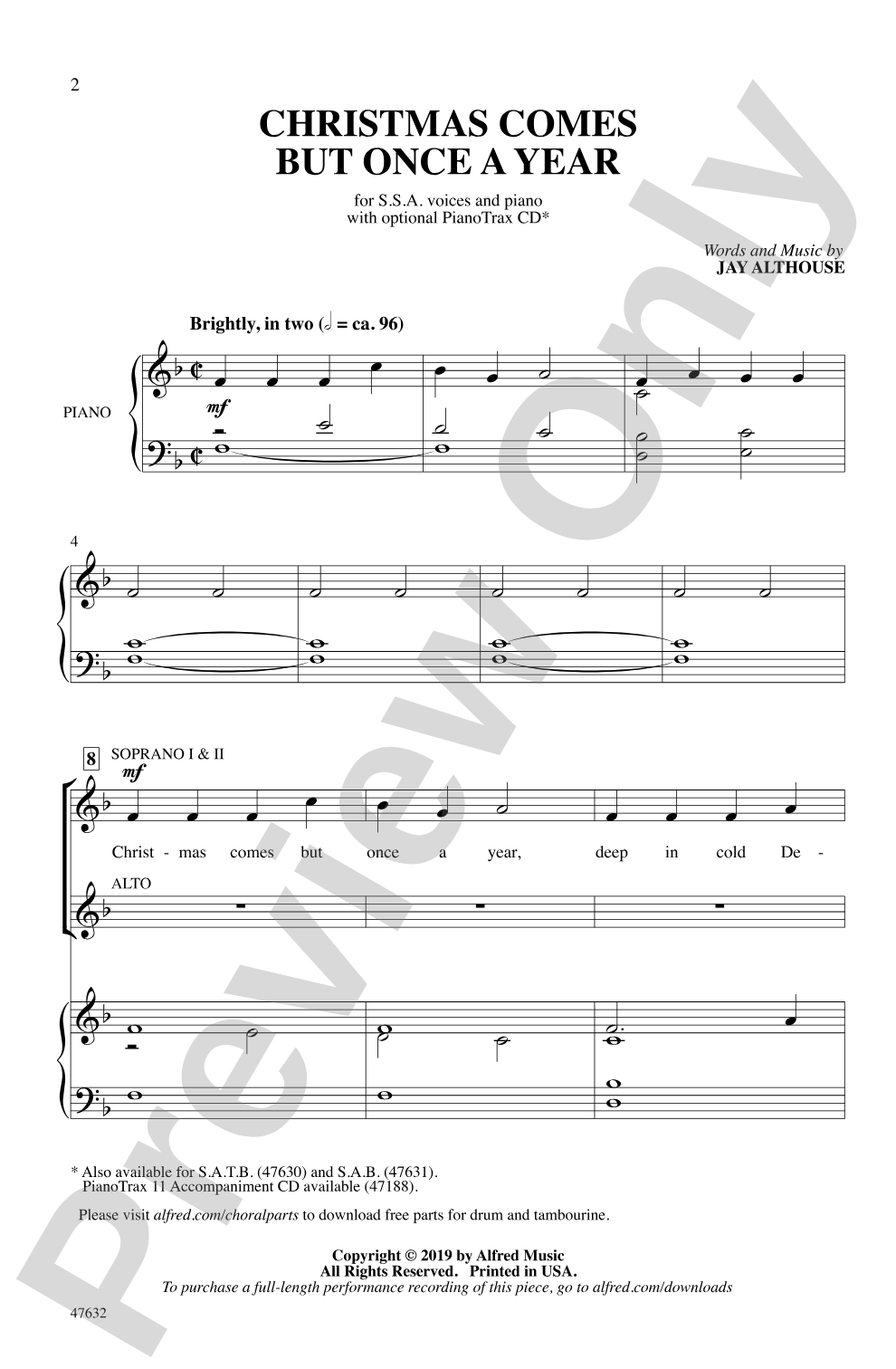
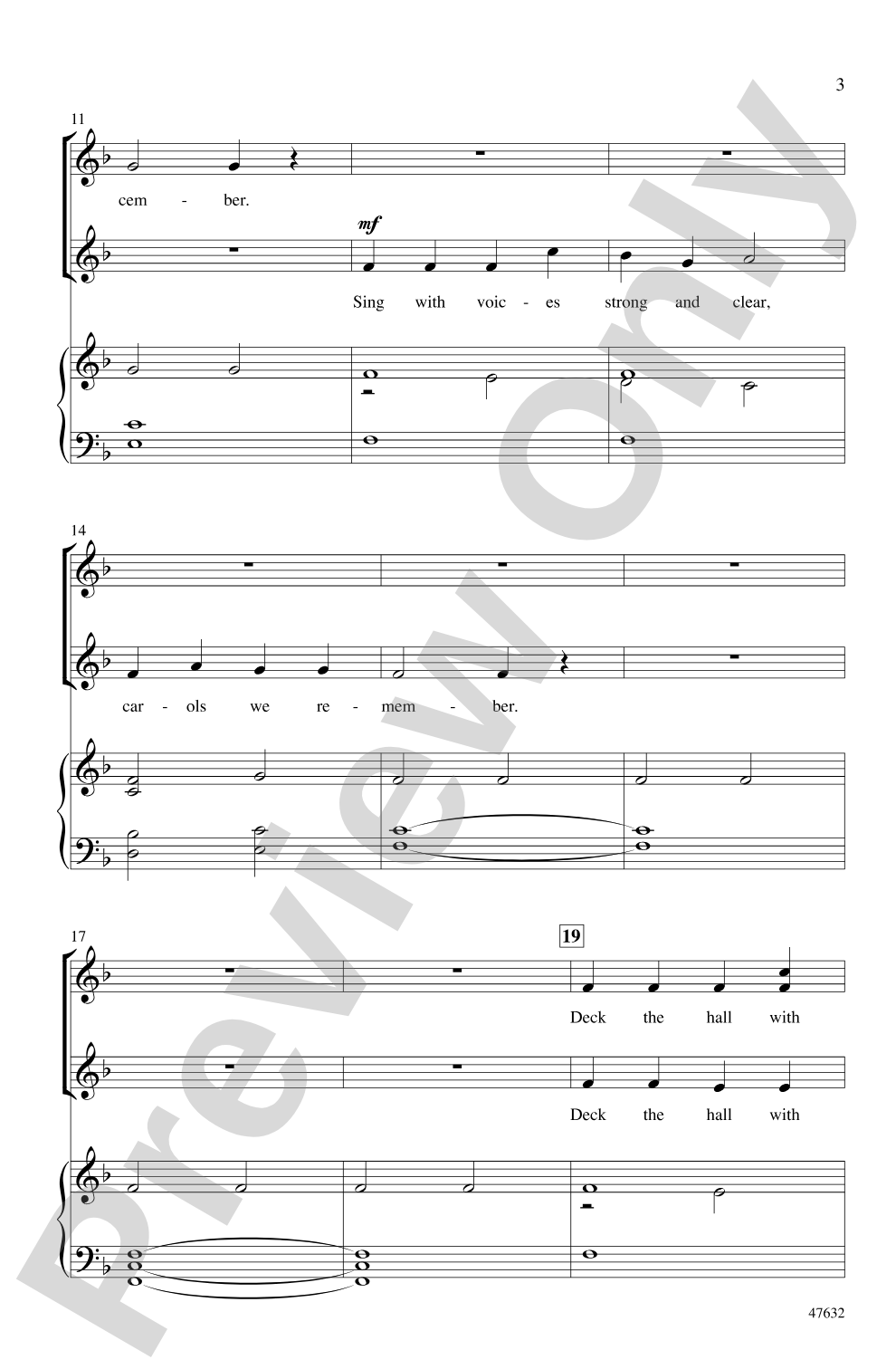
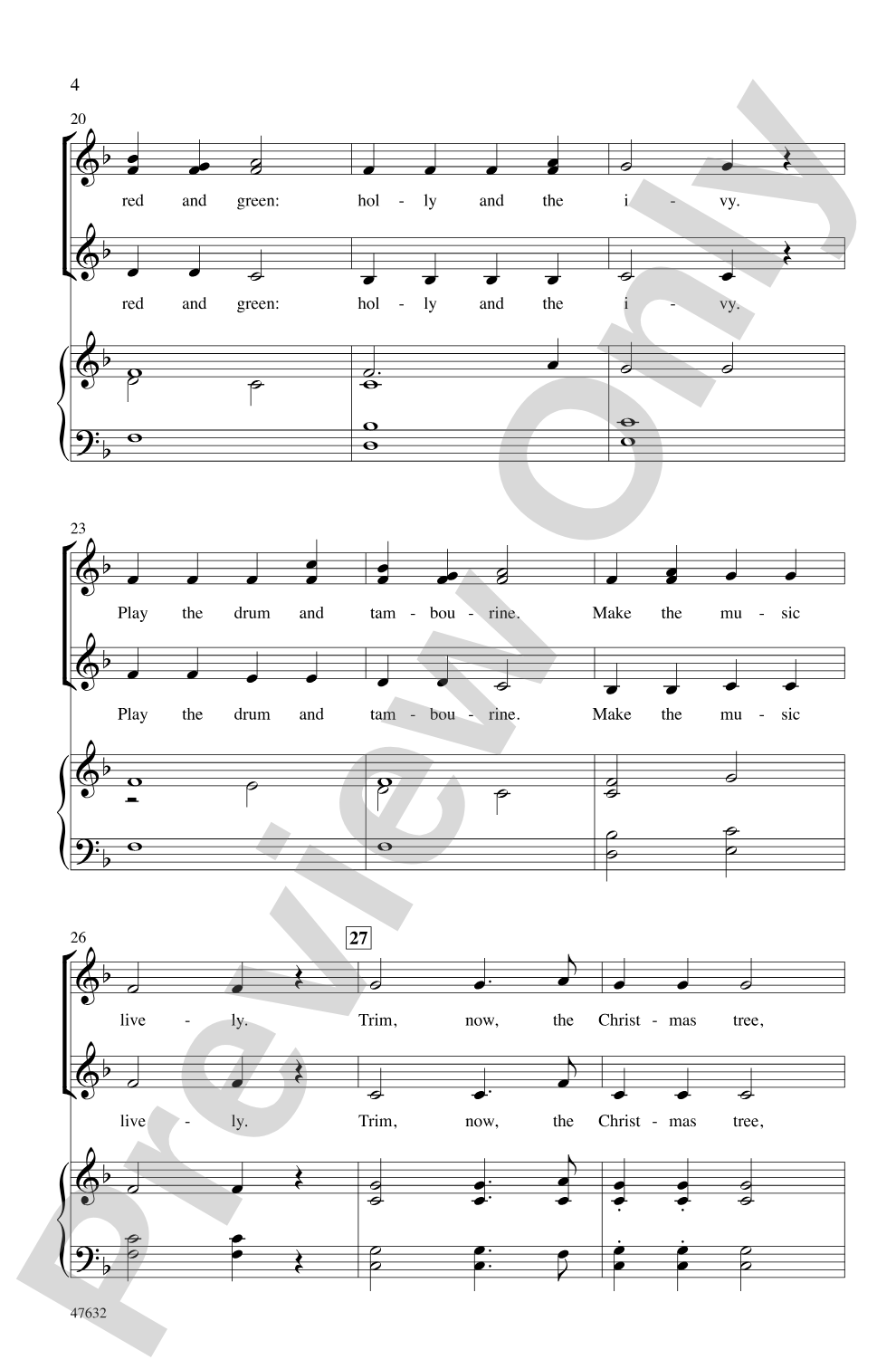
Optional drum and tambourine parts enhance this madrigal-influenced tune, which includes a festive “Fa-la-la” section in counterpoint. Well-crafted vocal parts are easy to learn and continue to develop as the song unfolds. This would make a festive processional for holiday performances of any kind.


Christmas Comes But Once a Year: SSA Choral Octavo isn't in MakeMusic Cloud just yet...but it could be. Let us know you'd like to see it, and you'll help shape what comes next. In the meantime, start a free trial and dive into thousands of interactive titles your students can play along with today.
Request This Title
Tell us you want it.
Start Your Free Trial
Explore everything that's ready to play right now.
Sample Audio
1
Audio File
--:--
0:00
0:00
Sample Video
No sample videos found.
Additional Details
Series:
Alfred Choral Designs
Publisher:
Alfred Music
Page Count:
12
SKU:
00-PO-0005969
More about this title
About the Composer: Jay Althouse

Jay Althouse holds degrees in Music Education and Music from Indiana University of Pennsylvania, where he was later honored with the Distinguished Alumni award. His eight-year tenure in rights and licensing at a major educational publisher included service on the Executive Board of the Music Publishers Association of America. He is a prolific composer with more than 800 choral works in print across all levels, performed widely throughout English-speaking countries.
As a writer member of ASCAP, Althouse is a regular recipient of the ASCAP Special Award for his contributions to standard music. Beyond composition, he has co-authored several children's musicals with Sally K. Albrecht, edited respected vocal solo collections, and written influential classroom resources including The Complete Choral Warm-up Book and Accent on Composers. His collaborative work "I Hear America Singing" was performed by the San Francisco Girls and Boys Choirs at President Barack Obama's 2009 Inauguration. Based in North Carolina, he serves on the National Advisory Board of the Folk Art Society of America.
Why we love this
Althouse's madrigal-influenced approach gives this piece genuine sophistication without creating learning barriers. The counterpoint section lands naturally and rewards careful listening, while the festive "Fa-la-la" section provides the kinetic energy that makes holiday programming memorable. This reads as a piece that respects singers' intelligence while remaining genuinely fun to perform.
What to expect
The piece opens with madrigal sophistication, treating voices as independent lines that interweave and dance around one another. When the counterpoint section arrives with its "Fa-la-la" refrain, the texture shifts to something celebratory and processional, inviting audiences into the festive energy without losing the musical refinement underneath.
Who it's for
This octavo works for treble choirs seeking repertoire with musical substance that still feels accessible. Whether you're working with an established ensemble or singers earlier in their training, the well-crafted vocal writing builds musicianship while remaining performance-ready within a reasonable rehearsal timeline.
How to get the most out of it
- Balance the counterpoint during the "Fa-la-la" section by rehearsing each voice line separately first, then layering parts gradually so each melody remains audible.
- If using the optional percussion parts, introduce them after the vocal lines are secure; drums and tambourine should add texture without dominating the ensemble's sound.
- Shape the madrigal-style passages with subtle dynamic shaping to highlight the melodic contours in each voice part rather than maintaining a static volume throughout.
How to use it
This works beautifully as the opening or closing moment of a holiday concert, especially when programmed alongside other secular Christmas music or as part of a mixed seasonal celebration. Its processional quality makes it an ideal choice for literal movement on stage or as a ceremonial opening number that sets a warm, inviting tone for the entire event.
Skills your students will build
- Reading madrigal-style part writing with independent melodic lines
- Singing sustained counterpoint while maintaining clear diction
- Balancing vocal blend when multiple melodic ideas occur simultaneously
- Interpreting Renaissance-influenced musical phrasing in a contemporary context
- Coordinating with optional percussion parts for ensemble cohesion