
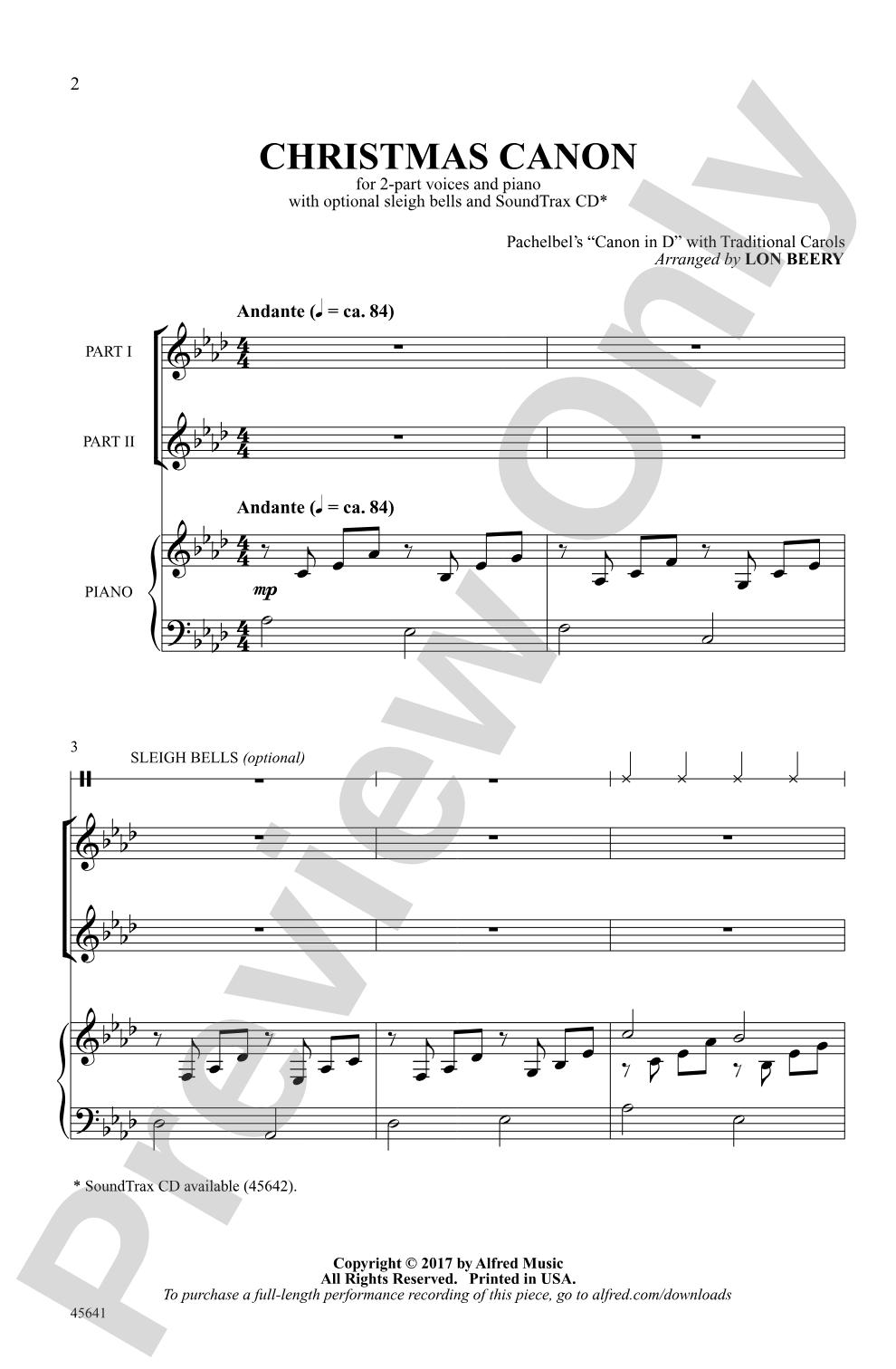

Christmas Canon: 2-Part Choral Octavo
Pachelbel's "Canon in D" with Traditional Carols
Music by Johann Pachelbel and others / arr. Lon Beery
Item: 00-PO-0005525

$1.90
Minimum order quantity: 20 copies
Pickup currently not available
Description
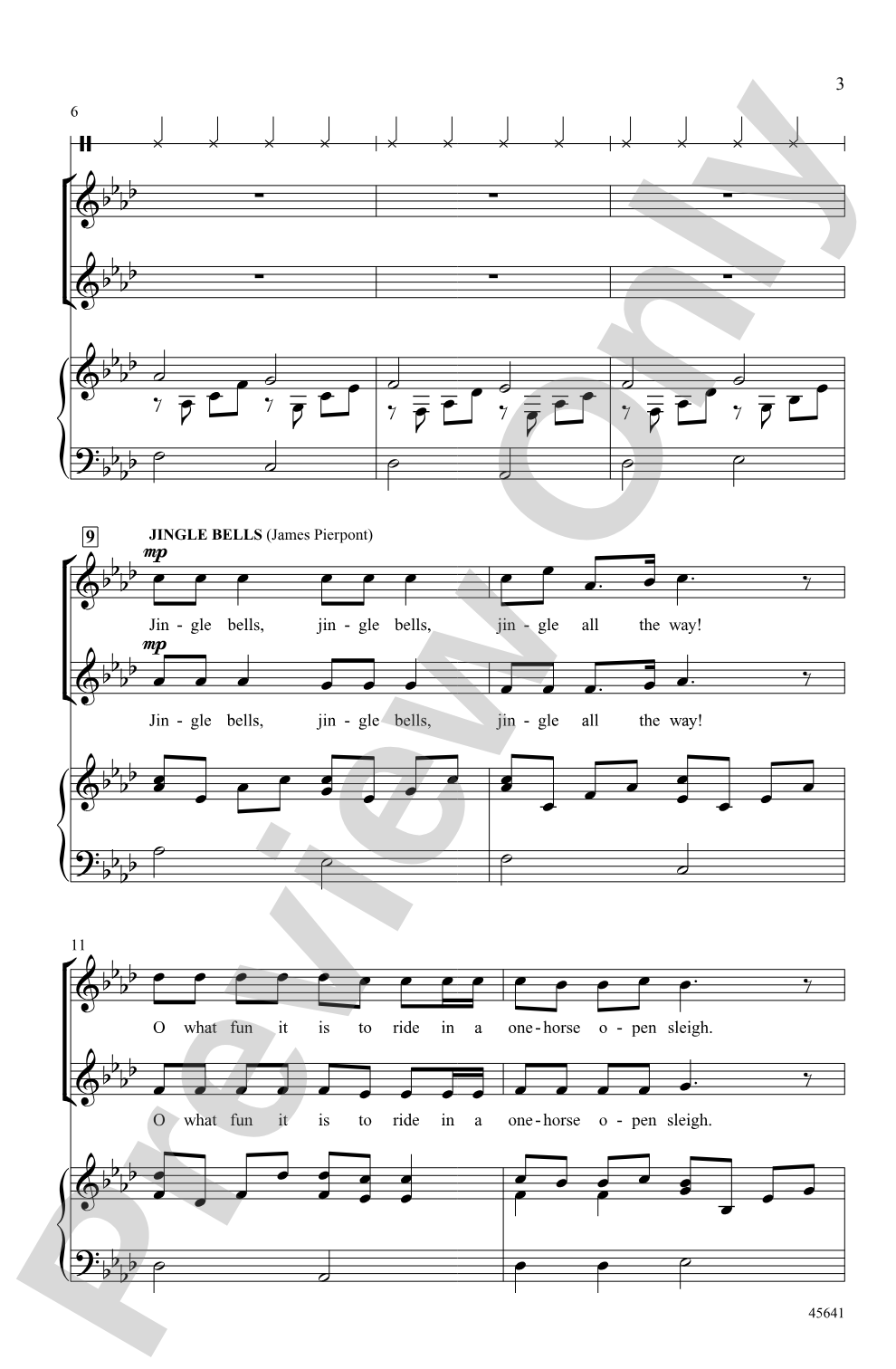
Three traditional carols are tastefully arranged and tied together with Pachelbel's enduring canon. Optionally, choir members may play sleigh bells during the interludes between "Jingle Bells," to "Deck the Hall," and "Jolly Old Saint Nicholas." Elegant, simple, familiar, memorable!


Don't just read it, hear it, play along with it, and watch your students grow with it. In MakeMusic Cloud, Christmas Canon: 2-Part Choral Octavo comes alive with professional accompaniment, adjustable tempo, and built-in practice tools that turn solo practice into real progress.
Open in the Player
Jump straight in and assign it today.
Start Your Free Trial
Open this title and explore the full library in minutes.
Sample Audio
1
Audio File
--:--
0:00
0:00
Sample Video
Additional Details
Series:
Alfred Choral Designs
Publisher:
Alfred Music
Page Count:
8
SKU:
00-PO-0005525
More about this title
About the Composer: Johann Pachelbel
Johann Pachelbel (1653-1706) was a German Baroque composer whose influence on harmonic language extended far beyond his own era. While he composed sacred works, fugues, and chamber music throughout his career, his Canon in D became one of the most recognized and beloved pieces in Western music, studied by composers and performed across centuries. His gift for elegant melodic writing and clear harmonic progression made his work accessible without sacrificing sophistication.
Pachelbel's Canon demonstrates the power of a simple, repeating harmonic progression to support infinite musical variation. This principle shaped Baroque compositional practice and continues to influence arrangement and composition today. For choral directors, Pachelbel's work offers a bridge between the accessibility students crave and the musical depth they need to develop.
Why we love this
Lon Beery's arrangement wraps three beloved holiday carols around Pachelbel's iconic progression, creating something that feels both fresh and immediately familiar to singers and audiences alike. The optional sleigh bell parts transform interludes into engaging moments that invite broader ensemble participation beyond traditional voice parts. For a 2-part voicing, this manages impressive musicality without overwhelming singers who are still developing range and confidence.
What to expect
The opening canon establishes an elegant, almost hypnotic harmonic bed that feels timeless and unhurried. When the first carol enters, the contrast between the canon's mathematical beauty and the warmth of a remembered melody creates genuine musical satisfaction. The interludes return you to that floating harmonic space, building anticipation for the next familiar tune.
Who it's for
Young singers and developing choirs find this arrangement welcoming because the two-part writing sits comfortably for expanding voices, and the melodies are songs students already know. Holiday concerts benefit from repertoire that engages both ensemble members and audiences; this piece delivers that engagement without requiring advanced musicianship.
How to get the most out of it
- Balance the canon voices so both the harmonic foundation and the carol melody remain clear; the elegance of this arrangement depends on hearing how they interweave rather than one overpowering the other.
- If you include sleigh bells, assign them early enough in rehearsal that singers aren't competing with percussion for attention during their own learning process.
- Shape each carol's phrases as complete musical thoughts, even though the canon underneath gives the whole piece forward momentum; too much uniformity flattens the character of familiar melodies.
- Consider whether your choir can sustain the long, open harmonic sonorities without letting intonation slip; this repertoire rewards a focused, connected vocal line.
How to use it
This arrangement works beautifully as an opener or closer for a holiday concert; it sets a sophisticated but accessible tone that welcomes audiences while honoring both classical and seasonal tradition. Programming it after more demanding secular carols or Christmas pop songs gives singers and listeners a moment of elegant simplicity. It also serves well as a bridge piece between different sections of a concert, since its moderate difficulty allows directors to pace rehearsal demands across the full program.
Skills your students will build
- Singing independent melodic lines while maintaining harmonic awareness of a bass or harmonic accompaniment
- Sustaining long tones and open vowels without deterioration in intonation
- Understanding how a repeating harmonic progression (ground bass) supports musical variation
- Transitioning smoothly between sections and contrasting material
- Ensemble blend and balance when two distinct musical ideas sound simultaneously