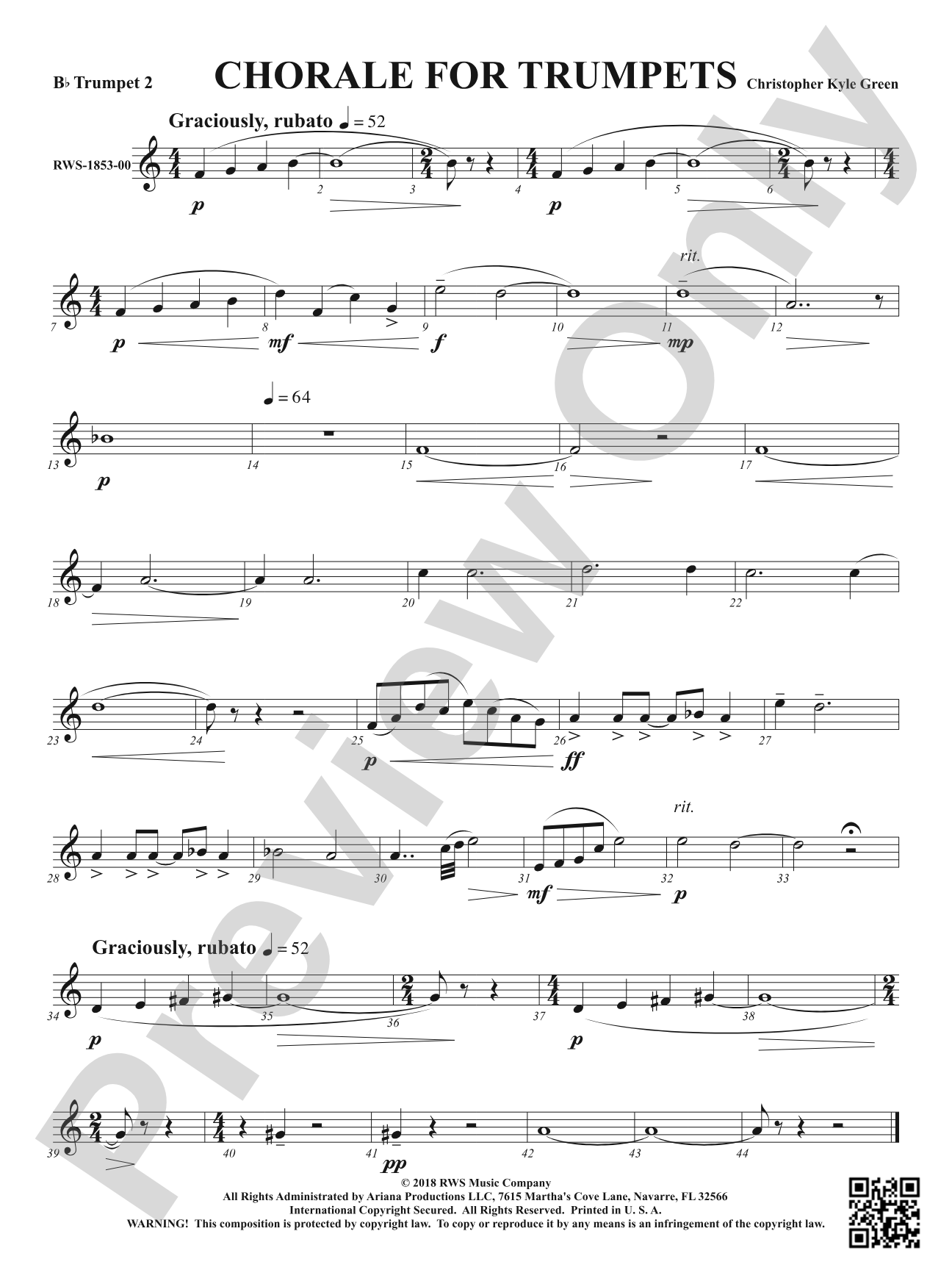
Chorale for Trumpets: 2nd B-flat Trumpet Sheet Music Preview

Chorale for Trumpets: 2nd B-flat Trumpet

By Christopher Kyle Green

Grade: 3

Item: 98-PC-RWS1853_T2

Digital Download
$3.99
Description
A beautifully written lyrical chorale for trumpet ensemble. Utilizing the whole tone scale, Christopher Kyle Green takes full advantage of the brilliant, organ-like sounds a trumpet ensemble can create. Perfect for solo & ensemble events, prism concerts or chamber music performances.

Original Item#: RWS-1853-00

Chorale for Trumpets: 2nd B-flat Trumpet isn't in MakeMusic Cloud just yet...but it could be. Let us know you'd like to see it, and you'll help shape what comes next. In the meantime, start a free trial and dive into thousands of interactive titles your students can play along with today.

Sample Audio
0:00
0:00
Sample Video
Additional Details
Series: RWS - Festival Ensemble
Publisher: RWS Music Company
SKU: 98-PC-RWS1853_T2

More about this title

Why we love this

Green's command of the whole tone scale transforms what could be an academic exercise into genuinely lyrical writing. The piece asks trumpets to blend and sustain rather than punctuate, which requires real control and musicianship from players used to more aggressive repertoire.

What to expect

Sustained and contemplative, with the shimmering harmonic ambiguity the whole tone scale creates. The piece has an organ-like resonance that feels both serene and slightly unsettling, inviting listeners into its unusual harmonic world.

Who it's for

Intermediate brass ensembles preparing for solo and ensemble festivals or chamber music showcases. This works especially well for groups of four to eight trumpets seeking repertoire that showcases blend and musicality over technical display.

How to get the most out of it

  • Balance the ensemble vertically so no single trumpet overpowers the harmonic wash. The whole tone scale can sound murky if upper voices sit too loud.
  • Work for consistent, warm tone quality throughout the range. The organ-like texture Green describes depends on unified voicing across all players.
  • Shape the phrasing through subtle dynamic swells rather than dramatic contrasts. Restraint makes the lyricism land harder.

How to use it

Program this alongside more traditional chorale arrangements to demonstrate how contemporary compositional tools can serve expressive rather than novelty purposes. It makes a strong closing piece for a brass ensemble concert or a thoughtful transition between contrasting program sections.

Skills your students will build

  • Blending and balancing within a homogeneous ensemble
  • Sustaining long tones with consistent tone quality
  • Reading and performing whole tone scale harmonies
  • Shaping lyrical phrases through dynamics rather than articulation
  • Listening to harmonic color as an expressive element

You May Also Like