Chorale and Dance: Baritone T.C. Sheet Music Preview

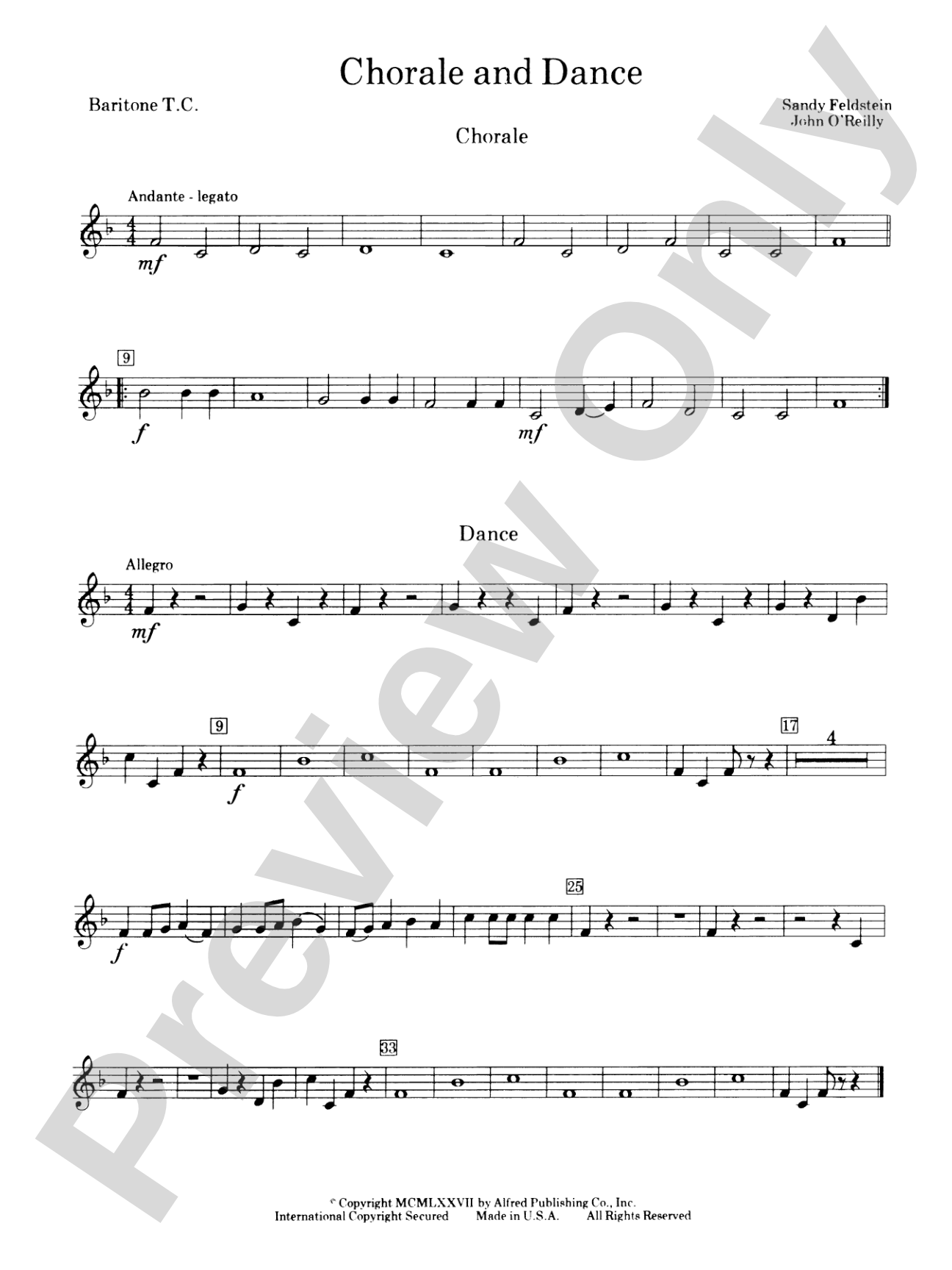
Chorale and Dance: Baritone T.C.

By Sandy Feldstein and John O'Reilly

Grade: 1 (Very Easy)

Item: 00-PC-0000187_BTC1

Digital Download
$3.00
Description

Don't just read it, hear it, play along with it, and watch your students grow with it. In MakeMusic Cloud, Chorale and Dance: Baritone T.C. comes alive with professional accompaniment, adjustable tempo, and built-in practice tools that turn solo practice into real progress.

Sample Audio
No sample audio found.
Sample Video
Additional Details
Series: Basic Band Series
Publisher: Alfred Music
Page Count: 46
SKU: 00-PC-0000187_BTC1

More about this title

About the Composer: Sandy Feldstein

Sandy Feldstein is a prolific composer and arranger whose work has shaped music education for decades. His compositions for young bands balance accessibility with musical substance, making him a cornerstone of the Basic Band Series and a trusted voice in elementary and middle school band programs nationwide.

Why we love this

Feldstein and O'Reilly craft a piece that gives your band genuine musical experiences without overwhelming developing players. The contrast between the chorale section and the dance creates natural pacing and keeps student interest high while remaining completely manageable at Grade 1.

What to expect

The chorale opens with warmth and reflection, asking the band to play with singing tone and attention to blend. The transition to the dance brings energy and rhythmic vitality, offering bright contrasts that keep the piece engaging and showcase the band's growing confidence.

Who it's for

Beginning and developing concert bands in middle school or early high school settings will find this piece within comfortable reach without sacrificing musicality. Directors preparing for contest or festival settings need repertoire that sounds polished within rehearsal time constraints, and this title delivers.

How to get the most out of it

  • Balance the chorale section by bringing out the melody line while keeping accompaniment parts supportive; this teaches young players to listen and blend rather than playing in isolation.
  • Establish a clear pulse in the dance section and maintain consistent articulation across the ensemble, especially in rhythmic passages where parts move together.
  • Use the conductor score to identify and rehearse problematic entrances separately, then integrate them into context so students understand how their part fits into the larger texture.

How to use it

Program this as a concert opener to establish a musical tone early in the program, or pair it with one contrasting work to show your band's range from lyrical to rhythmic playing. Its moderate length and clear sections make it ideal for festival competition where you need strong opening music that judges hear as intentional and well-prepared.

Skills your students will build

  • Sustaining long tones with consistent tone quality and intonation
  • Distinguishing between lyrical phrasing and rhythmic precision
  • Listening to and balancing against other sections
  • Responding to clear harmonic motion and cadential points
  • Executing accurate rhythmic entrances in both homophonic and unison passages

You May Also Like