
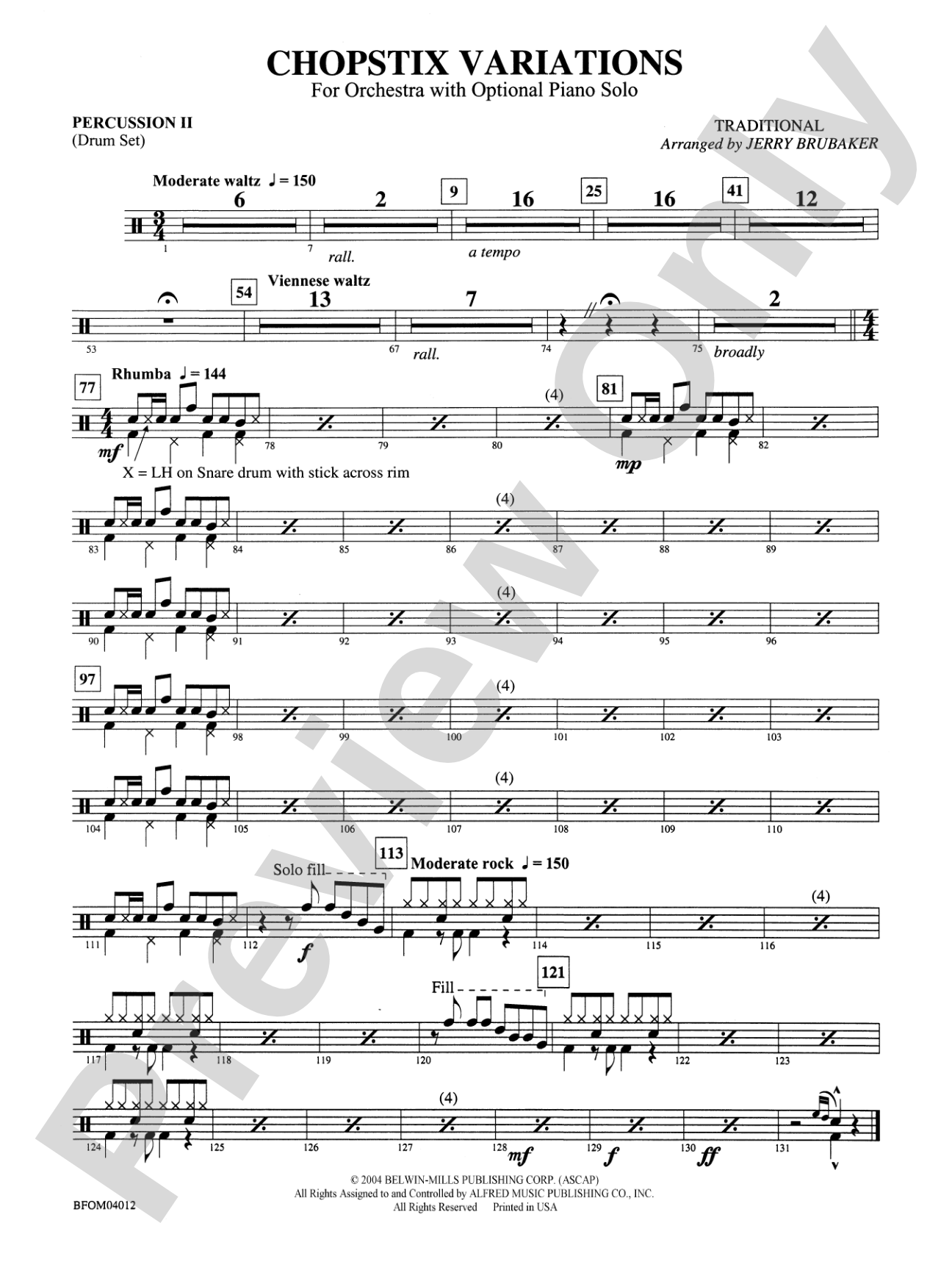

Chopstix Variations (with Opt. Piano Solo): 2nd Percussion
Arr. Jerry Brubaker
Grade: 2
Item: 00-PC-0015208_PC2
$3.00
Pickup currently not available
Description
An amusing series of perspectives on "Chopstix" that can feature even the most inexperienced piano soloist or, the piano part is cued throughout the string section. Your principal, the coach, or anyone can solo with your orchestra. Remember it works with strings alone if desired. The variations include a standard waltz, a Viennese waltz, and a rumba closing with a rock variation. Delightful for any intermediate program and an easy-rehearse for your advanced orchestra. (3:18)


Don't just read it, hear it, play along with it, and watch your students grow with it. In MakeMusic Cloud, Chopstix Variations (with Opt. Piano Solo): 2nd Percussion comes alive with professional accompaniment, adjustable tempo, and built-in practice tools that turn solo practice into real progress.
Open in the Player
Jump straight in and assign it today.
Start Your Free Trial
Open this title and explore the full library in minutes.
Sample Audio
1
Audio File
--:--
0:00
0:00
Sample Video
No sample videos found.
Additional Details
Series:
Belwin Intermediate String/Full Orchestra
Publisher:
Alfred Music
Page Count:
248
SKU:
00-PC-0015208_PC2
More about this title
About the Arranger: Jerry Brubaker

Jerry Brubaker has spent decades creating accessible arrangements that don't sacrifice musicality for ease of execution. His work appears regularly in school orchestras across the country, where directors value his practical understanding of what young musicians can actually accomplish in rehearsal.
Brubaker's arrangements often feature clever orchestration tricks that make parts sound fuller and more sophisticated than their technical demands suggest. He knows how to write for mixed ability levels within a single ensemble, allowing less experienced players to contribute meaningfully without becoming overwhelmed.
Why we love this
This arrangement transforms a melody most musicians have known since childhood into a genuine showcase moment. The ability to swap out the piano soloist means your principal, accompanist, or even a supportive parent can take a turn without compromising the performance, which opens up real programming flexibility. The stylistic variety within a single piece keeps the rehearsal process entertaining while building specific musical skills.
What to expect
Brubaker's variations feel like a musical conversation at a cocktail party, where the same tune keeps showing up in wildly different outfits. The progression from ballroom elegance through Latin spice to rock attitude creates genuine momentum, and the humor is never mean-spirited, just genuinely playful.
Who it's for
Intermediate orchestras that want an entertaining concert piece without endless rehearsal demands, and specifically for any program looking to feature a solo pianist who may not have extensive concerto experience. It works equally well as a morale builder for advanced ensembles seeking a palate cleanser between serious repertoire.
How to get the most out of it
- Let the piano soloist hear the orchestral accompaniment during rehearsals, especially in the waltz sections where the piano sits comfortably above the strings. Most inexperienced soloists will gain confidence faster if they can lock into the groove rather than counting measures.
- Attend to the harmonic color shift between variations. The Viennese waltz needs slightly more lift and sparkle than the standard waltz opening, so encourage your string players to adjust their vibrato and tone accordingly.
- The rumba closing requires a rhythmic lock between your rhythm section and the melodic instruments. Mark the cues clearly so the transition feels intentional rather than accidental.
- If performing with strings alone, balance the solo line so it projects clearly without needing the wind reinforcement. This arrangement rewards a more transparent string sound.
How to use it
Consider programming this toward the end of a concert where audiences have settled in and are ready for lighter fare. It pairs beautifully after a substantial classical work, offering release without feeling like filler. The runtime under three and a half minutes makes it ideal for filling a specific program slot or as the opening number if you want to start your concert with immediate engagement.
Skills your students will build
- Secure rhythm reading in multiple meters and styles (waltz, rumba, rock)
- Accompanying and ensemble sensitivity with a featured soloist
- Stylistic differentiation across contrasting musical contexts
- Cue anticipation and sectional coordination
- Solo piano repertoire and reduced-ensemble orchestration