
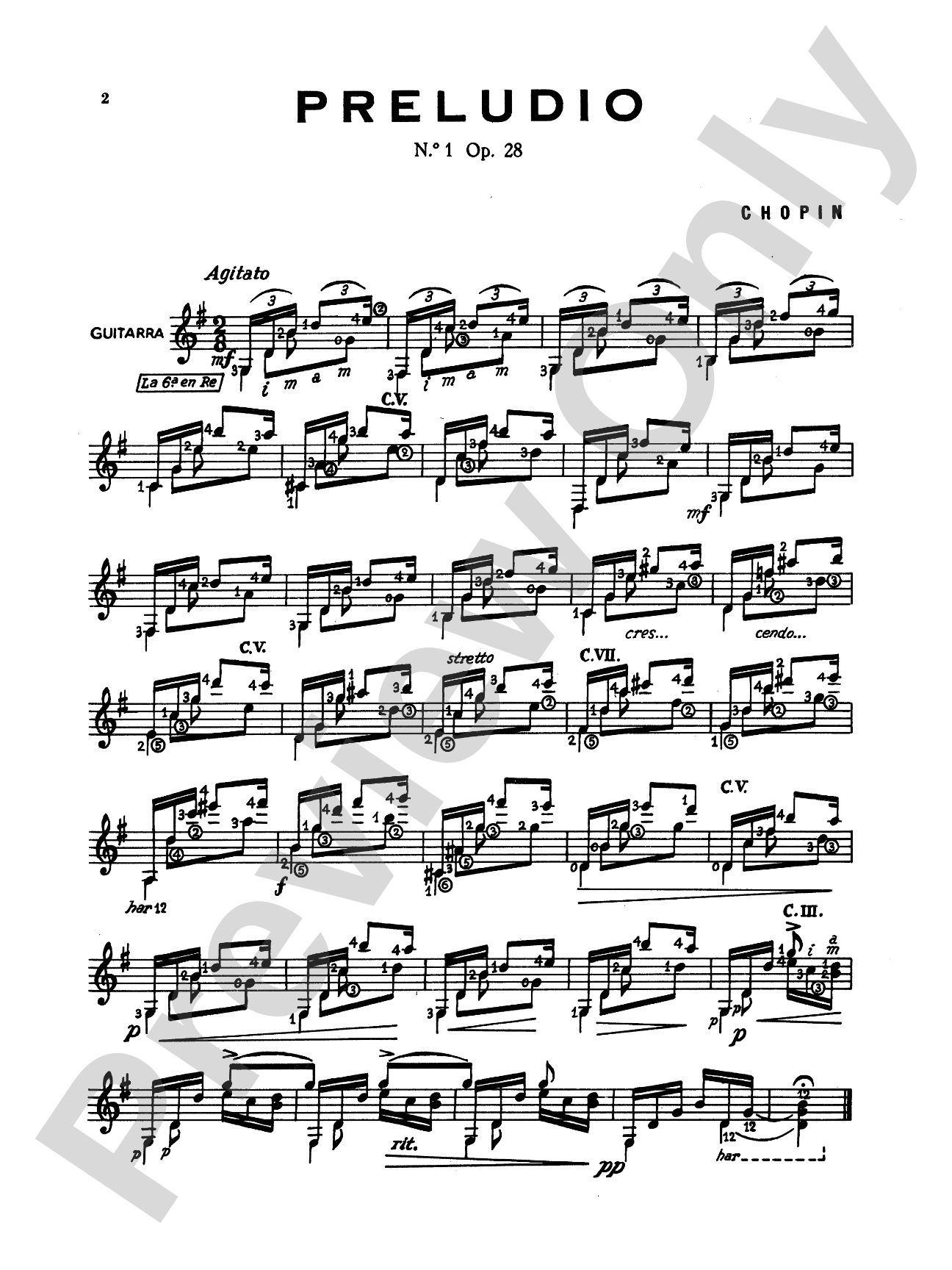

Chopin: Various Preludes Transcribed for Guitar: Guitar Book
By Frédéric Chopin
Item: 00-PK-0003443

$7.99
Pickup currently not available
Buy Extra Parts (Digital PDF Download)
Parts Added to Cart!
Related Items
Album of Various Preludes Transcribed for Guitar: Guitar Book |
$7.95
|
View |
Description
Various preludes transcribed for intermediate classical guitar.


Don't just read it, hear it, play along with it, and watch your students grow with it. In MakeMusic Cloud, Chopin: Various Preludes Transcribed for Guitar: Guitar Book comes alive with professional accompaniment, adjustable tempo, and built-in practice tools that turn solo practice into real progress.
Open in the Player
Jump straight in and assign it today.
Start Your Free Trial
Open this title and explore the full library in minutes.
Sample Audio
No sample audio found.
Sample Video
No sample videos found.
Additional Details
Series:
Kalmus Edition
Publisher:
Alfred Music
Page Count:
12
SKU:
00-PK-0003443
More about this title
About the Composer: Frédéric Chopin
Frédéric Chopin (1810-1849) fundamentally reshaped what the piano could express, crafting an intimate musical language that prioritized lyrical singing tone and harmonic innovation over virtuosic display. His preludes, nocturnes, and etudes became cornerstones of Romantic piano literature, celebrated for their emotional depth and structural refinement. Chopin's influence extended far beyond the keyboard; his compositional ideas have inspired arrangements across instruments for nearly two centuries, inviting musicians to discover how his melodic and harmonic genius translates to new contexts.
As a pedagogue, Chopin valued clarity of touch, emotional authenticity, and the cultivation of individual voice at the instrument. His approach to teaching emphasizes listening with intention and understanding music from the inside out, principles that remain vital to serious music study today.
Why we love this
Chopin's preludes are architectural miniatures, each one exploring a distinct harmonic or textural idea with stunning economy. Hearing them reimagined for guitar reveals how purely melodic and harmonic his thinking was; the transcriptions honor the original voice while unlocking guitar-specific sonorities that feel natural rather than forced. For intermediate players, these arrangements offer access to genuine masterworks without requiring the technical superhuman demands of the originals.
What to expect
Intimate, introspective, and harmonically rich. These pieces invite you into Chopin's private musical conversations, where a single melody line carries emotional weight and each chord change matters. The guitar's natural resonance and sustain capture the pianistic warmth of the originals while offering fresh intimacy in a smaller ensemble or solo setting.
Who it's for
Intermediate classical guitarists ready to tackle serious Romantic-era material without the virtuosic overreach of advanced repertoire. These transcriptions suit students building an aesthetic foundation in 19th-century music and performers seeking substantive recital repertoire that connects guitar to the broader classical canon.
How to get the most out of it
- Attend to the singing line as you would a vocal phrase; find the apex of each melodic gesture and shape around it rather than treating the line as a series of notes.
- Use dynamic shaping to clarify harmonic movement, especially in pieces where Chopin employs chromatic voice-leading or unexpected key areas.
- Experiment with rubato carefully and purposefully; these pieces thrive on subtle time flexibility, but it must serve the harmony and phrasing, not distract from it.
- Listen for the original piano voicing beneath the guitar arrangement; understanding which hand plays which material helps you voice chords with proper balance and color.
How to use it
Anchor a classical guitar recital with one or more of these pieces, pairing them with other Romantic-era guitar works or contemporary classical pieces that share Chopin's harmonic sophistication. They also work beautifully as concert openers that establish an elegant, thoughtful tone for a mixed-level program.
Skills your students will build
- Legato phrasing and cantabile tone production on classical guitar
- Voice-leading awareness and chord voicing clarity
- Interpretation of rubato and expressive timing in Romantic-era music
- Transcription literacy: understanding how pianistic idioms translate to fretted instruments
- Harmonic analysis of chromatic and functional harmony in the 19th century