

Chopin: Twenty-Seven Etudes (Ed. Franz Liszt)
By Frédéric Chopin / ed. Franz Liszt
Item: 00-PC-0006428
$0.99
Pickup currently not available
Description
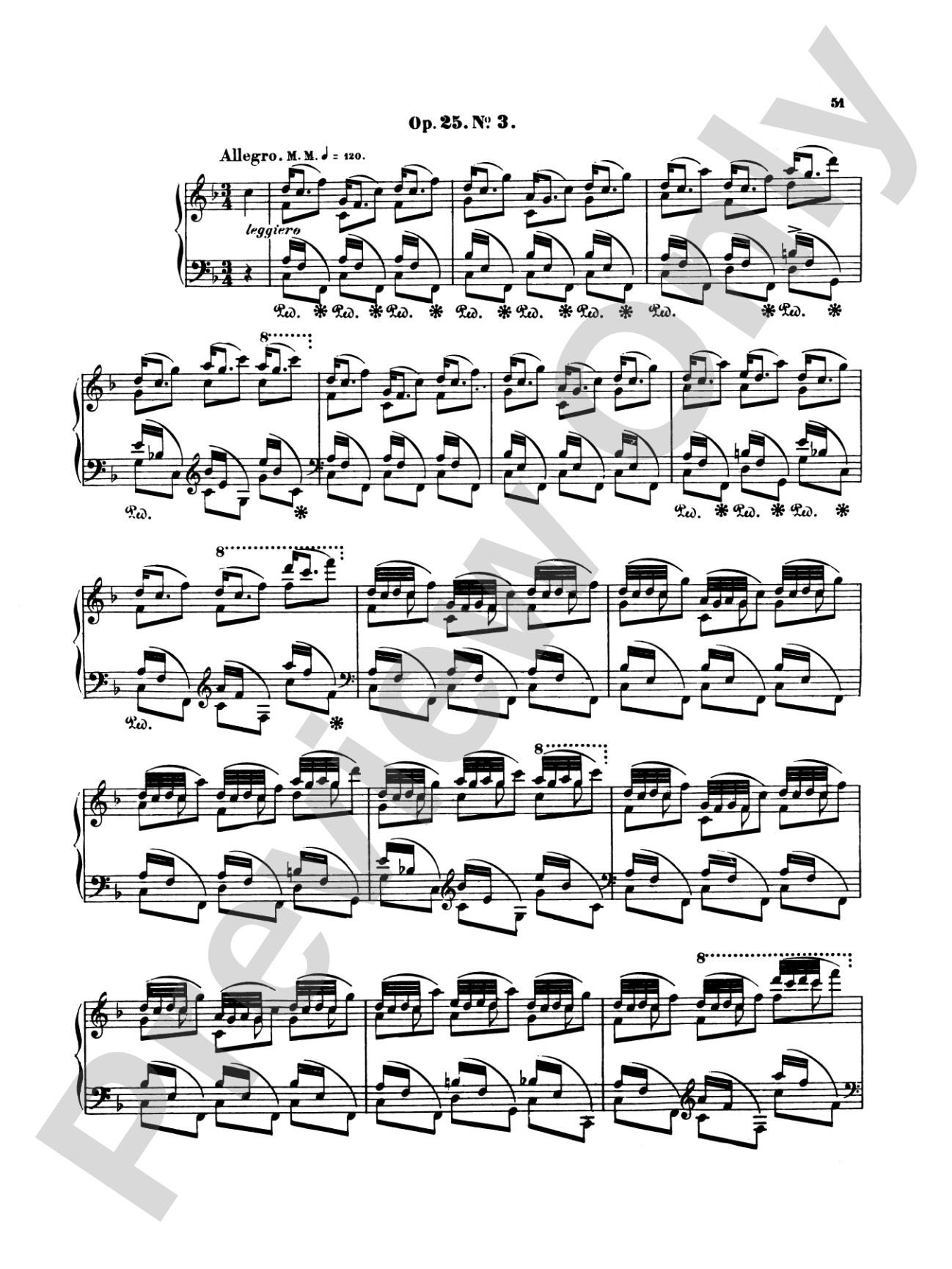
The Etudes by Frédéric Chopin comprise a total of twenty-seven solo studies for the piano, numbered Opus 10 and 25, and a set of three without opus number. Chopin's Etudes are the foundation of a new system of technical piano playing that was radical and revolutionary the first time they appeared. They are some of the most challenging and evocative pieces of all the works in concert piano repertoire. This volume is "from the first, critically revised, complete edition." Includes the complete Etudes of Opus 10 and Opus 25, along with 3 posthumous Etudes.


Don't just read it, hear it, play along with it, and watch your students grow with it. In MakeMusic Cloud, Chopin: Twenty-Seven Etudes (Ed. Franz Liszt) comes alive with professional accompaniment, adjustable tempo, and built-in practice tools that turn solo practice into real progress.
Open in the Player
Jump straight in and assign it today.
Start Your Free Trial
Open this title and explore the full library in minutes.
Sample Audio
No sample audio found.
Sample Video
No sample videos found.
Additional Details
Series:
Kalmus Edition
Publisher:
Alfred Music
Page Count:
104
SKU:
00-PC-0006428
More about this title
About the Composer: Frédéric Chopin
Frédéric Chopin (1810-1849) was a Polish composer and pianist who fundamentally reshaped piano technique and musical expression during the Romantic era. His innovations in harmony, form, and keyboard writing emerged from his deep understanding of the instrument's capabilities, informed by his own virtuosic performing career.
Chopin's Etudes stand as perhaps his most enduring pedagogical legacy. Rather than treating technical studies as mechanical exercises, he composed pieces that demanded mastery of specific technical challenges while maintaining profound musical substance. His approach influenced generations of composers and pianists, establishing that serious technique and artistic depth could coexist inseparably.
Why we love this
These twenty-seven studies represent the gold standard for advanced piano repertoire because they refuse to separate technique from artistry. Each Etude tackles genuine musical problems (hand independence, rapid passagework, wide stretches, rhythmic clarity) within fully realized compositions that reward deep, careful interpretation. Pianists return to these pieces throughout their careers, discovering new layers of difficulty and beauty with each level of advancement.
What to expect
The Etudes encompass remarkable emotional range: some are restless and brilliant, others introspective and searching, still others virtuosically dazzling. They balance intellectual rigor with profound lyricism, creating music that feels both technically demanding and deeply human. Playing them involves managing technical challenges so thoroughly that they become transparent vehicles for expression.
Who it's for
This collection serves advanced piano students preparing for conservatory auditions, college performance majors, and accomplished amateur pianists working toward a comprehensive understanding of the Romantic piano repertoire. These works demand mature technical facility, interpretive independence, and the willingness to spend extended time on single pieces.
How to get the most out of it
- Approach hand independence studies (particularly Opus 10 No. 6 and Opus 25 No. 6) by isolating each hand's voice in practice, then gradually reducing the dynamic gap between them rather than attempting even balance immediately.
- In rapid figuration studies, establish a tempo that allows completely clean articulation in the fastest passages before increasing speed; rushing the learning process creates habits that become difficult to correct.
- Pay attention to Liszt's editorial markings and fingerings, which reflect nineteenth-century performance practice and often suggest pianistic approaches that remain valid for modern playing.
- Use the harmonic structure of each Etude as a guide to phrase architecture; Chopin's revolutionary harmonies often signal where gestures begin and end more clearly than traditional phrase markings do.
How to use it
Individual Etudes work well as recital openers that establish a performer's technical credentials while showcasing musical maturity. Pairing Etudes from different opus numbers creates compelling programming that demonstrates variety of technique and mood. Some pianists build entire recital segments around thematic Etude groupings (the black-key Etude alongside other works exploring similar technical territory).
Skills your students will build
- Rapid passagework execution across multiple registers
- Rhythmic independence between hands (polyrhythmic figures)
- Chromatic facility and black-key/white-key dexterity
- Sustained melody over rapid accompaniment figures
- Wide hand stretches and intervallic leaps
- Control of arm weight and rotational motion
- Pedal coordination with harmonic changes
- Interpretive nuance within technically demanding contexts