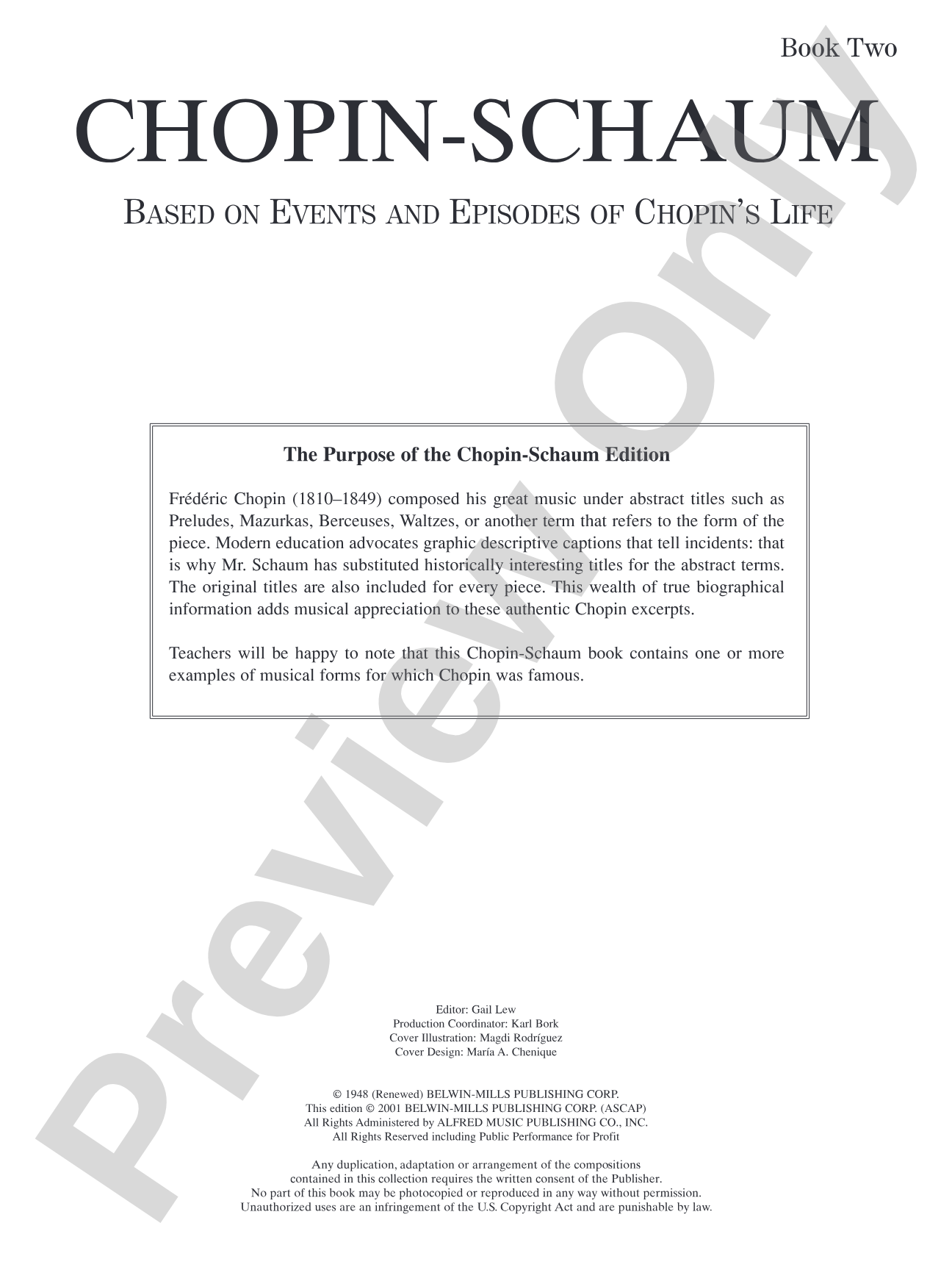
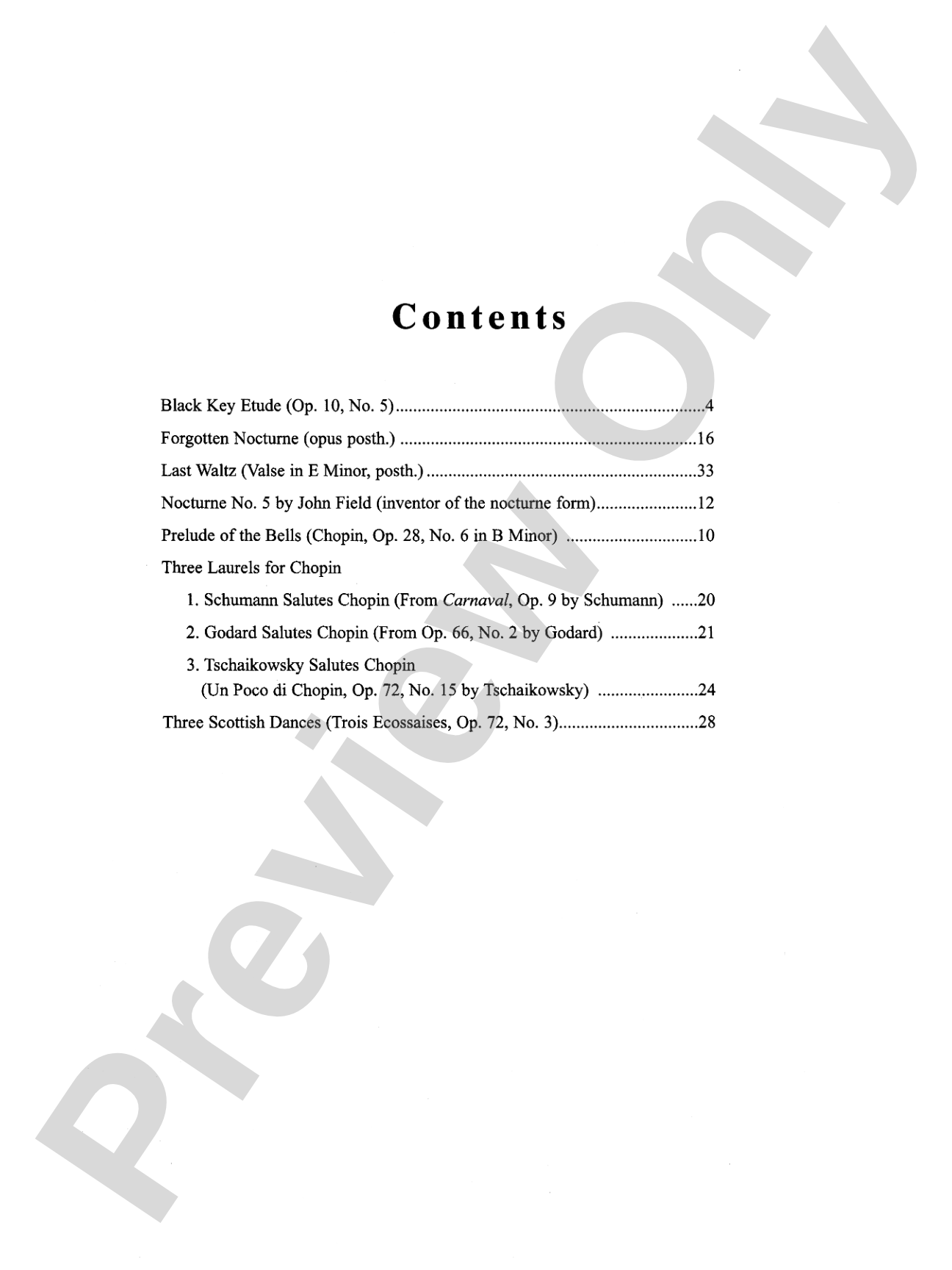
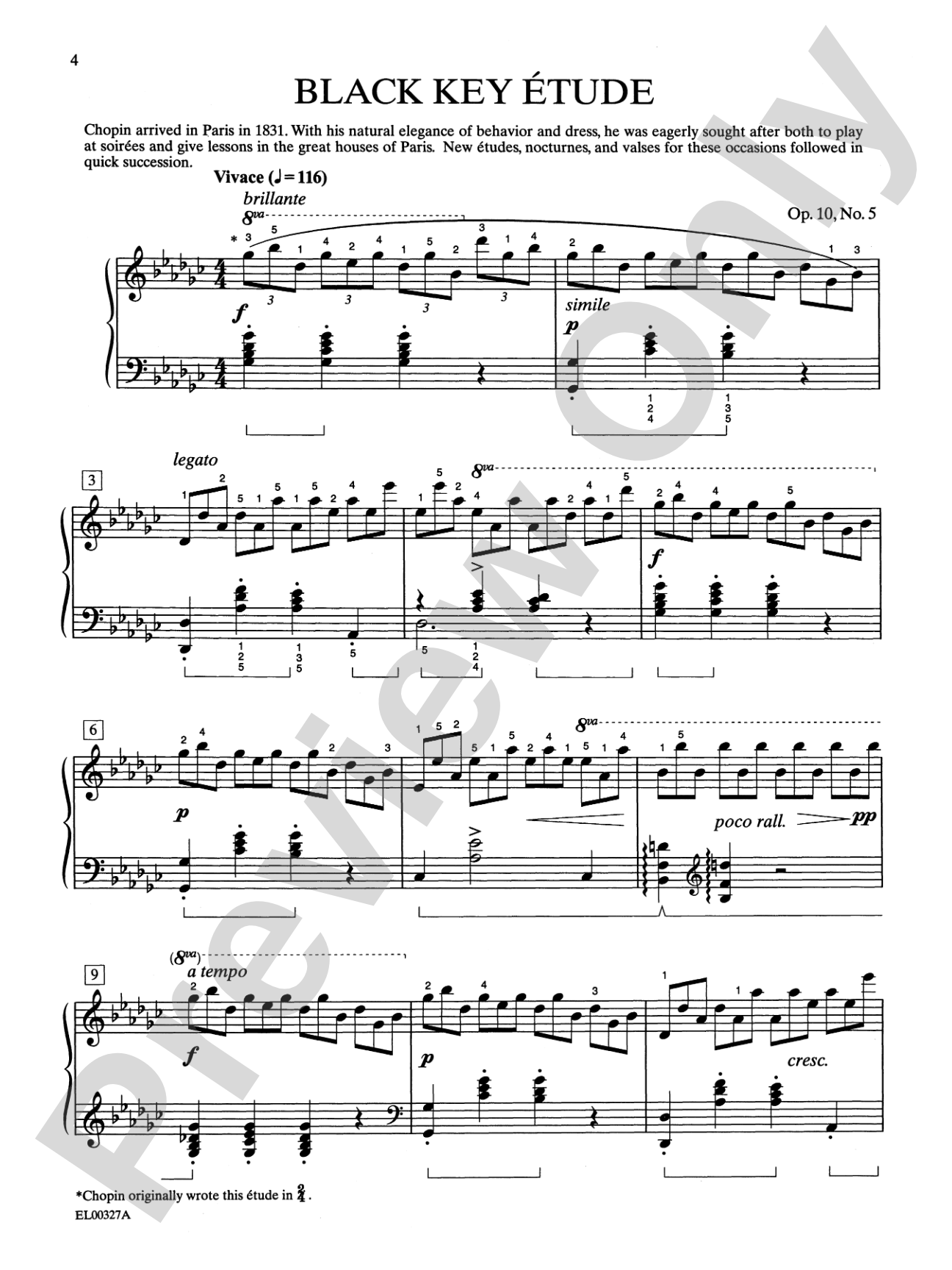
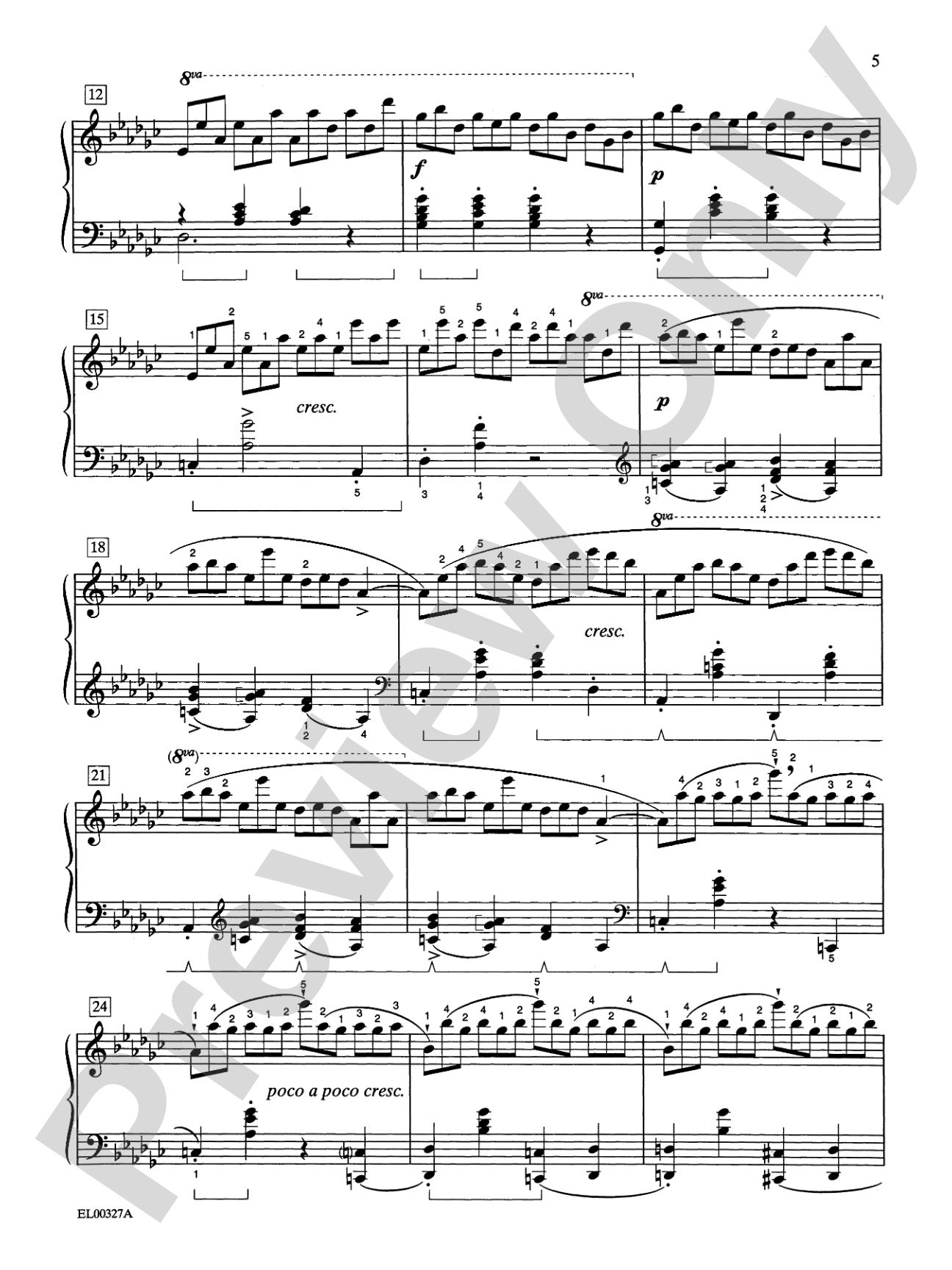
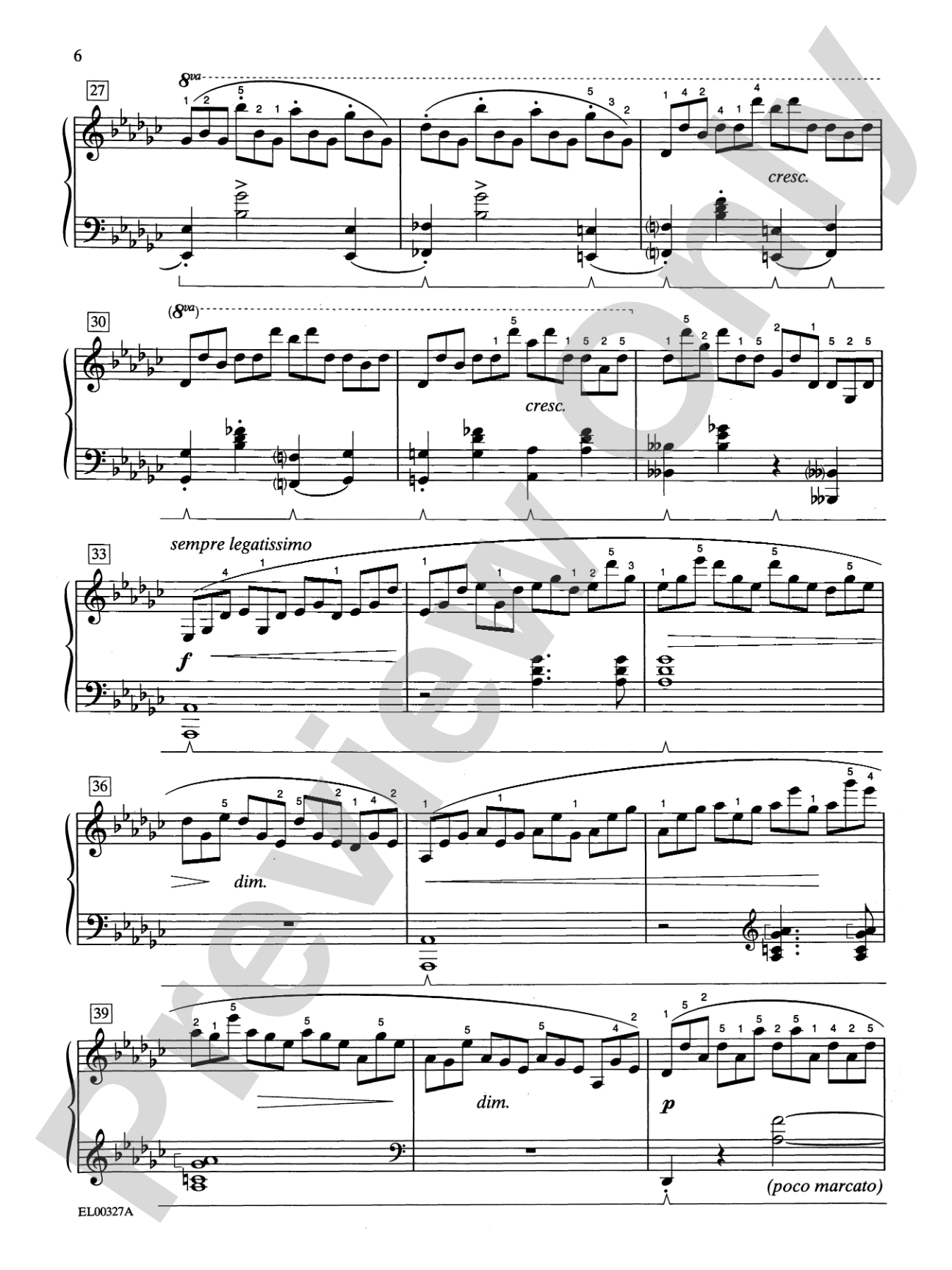
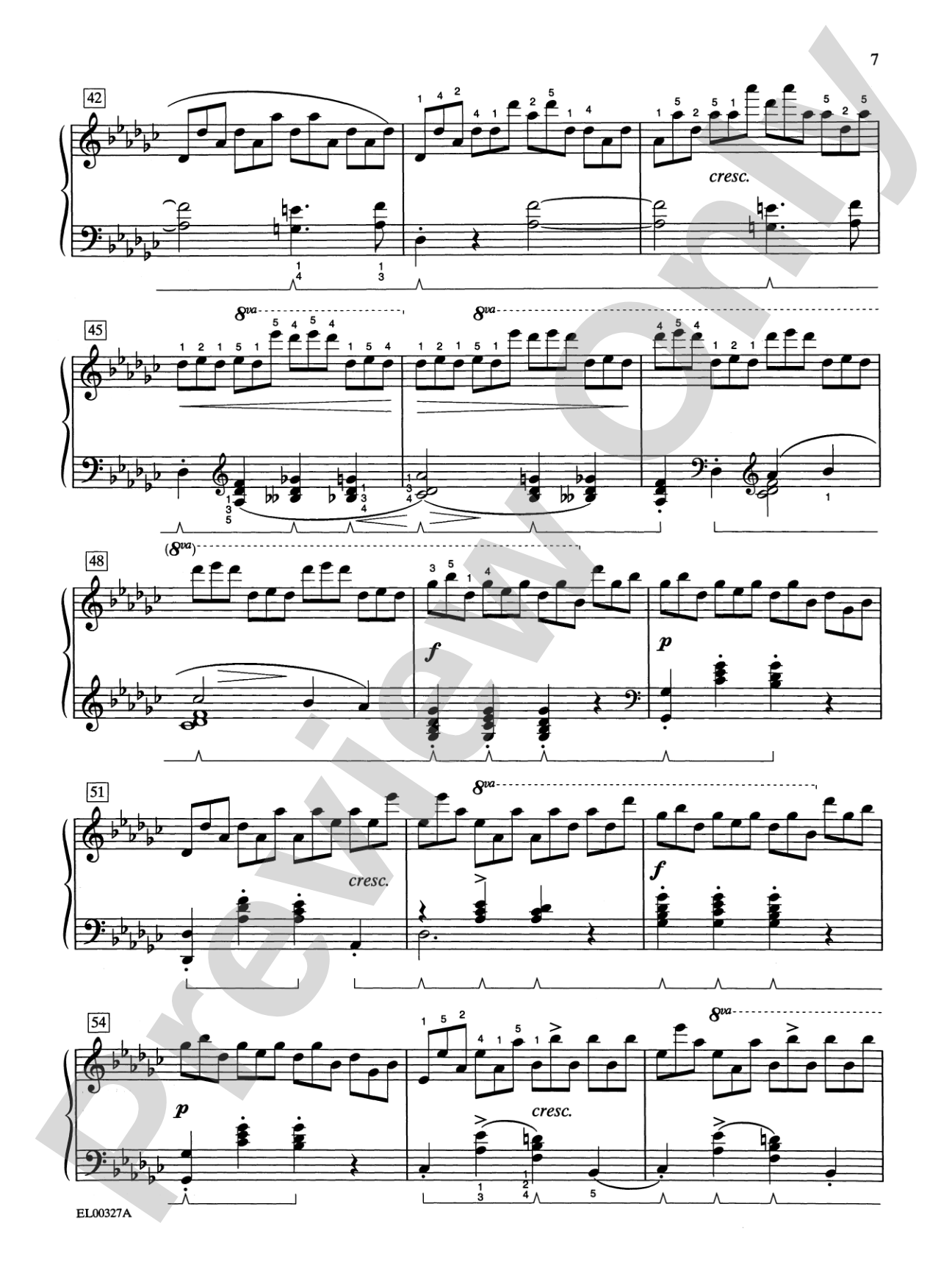
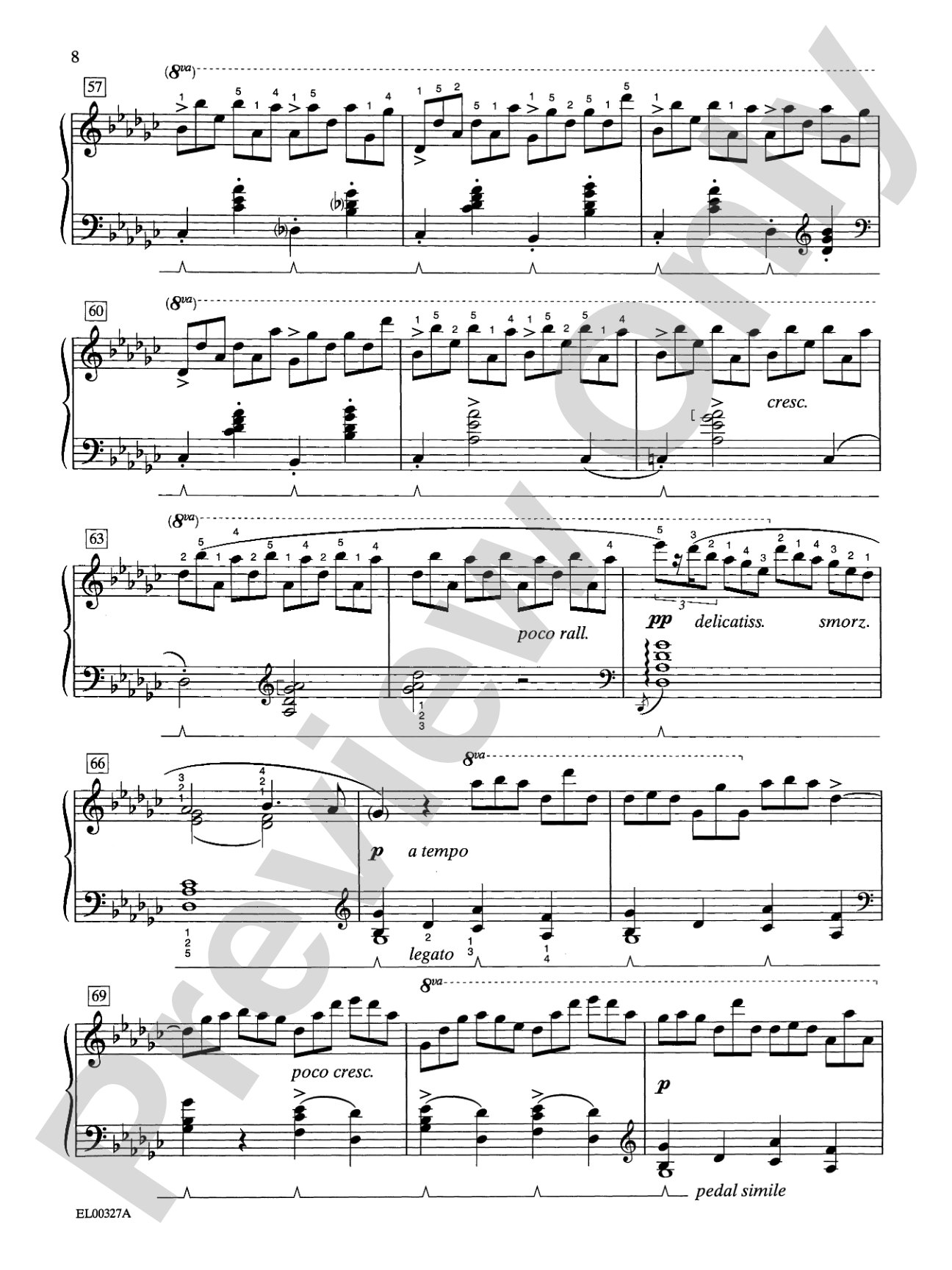
Chopin-Schaum, Book Two: Based on Events and Episodes of Chopin's Life: Piano
Based on Events and Episodes of Chopin's Life
By Frédéric Chopin / arr. John W. Schaum
Item: 00-PB-0001894
Pickup currently not available
Related Items
Chopin-Schaum, Book Two: Piano Book |
$6.95
|
View |
Description
Chopin-Schaum, Book Two: Based on Events and Episodes of Chopin's Life: Piano isn't in MakeMusic Cloud just yet...but it could be. Let us know you'd like to see it, and you'll help shape what comes next. In the meantime, start a free trial and dive into thousands of interactive titles your students can play along with today.
Tell us you want it.
Explore everything that's ready to play right now.
Sample Audio
Sample Video
Additional Details
More about this title
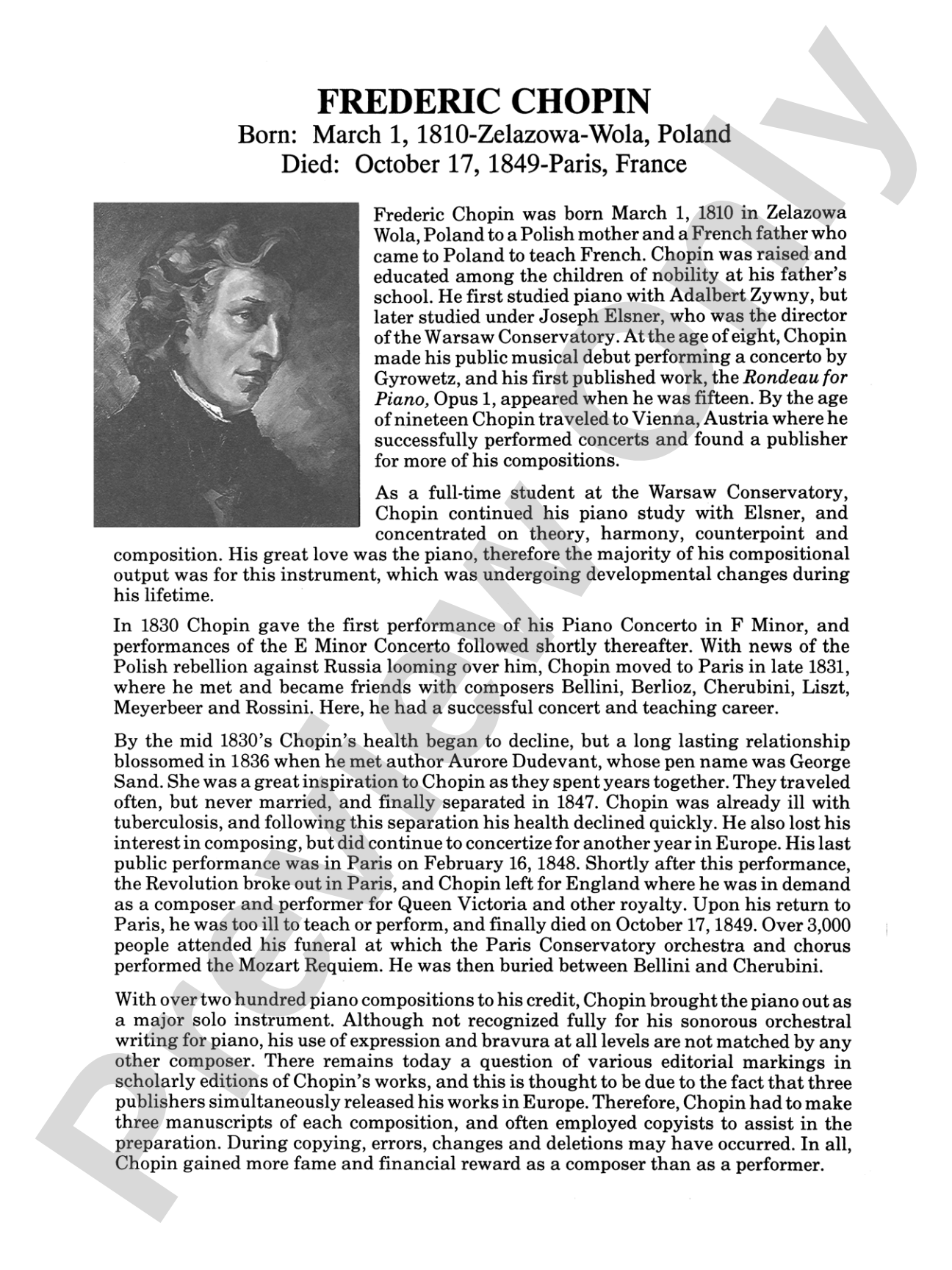
About the Composer: Frédéric Chopin
Frédéric Chopin (1810-1849) was a Polish composer and virtuoso pianist who fundamentally transformed the piano's expressive possibilities during the Romantic era. His language of rubato, harmonic innovation, and intimate lyricism established him as one of the most influential composers for the instrument, yet he rarely worked with explicit programmatic titles, preferring abstract forms like the Prelude, Mazurka, and Nocturne.
Chopin's life was marked by artistic ambition, personal struggle, and a deep connection to Polish musical traditions. He composed primarily for solo piano, creating a catalog where technical demands serve emotional depth rather than mere display. His music shaped how generations of pianists approached tone production, pedaling, and the relationship between composer and instrument.
Why we love this
Schaum's biographical approach opens Chopin to younger pianists by grounding his abstract forms in lived experience and historical context. Rather than asking students to engage with a Prelude op. 28 no. 4 as pure structure, they learn the story behind each piece, creating immediate emotional investment and deeper retention. The newly engraved edition presents these authentic excerpts with clarity and care, making it an accessible entry point to Romantic piano literature.
What to expect
Moving through these pages feels like opening a musical diary. Each piece unfolds with lyrical beauty, sometimes introspective and tender, sometimes touched by melancholy or nostalgia. The piano writing sings in ways that previous method books may not have demanded, requiring students to shape longer lines and balance melody against accompaniment with newfound maturity.
Who it's for
Intermediate pianists who have built solid technique and are ready to explore the Romantic masters with guidance. Teachers seeking a bridge between method books and full concert works will find this collection particularly valuable for students ages 10-14 or those in their second or third year of serious study.
How to get the most out of it
- Respect the original harmonic language while adjusting your touch to match the emotional narrative each biographical title suggests. A piece titled 'Farewell' demands different pedal choices and voice leading than one marked 'Remembrance.'
- Study the original Chopin titles in parentheses alongside the descriptive captions. Understanding what Chopin actually called a work versus Schaum's interpretive framing sharpens your awareness of how meaning is layered in music.
- Work with the rubato inherent in Chopin's writing gradually. These excerpts contain the characteristic rhythmic flexibility that defines his style, so don't lock into metronomic precision before you've heard the shape of each phrase.
- Pay attention to Chopin's pedal indications where marked. His pedaling creates color and harmonic resonance that are integral to the music, not optional embellishment.
How to use it
Use individual pieces as recital repertoire that allows students to perform recognizable Chopin at appropriate levels rather than always turning to simplified versions. Alternatively, group several biographical pieces into a short suite that tells a narrative arc during a student showcase, creating a cohesive program that combines musical substance with storytelling.
Skills your students will build
- Voicing and balancing melody with accompaniment in Romantic idiom
- Pedaling techniques that create harmonic resonance and color
- Rhythmic flexibility and rubato within structured forms
- Interpreting harmonic progressions typical of Chopin's Romantic language
- Connecting programmatic titles and historical context to musical choices
- Reading and executing dynamic and expressive marking with nuance