

Chopin: Rondos (Ed. Franz Liszt)
By Frédéric Chopin / ed. Franz Liszt
Item: 00-PC-0006627
$2.99
Pickup currently not available
Description
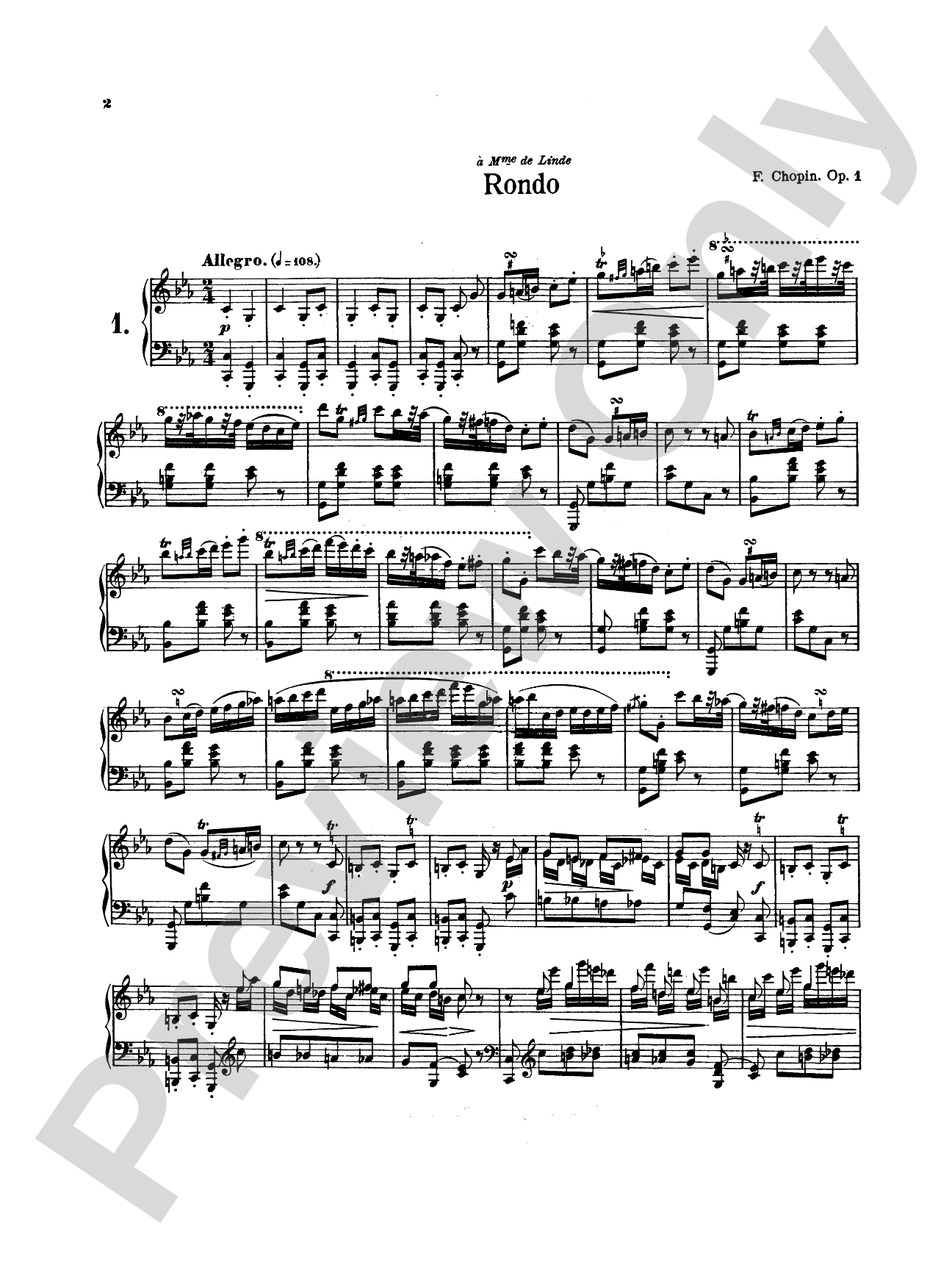
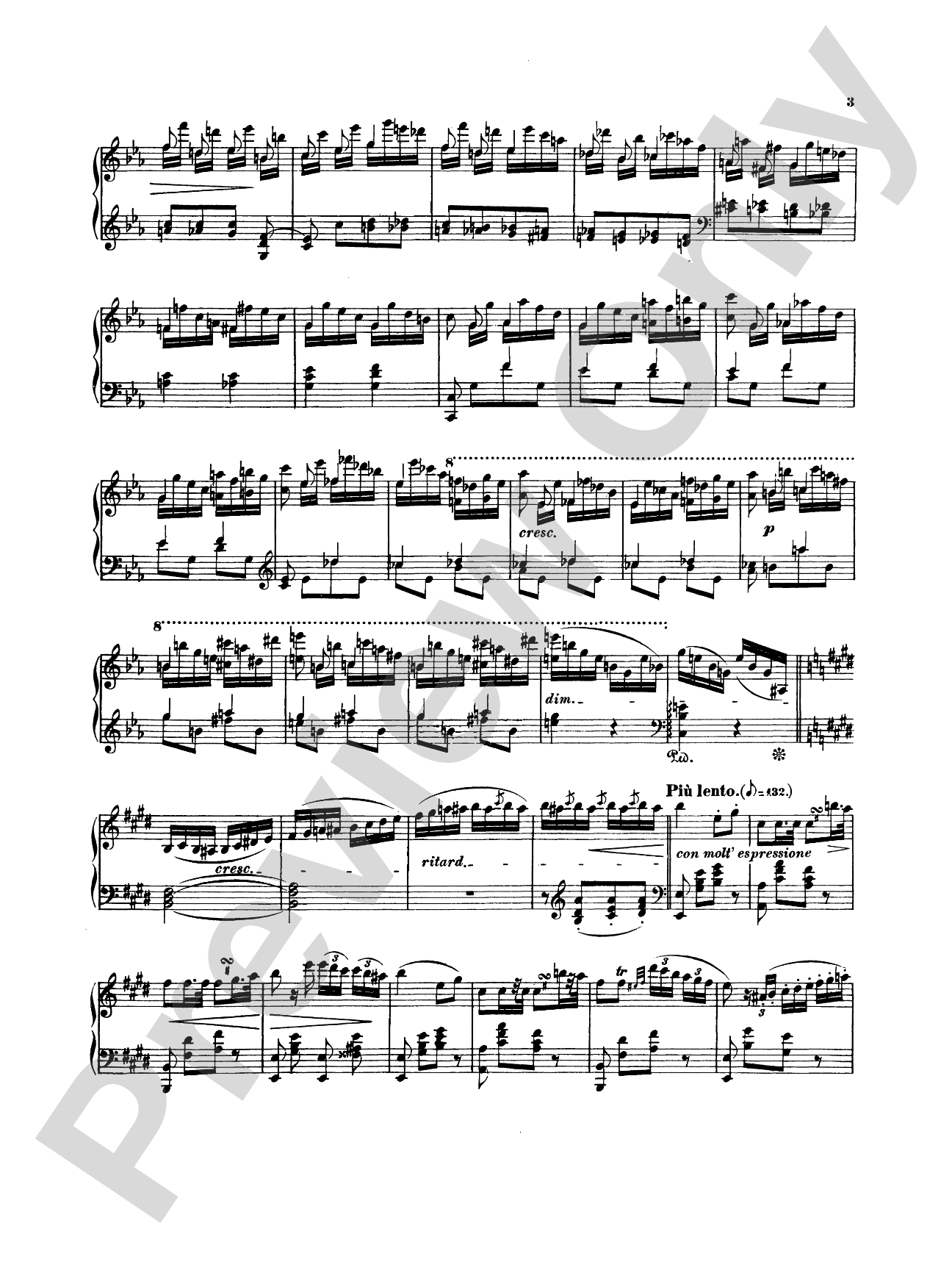
The Rondo in C minor, Op. 1, was Chopin's first published work (at age 15), and was dedicated to "Madame de Linde", a family friend with whom Chopin played duets. The Rondo à la mazur in F major, Op. 5, was written in 1826, when he was 16. It is the only one of the rondos not written in 2/4 time. The third Rondo, in E-flat major, Op. 16, is sometimes called Introduction and Rondo. This volume is "from the first, critically revised, complete edition."


Don't just read it, hear it, play along with it, and watch your students grow with it. In MakeMusic Cloud, Chopin: Rondos (Ed. Franz Liszt) comes alive with professional accompaniment, adjustable tempo, and built-in practice tools that turn solo practice into real progress.
Open in the Player
Jump straight in and assign it today.
Start Your Free Trial
Open this title and explore the full library in minutes.
Sample Audio
No sample audio found.
Sample Video
No sample videos found.
Additional Details
Series:
Kalmus Edition
Publisher:
Alfred Music
Page Count:
40
SKU:
00-PC-0006627
More about this title
About the Composer: Frédéric Chopin
Frédéric Chopin (1810-1849) revolutionized piano writing by treating the instrument as a vehicle for intimate expression rather than virtuosic display. Born in Warsaw and trained rigorously in composition and performance, he spent much of his creative life in Paris, where he became the artistic center of the city's musical salon culture. His output remained focused almost exclusively on the piano, a restraint that allowed him to deepen and refine the instrument's expressive vocabulary across forms from nocturnes to ballades to concertos.
Chopin's early rondos, written as a teenager in Warsaw before his move west, already show the hallmarks of his mature style: elegant melodic phrasing, sophisticated harmonic language, and a keen understanding of how the piano's unique acoustical properties could serve emotional depth. These works reveal a composer already thinking beyond conventional form, bending the rondo's traditional structure to accommodate his lyrical impulses and his gift for transforming folk idioms (particularly the mazurka) into art music.
Why we love this
These three rondos offer advanced pianists substantial early Romantic material that bridges accessible charm with genuine compositional sophistication. The Rondo in C minor, Op. 1, carries the historical weight of a teenage prodigy's first published statement, while the Rondo à la mazur introduces the Polish folk inflections that would define Chopin's voice. Liszt's editorial hand ensures these texts are reliable without unnecessary modernization, giving students direct access to music that shaped how composers think about the piano.
What to expect
These rondos balance courtly elegance with intimate expression. The C minor work carries a minor-key introspection broken by sunny refrain moments, while the F major mazur-rondo dances with the rhythmic snap of Polish vernacular. Each piece reveals Chopin's gift for creating melodies that lodge immediately in memory, supported by harmonies that are both lush and structurally purposeful, inviting the performer to shape each phrase with care and individuality.
Who it's for
Advanced pianists preparing for recitals, competitions, or advanced repertoire classes will find these rondos ideal for expanding beyond the nocturnes and ballades typically explored at this level. Students studying Romantic-era form and harmonic language benefit from analyzing how Chopin reinvents the rondo as a vehicle for lyricism. Teachers programming student or faculty recitals benefit from works that showcase technical competence alongside musical maturity.
How to get the most out of it
- Shape the lyrical A sections with singing tone and gentle pedal; resist the urge to rush passages marked at moderate tempo, as Chopin's melodies often unfold more slowly than students expect.
- Attend carefully to the left-hand figuration in the development sections; these accompaniment patterns often contain the harmonic tension that drives the form forward, not merely rhythmic support.
- In the Rondo à la mazur, embrace the characteristic lilt and swagger of the mazurka rhythm without exaggerating it; the folk character serves the elegance, not the reverse.
- Use the score's dynamic markings as structural signposts; Chopin's contrasts between piano and forte often signal formal transitions that shape large-scale form.
How to use it
The three rondos work effectively programmed together as a thematic recital segment exploring Chopin's formal flexibility and his relationship to Polish musical idioms, or they can be extracted individually for concerts highlighting young composers' precocious achievements. Pairing any rondo with nocturnes or mazurkas by the same composer creates a cohesive program that traces Chopin's characteristic voice without demanding the length of a ballade or concerto.
Skills your students will build
- Singing tone production over sustained accompaniment textures
- Rondo and modified rondo form with harmonic variations
- Pedal technique for blending accompaniment patterns with melody
- Mazurka rhythm and accentuation
- Interpretation of Romantic-era dynamic and tempo markings
- Left-hand independence in accompaniment figures