Chopin: Preludes (Ed. Eduard Mertke) Sheet Music Preview

Chopin: Preludes (Ed. Eduard Mertke)

By Frédéric Chopin / ed. Eduard Mertke

Level: Intermediate / Advanced

Item: 00-PC-0006558

Digital Download
$0.99
Description
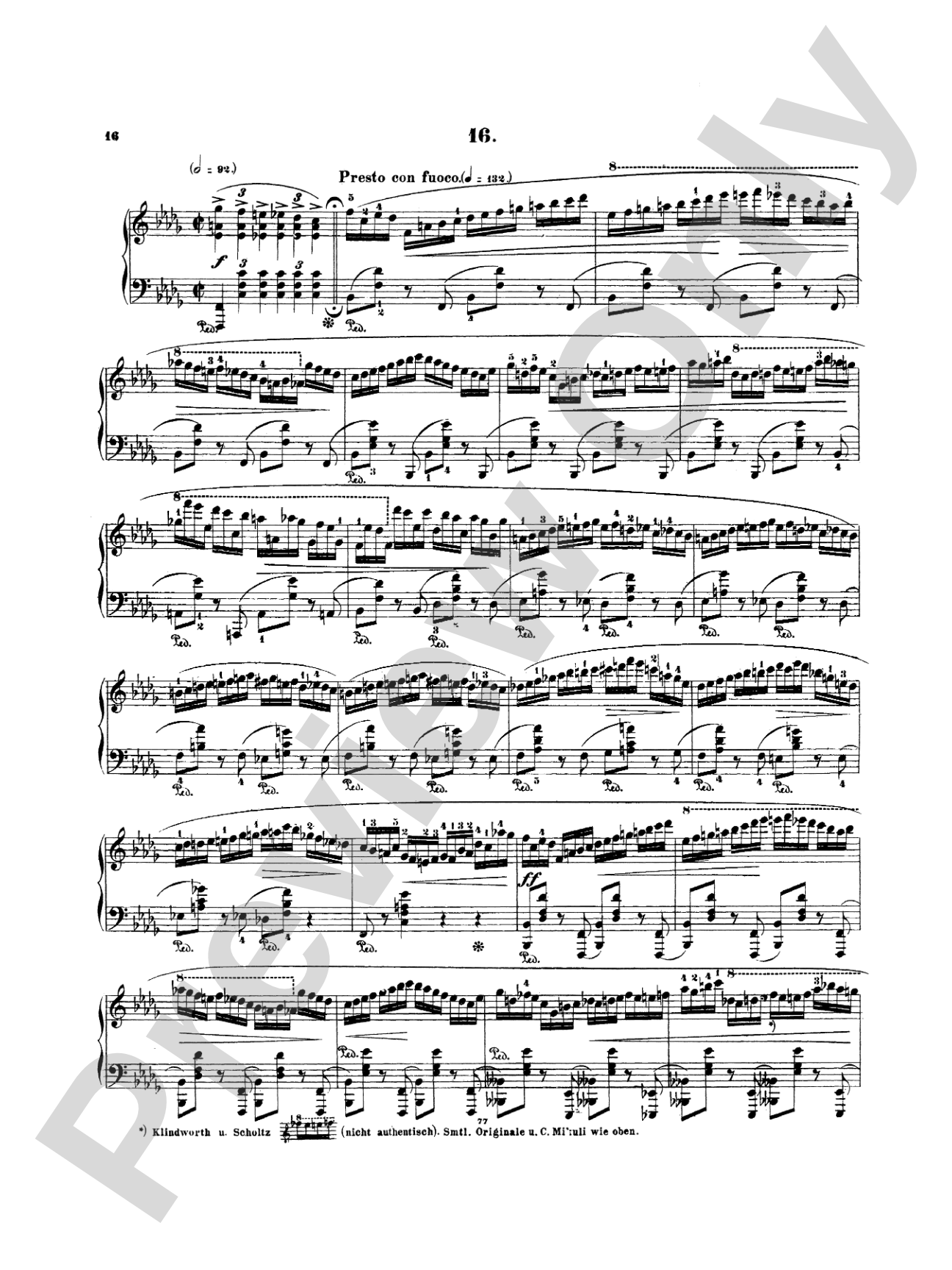
Edited and fingered by Ed Mertke. Chopin's 24 Preludes, Op. 28, are a set of short pieces for piano, one in each of the twenty-four keys, originally published in 1839. The Prelude in C-sharp minor, Op. 45 (sometimes listed as Prelude No. 25), was composed in 1841. Although the term "prelude" is generally used to describe an introductory piece, Chopin's preludes stand as self-contained units, each conveying a specific idea or emotion.

Don't just read it, hear it, play along with it, and watch your students grow with it. In MakeMusic Cloud, Chopin: Preludes (Ed. Eduard Mertke) comes alive with professional accompaniment, adjustable tempo, and built-in practice tools that turn solo practice into real progress.

Sample Audio
No sample audio found.
Sample Video
Additional Details
Series: Kalmus Edition
Publisher: Alfred Music
Page Count: 40
SKU: 00-PC-0006558

More about this title

About the Composer: Frédéric Chopin

Frédéric Chopin (1810-1849) was a Polish composer and pianist whose innovations fundamentally shaped Romantic-era keyboard music. He expanded the expressive and technical possibilities of the piano, moving beyond the Classical forms he inherited and establishing the miniature character piece as a vehicle for profound musical and emotional exploration.

Chopin's influence on piano pedagogy and repertoire remains unmatched. His works demand technical refinement, interpretive maturity, and an understanding of rubato and tonal color that continue to challenge and inspire pianists at every level. Teachers value his compositions because they teach musicianship alongside technique, requiring students to think beyond mechanics.

Why we love this

These twenty-four preludes form the backbone of intermediate-to-advanced piano study because each piece introduces a single musical idea or technical challenge without padding. Mertke's fingering and editing streamline the learning process, allowing students to focus on interpretation rather than textual confusion. Programming all twenty-four (or a curated selection) offers programming flexibility ranging from intimate recitals to comprehensive masterclass demonstrations.

What to expect

These miniatures span from intimate introspection to virtuosic brilliance, sometimes within a single page. You encounter moments of crystalline simplicity alongside harmonic ambiguity that pulls against expected resolutions, creating a sense of emotional complexity that feels both personal and universal.

Who it's for

This collection serves advanced intermediate and advanced pianists preparing for recitals, competitions, or comprehensive study of Chopin's keyboard works. Teachers use these preludes to develop interpretive independence in upper-level students and to demonstrate how constraint (the single-key structure) can generate infinite musical variety.

How to get the most out of it

  • Treat each prelude as a complete thought with its own architecture. Resist the temptation to rush shorter pieces; let silence and space have weight.
  • Study the harmonic language closely before worrying about tempo. Understanding Chopin's unexpected chord progressions and voice leading will inform your phrasing naturally.
  • Exploit the sustain pedal deliberately rather than continuously. The preludes were written for instruments with lighter action than modern pianos; thoughtful pedal work prevents harmonic muddiness.
  • Allow rubato to emerge from the musical content, not as an overlay. The most convincing interpretations honor the rhythmic integrity of the accompaniment while the melody breathes.

How to use it

Build a recital around a thematic subset (all minor-key preludes, all étude-style pieces, or a modulating sequence of keys) rather than performing all twenty-four at once. Alternatively, feature one or two standalone pieces alongside other Romantic repertoire to show stylistic context without overwhelming the program.

Skills your students will build

  • Voice independence and harmonic awareness across all twenty-four major and minor keys
  • Control of pedal to balance clarity with resonance in varied textures
  • Stylistic understanding of Romantic-era rubato and phrasing conventions
  • Rapid technical facility across multiple figurative patterns (arpeggios, repeated notes, runs)
  • Interpretive decision-making when editorial markings are minimal or sparse

You May Also Like