Chopin Prelude Sheet Music Preview

Chopin Prelude: SATB Choral Octavo

Music by Frédéric Chopin / arr. Michael Scott

Item: 00-PO-0005268

Digital Download
$2.25

Minimum order quantity: 20 copies

Description
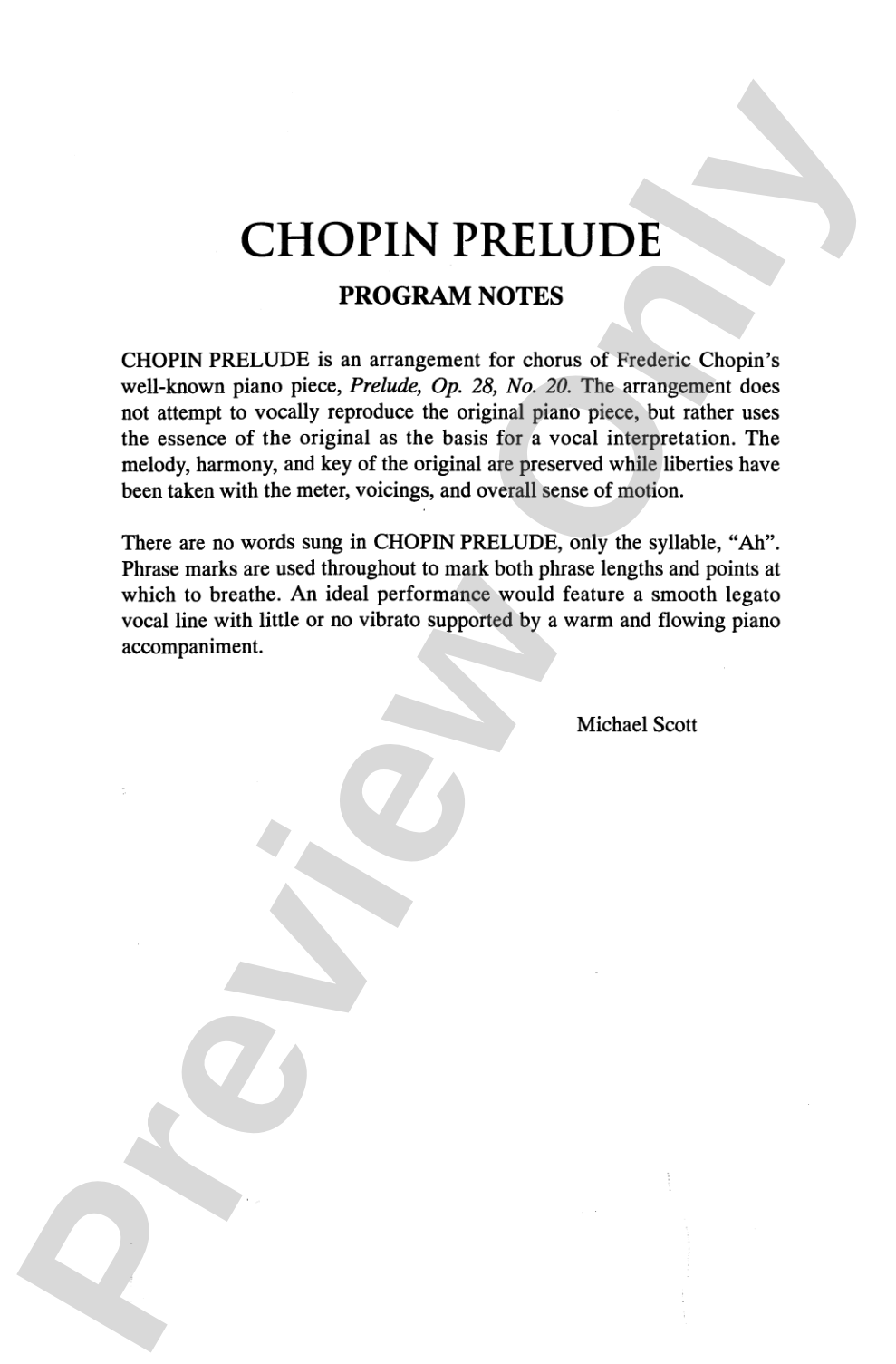
Adapted from Frederic Chopin's Prelude, Opus 28 No. 20, this unique creation makes classic piano repertoire accessible to the voices of singers for the very first time. Keeping the original melody and harmonic structures intact, Michael has skillfully created a most beautiful and prestigious concert work. Use it in a variety of programming situations, or as an inspiring choral warm-up!

Chopin Prelude: SATB Choral Octavo isn't in MakeMusic Cloud just yet...but it could be. Let us know you'd like to see it, and you'll help shape what comes next. In the meantime, start a free trial and dive into thousands of interactive titles your students can play along with today.

Sample Audio
No sample audio found.
Sample Video
Additional Details
Series: Alfred Archive Edition: Studio PR Catalog
Publisher: Alfred Music
Page Count: 8
SKU: 00-PO-0005268

More about this title

About the Composer: Frédéric Chopin

Frédéric Chopin (1810-1849) was a Polish composer and pianist who fundamentally shaped Romantic piano literature. His innovations in harmonic language, use of rubato, and deeply expressive approach to melody established new possibilities for the instrument and influenced generations of composers who followed.

Chopin's preludes, particularly the Op. 28 set published in 1839, stand among the most performed and studied works in classical music. Written to explore all major and minor keys, they range from technically straightforward to virtuosic, each one a complete musical thought that demonstrates his gift for distilling profound emotion into concentrated form.

Why we love this

This arrangement opens one of the Romantic era's most intimate keyboard works to an entire choir, preserving every harmonic nuance Chopin built into the original while giving singers genuine musical material to interpret. The 8-page score carries real weight in a concert program, offering your ensemble the opportunity to experience a legitimate masterwork rather than a simplified approximation.

What to expect

The prelude unfolds with a contemplative grace, its gently undulating harmonies creating an atmosphere of quiet introspection. Chopin's harmonic language feels both elegant and emotionally restrained, inviting singers and listeners alike into a moment of profound intimacy.

Who it's for

This octavo suits choirs with secure musicianship and comfort with romantic-era harmonic language. The SATB voicing and moderate difficulty make it accessible to collegiate, adult community, and advanced high school ensembles seeking substantive concert repertoire.

How to get the most out of it

  • Attend closely to dynamic shape across phrases; Chopin's original marks subtle gradations that transform the harmonic progression, and your choir should mirror these shifts in vocal intensity.
  • Balance the upper voices with care so the soprano melody remains audible but the inner voices' chromatic movement stays present; this interplay is central to the piece's harmonic richness.
  • Treat the opening and closing sections with restraint. The piece asks for control and introspection, not volume; a softer dynamic often communicates greater sophistication and respects Chopin's intimate character.

How to use it

Position this as a serious concert anchor rather than filler; its classical pedigree and harmonic sophistication reward a principal programming slot. It also functions beautifully as an extended warm-up for rehearsal, allowing your choir to settle into focused, expressive singing while engaging with genuine artistry.

Skills your students will build

  • Sustaining lyrical legit singing over chromatic harmonic movement
  • Balancing multiple voice lines when inner parts carry harmonic interest
  • Interpreting dynamic and tempo nuance in Romantic-era style
  • Reading and performing music that prioritizes harmonic color and emotional restraint over rhythmic complexity

You May Also Like