
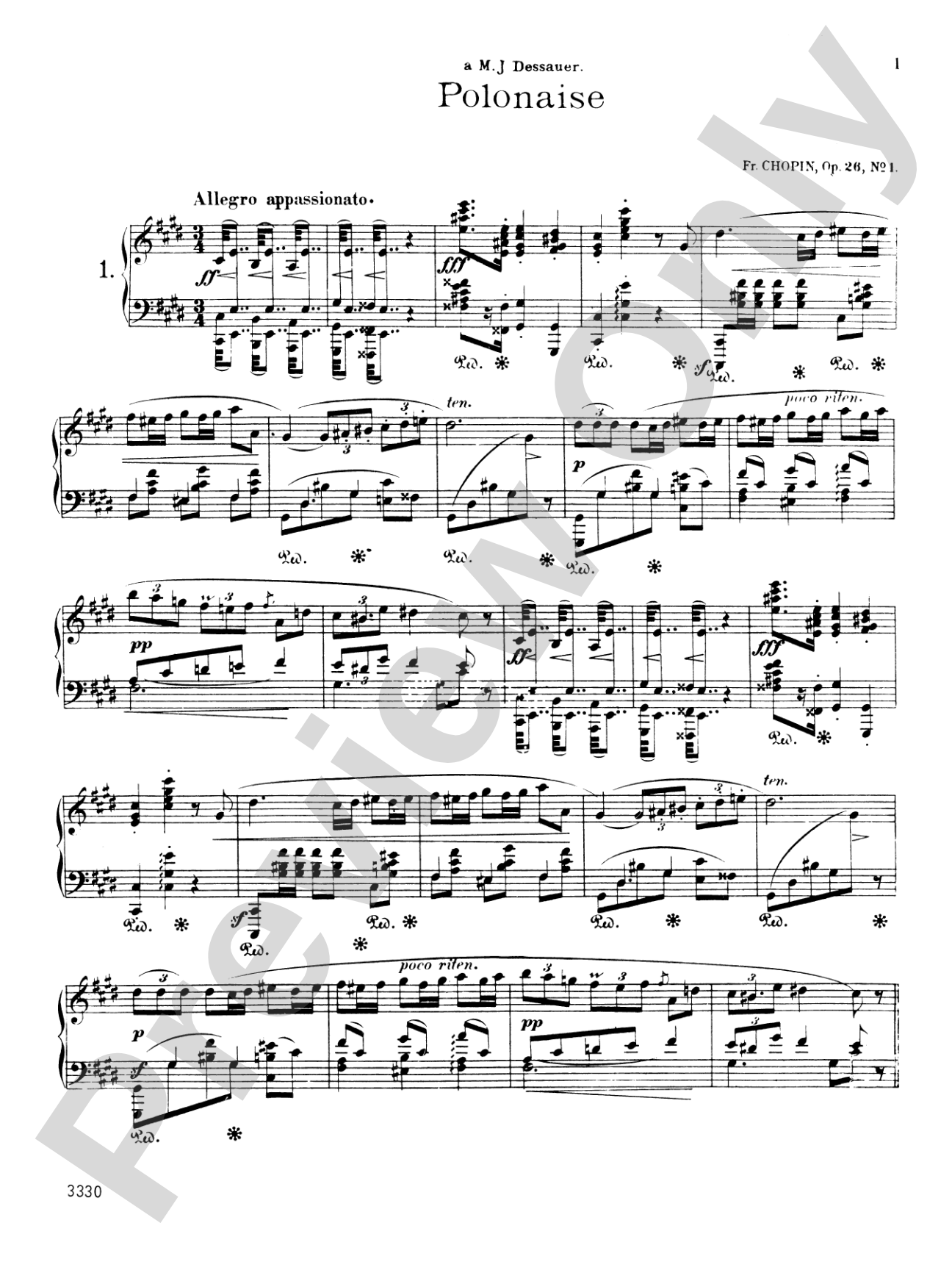
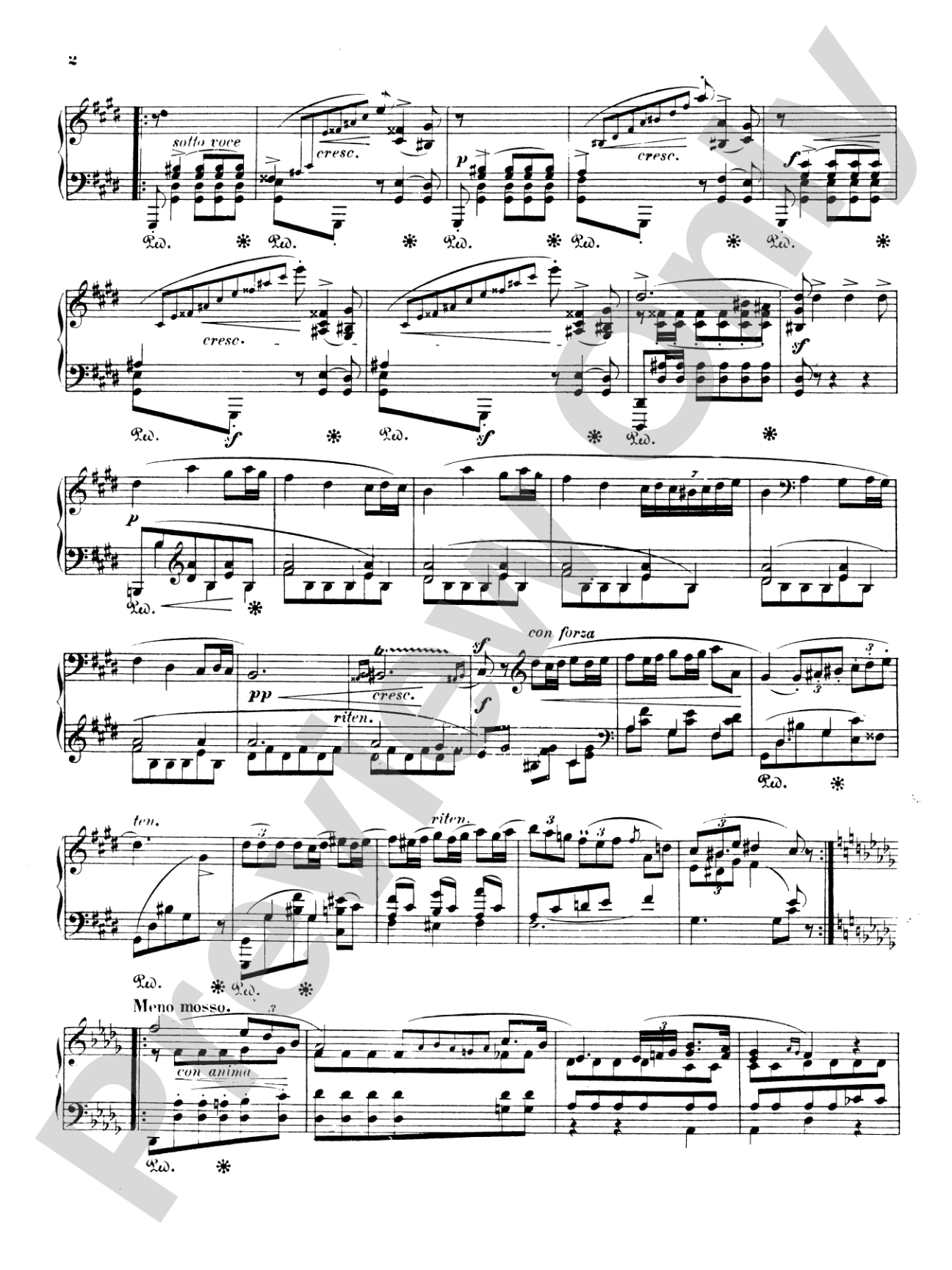
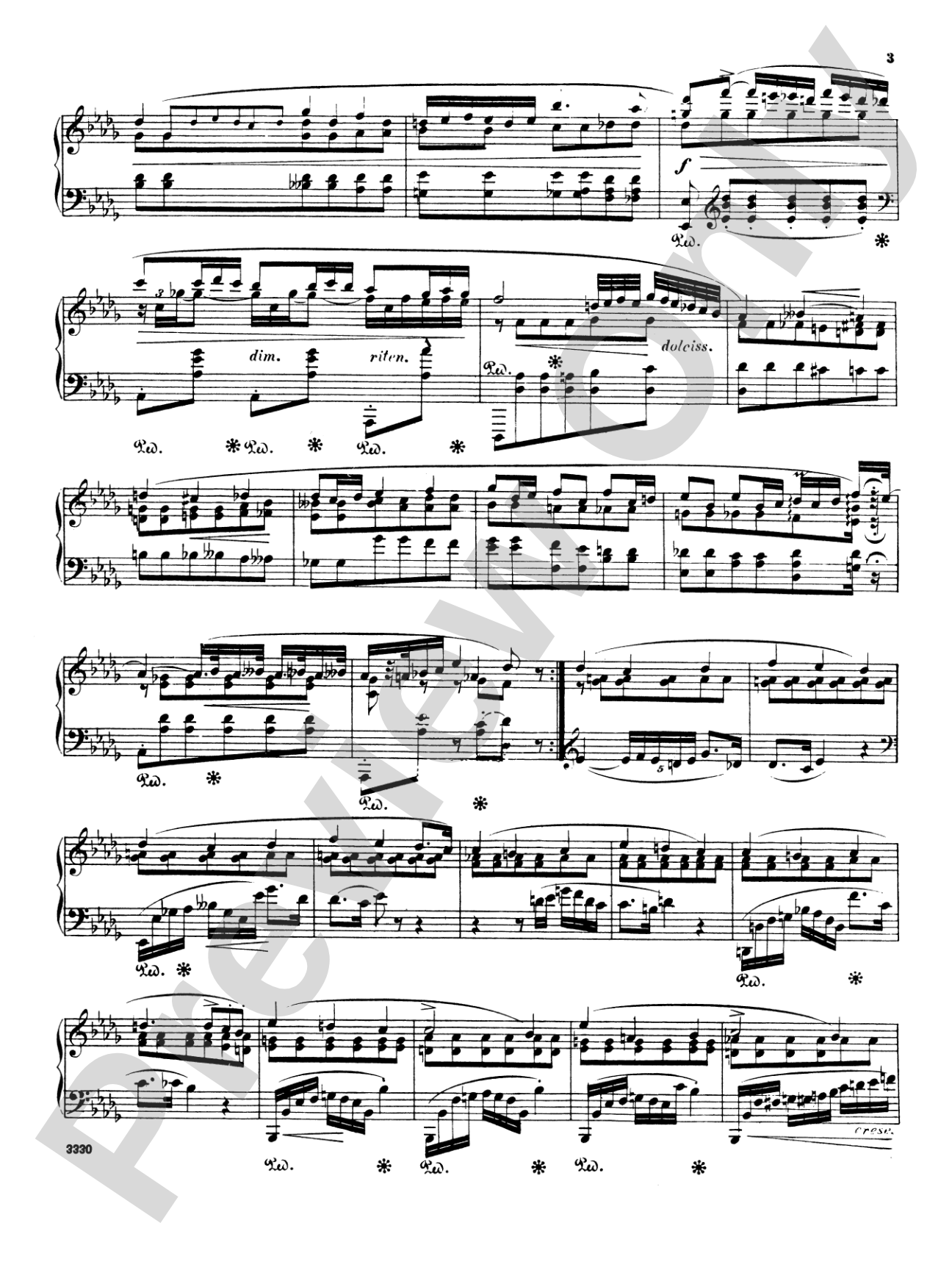
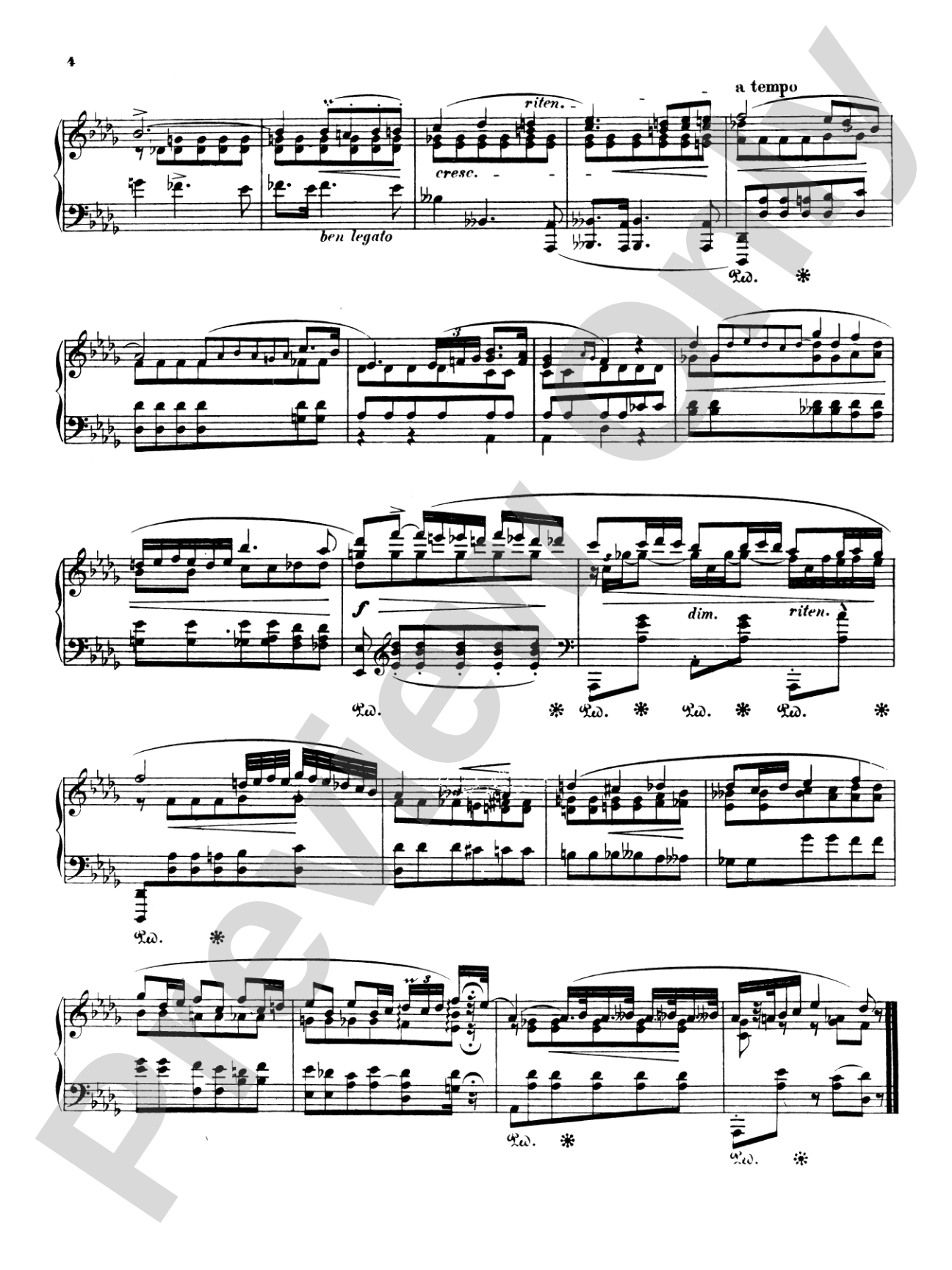

Chopin: Polonaises (Ed. Franz Liszt): Piano Book
By Frédéric Chopin / ed. Franz Liszt
Level: Advanced
Item: 00-PK-0003017

$10.99
Pickup currently not available
Buy Extra Parts (Digital PDF Download)
Parts Added to Cart!
Related Items
Polonaises: Piano Book |
$10.95
|
View |
Description
Chopin wrote his first polonaise in 1817, when he was 7, and his last was the Polonaise-Fantaisie of 1846, three years before his death. This volume is "from the first, critically revised, complete edition." Includes: Opus 26, No. 1 * Opus 26, No. 2 * Opus 40, No. 1 * Opus 40, No. 2 * Opus 44 * Opus 53 * Opus 61 (Polonaise-Fantaisie) * Opus 71, No. 1 * Opus 71, No. 2 * Opus 71, No. 3 * 2 posthumous polonaises.


Don't just read it, hear it, play along with it, and watch your students grow with it. In MakeMusic Cloud, Chopin: Polonaises (Ed. Franz Liszt): Piano Book comes alive with professional accompaniment, adjustable tempo, and built-in practice tools that turn solo practice into real progress.
Open in the Player
Jump straight in and assign it today.
Start Your Free Trial
Open this title and explore the full library in minutes.
Sample Audio
No sample audio found.
Sample Video
No sample videos found.
Additional Details
Series:
Kalmus Edition
Publisher:
Alfred Music
Page Count:
84
SKU:
00-PK-0003017
More about this title
About the Composer: Frédéric Chopin
Frédéric Chopin (1810-1849) transformed the piano from a drawing-room instrument into a vehicle for profound emotional expression. His polonaises span his entire compositional life, from childhood sketches to the late Polonaise-Fantaisie, revealing an artist constantly refining his harmonic language and structural innovations.
Chopin's command of piano idiom remains unmatched. He understood the instrument's capabilities so deeply that his music demands both technical mastery and interpretive depth, making his works central to advanced repertoire across conservatories and professional recital stages worldwide.
Why we love this
This Liszt edition offers the complete polonaise cycle in one volume, allowing pianists to trace Chopin's evolution from Op. 26 through the late Polonaise-Fantaisie. The critical revision and historical authority make it a reliable choice for serious study, while the span of 84 pages means students can work through contrasting keys and temperaments without juggling multiple scores.
What to expect
These polonaises move between ceremonial grandeur and intimate reflection. The earlier opuses pulse with dancelike rhythm and structural clarity, while the later works, particularly the Polonaise-Fantaisie, dissolve conventional form into a dreamlike exploration of harmonic possibility. Throughout, there is an undercurrent of nationalism and melancholy beneath the surface elegance.
Who it's for
Advanced pianists preparing recital programs, entering conservatory studies, or building a comprehensive understanding of Romantic keyboard literature. This collection serves performers ready to engage with Chopin's harmonic sophistication and pianistic demands across multiple opus numbers and stylistic phases.
How to get the most out of it
- Attend to Chopin's pedal markings with precision; these are not optional flourishes but essential to the harmonic color and voice independence he crafted.
- Approach the tempo markings (Alla marcia, Maestoso, Allegro non tanto) as character indicators rather than metronomic absolutes; the polonaise rhythm carries nobility but not rigidity.
- Balance the aristocratic dance origins with the inner turbulence many of these pieces contain, especially in the later works where harmonic ambiguity deepens the emotional landscape.
- Shape the left-hand accompaniment figures with the same care you give the melody; Chopin's broken-chord patterns are rhythmic and harmonic, not merely supportive.
How to use it
Solo a single polonaise (Op. 53 or Op. 61 are popular choices) as a recital centerpiece, or program several from different opuses to showcase Chopin's stylistic range within a single genre. The posthumous pieces and Op. 71 works offer rarer programming options for pianists seeking to move beyond the most familiar selections.
Skills your students will build
- Romantic-era harmonic language, including chromaticism and voice leading across the keyboard
- Pedal technique and its relationship to harmonic color and texture
- Balancing melodic phrasing with accompaniment figures across both hands
- Ornamentation and rubato appropriate to Chopin's compositional style
- Structural analysis of theme and variation within dance forms