
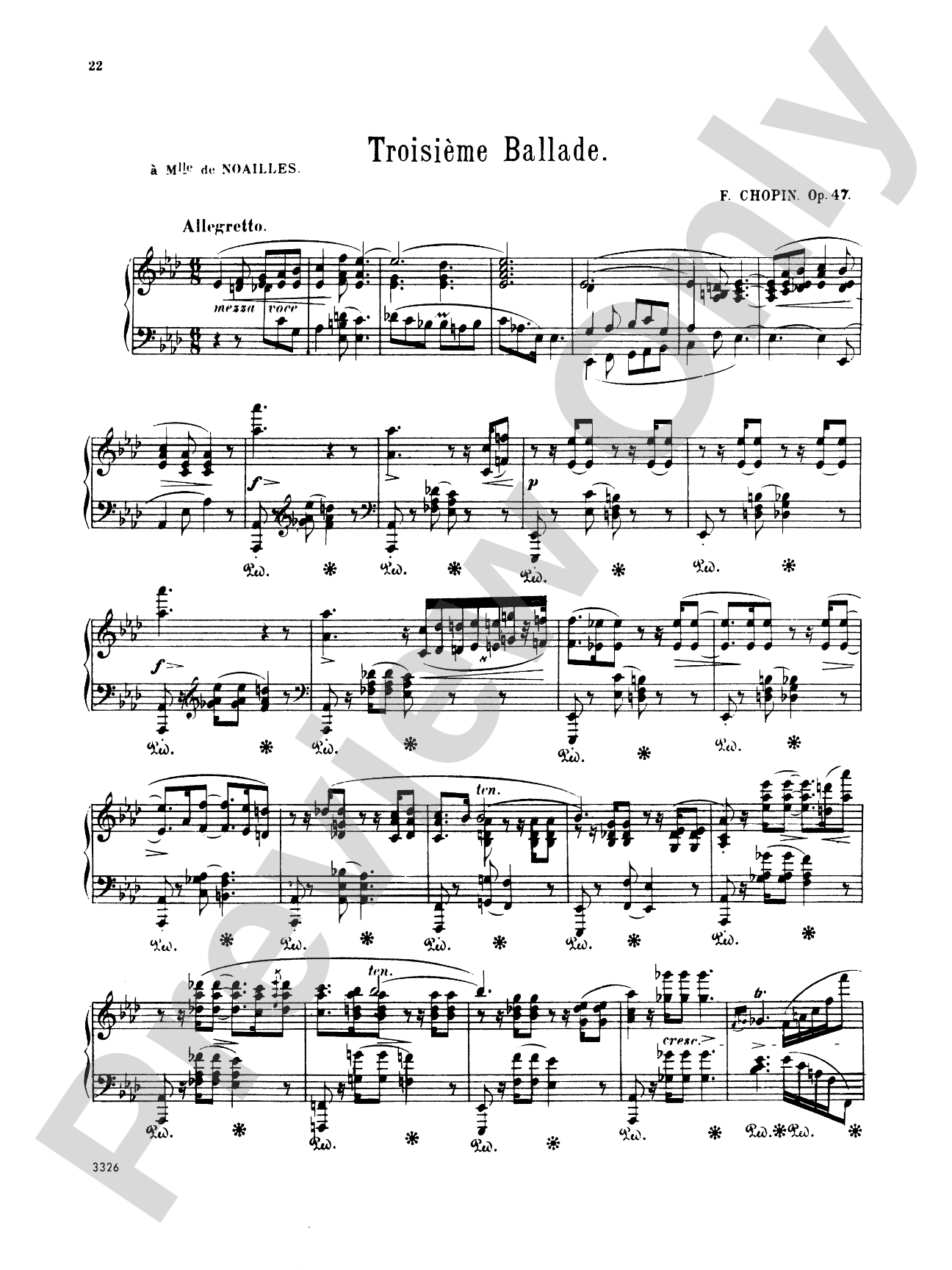
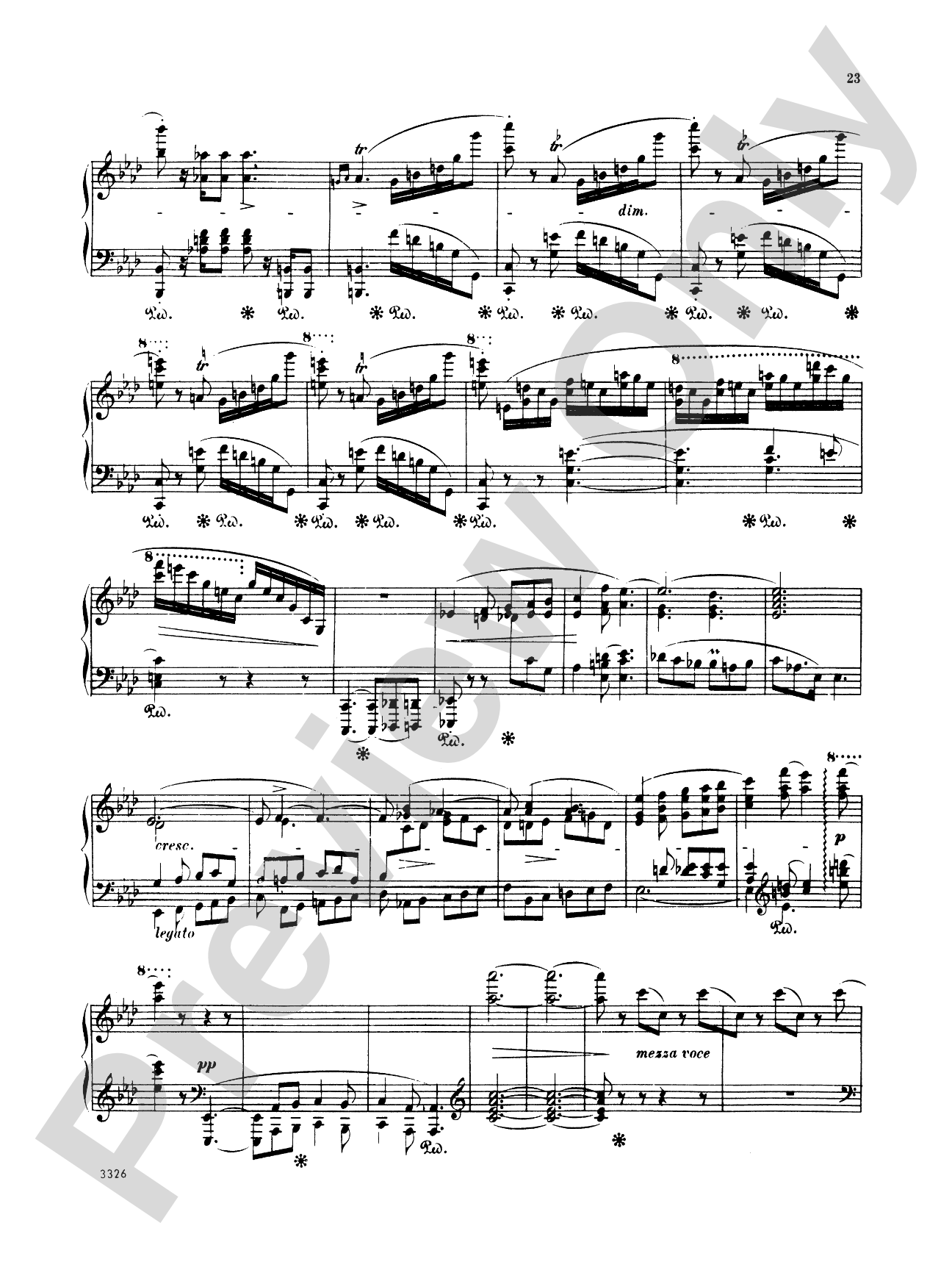

Chopin: Ballades (Ed. Franz Liszt)
By Frédéric Chopin / ed. Franz Liszt
Level: Advanced
Item: 00-PC-0006412
$1.99
Pickup currently not available
Description
Frédéric Chopin's four ballades, composed between 1835 and 1842, are some of the most challenging pieces in the standard piano repertoire. The term "ballade" was associated with French poetry until the mid-19th century, when Chopin was among the first to pioneer the ballade as a musical form. Contains: No. 1, Op. 23, in G minor * No. 2, Op. 38, in F major * No. 3, Op. 47, in A-flat major * No. 4, Op. 52, in F minor.


Don't just read it, hear it, play along with it, and watch your students grow with it. In MakeMusic Cloud, Chopin: Ballades (Ed. Franz Liszt) comes alive with professional accompaniment, adjustable tempo, and built-in practice tools that turn solo practice into real progress.
Open in the Player
Jump straight in and assign it today.
Start Your Free Trial
Open this title and explore the full library in minutes.
Sample Audio
No sample audio found.
Sample Video
No sample videos found.
Additional Details
Series:
Kalmus Edition
Publisher:
Alfred Music
Page Count:
44
SKU:
00-PC-0006412
More about this title
About the Composer: Frédéric Chopin
Frédéric Chopin (1810-1849) was a Polish composer and virtuoso pianist who fundamentally transformed the piano's expressive range during the Romantic era. His compositions, which include nocturnes, études, preludes, and ballades, blend technical brilliance with deep lyricism, establishing him as one of the most influential composers in the Western classical tradition.
Chopin's approach to the piano emphasized singing tone, subtle rubato, and poetic narrative over sheer virtuosity. His works remain central to advanced piano pedagogy because they demand both technical mastery and interpretive maturity from performers, requiring pianists to balance precision with spontaneity and to understand how musical form serves emotional storytelling.
Why we love this
These four ballades showcase Chopin at his most ambitious, each one a complete musical narrative that pushes pianists toward genuine artistry rather than mere technical display. The Liszt edition offers carefully considered fingerings and interpretive markings that guide advanced students through the formal and emotional complexity these works demand. Programming all four together creates a recital program of substantial intellectual and emotional weight.
What to expect
The ballades evoke the narrative structure of poetry and drama, moving through episodes of lyrical beauty, virtuosic passage work, and moments of intimate reflection. Each piece feels like a miniature emotional journey, alternating between expansive brilliance and moments of vulnerability that require genuine expressive maturity from the performer.
Who it's for
This collection is designed for advanced pianists preparing for recitals, competitions, or serious concert performance. Whether you're working toward a music degree, building a substantial recital program, or exploring the Romantic solo literature in depth, the ballades demand commitment to both technical mastery and interpretive independence.
How to get the most out of it
- Study the large-scale structural architecture first before diving into passage work. Each ballade unfolds as a story; understanding where the climax falls and how material returns transforms your interpretation from note-playing into musical communication.
- Shape the lyrical themes with the same care you would bring to vocal music. Chopin's melodies sing through the texture, and the piano's role is to support rather than overshadow that singing quality.
- Approach tempo relationships between sections with flexibility. The printed tempo markings provide landmarks, but Chopin's rubato is integral to the music's character; allow the phrase shape to guide your timing rather than treating the metronome as law.
- Balance the left hand's accompaniment figuration so it remains transparent. These pieces require clarity in texture even at the fastest tempos; the accompaniment must never overwhelm the melodic content.
How to use it
A single ballade works as a substantial recital centerpiece or encore; together, the four ballades form a complete, compelling program. You might pair them across multiple concert seasons, programming one ballade per year as you deepen your interpretation, or present them all in a single recital dedicated entirely to Chopin's larger character pieces.
Skills your students will build
- Voicing in complex polyphonic textures and managing multiple melodic strands
- Shaping long-line phrasing across extended formal structures
- Executing rapid passage work with rhythmic precision and tonal control
- Navigating chromatic harmony and understanding formal expansion techniques
- Developing interpretive independence through rubato and expressive timing
- Balancing technical demands with musical storytelling and characterization