
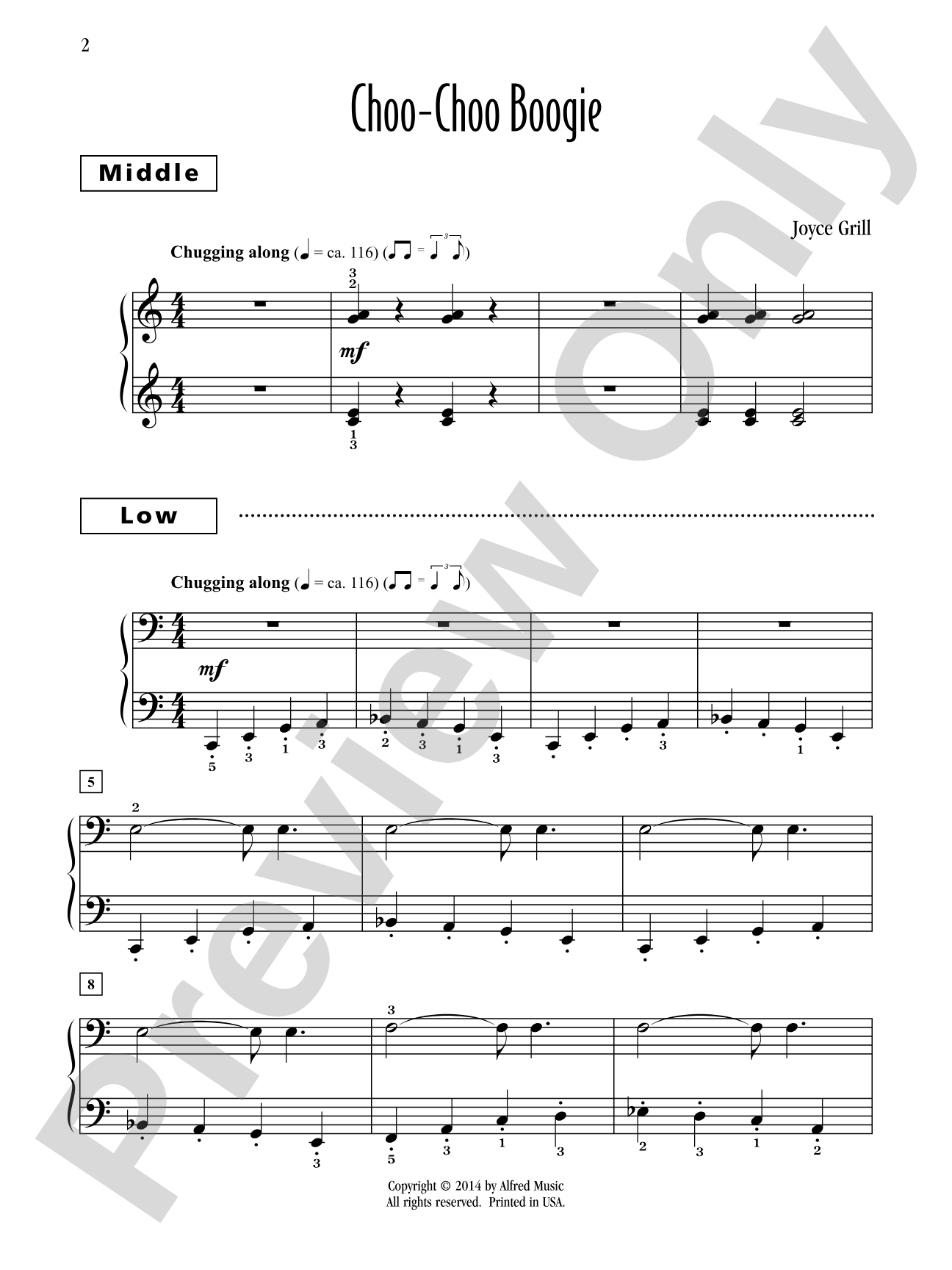
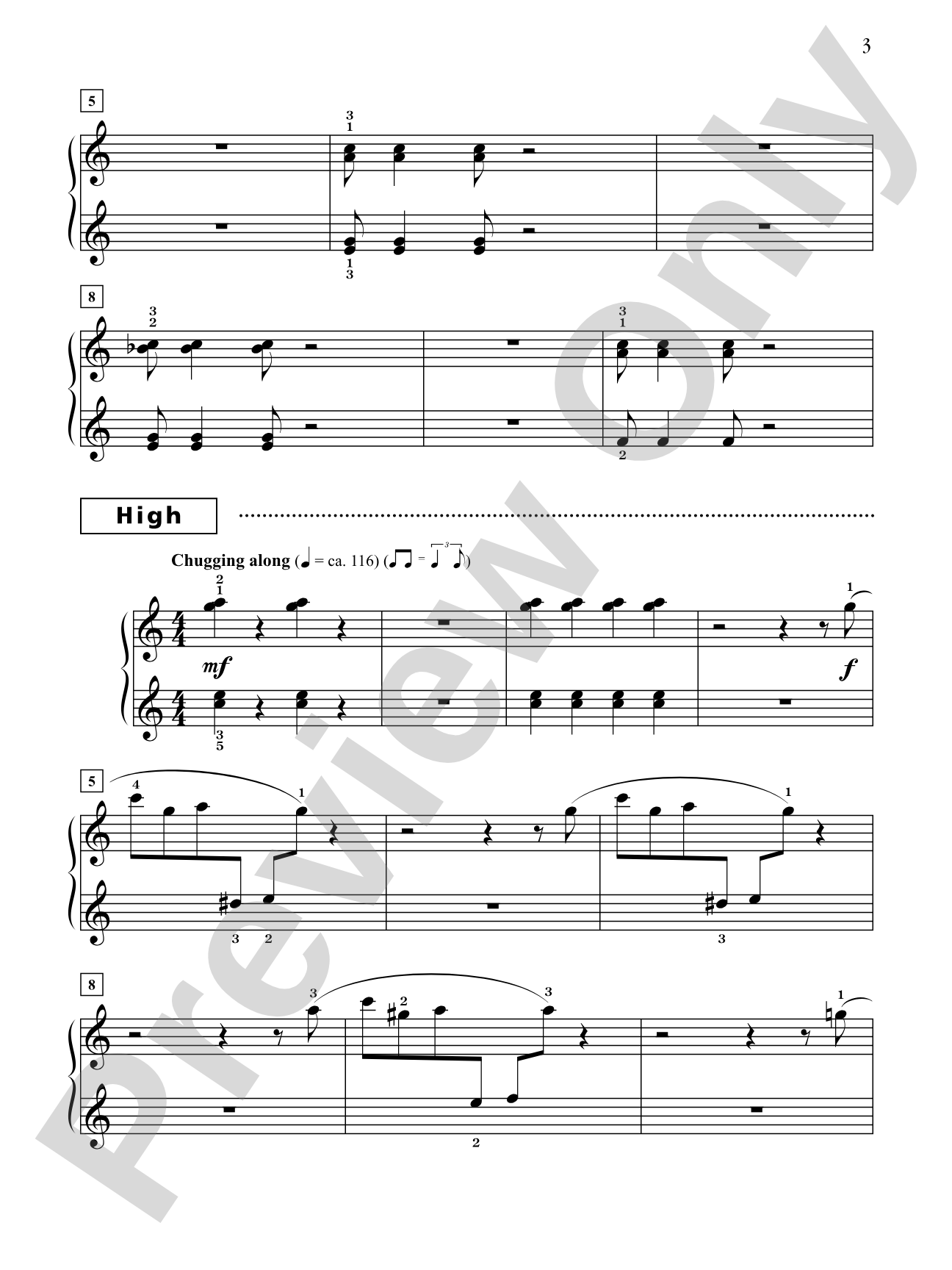

Choo-Choo Boogie - Piano Trio (1 Piano, 6 Hands): Piano
By Joyce Grill
Level: Early Intermediate
Item: 00-PB-0000817
$4.99
Pickup currently not available
Related Items
Choo-Choo Boogie: Piano Trio (1 Piano, 6 Hands) Sheet |
$4.99
|
View |
Description
Choo-Choo Boogie is a quick, energetic trio written in equal parts for students at the early intermediate level. There is a traditional boogie bass line, accentuated by staccatos. An abundance of harmonic seconds and thirds create the sound of a train whistle. Students and teachers will love this inventive piece and play it over and over again in lessons and recitals. A Federation Festivals 2016-2020 selection. A Federation Festivals 2020-2024 selection.


Choo-Choo Boogie - Piano Trio (1 Piano, 6 Hands): Piano isn't in MakeMusic Cloud just yet...but it could be. Let us know you'd like to see it, and you'll help shape what comes next. In the meantime, start a free trial and dive into thousands of interactive titles your students can play along with today.
Request This Title
Tell us you want it.
Start Your Free Trial
Explore everything that's ready to play right now.
Sample Audio
No sample audio found.
Sample Video
No sample videos found.
Additional Details
Series:
Signature Series
Publisher:
Alfred Music
Page Count:
8
SKU:
00-PB-0000817
More about this title
About the Composer: Joyce Grill

Joyce Grill has shaped music education through decades of classroom teaching and mentorship. Her work as emeritus faculty at the University of Wisconsin-La Crosse and her leadership roles within MTNA, including Wisconsin State President and Division Vice-President, reflect her commitment to the profession. In 2006, the MTNA Foundation recognized her contributions by naming her a Fellow. Grill holds degrees from the University of Wisconsin-Madison and studied composition and theory with Nadia Boulanger at the School of Fine Arts in Fontainebleau, France, where she also worked with pianists Robert and Jean Casadesus.
Her reputation rests on her skill at writing for multiple instruments, and she frequently conducts multi-piano concerts. She holds the MTNA Master Teacher Certificate and serves as a National Certified Teacher of Music (NCTM). Her published works, including In Style, Down the Road, and Accompanist (Yes, It Really Happens), reflect her understanding of what works in the teaching studio. She founded the La Crosse Area Music Teachers Association and continues to share practical strategies through workshops and presentations across the country.
Why we love this
Grill crafts six-hand writing with genuine equality among the three players, meaning none of them plays a secondary role. The boogie bass line grounds the texture while harmonic seconds and thirds layer in to evoke the whistle of a moving train, making the musical imagery clear without sounding gimmicky. Students stay engaged because each part feels substantial and the piece moves with genuine rhythmic drive.
What to expect
Rhythmic energy propels this piece forward with the clacking momentum of wheels on a track. Harmonic color shifts as the train whistle voice weaves through the texture, creating a piece that feels both playful and genuinely musical. The boogie foundation gives it swagger and lift.
Who it's for
Three early intermediate pianists ready to explore ensemble playing without sacrificing individual musicality. The single-piano setup removes setup complications while building collaborative listening skills that wind ensemble or orchestra players at this level are also developing.
How to get the most out of it
- Balance the staccato articulation in the boogie bass line so it drives the piece forward without overshadowing the harmonic seconds and thirds in the upper voices.
- Rehearse the three parts independently first to establish confidence in each player, then lock in the rhythmic relationship by having the bass player count off and set the tempo.
- Clarify ensemble entrances by having the group practice the opening together several times; early intermediate players benefit from this predictability.
- Experiment with dynamic shaping across the trio; the train whistle effect becomes more vivid when the harmonic seconds and thirds have slightly more presence than the bass.
How to use it
Program this alongside other inventive early intermediate pieces to show students that this level opens doors to real ensemble experience. It lands naturally on spring recitals where audience energy is high and families appreciate the theatrical character. Teachers often schedule it after students have gained basic sight-reading confidence; its straightforward harmonic language rewards focused preparation.
Skills your students will build
- Coordinating rhythmic entrances and maintaining steady tempo with two other players
- Reading staccato articulation and executing it consistently
- Recognizing harmonic intervals (seconds and thirds) by ear and in notation
- Balancing individual voice within a three-part texture
- Building confidence in early intermediate ensemble playing