
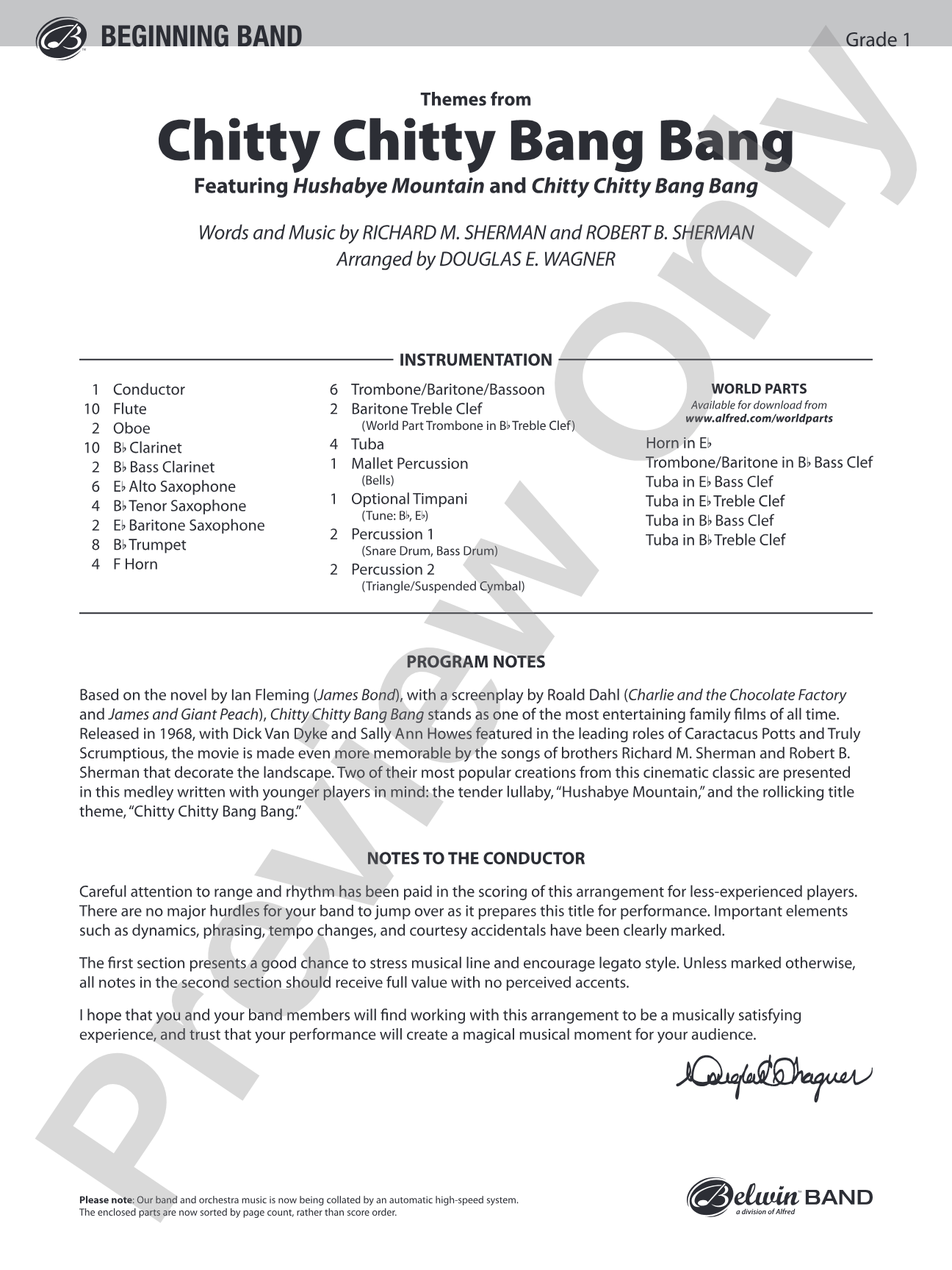

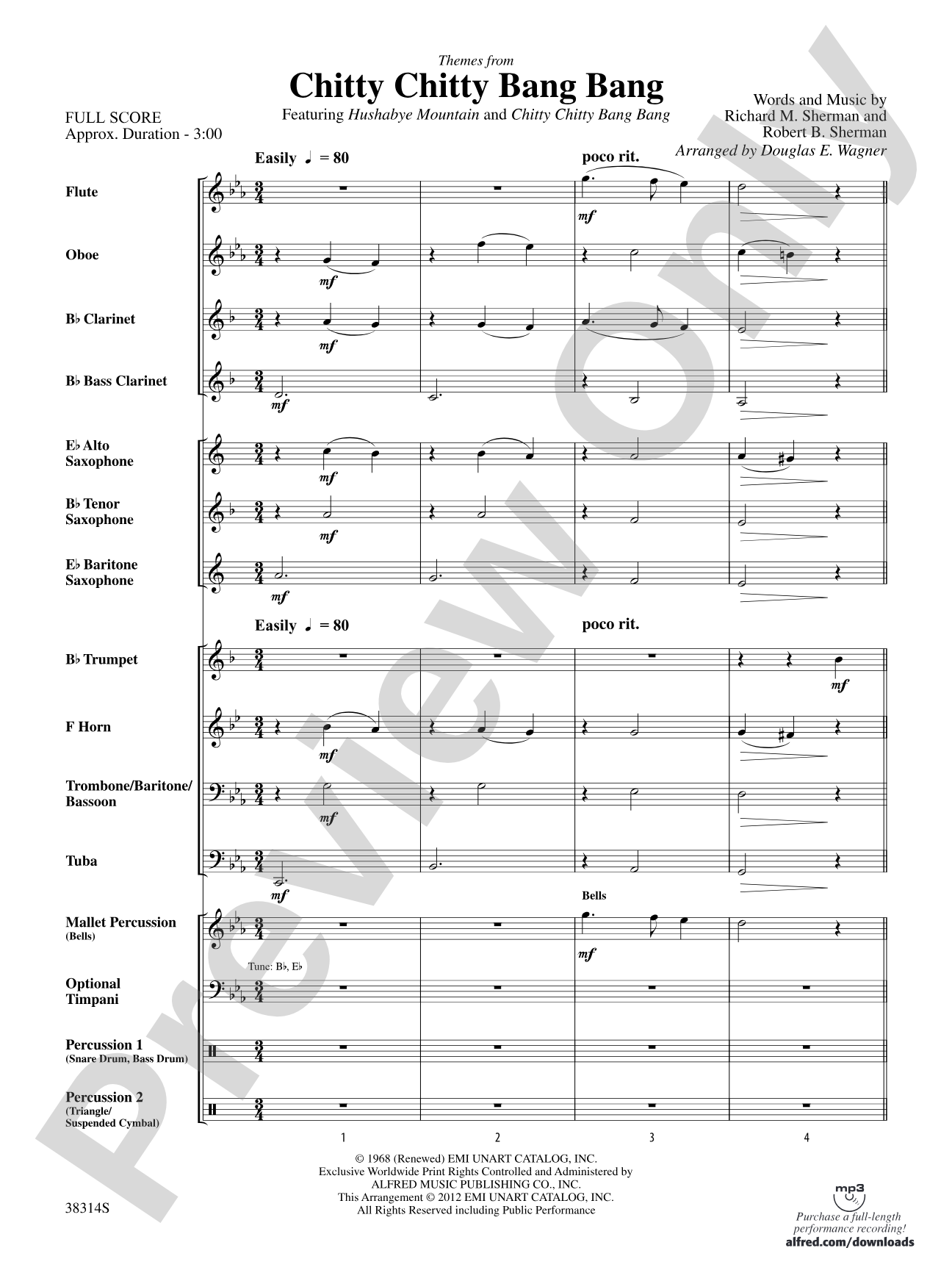
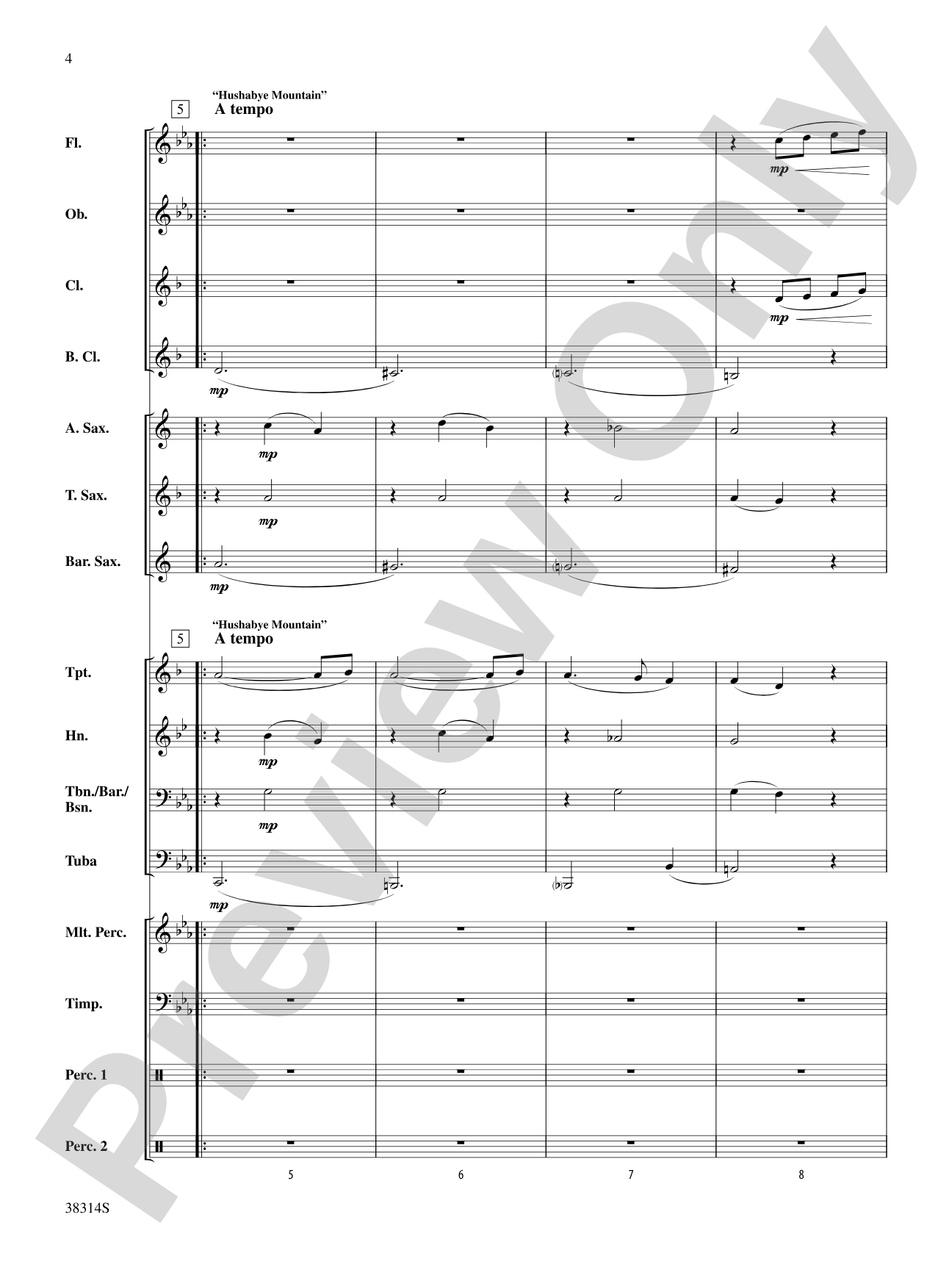
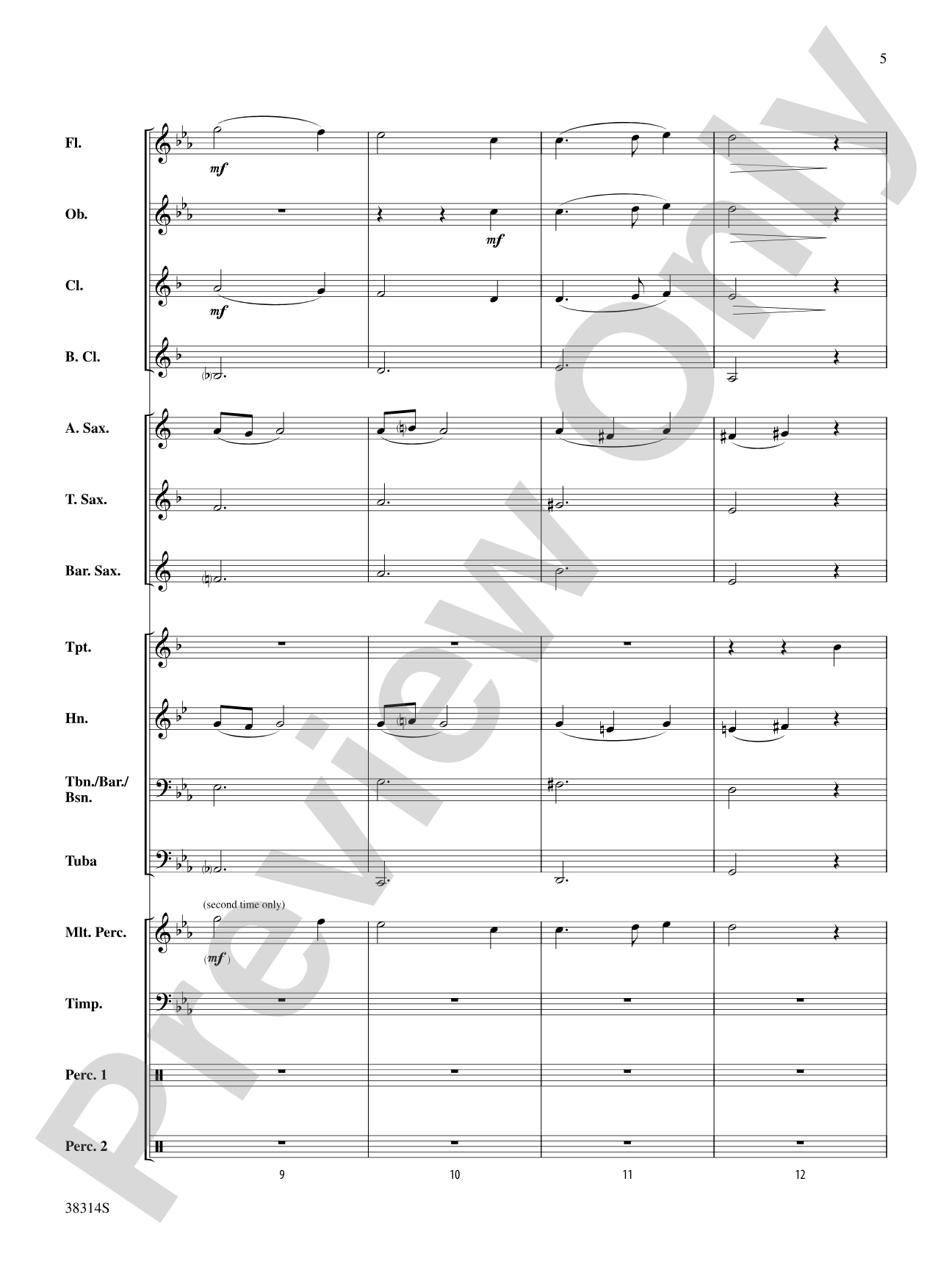
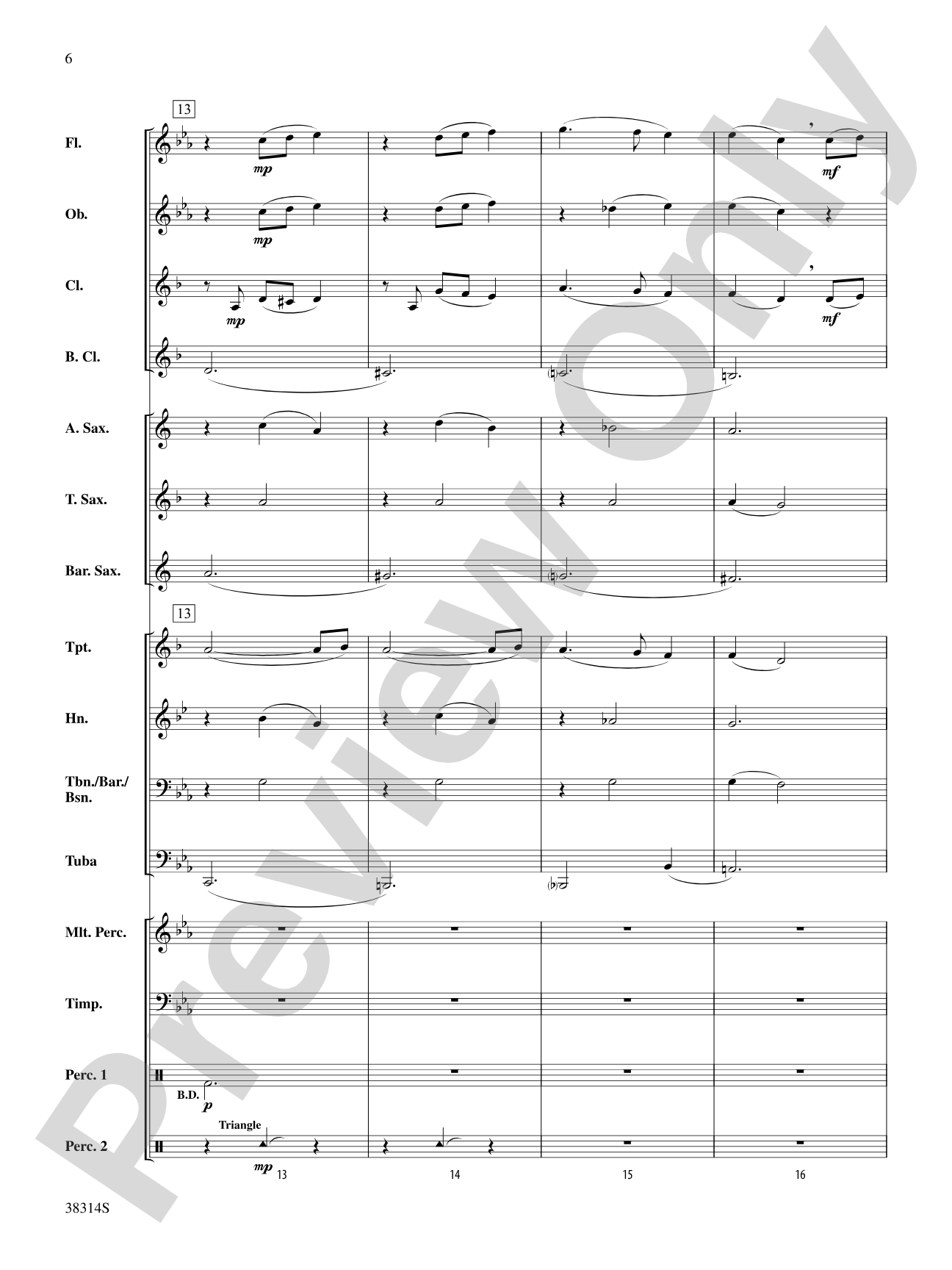
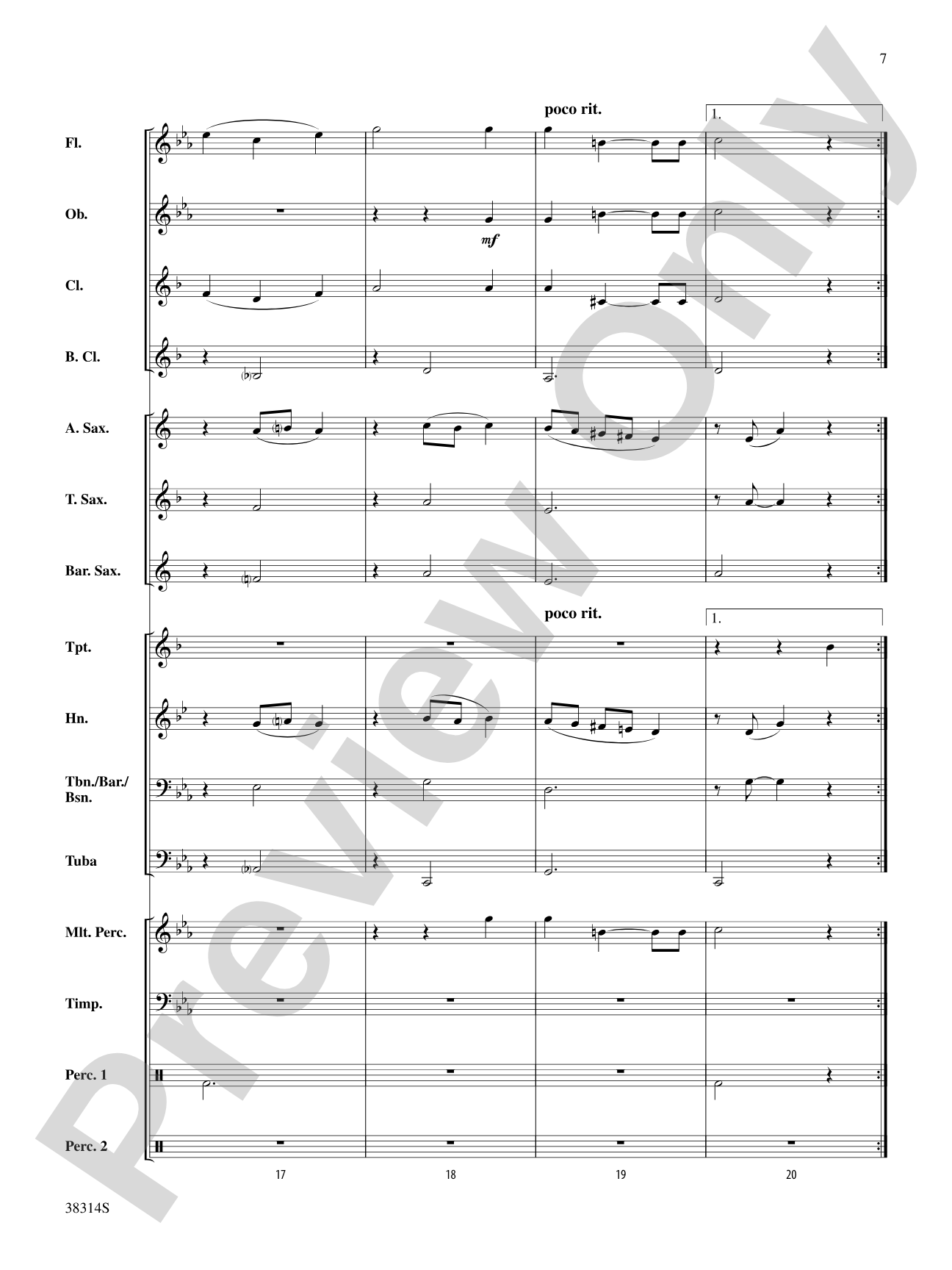
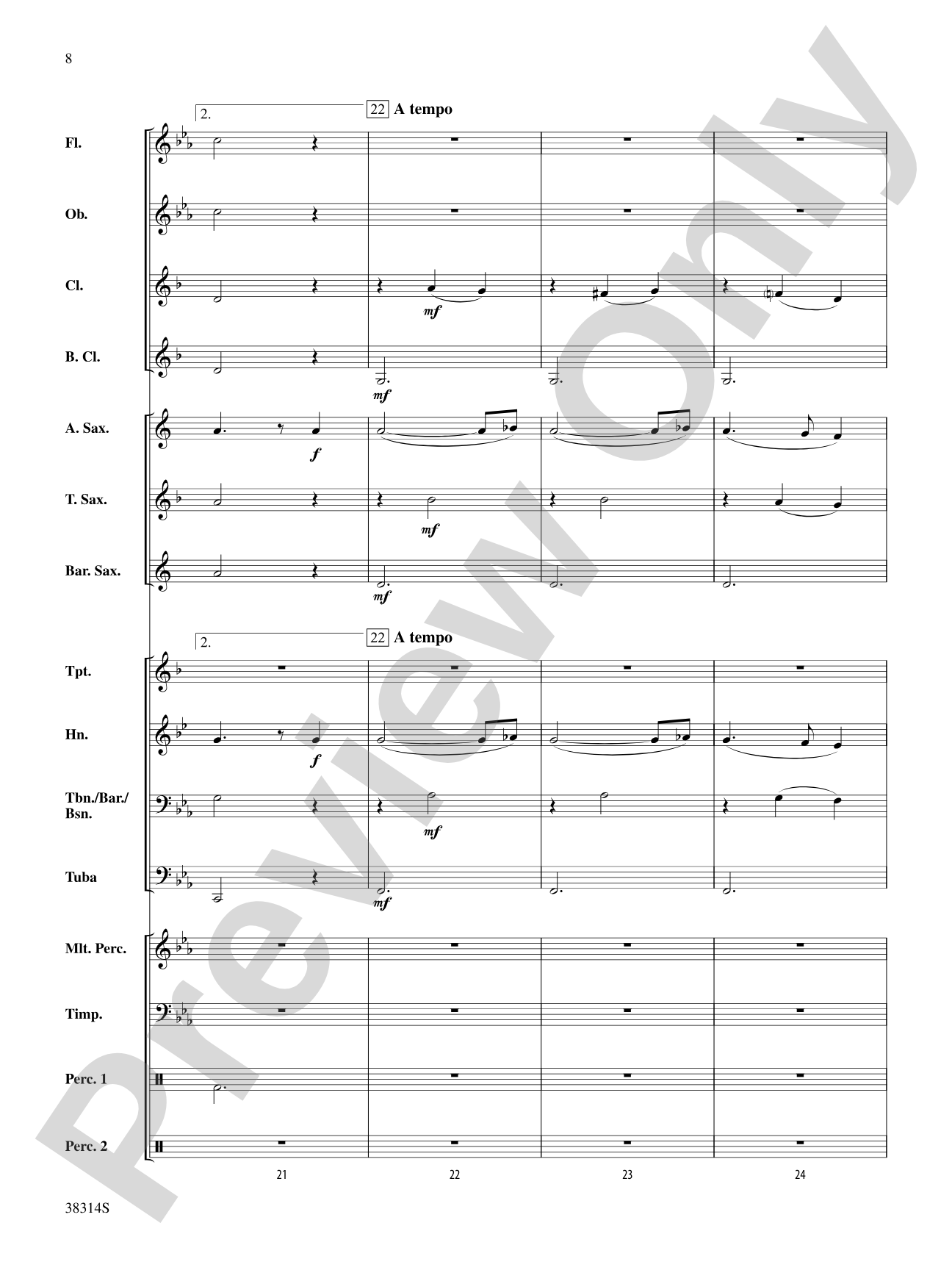
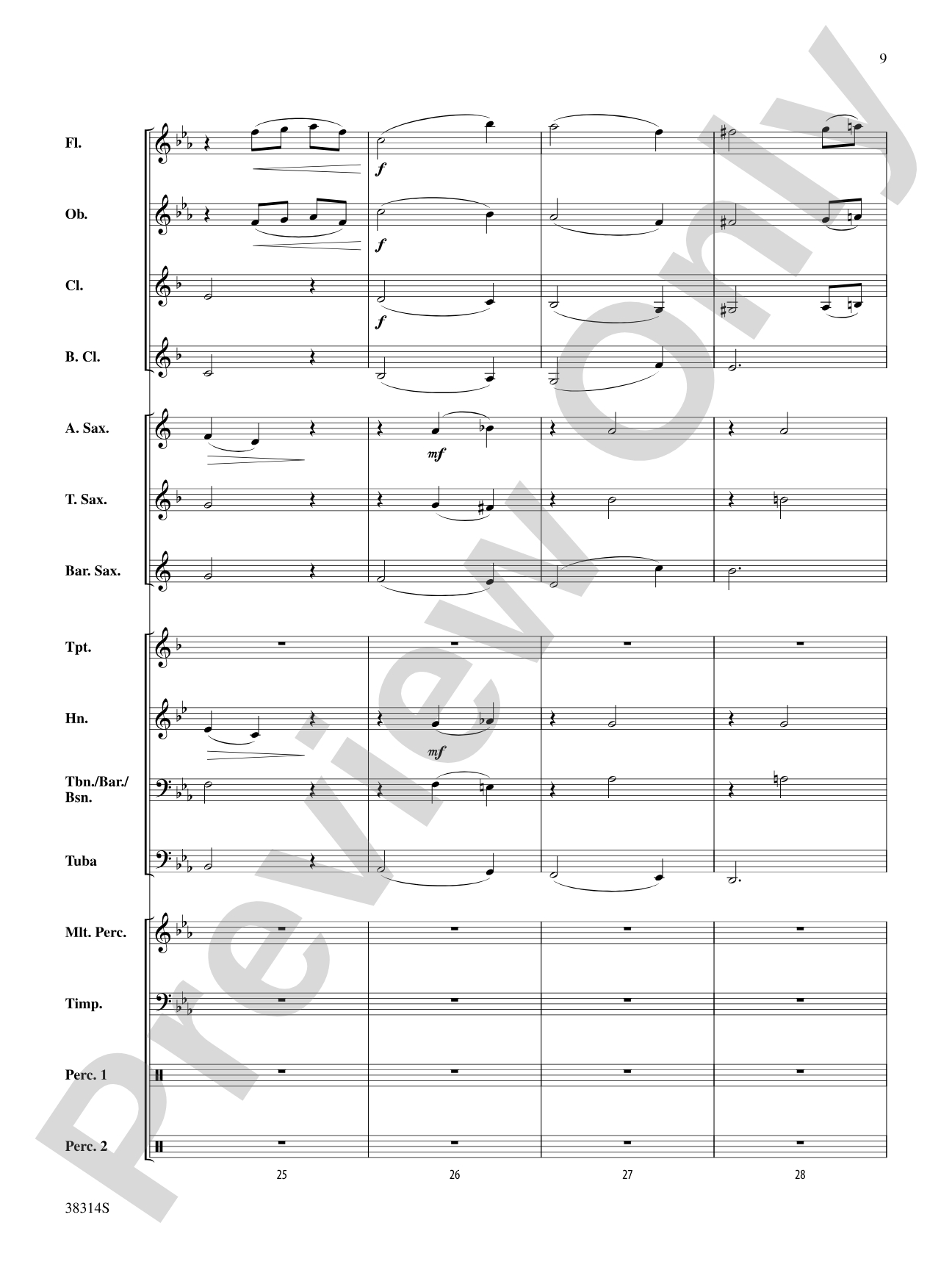
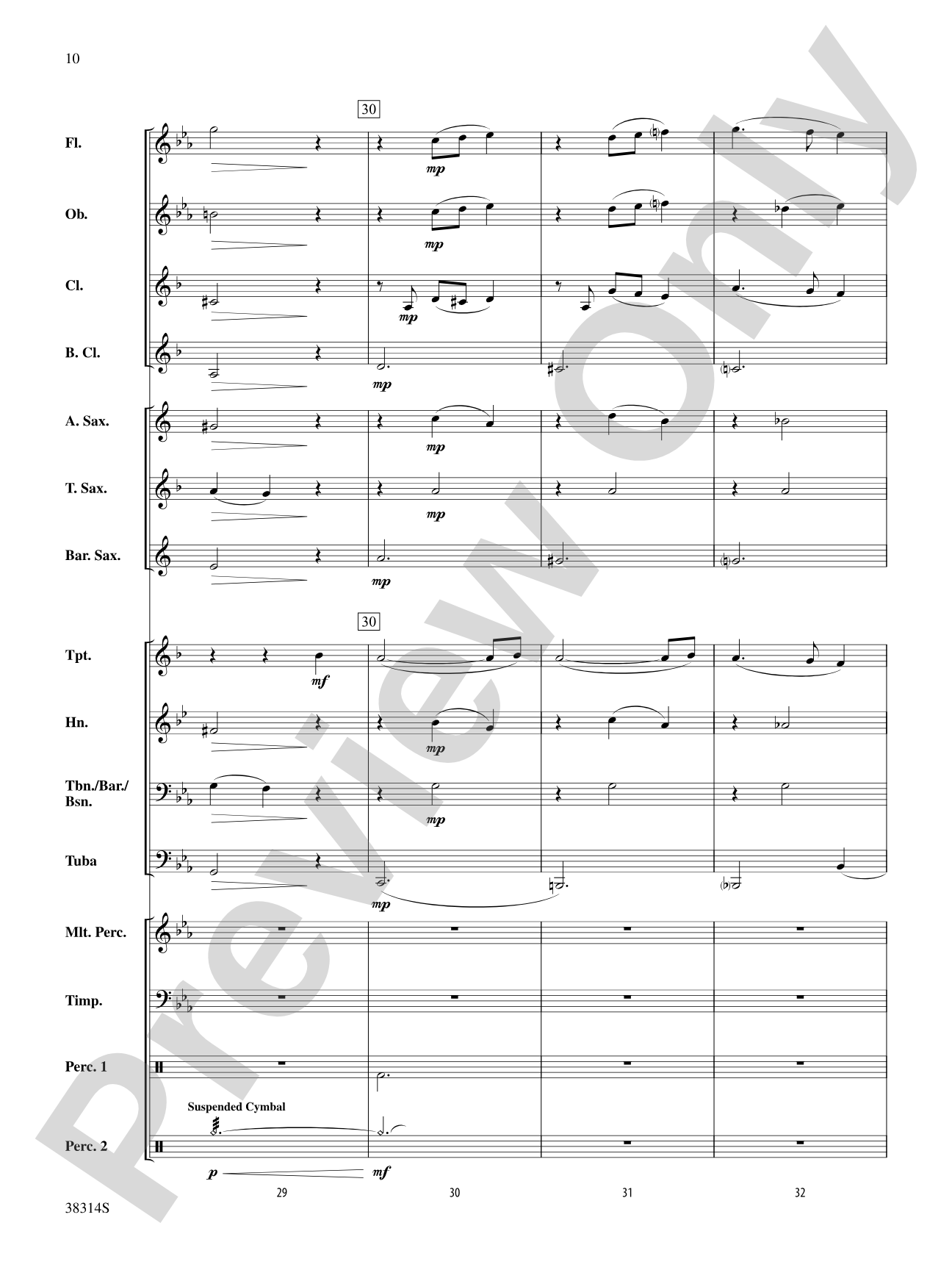
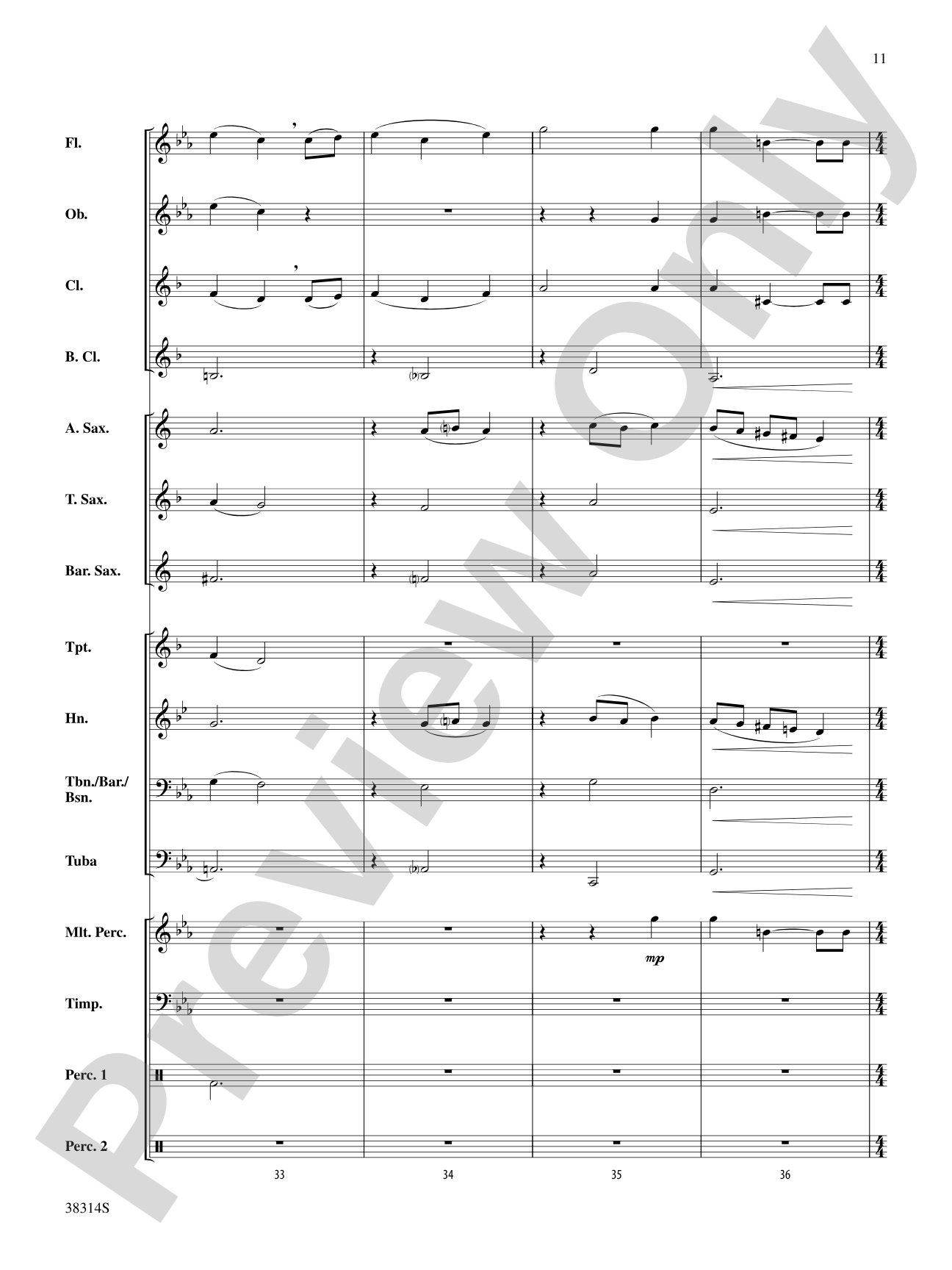
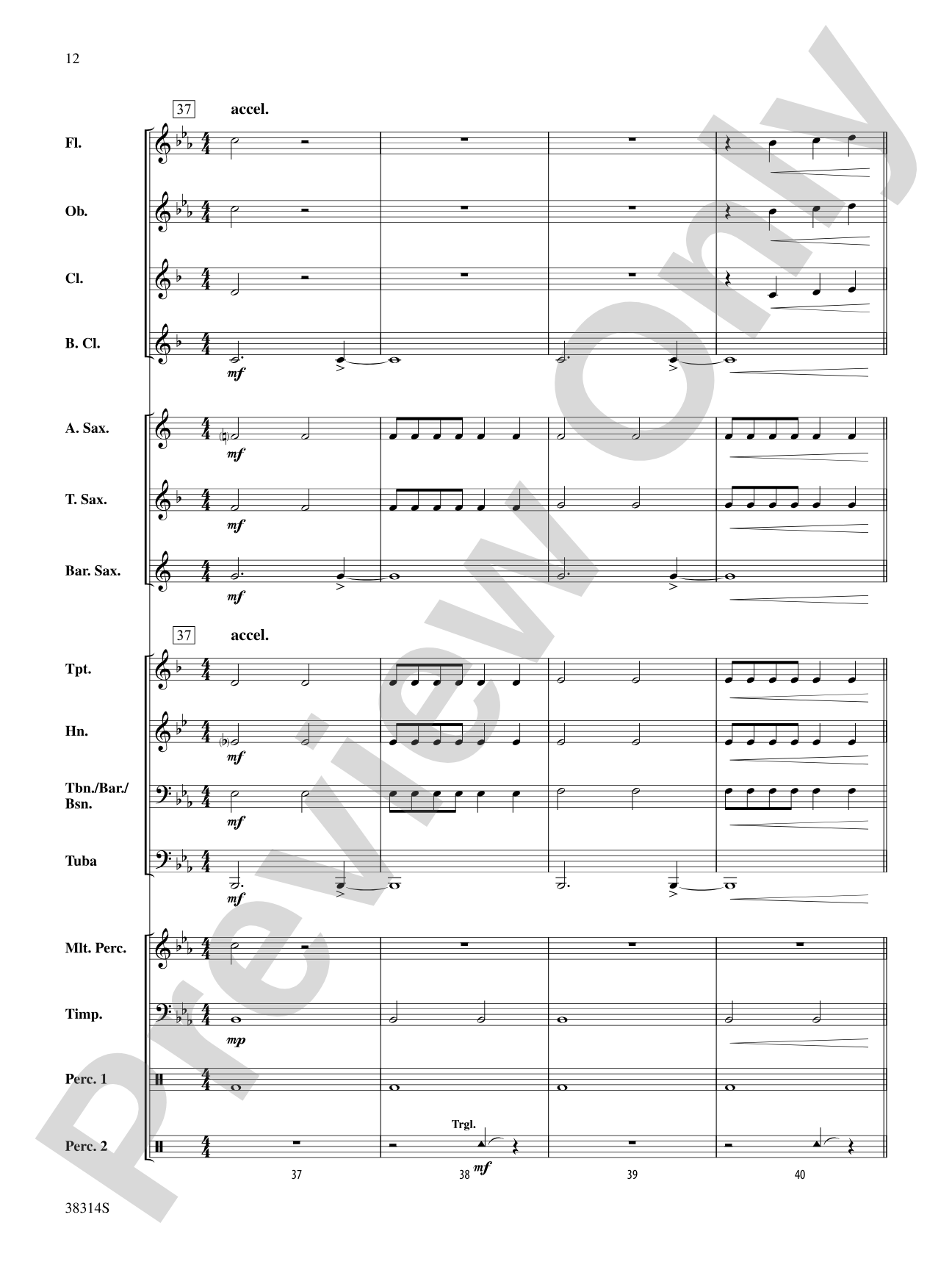
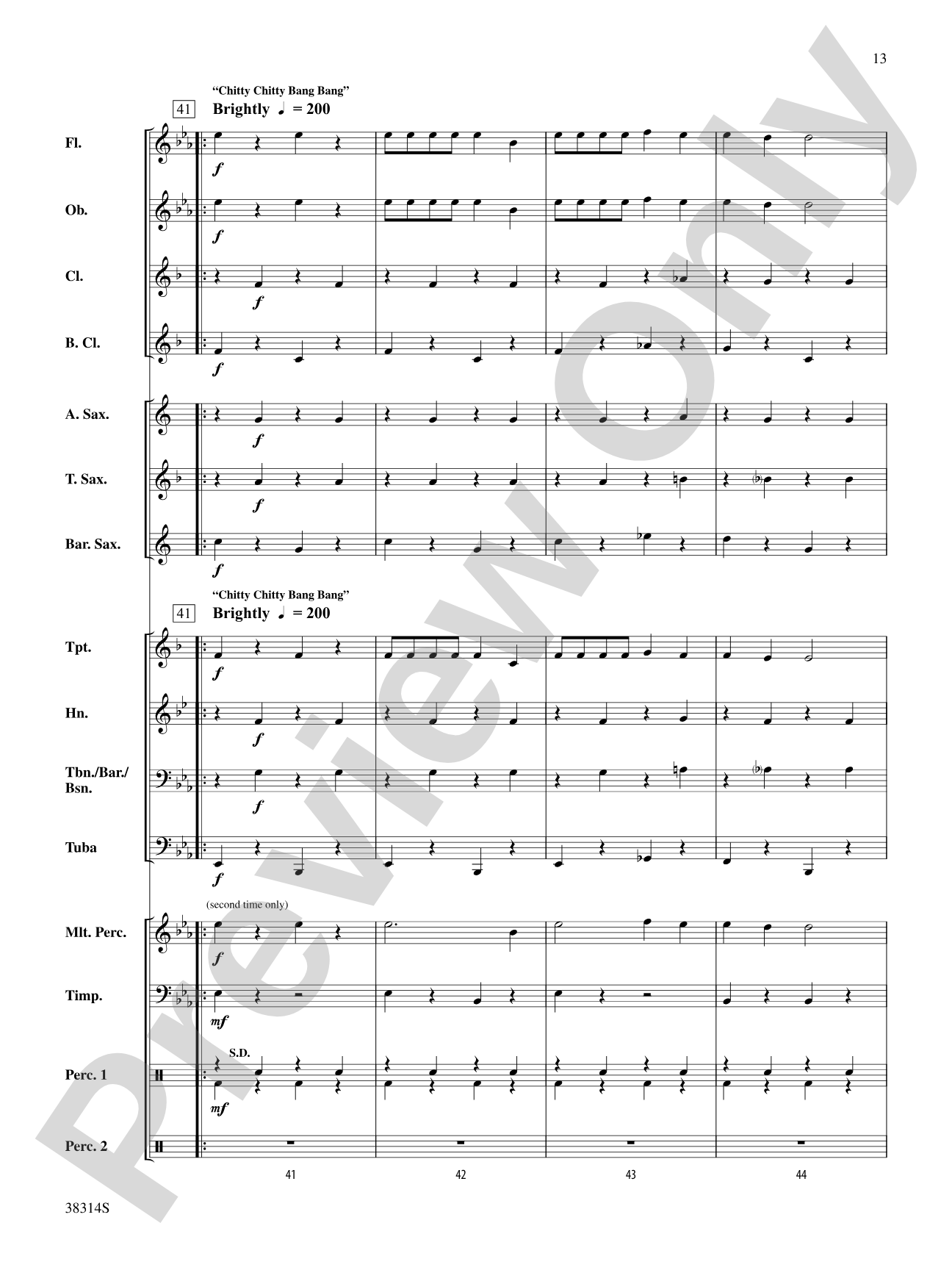
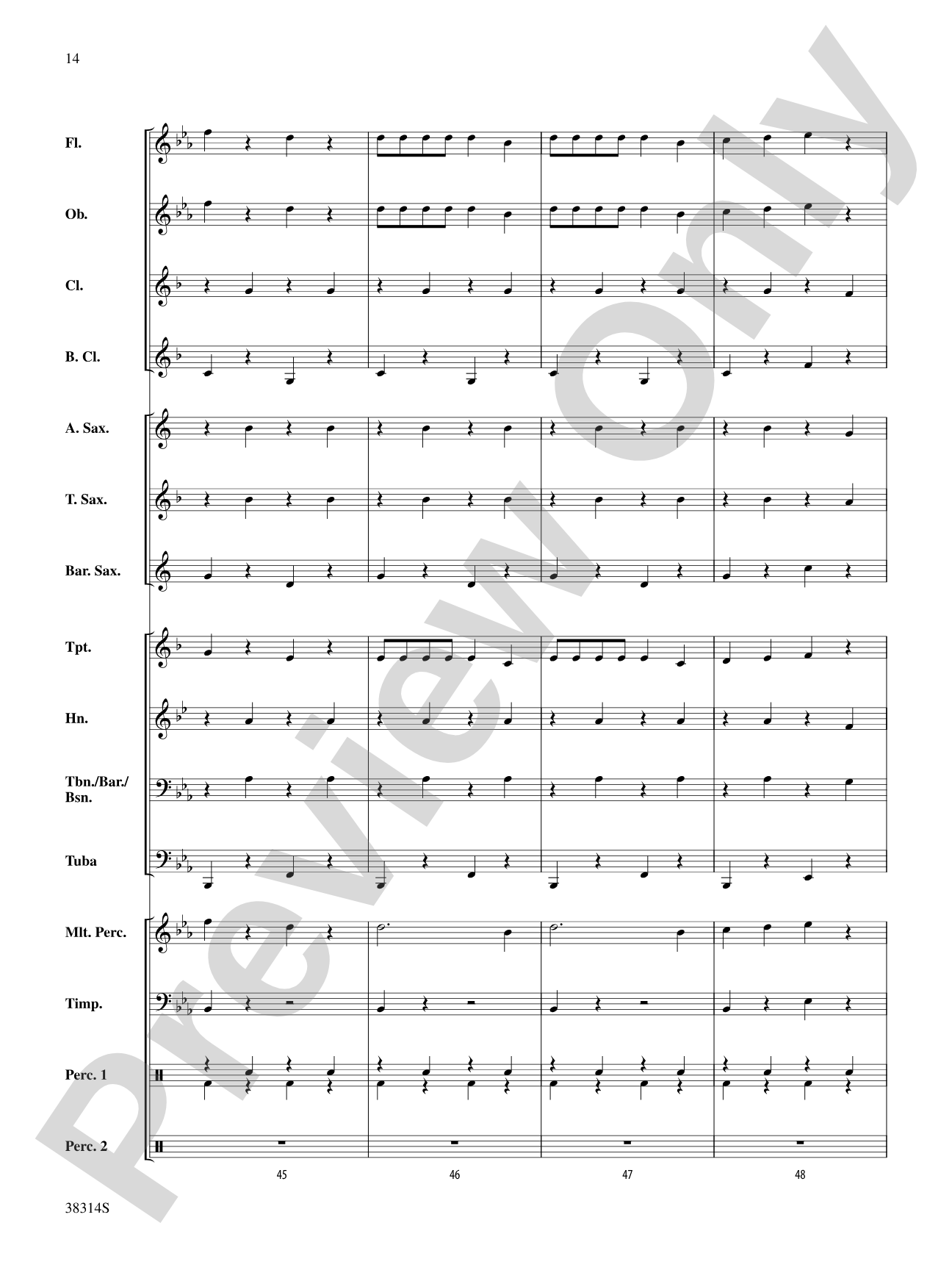
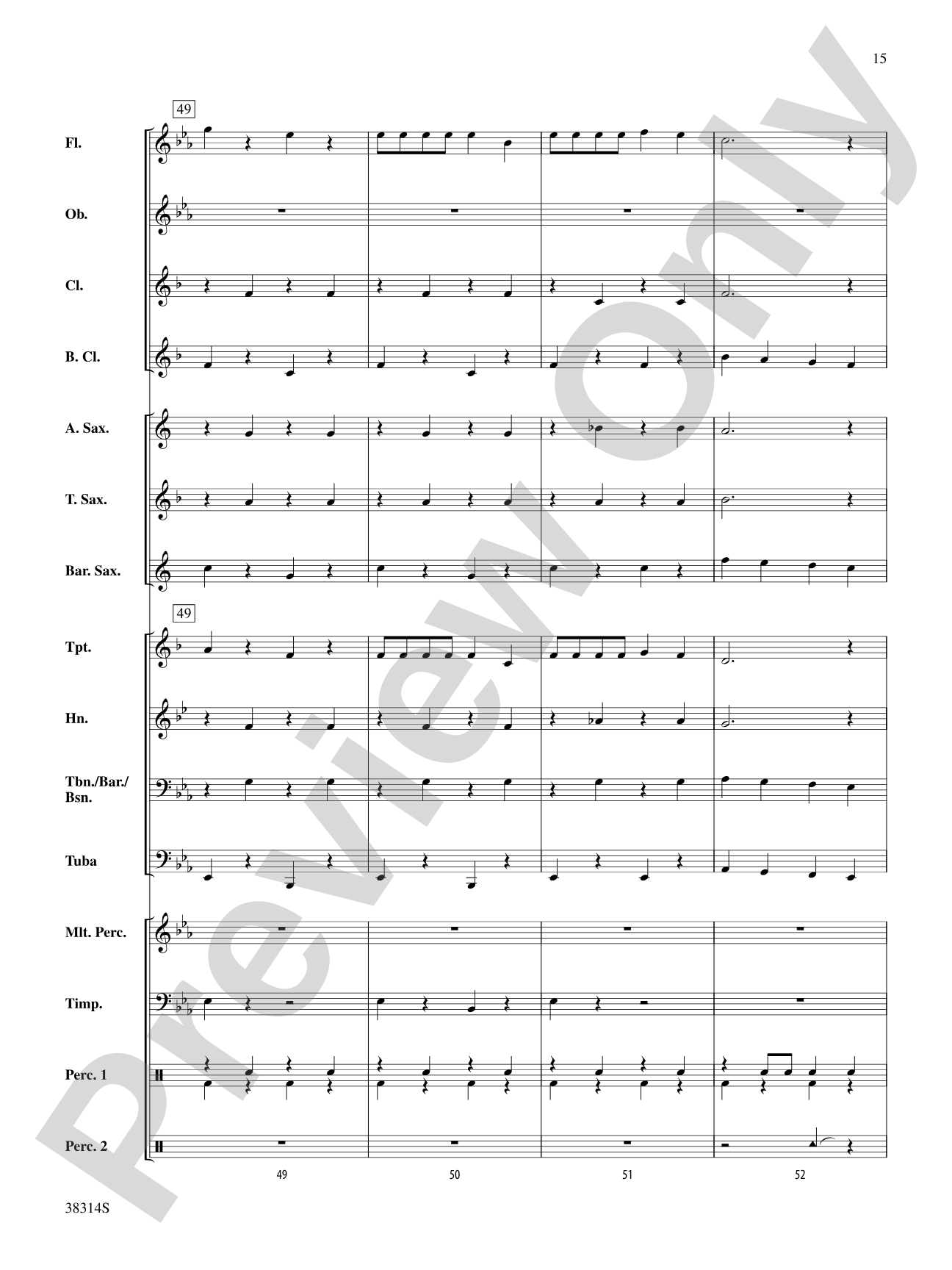
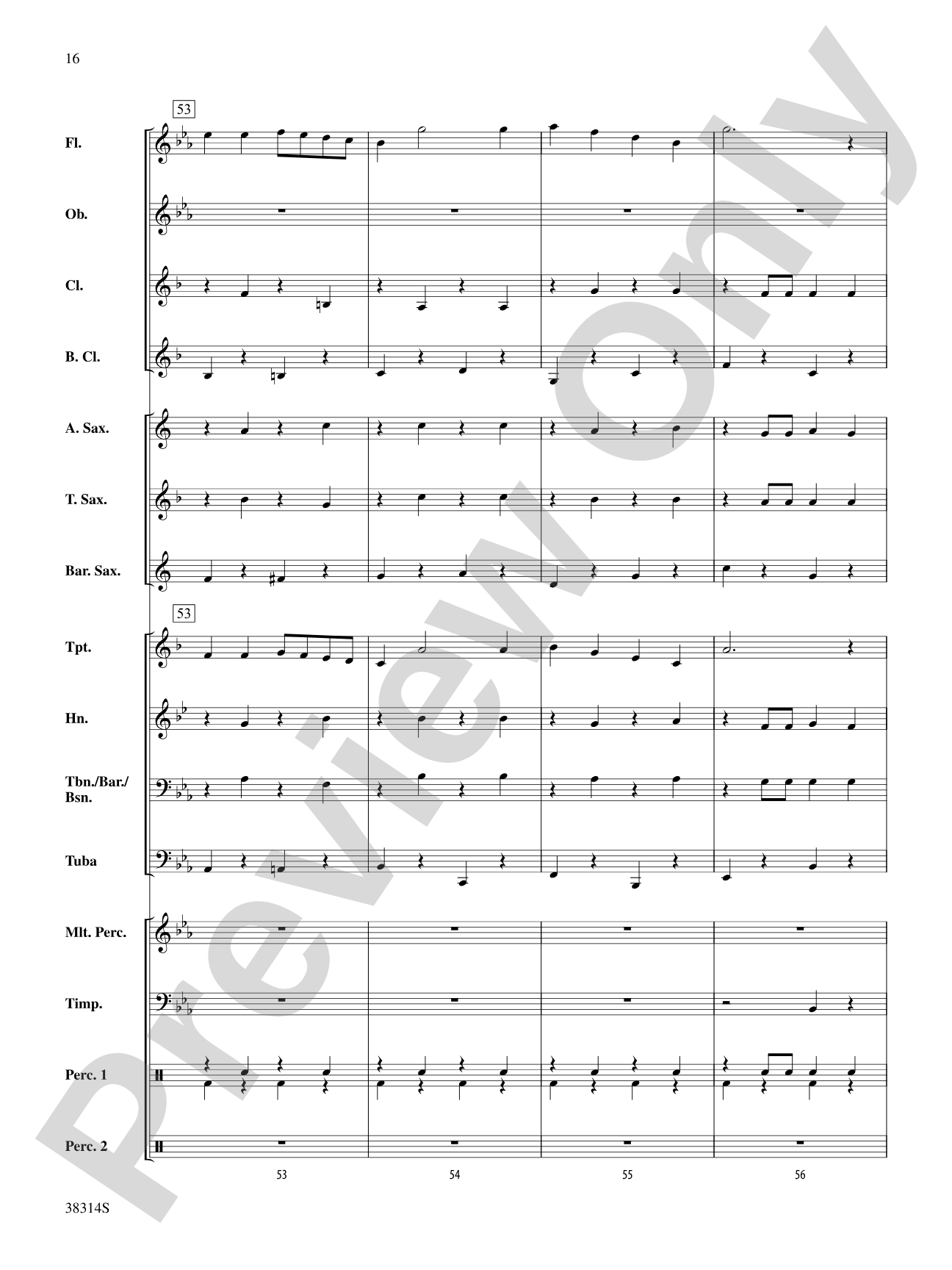
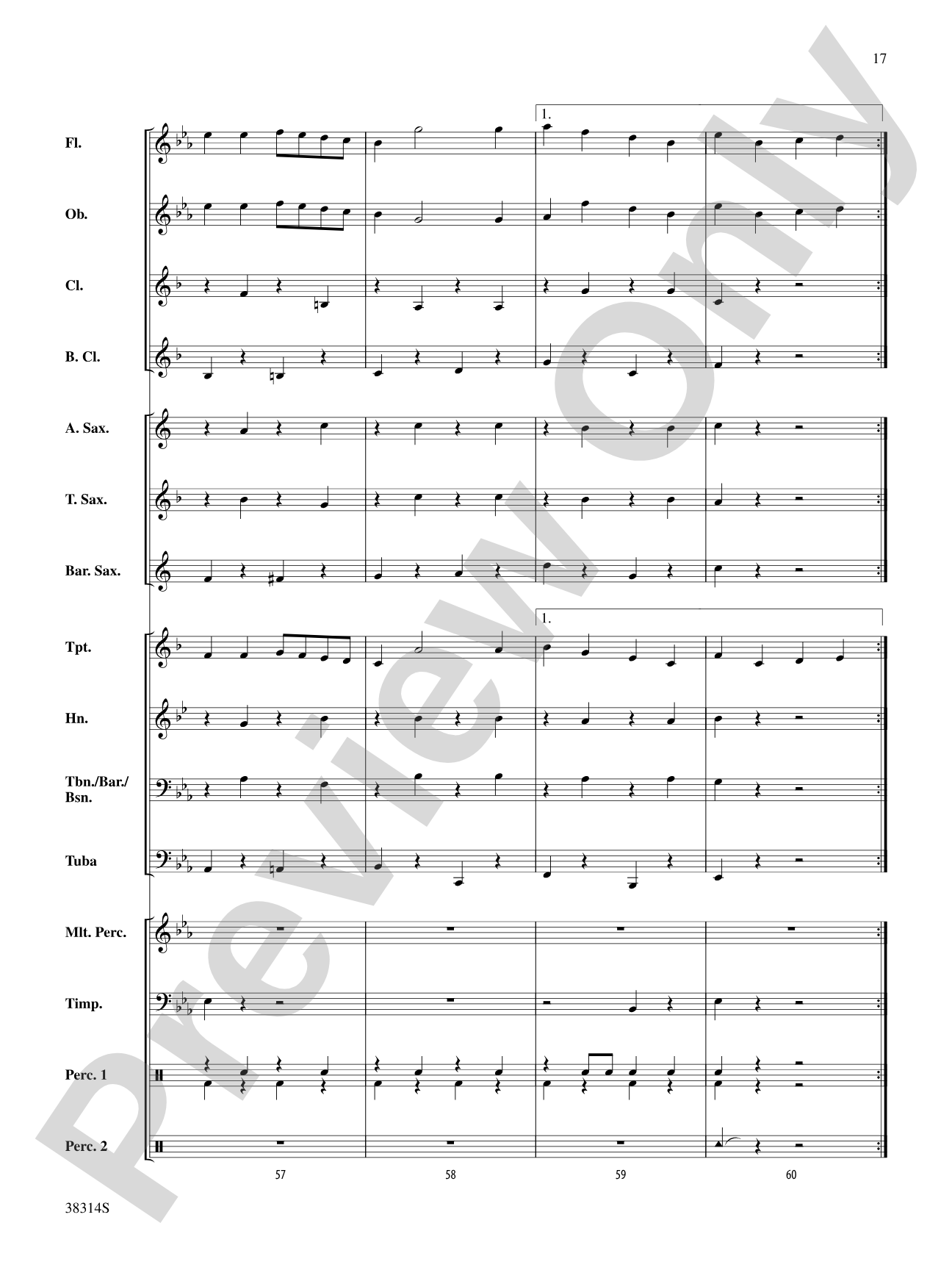
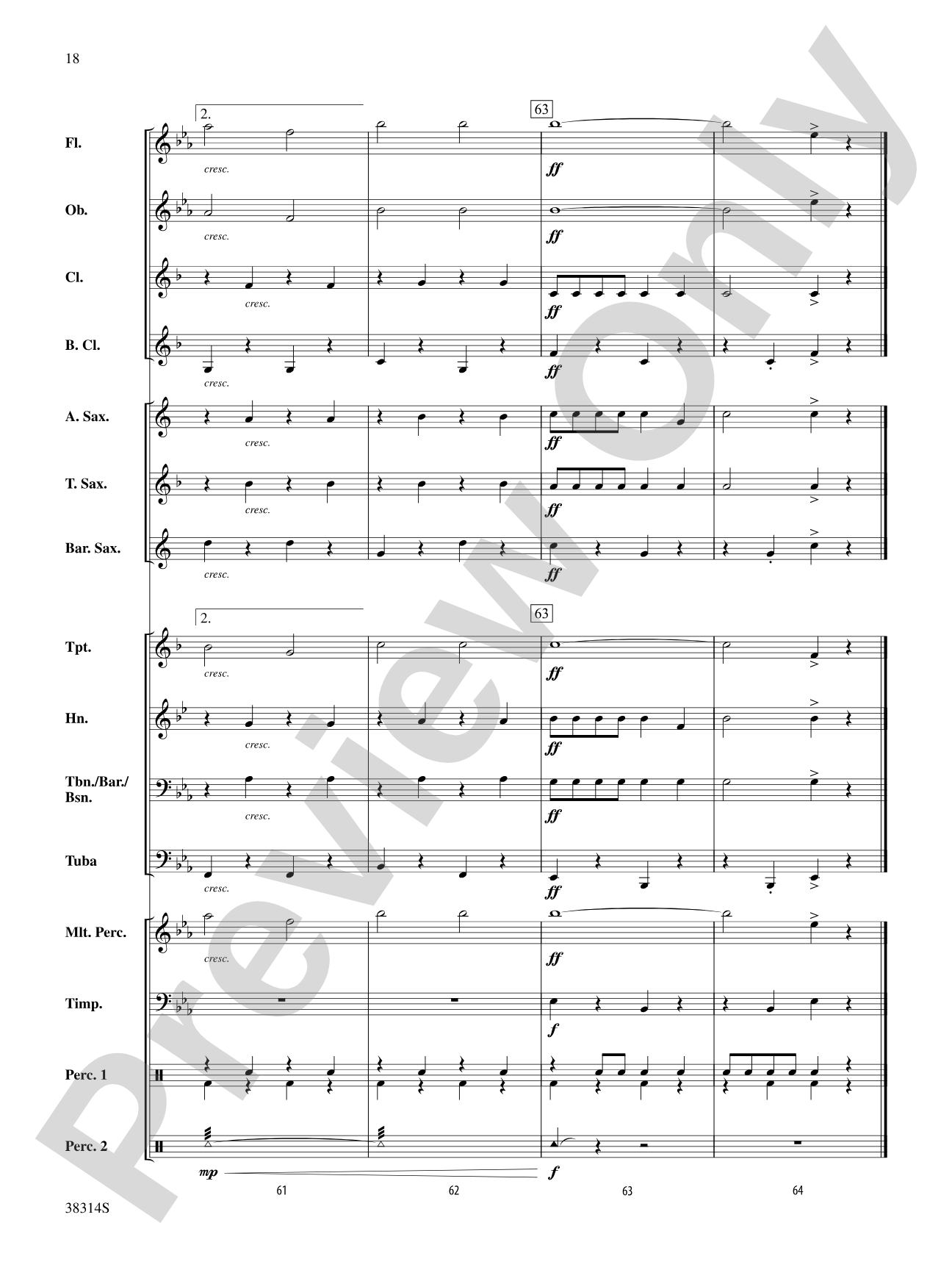



Chitty Chitty Bang Bang, Themes from: Concert Band Conductor Score & Parts
Featuring: Hushabye Mountain / Chitty Chitty Bang Bang
Words and music by Richard M. Sherman and Robert B. Sherman / arr. Douglas E. Wagner
Grade: 1 (Very Easy)
Item: 00-PK-0005159

$57.00
One moment…
Description
Based on the novel by Ian Fleming, Chitty Chitty Bang Bang stands as one of the most entertaining family films of all time. Two of their most popular creations from this cinematic classic are presented in this medley written with younger players in mind: the tender lullaby, "Hushabye Mountain," and the rollicking title theme, "Chitty Chitty Bang Bang." Great fun! (3:00)


Don't just read it, hear it, play along with it, and watch your students grow with it. In MakeMusic Cloud, Chitty Chitty Bang Bang, Themes from: Concert Band Conductor Score & Parts comes alive with professional accompaniment, adjustable tempo, and built-in practice tools that turn solo practice into real progress.
Open in the Player
Jump straight in and assign it today.
Start Your Free Trial
Open this title and explore the full library in minutes.
Sample Audio
1
Audio File
--:--
0:00
0:00
Sample Video
No sample videos found.
Additional Details
Series:
Pop Beginning Band
Publisher:
Alfred Music
Page Count:
132
SKU:
00-PK-0005159
More about this title
About the Composer: Richard M. Sherman
Richard M. Sherman, along with his brother Robert B. Sherman, created some of the most recognizable melodies in American film and theater. The Sherman Brothers composed and wrote lyrics for Disney's Mary Poppins, The Jungle Book, and numerous other beloved films, earning Academy Awards and becoming giants of twentieth-century popular music.
Their work for Chitty Chitty Bang Bang (1968) showcases their gift for writing music that appeals equally to children and adults. Songs like the title theme and "Hushabye Mountain" became standards precisely because they balance sophisticated songwriting with immediate melodic appeal, making them ideal material for young musicians learning to play with expression and style.
Why we love this
This medley gives young bands immediate access to Sherman Brother melodies that audiences know and love, building confidence and concert appeal in players who might otherwise struggle with original compositions at this level. The contrasting material—a gentle lullaby paired with a spirited title theme—teaches directors how to shape two distinct musical characters within a single, manageable rehearsal package.
What to expect
Warmth and whimsy. The lullaby floats gently, evoking a child drifting to sleep while a magical car hovers nearby, while the title theme bounces with infectious charm and comic mischief. Together they capture the film's heart: family adventure delivered with grace and humor.
Who it's for
Grade 1 concert bands and younger high school groups making their first forays into repertoire beyond method books. Directors looking for music with genuine theatrical appeal and recognizable melodies that motivate inexperienced ensembles.
How to get the most out of it
- Balance the ensemble sound during 'Hushabye Mountain' by keeping the melody singing over a soft harmonic foundation; younger players often over-blow accompaniment parts and bury the tune.
- Shape the dynamic arc of 'Chitty Chitty Bang Bang' with clear crescendos and releases; the rhythmic energy should feel playful, not rushed.
- Use the transition between movements to reset focus; a brief pause and conductor eye contact will help the ensemble shift from the intimate mood of the lullaby to the bright, comedic character of the title theme.
- Encourage the section with the main melody to listen for its own voice; younger players benefit from hearing themselves as the featured part that drives the arrangement.
How to use it
Program this as a standalone feature on a family concert or early-season pops program, where the Sherman Brothers' star power and the film's cultural resonance will draw audiences. The 3-minute duration also makes it an excellent closer for a concert of shorter works, leaving audiences smiling.
Skills your students will build
- Shaping contrasting musical characters (lyrical versus energetic) within a single piece
- Balancing melody and accompaniment in simple homophonic textures
- Executing smooth dynamic transitions and phrase curves
- Reading straightforward rhythmic patterns in Grade 1 notation
- Responding to conductor cues that signal tempo and mood changes