
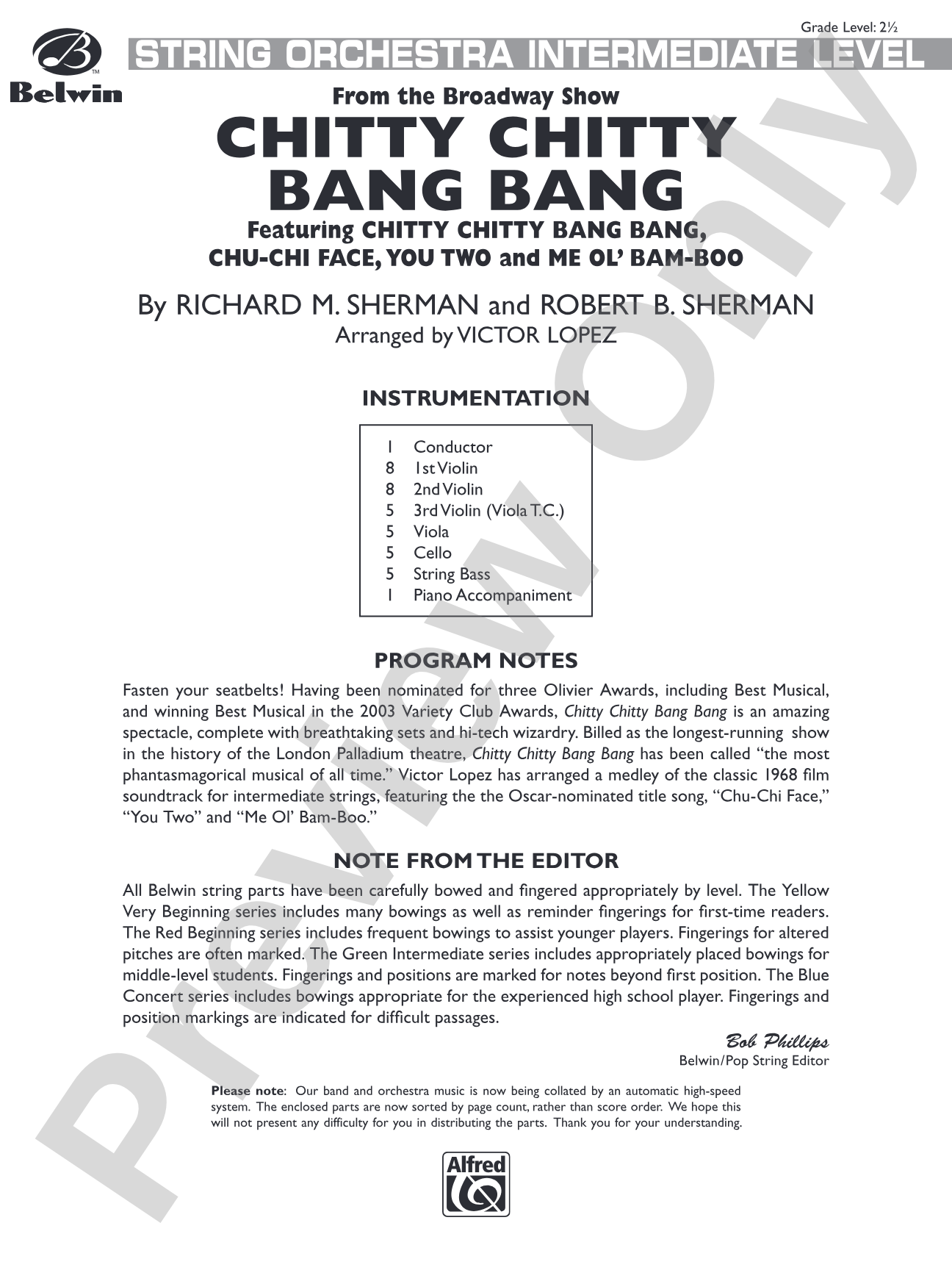
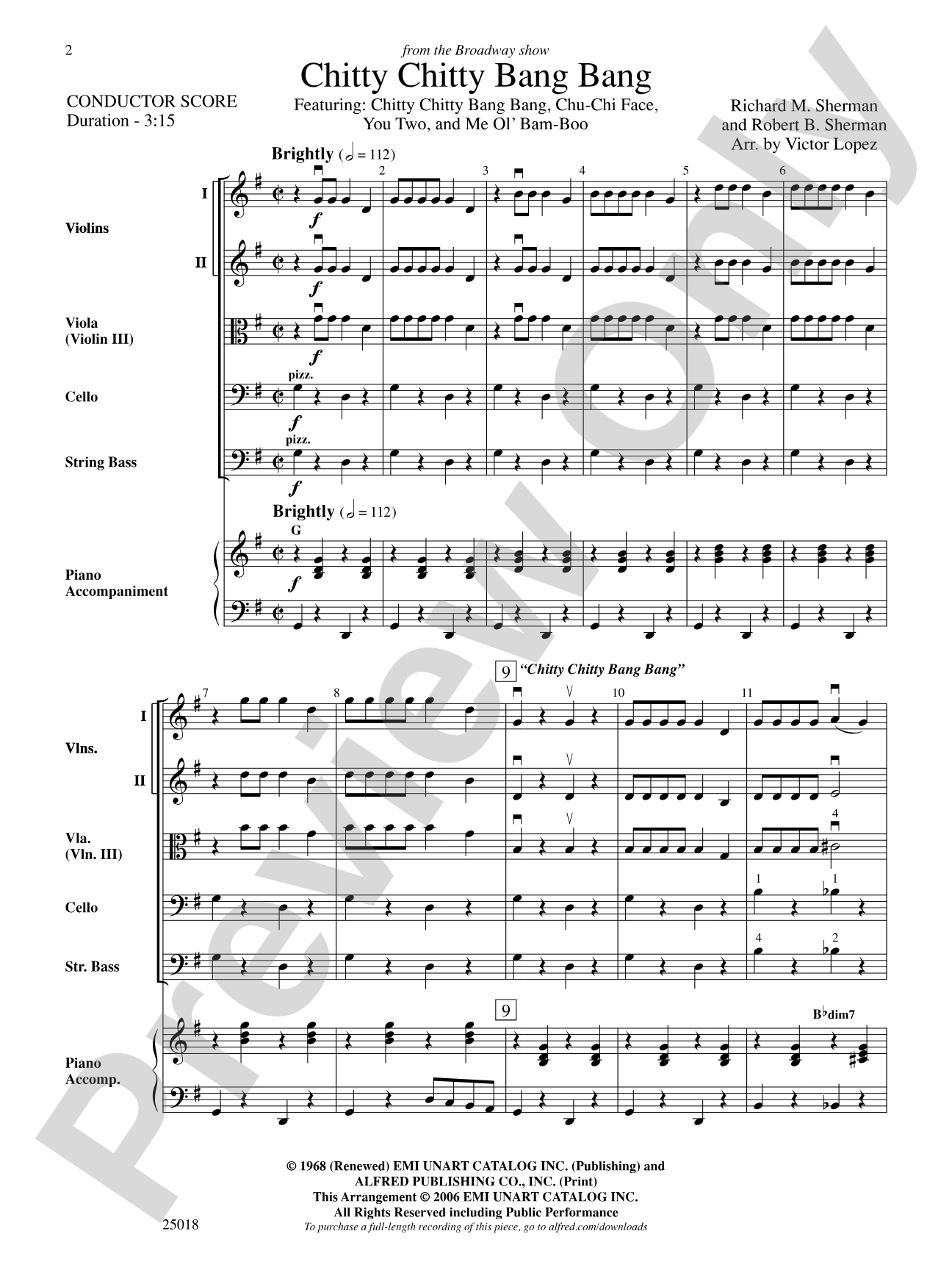
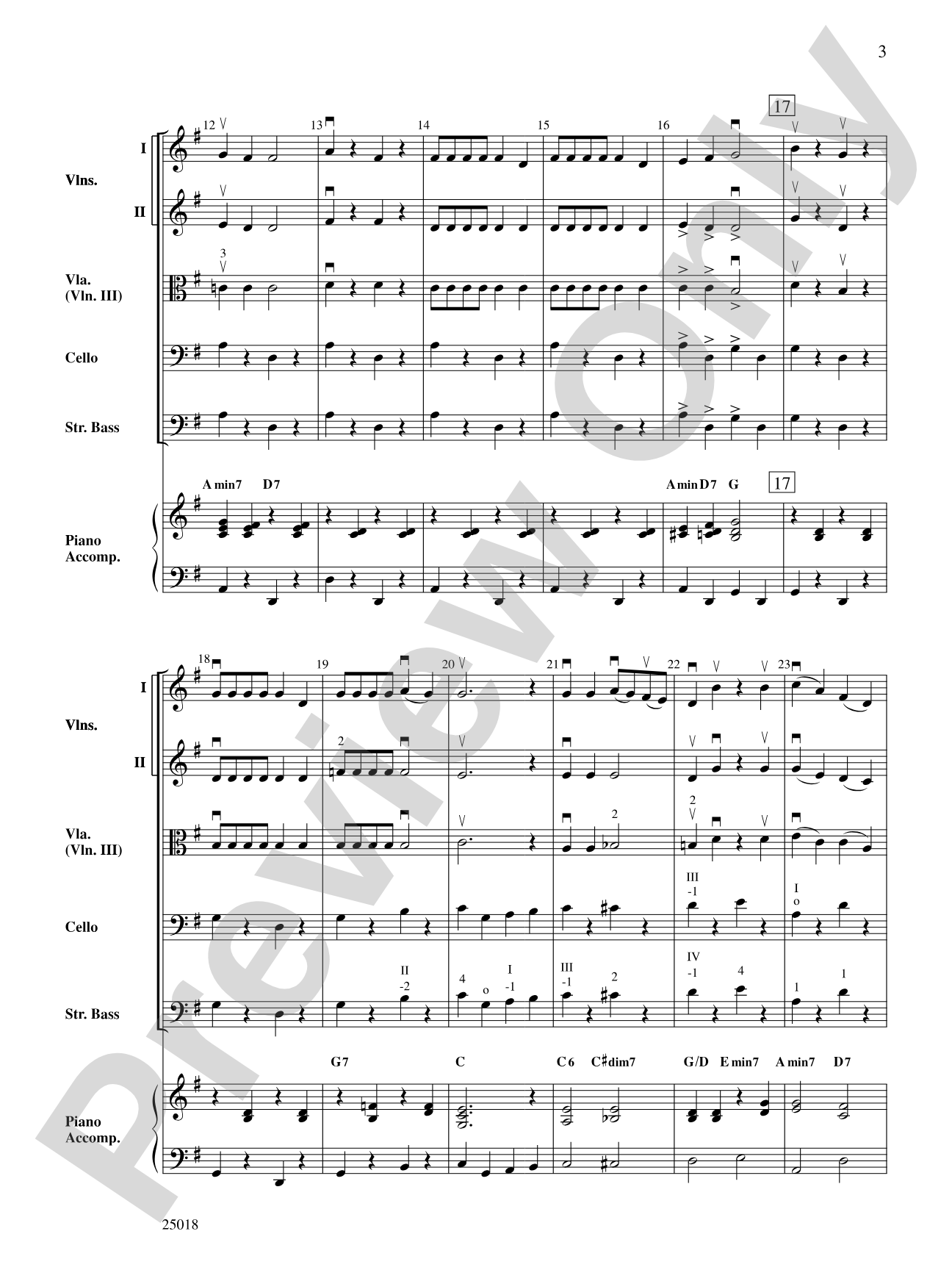
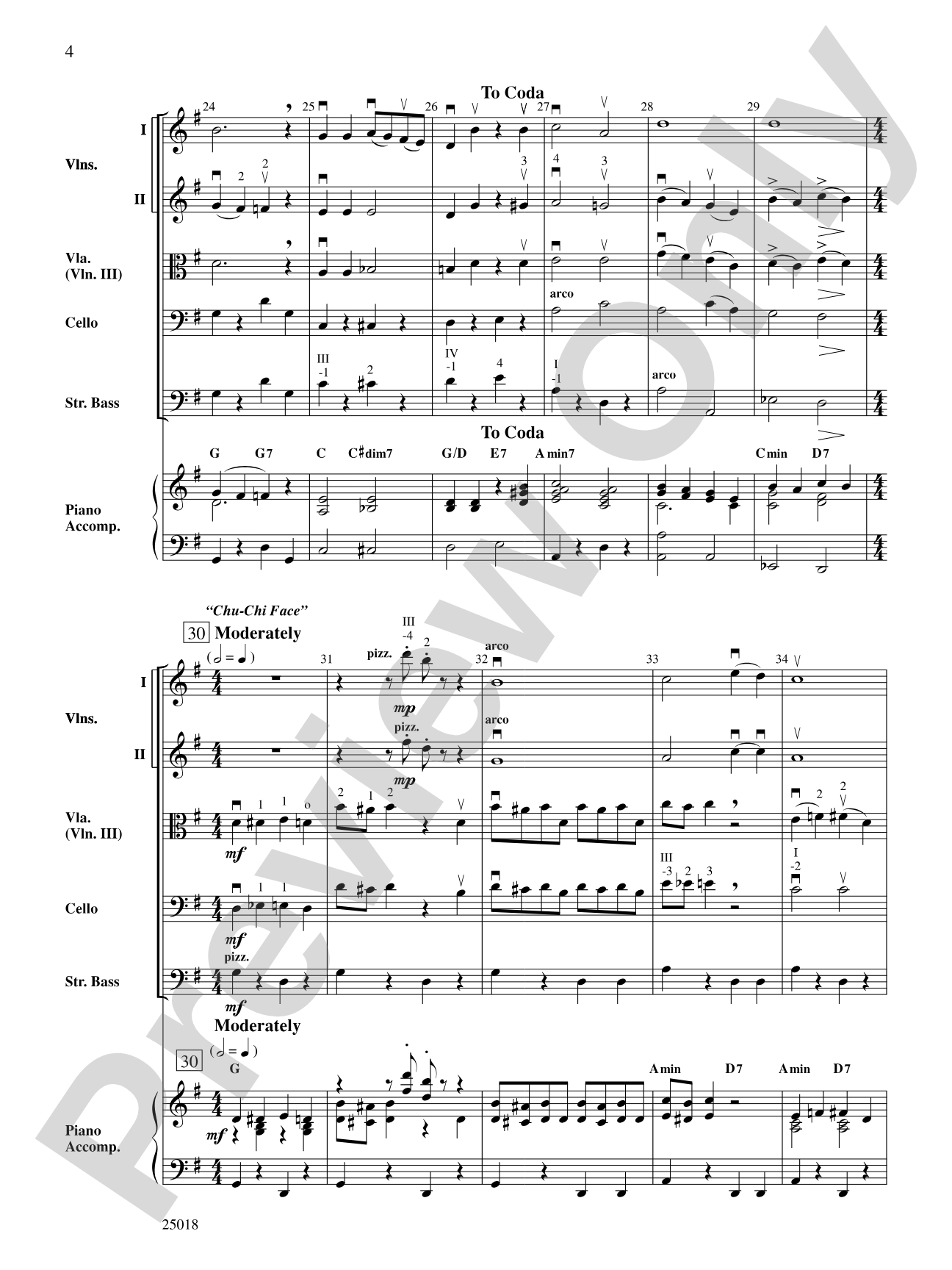
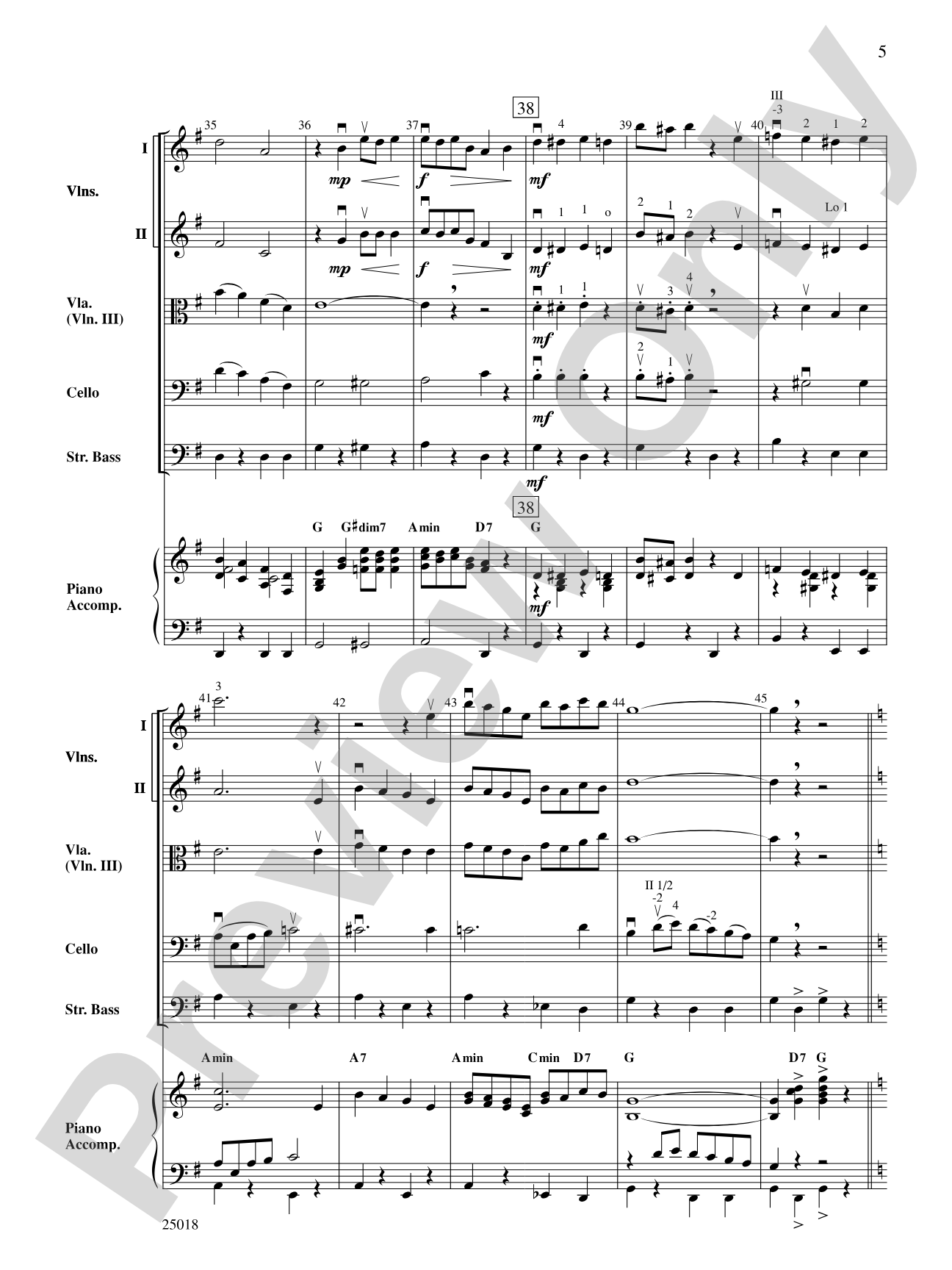
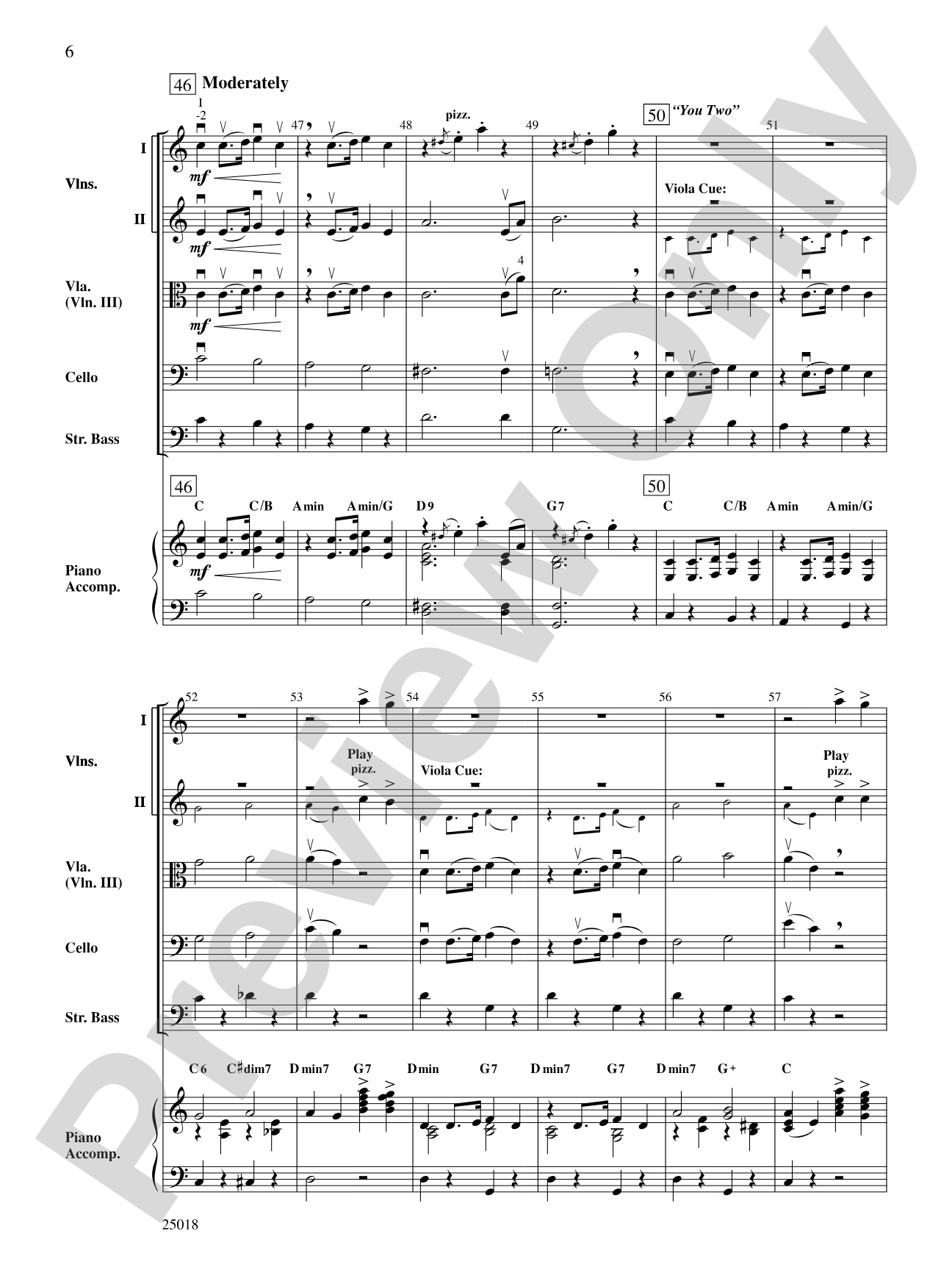
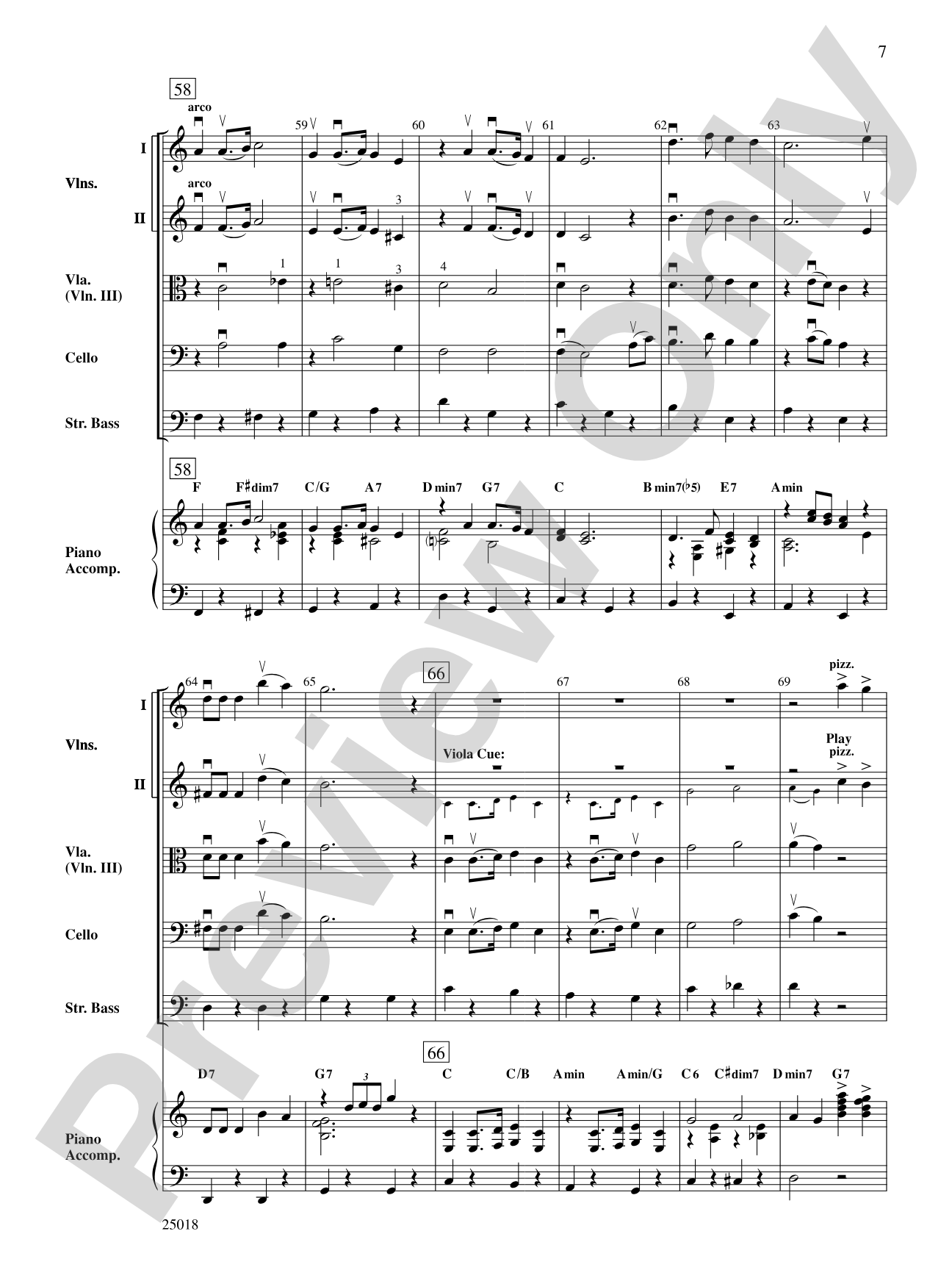
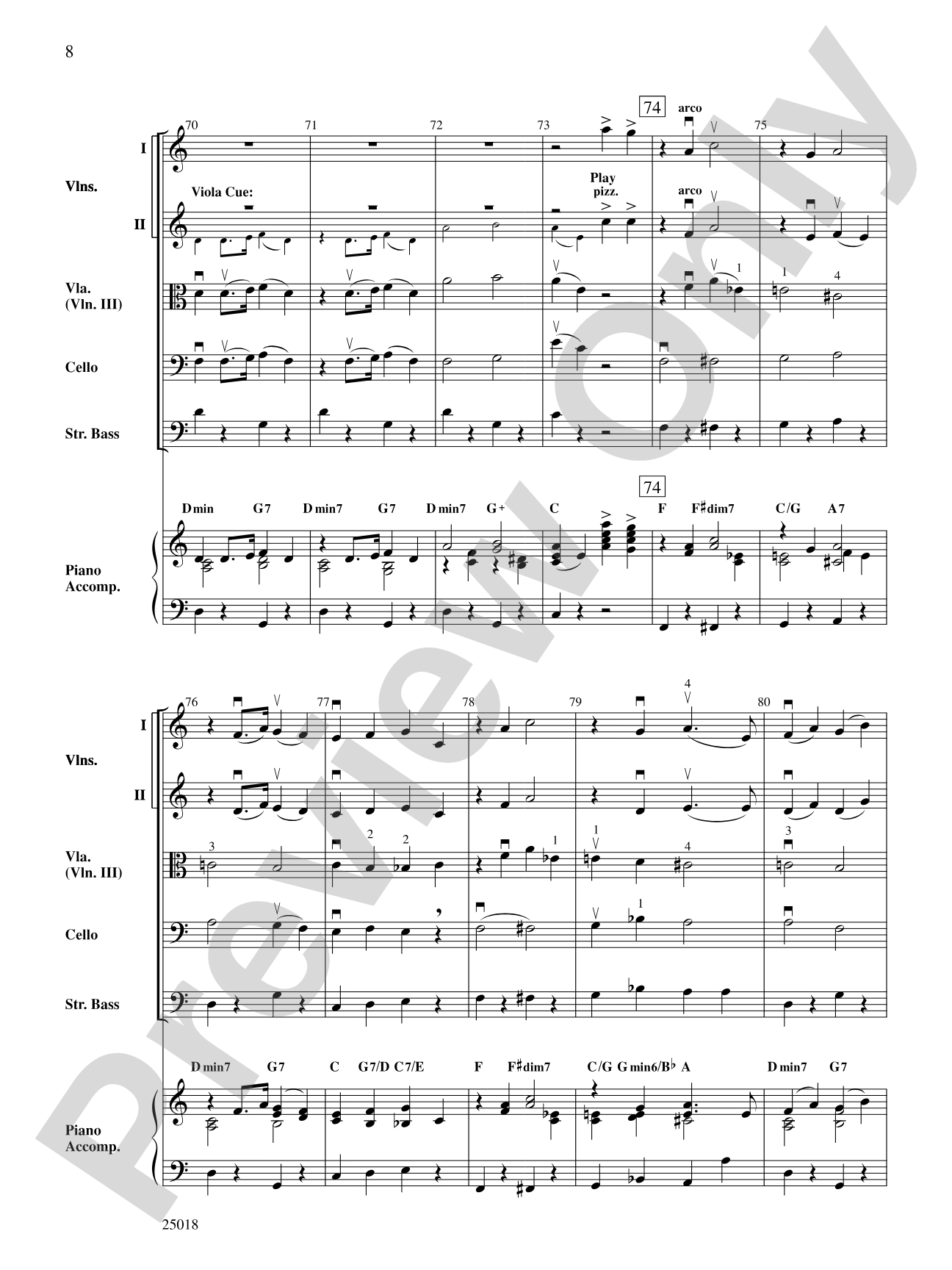
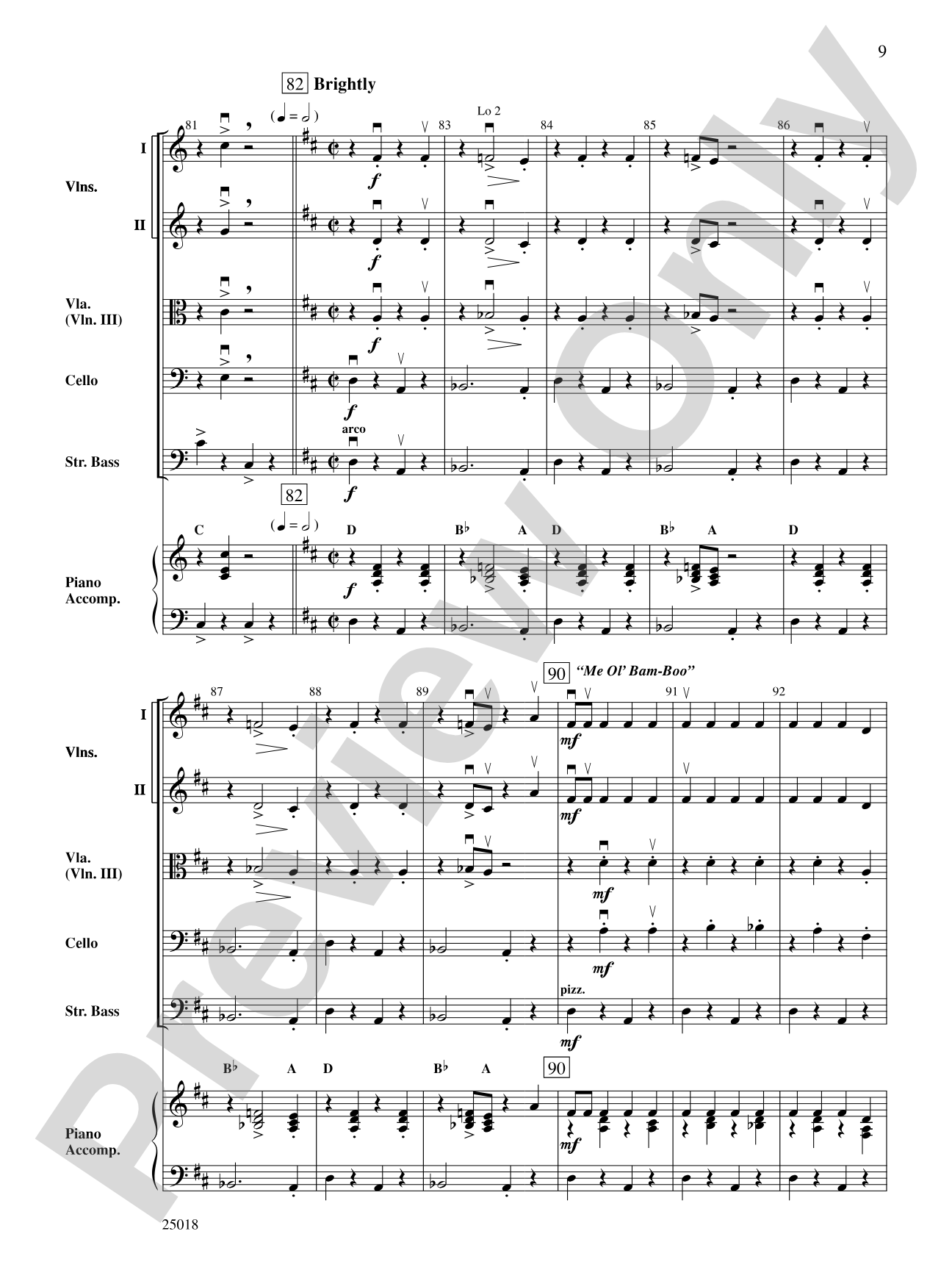
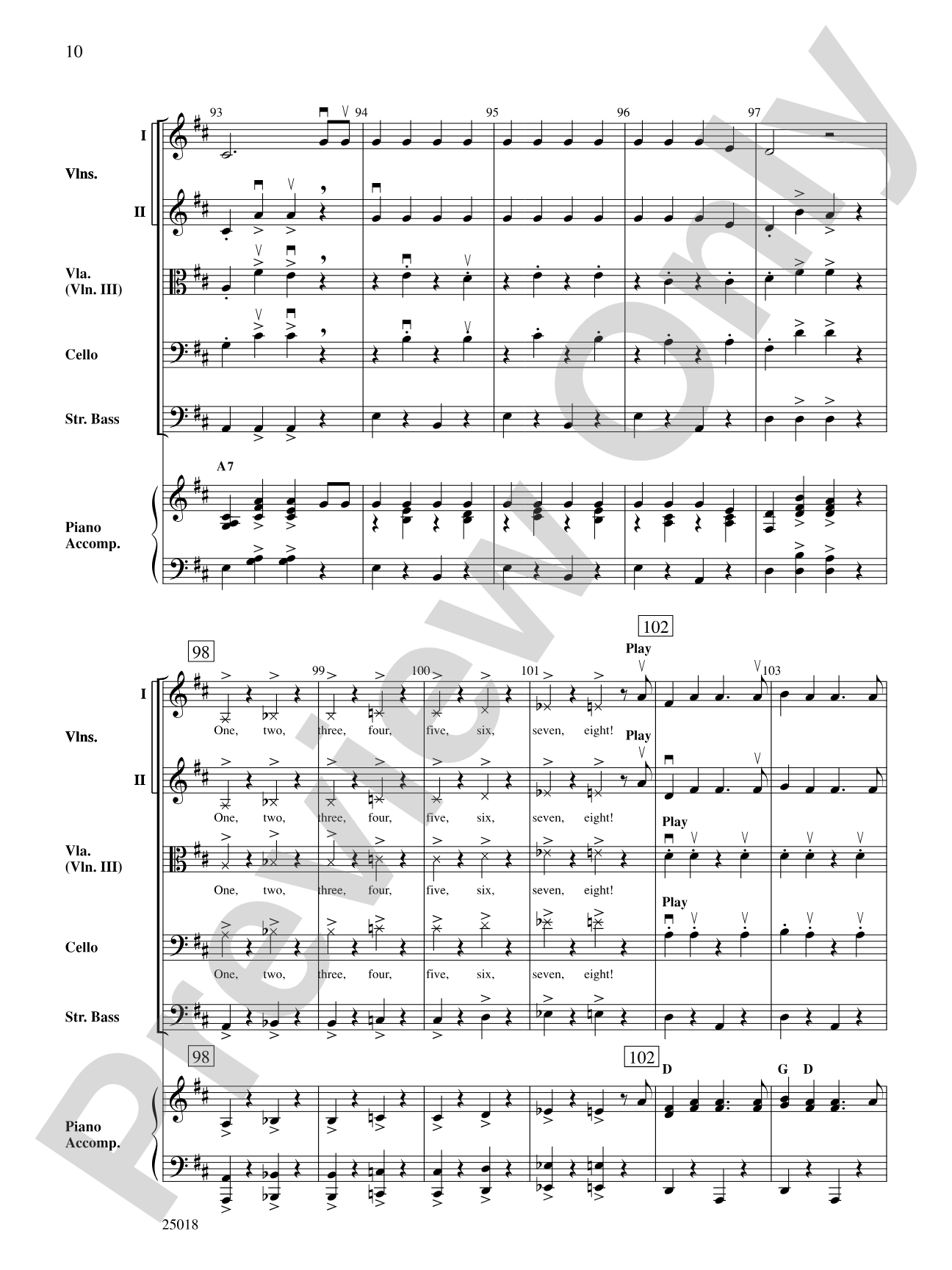
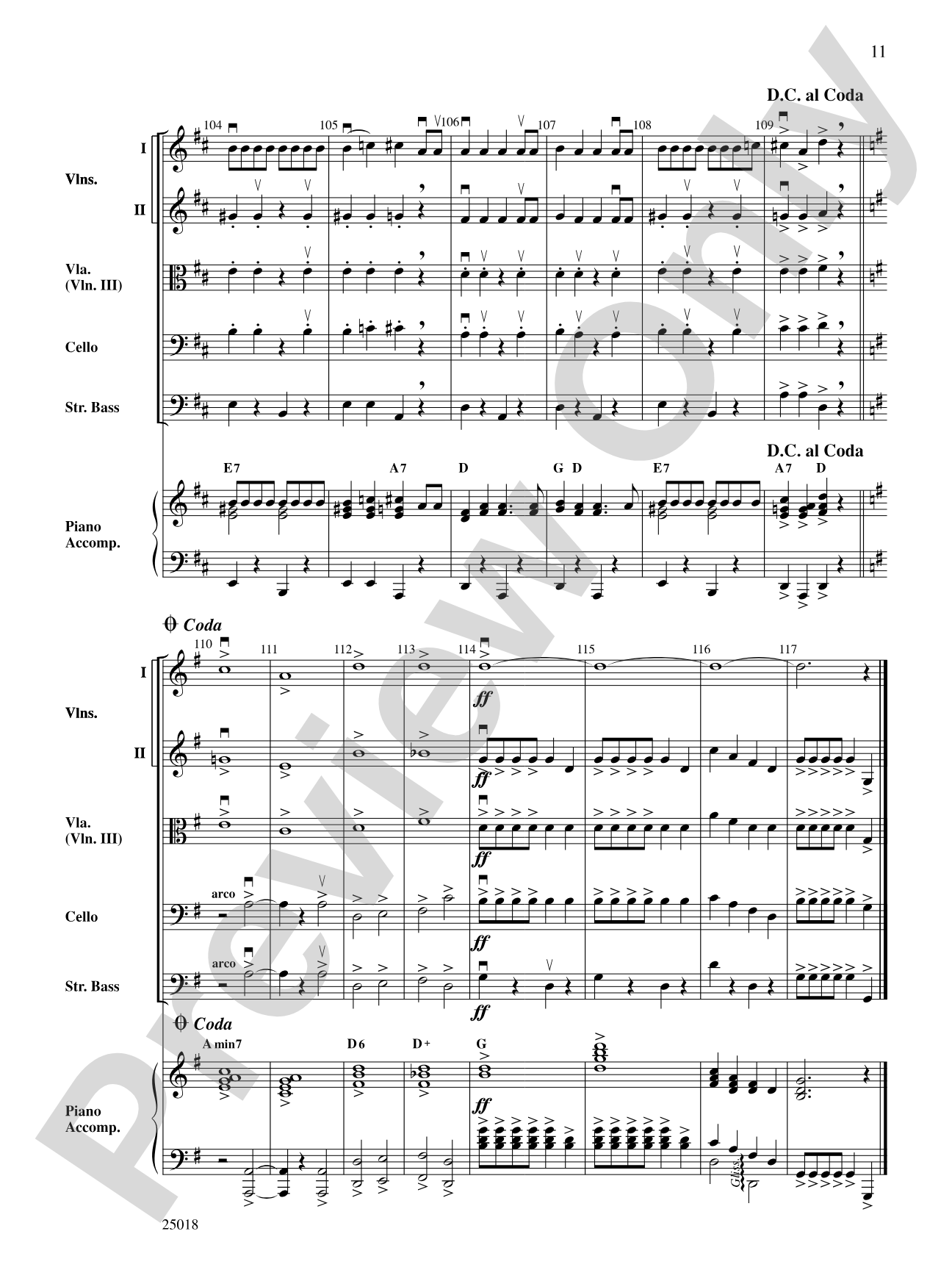


Chitty Chitty Bang Bang: String Orchestra Conductor Score & Parts
Featuring: Chitty Chitty Bang Bang / Chu-Chu Face / You Two / Me Ol' Bam-Boo
Words and music by Richard M. Sherman and Robert B. Sherman / arr. Victor López
Grade: 2.5
Item: 00-PK-0001003

$58.00
One moment…
Description
Fasten Your Seatbelts! Having been nominated for three Olivier Awards including Best Musical and winning Best Musical in the 2003 Variety Club Awards Chitty Chitty Bang Bang™ remains an amazing spectacle, with sets to take the breath away and hi-tech wizardry. Considered the longest running show in the history of the London Palladium theatre, Chitty Chitty Bang Bang™ is known as the most phantasmagorical musical of all time. Written for intermediate strings Victor López gives us a medley of the classic 1968 film soundtrack, featuring favorite songs "Chu-Chi Face," "You Too," "Me Ol' Ban-Boo" and the Oscar-nominated title song.


Don't just read it, hear it, play along with it, and watch your students grow with it. In MakeMusic Cloud, Chitty Chitty Bang Bang: String Orchestra Conductor Score & Parts comes alive with professional accompaniment, adjustable tempo, and built-in practice tools that turn solo practice into real progress.
Open in the Player
Jump straight in and assign it today.
Start Your Free Trial
Open this title and explore the full library in minutes.
Sample Audio
1
Audio File
--:--
0:00
0:00
Sample Video
No sample videos found.
Additional Details
Series:
Pop Intermediate String Orchestra
Publisher:
Alfred Music
Page Count:
148
SKU:
00-PK-0001003
More about this title
About the Composer: Richard M. Sherman
Richard M. Sherman and his brother Robert B. Sherman composed some of the most recognizable melodies in American film and theater history. Their work spans across Disney animated features, live-action films, and stage productions, earning them Academy Award nominations and a lasting influence on how popular music functions in storytelling. Their gift for writing memorable, singable themes that lodge themselves in audiences' minds made them ideal composers for material designed to reach broad, multigenerational audiences.
Why we love this
Victor López's arrangement captures the exuberant energy of the Sherman Brothers' score while keeping the orchestration accessible for intermediate players. The medley format lets you program recognizable, audience-pleasing material without committing to a full musical suite, and the Grade 2.5 writing ensures your section leaders can carry the melody while everyone stays engaged.
What to expect
Pure theatrical joy. The Sherman Brothers' melodies practically bounce off the page, full of charm and whimsy. Even in this orchestral setting, the writing preserves the playfulness and optimism of the 1968 film, giving your ensemble the chance to sound expansive and theatrical without technical demands that outpace their abilities.
Who it's for
String orchestras at the intermediate level looking to program material that audiences instantly recognize and enjoy. Directors seeking a manageable arrangement of beloved film music that builds confidence in younger or developing ensembles without oversimplifying the compositional craft.
How to get the most out of it
- Balance the melodic lines across your first and second violin sections; these themes thrive when the tune floats clearly above the accompaniment rather than getting buried in full-choir texture.
- The march-like passages in the title song benefit from crisp articulation in the lower strings to establish rhythmic drive without rushing the tempo.
- Lean into the lightness of the orchestration during the softer passages; resist the urge to fill every moment with sound, especially in transitions between medley sections.
- Mark cue points clearly for your principals so transitions between songs stay smooth and the narrative of the medley lands as intended.
How to use it
This works beautifully as a full concert closer or as a family concert highlight when audiences include younger listeners. The medley format also makes it ideal for shorter concert slots or outreach events where a single cohesive piece of recognizable theater music creates immediate audience connection.
Skills your students will build
- Balancing melody and accompaniment across multiple string lines
- Sustaining tone quality through longer phrases at moderate tempos
- Reading standard string divisi patterns and managing section transitions
- Responding to theatrical phrasing and character in pop-music-influenced arrangements
- Coordinating smooth transitions within a medley structure