
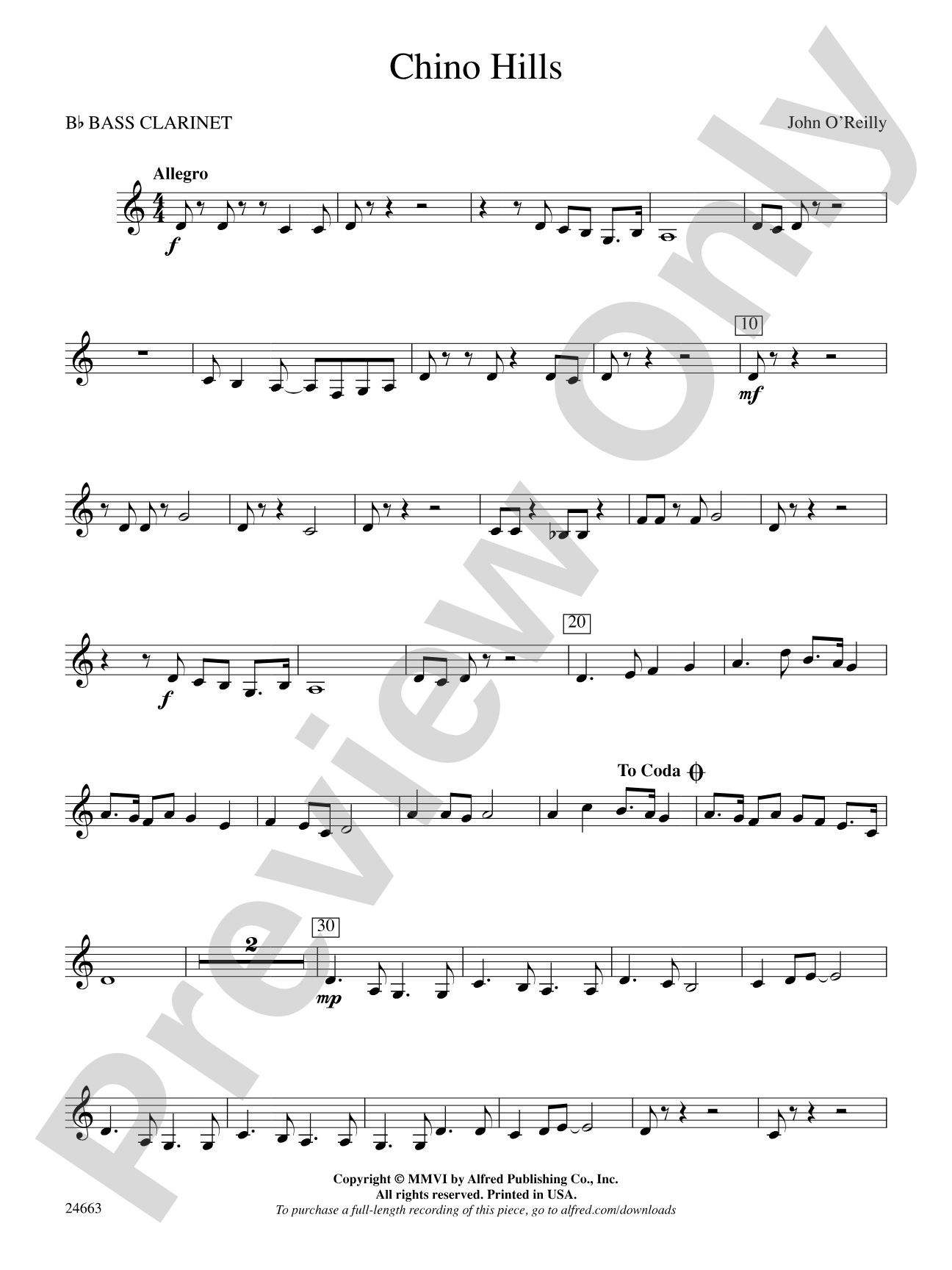

Chino Hills: B-flat Bass Clarinet
By John O'Reilly
Grade: 2.5 (Medium Easy)
Item: 00-PC-0000831_CBC
$3.00
Pickup currently not available
Description
Syncopated brass and driving percussion open this sparkling concert selection. The rhythmic woodwind melody that enters after the brief introduction is set in the Dorian mode, a tonality that dominates the remainder of the piece. The very prominent percussion section gives way to a more delicate woodblock, triangle and tambourine ostinato that accompanies the light hearted second theme. Trumpets now take over the melody and the style hints at the early Hispanic roots of Chico Hills. A lyrical theme in the original Dorian mode highlights the slower middle section that builds to a dramatic climax before returning to the opening Allegro and a short exciting conclusion.


Don't just read it, hear it, play along with it, and watch your students grow with it. In MakeMusic Cloud, Chino Hills: B-flat Bass Clarinet comes alive with professional accompaniment, adjustable tempo, and built-in practice tools that turn solo practice into real progress.
Open in the Player
Jump straight in and assign it today.
Start Your Free Trial
Open this title and explore the full library in minutes.
Sample Audio
1
Audio File
--:--
0:00
0:00
Sample Video
No sample videos found.
Additional Details
Series:
Young Symphonic
Publisher:
Alfred Music
Page Count:
196
SKU:
00-PC-0000831_CBC
More about this title
About the Composer: John O'Reilly
John O'Reilly is a prolific composer and arranger whose work spans educational and professional settings. His catalog reflects a deep commitment to writing accessible yet sophisticated music for young ensembles, balancing technical growth with genuine musical enjoyment.
Why we love this
O'Reilly's orchestration here is particularly smart for the grade level. The prominent but manageable percussion writing keeps energy high without overwhelming younger players, while the Dorian modal harmony introduces harmonic color that goes beyond typical diatonic fare. The piece balances accessibility with genuine musical substance, giving directors something that sounds sophisticated in performance without requiring exceptional technical facility.
What to expect
Chino Hills opens with infectious rhythmic energy that immediately captures attention. The modal melody feels both contemporary and gently exotic, while the shift to a Spanish-inflected trumpet statement brings warmth and character before the piece settles into a lyrical, introspective middle section that builds gradually to a satisfying climax and a swift, sparkly return home.
Who it's for
This score and parts set works for conductors developing band programs at the middle school or early high school level who want repertoire that sounds polished and colorful without demanding virtuosic playing. The Grade 2.5 difficulty is genuinely accessible for developing ensembles, making it ideal for concert programming when you need something engaging that won't stretch your logistics.
How to get the most out of it
- Lock the rhythmic unison between woodwinds and brass in the opening section. The syncopation reads clearly only when these families articulate together with matching precision and the same amount of space.
- Bring the delicate ostinato figures (woodblock, triangle, tambourine) clearly to the front during the second theme. Balance the trumpet melody above them rather than drowning the percussion texture.
- Shape the slower middle section as a genuine lyrical statement. Encourage longer phrase arcs through the Dorian melody and allow the dynamic buildup to the climax room to breathe.
- Return to the opening Allegro with fresh energy. The final section should feel like a new arrival, not a tired recap, which requires a clear break or conductor gesture between the climax and the reprise.
How to use it
Program this early in a concert when you need a piece that energizes the audience and settles your students into performance mode. Its moderate length and programmatic title also make it an engaging choice for community concerts or pops programs where both musicians and listeners appreciate music that tells a clear musical story without excessive length.
Skills your students will build
- Reading and performing in Dorian mode and modal harmony
- Rhythmic precision in syncopated brass and woodwind passages
- Balancing distinct melodic and textural roles across multiple instrumental families
- Shaping longer phrases with dynamic control through a lyrical section
- Ensemble coordination across contrasting tempos and textures