China Grove: Lead Sheet Digital Sheet Music

China Grove: Lead Sheet Digital Sheet Music

Tom Johnston, Doobie Brothers

Item: 00-PS-0008796

Digital Download
$1.99
Description

China Grove: Lead Sheet Digital Sheet Music isn't in MakeMusic Cloud just yet...but it could be. Let us know you'd like to see it, and you'll help shape what comes next. In the meantime, start a free trial and dive into thousands of interactive titles your students can play along with today.

Sample Audio
No sample audio found.
Sample Video
Additional Details
SKU: 00-PS-0008796

More about this title

About the Artist: Doobie Brothers

The Doobie Brothers emerged from the San Jose rock scene in the early 1970s and built a catalog of radio hits that balanced infectious grooves with sophisticated musicianship. The band's two-drummer setup and layered vocal harmonies became their signature sound, earning them induction into the Rock and Roll Hall of Fame in 2020. Their influence on pop-rock songwriting and ensemble playing extends well beyond their commercial peak, making their music a staple of education and performance contexts.

China Grove exemplifies what made the Doobie Brothers essential listening across generations: a memorable melody, rock-solid groove, and arrangements that reward close listening. The song has become a standard in cover bands, jazz ensembles, and pop-rock programs precisely because it sits at the intersection of accessibility and musicianship.

Why we love this

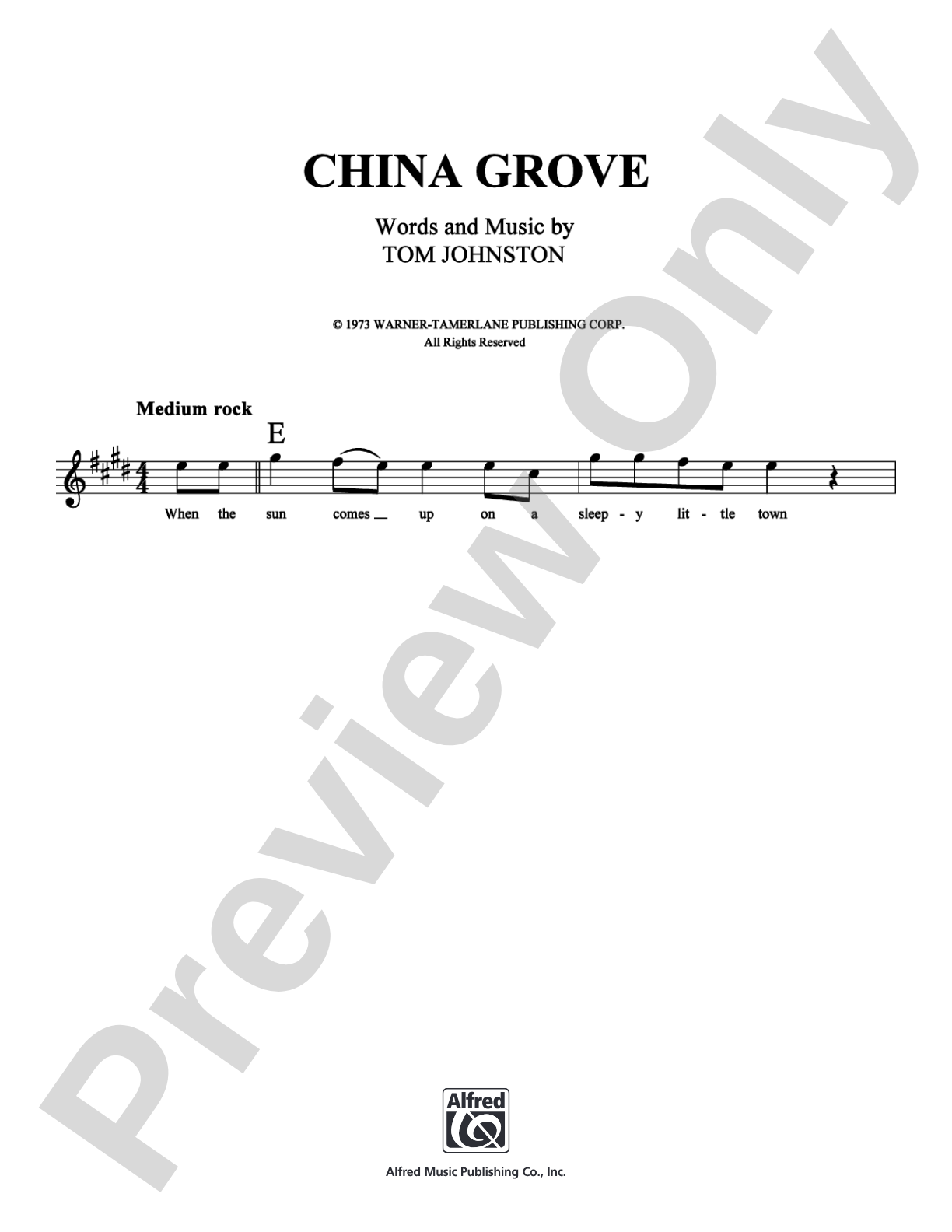
China Grove is built on a syncopated groove that's instantly recognizable yet technically interesting enough to keep players engaged through multiple takes. The lead sheet format strips away studio production and puts the focus where it belongs: the song's harmonic content, rhythmic pocket, and melodic strength. Directors can use this to explore how a hit song's skeleton reveals the craft underneath the recording.

What to expect

Groove-driven and funky, with a pocket that feels like a natural pocket you've been playing your whole life. The melody sits comfortably in a mid-range and lands with satisfaction, while the chord progression underneath keeps your ear interested through repetition. There's an easy swagger to this tune that encourages you to settle in and find the feel rather than play it stiff.

Who it's for

Pianists, guitarists, and other chord instrument players who want to explore a classic pop-rock tune in lead sheet form. Jazz students, combo players, and those building repertoire for ensemble performance or recital will find the harmonic and rhythmic content worth studying. Musicians interested in understanding how a memorable hit song is constructed will appreciate the clarity of this format.

How to get the most out of it

  • Lock into the signature syncopated rhythm pattern early in rehearsal. The groove's pocket drives the entire arrangement, so nail the comping rhythm before layering melody or solos.
  • Pay attention to the chord changes on repeats and turnarounds. Lead sheets require you to read ahead and anticipate harmonic movement; this song has several that catch unprepared players.
  • Sing the main melody against your own harmonic part during sectional rehearsals. The counterpoint between melody and bass line is part of what makes this song sticky.
  • Experiment with dynamics across choruses. A lead sheet gives you freedom to color the arrangement differently each time through; use that space.

How to use it

Include this in a pop-rock themed concert or a unit on 1970s hits and their staying power. It pairs well with other Doobie Brothers standards or with classics from bands with similar harmonic sophistication. Solo pianists and guitarists can use it as a recital piece that appeals to general audiences, while small ensembles and combos can turn it into a vehicle for improvisation and ensemble communication.

Skills your students will build

  • Reading syncopated rhythm patterns across bar lines
  • Comping against a strong groove without rushing or dragging
  • Voice leading through jazz-inflected chord changes (particularly dominant 7 alterations)
  • Balancing melody and harmony when performing from a lead sheet
  • Recognizing and replicating the pocket of a classic pop-rock groove

You May Also Like